Petroselinum crispum var. neapolitanum
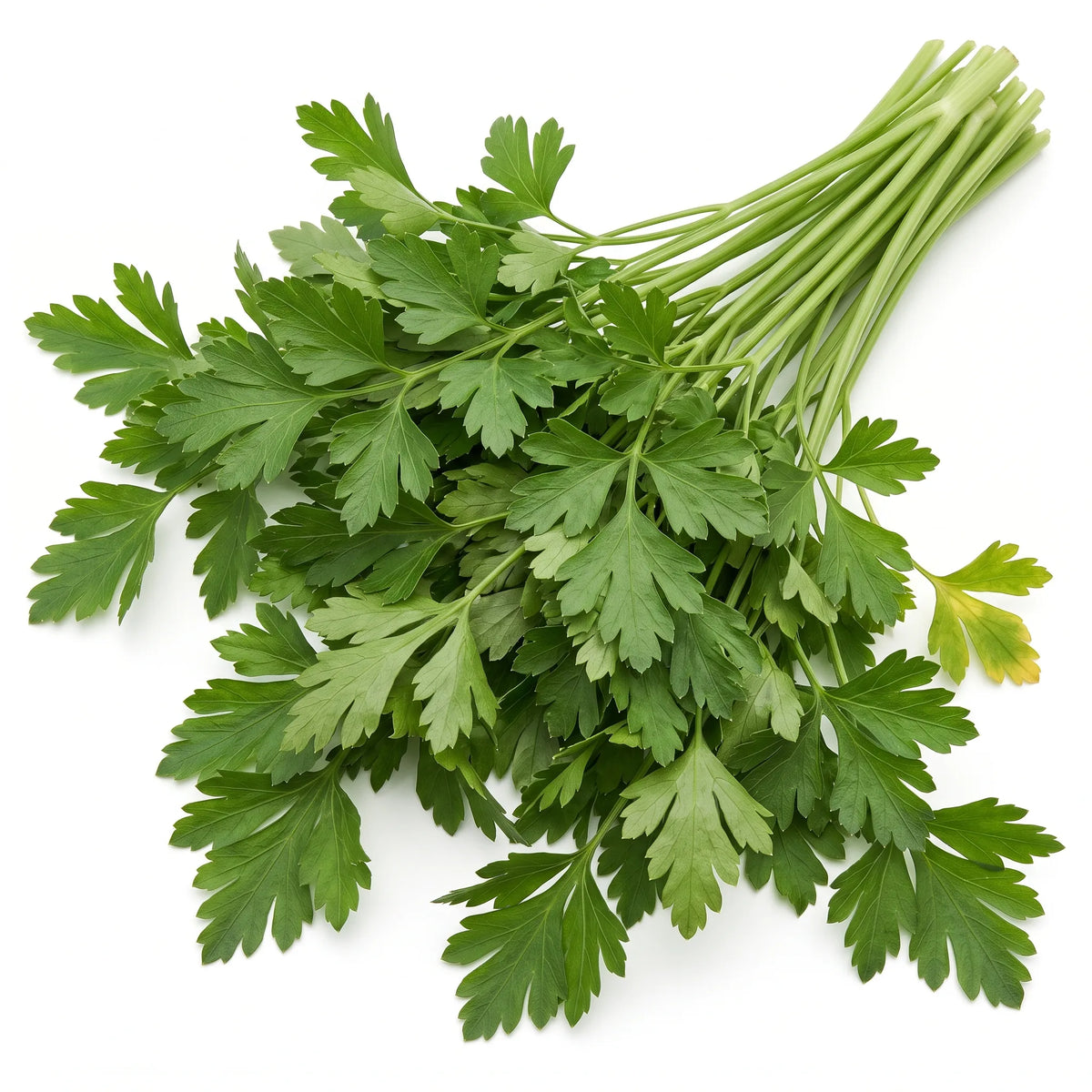
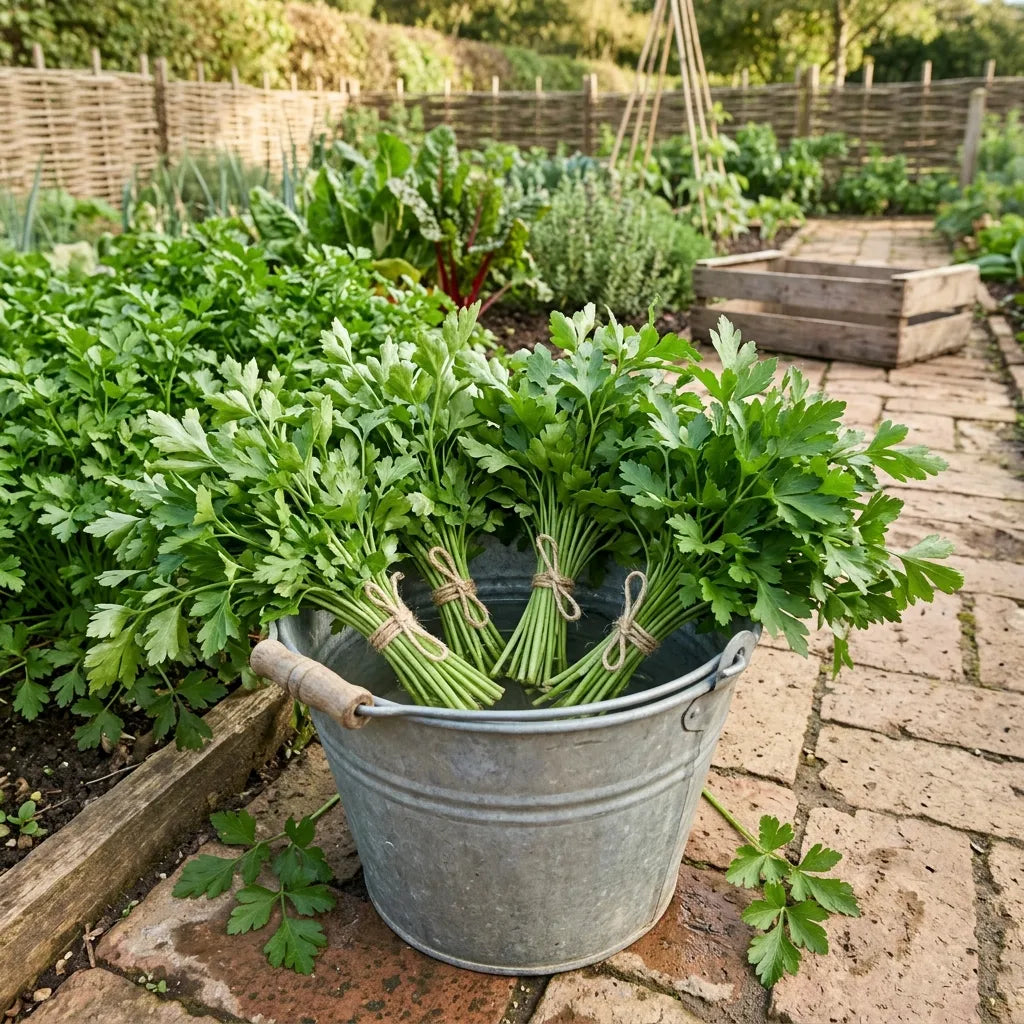
Flat-leaf parsley, Italian parsley, common broad-leaved parsley: this is the cooks’ parsley. While curly parsley charms with its appearance, flat-leaf parsley clearly wins on fragrance — more pronounced and fuller-bodied, it holds up better during cooking. And a little-known fact: its stems are even more aromatic than its leaves.
Characteristics:
-
Full-bodied fragrance: distinctly more aromatic than curly parsley, this is the chefs’ choice.
-
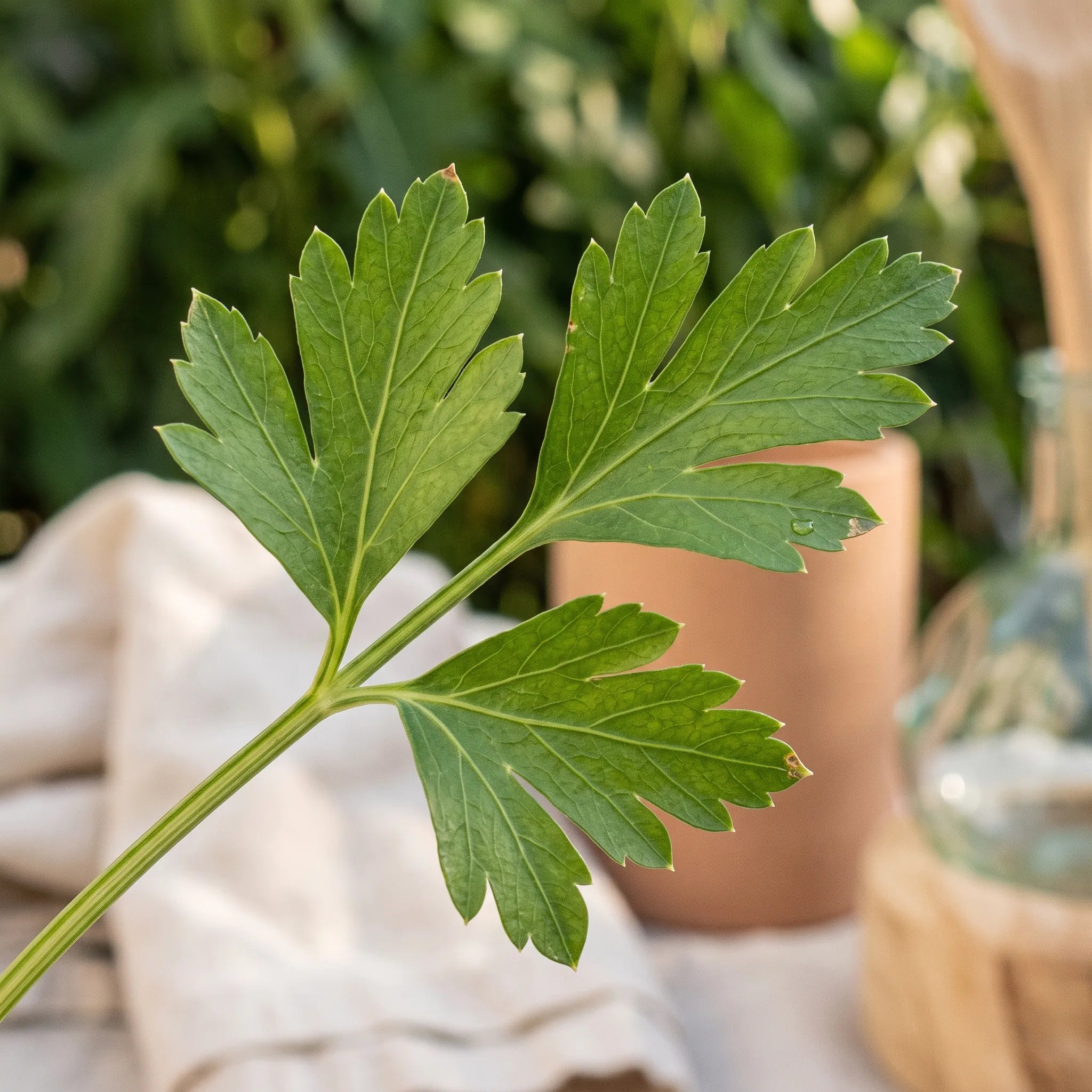
Cut flat leaves: larger and easier to chop.
-
Extended harvest: from spring to winter, leaf by leaf.
-
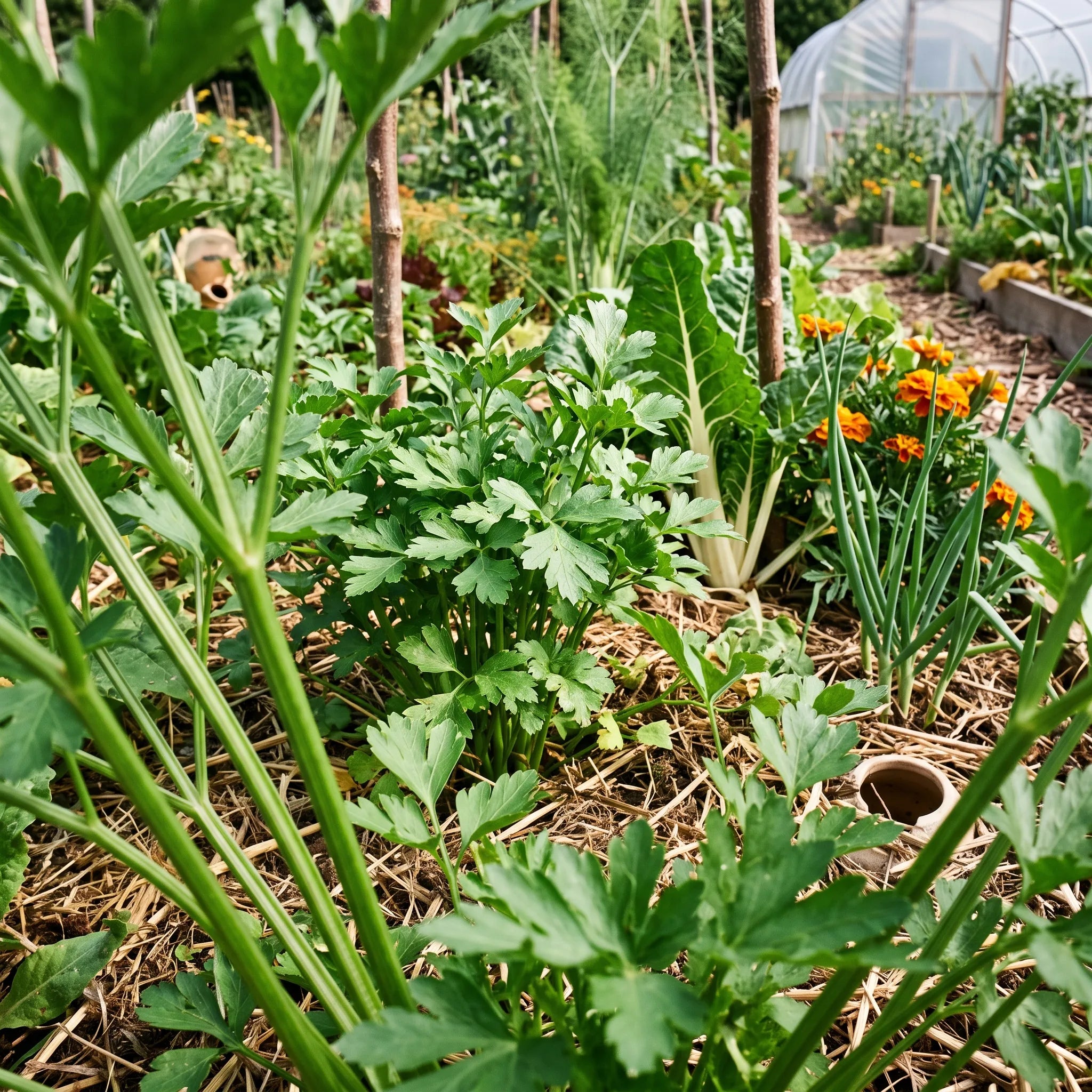
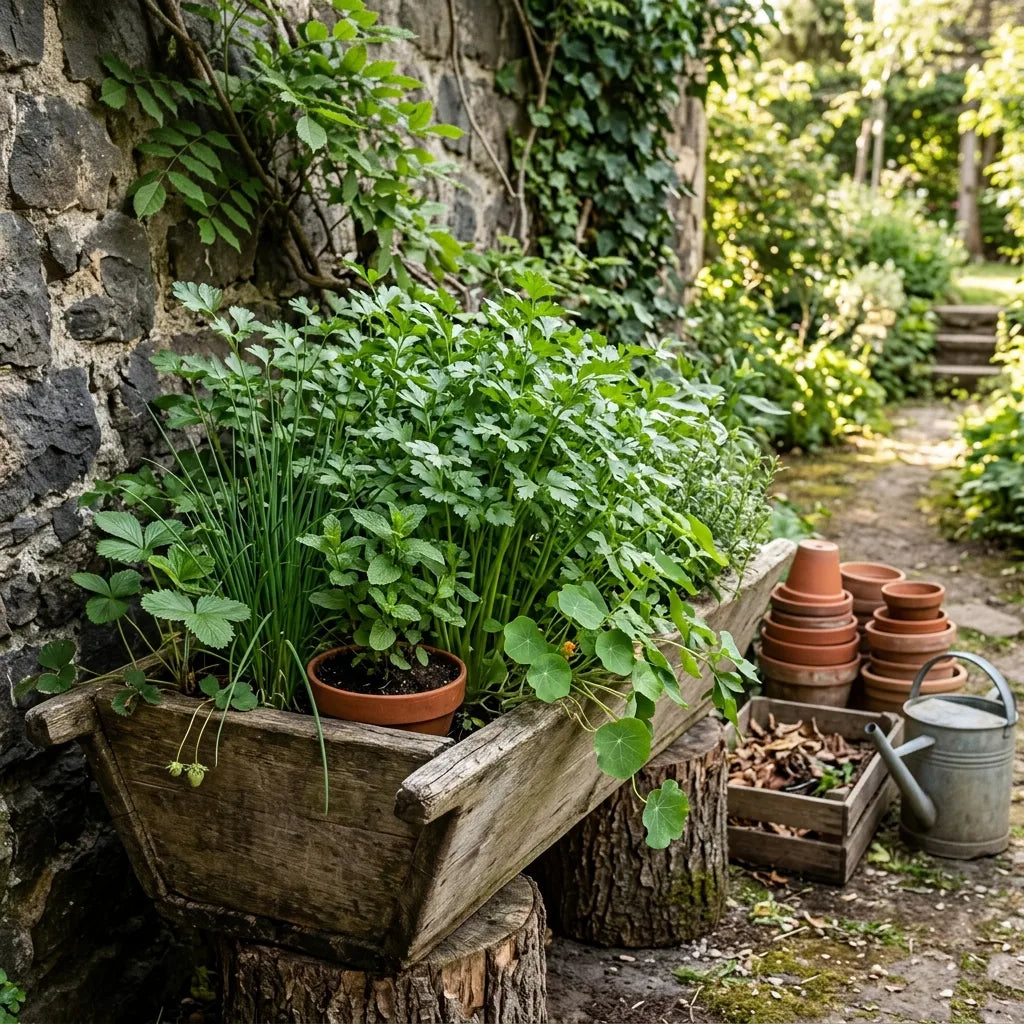
Grows anywhere: in the ground, in a planter, or in a pot indoors.
Sowing advice:
-
Exposure: sunny or lightly shaded — partial shade suits it well in summer.
-
Soil: deep, cool, loose, and rich in humus. Adding compost produces noticeably fuller foliage.
-
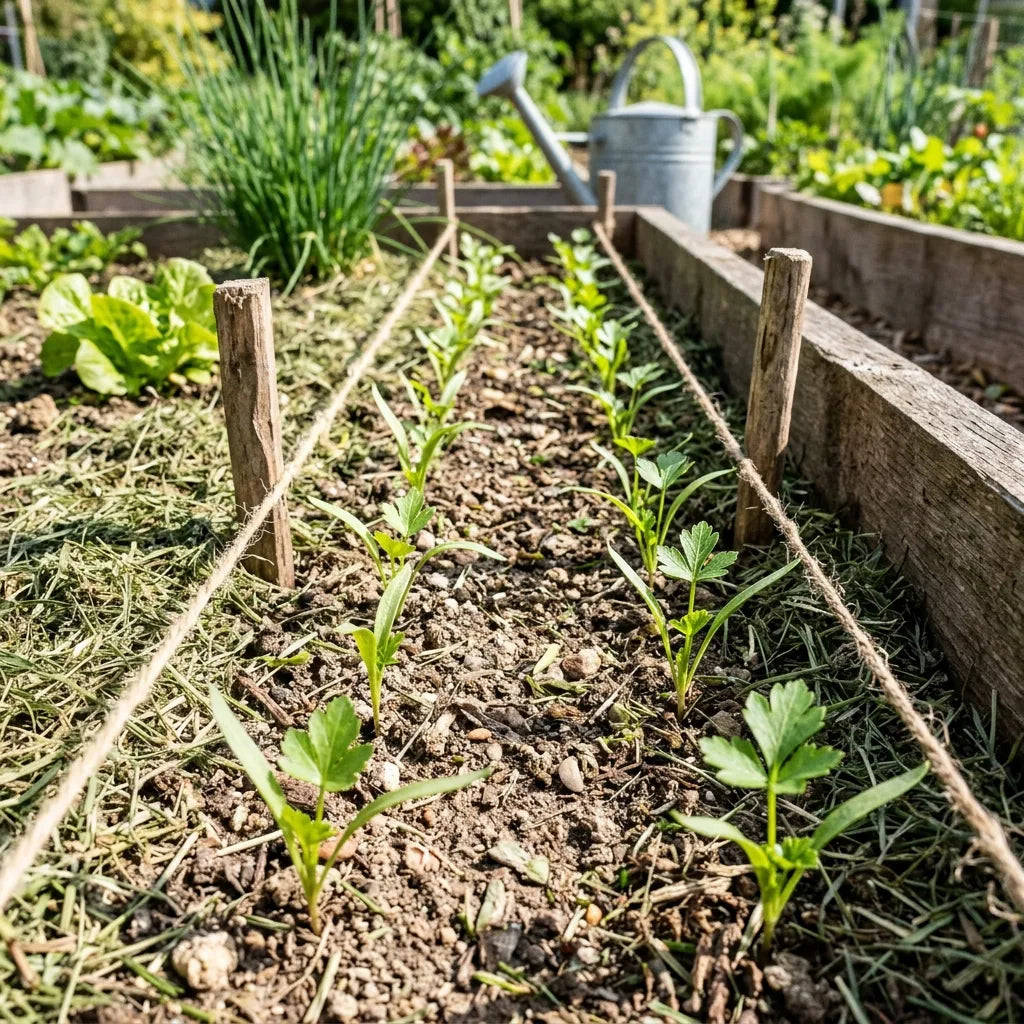
Method: germination is slow, taking about three weeks. Soak the seeds overnight in lukewarm water before sowing, and above all keep the soil constantly moist until emergence — drying out during germination is the leading cause of failure. Sow from April to October at a depth of 1 cm, staggering sowings for regular harvests. See how to sow your seeds.
Care advice:
- Thin to 15 cm apart. Water regularly, as drought causes it to bolt prematurely.
- Remove flower stalks as soon as they appear in the second year to extend leaf production.
Harvesting advice:
- Take the outer stems at the base, leaving the center intact: the plant will continue to regrow. Never cut the clump halfway up.
- Do not discard the stems: more aromatic than the leaves, they add wonderful flavor to broths, stocks, and court-bouillons.
Beneficial pairings:
Benefits for biodiversity:
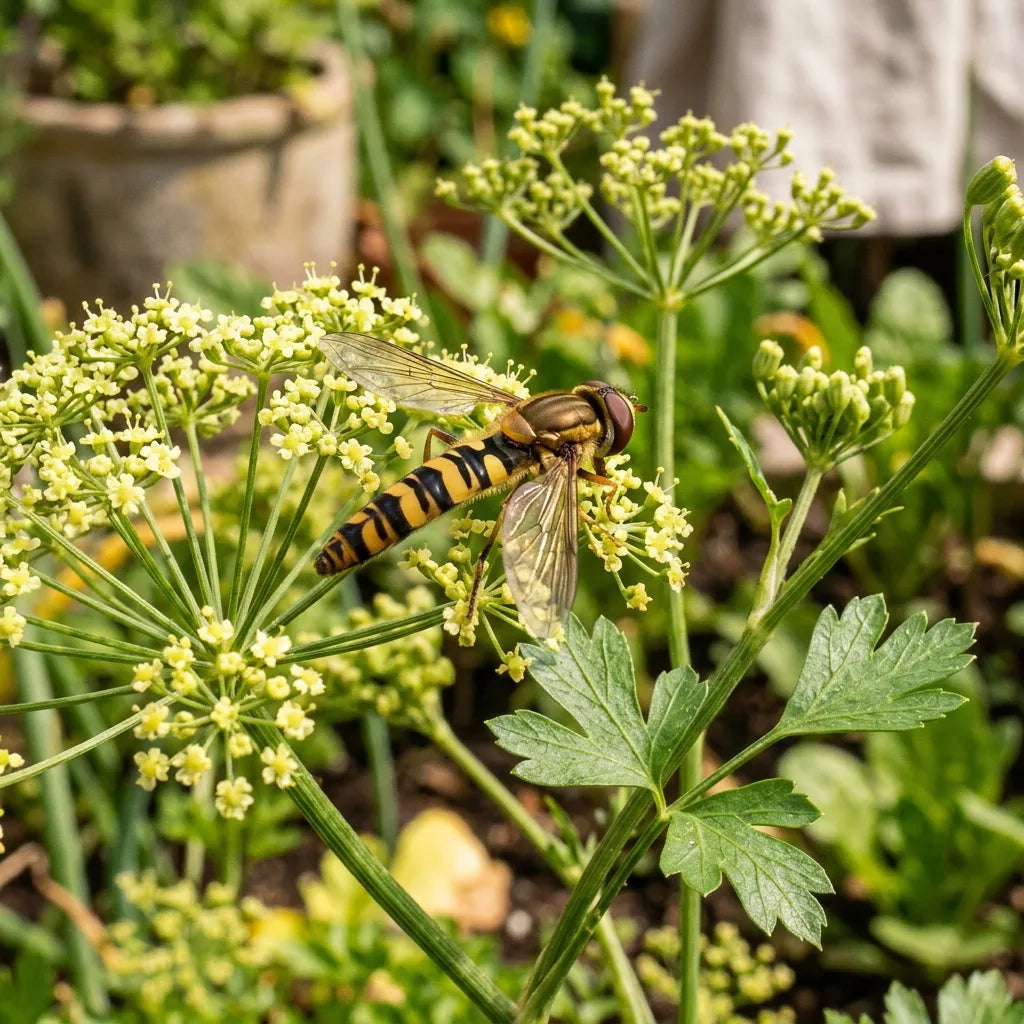
- Let one plant go to seed in its second year: its yellow-green umbels are veritable platforms for hoverflies and beneficial micro-wasps.
- Like all umbellifers, it is a host plant for swallowtail caterpillars.
Uses:
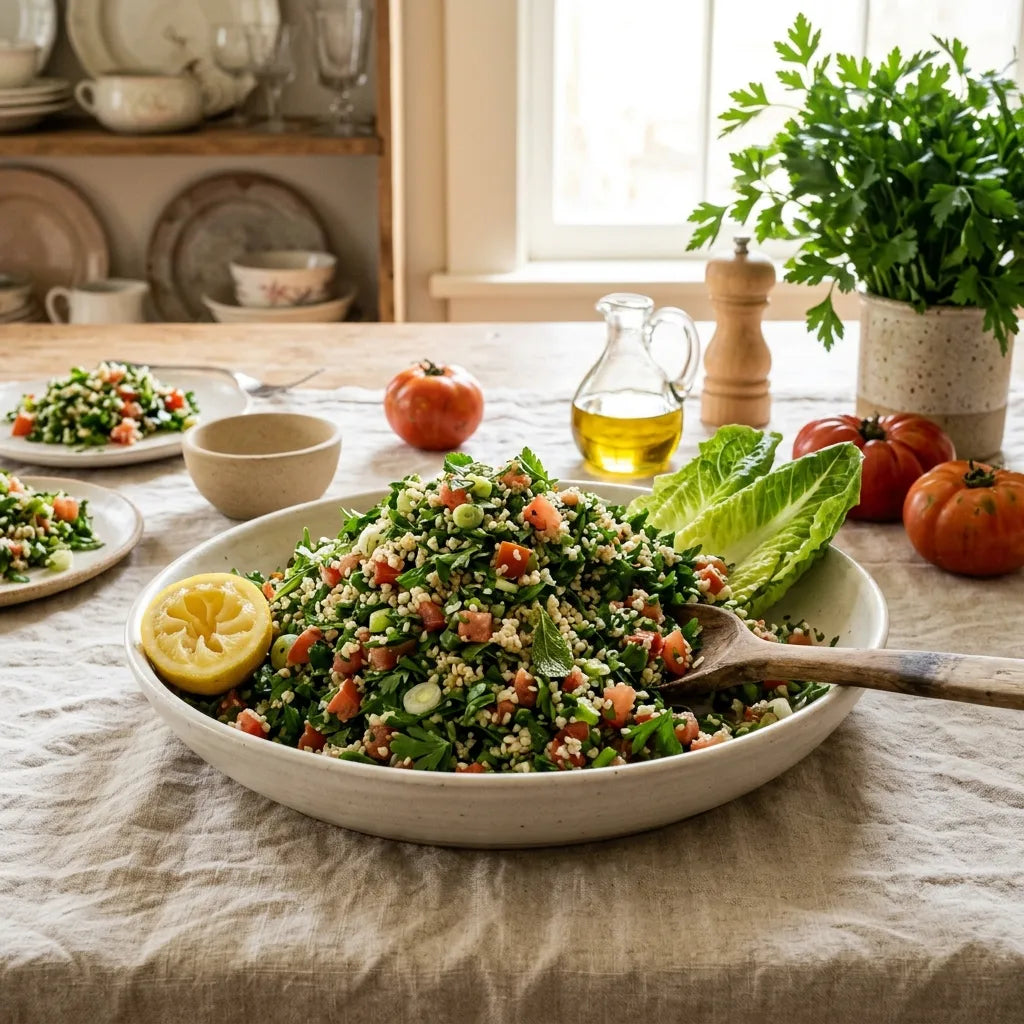
- Chopped raw at the end of cooking: tabbouleh, persillade, gremolata, chimichurri, sauces, and soups. Its ability to withstand cooking makes it more versatile than curly parsley, which is often limited to decoration.
- A traditional medicinal plant, cultivated in herb gardens since Antiquity. See our medicinal plants to sow.
Harvesting your own seeds:
As a biennial, it goes to seed in its second year: let one plant flower, then harvest the umbels when the seeds turn brown. Be careful, as it cross-pollinates with curly parsley: isolate your seed plant if you grow both. See how to store your seeds.
Commitment to Quality: at SemiSauvage - Permaculture, we grow and select our seeds with respect for living things as our guiding principle. Based near the Auvergne Volcanoes, we choose reproducible, non-hybrid varieties, tested for their germination rate, carefully sorted and packaged, without any chemical treatment. Our conviction: to give gardeners back the ability to resow, year after year, seeds that truly belong to them.
The cooks’ parsley, more fragrant than curly parsley.