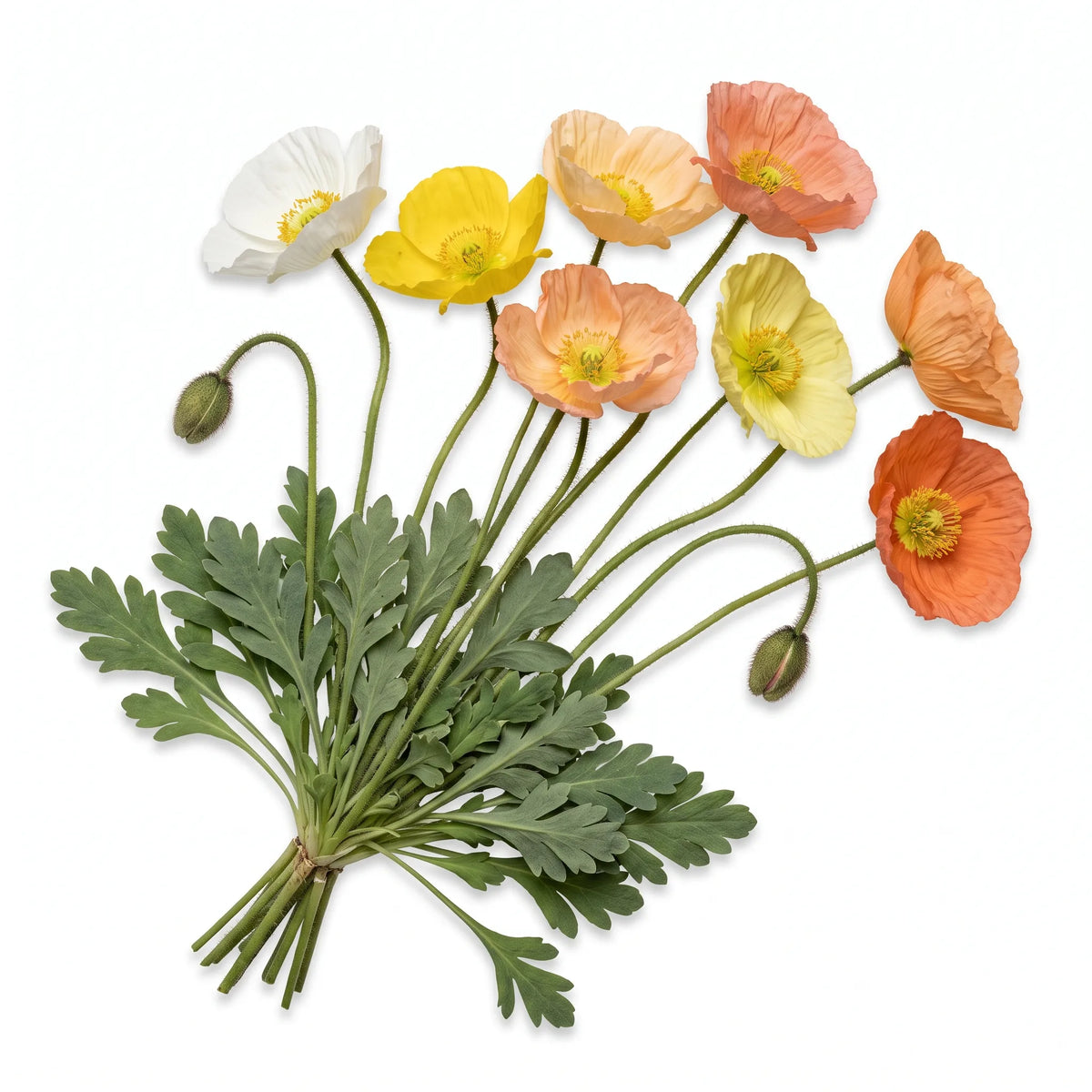
Papaver nudicaule
Iceland poppy, Arctic poppy: contrary to what its name suggests, this species does not come from Iceland but from the subarctic regions of Asia and North America. From its polar origins, it has retained a marked preference for cool conditions and exceptional hardiness, along with a range of colors that few flowers can match.
Characteristics:
-
Fragrant flowering: from May–June to September, in a bright range of yellow, orange, red, pink, and white, on slender leafless stems.
-
Short-lived perennial: generally grown as an annual or biennial, it does not appreciate overly hot summers.
-
Very hardy: it tolerates cold down to -20 °C.
Precautions:
- Like all poppies, the plant contains small amounts of alkaloids: avoid ingesting it, especially by young children and pets.
Sowing advice:
-
Exposure: sunny, but cool — in warm regions, choose a position sheltered from the hot afternoon sun.
-
Soil: undemanding, ordinary to poor, but absolutely well-drained and preferably cool. It dislikes stagnant moisture in winter just as much as scorching drought in summer. Do not fertilize.
-
Method: Cold stratification significantly improves germination. Then sow directly in place, on the surface without covering (the seeds need light), as its taproot does not tolerate transplanting well.
Care advice:
- Remove faded flowers to extend flowering. Water sparingly, but do not let the soil dry out completely.
Beneficial combinations:
- It creates lovely displays with the other poppies in the catalog, such as the wild poppy or the California poppy, extending flowering throughout the season.
Benefits for biodiversity:
- Like other poppies, it produces no nectar but an abundance of pollen, sought by bees from early morning.
- Its early flowering, beginning in May, makes it a useful resource at the start of the season.
Uses:
- Excellent as a cut flower: pick the buds just before they open and sear the stem in a flame for a few seconds to extend its vase life.
Harvesting your own seeds:
Leave the capsules to brown and dry on the plant until they open into small slits at the top, then turn them upside down over a bag like a salt shaker. The Iceland poppy readily self-seeds in cool climates. See storing your seeds.
Commitment to Quality: at SemiSauvage - Permaculture, we grow and select our seeds with respect for all living things as our guiding principle. Based near the Auvergne Volcanoes, we choose open-pollinated, non-hybrid varieties, tested for their germination rate, carefully sorted and packaged, with no chemical treatment. Our conviction: to give gardeners back the ability to sow, year after year, seeds that truly belong to them.
Bring your garden the bright palette and delicate fragrance of Iceland poppies.