Amaranthus caudatus
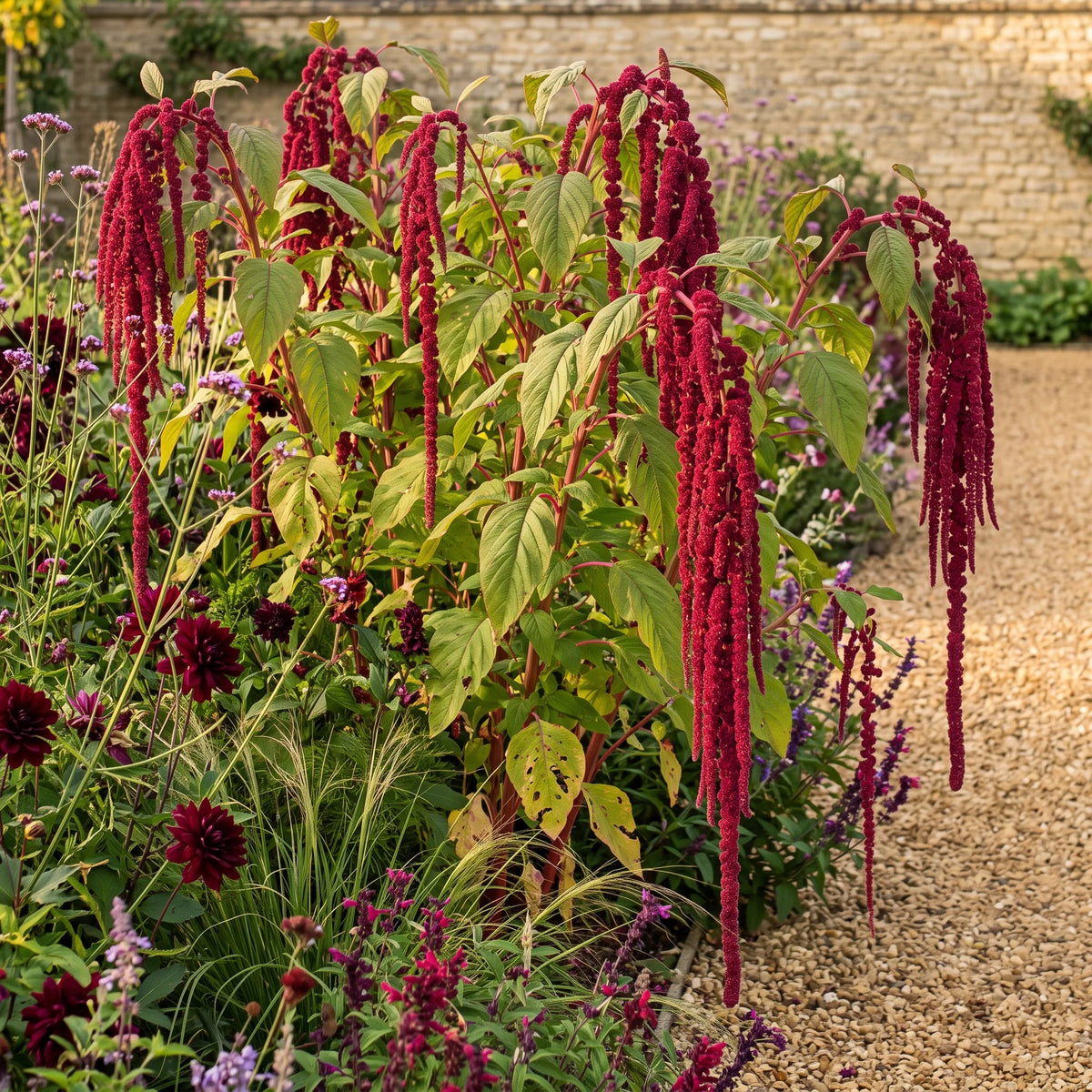
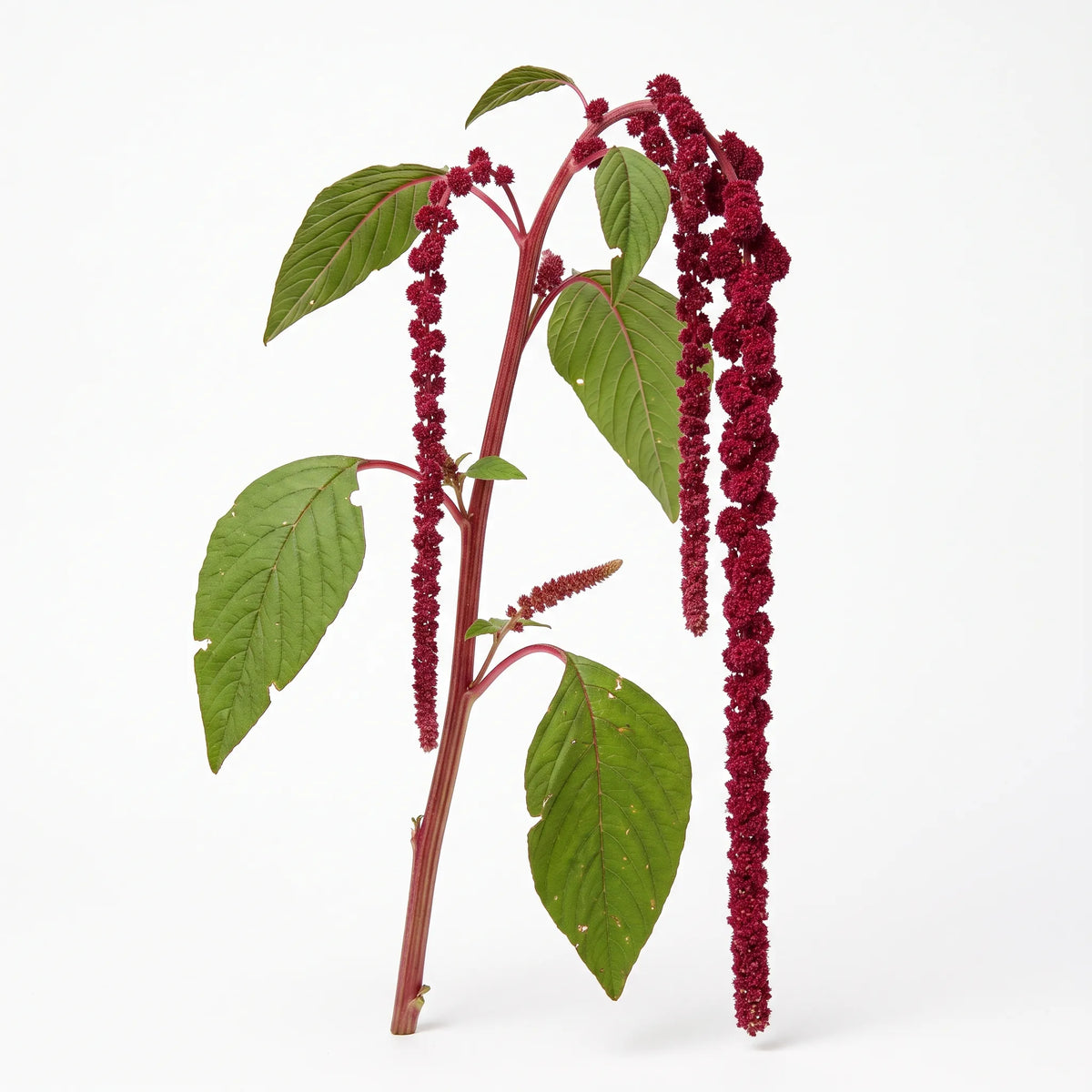
Love-lies-bleeding amaranth, monk’s discipline, jealousy, kiwicha: its long, bright-red clusters cascade in soft pendulous strands, hence its monastic nickname, “discipline.” A sacred crop of the Incas, amaranth was banned by the conquistadors because of its ritual role—it is now being rediscovered for its nourishing seeds as much as for its beauty.
Characteristics:
-
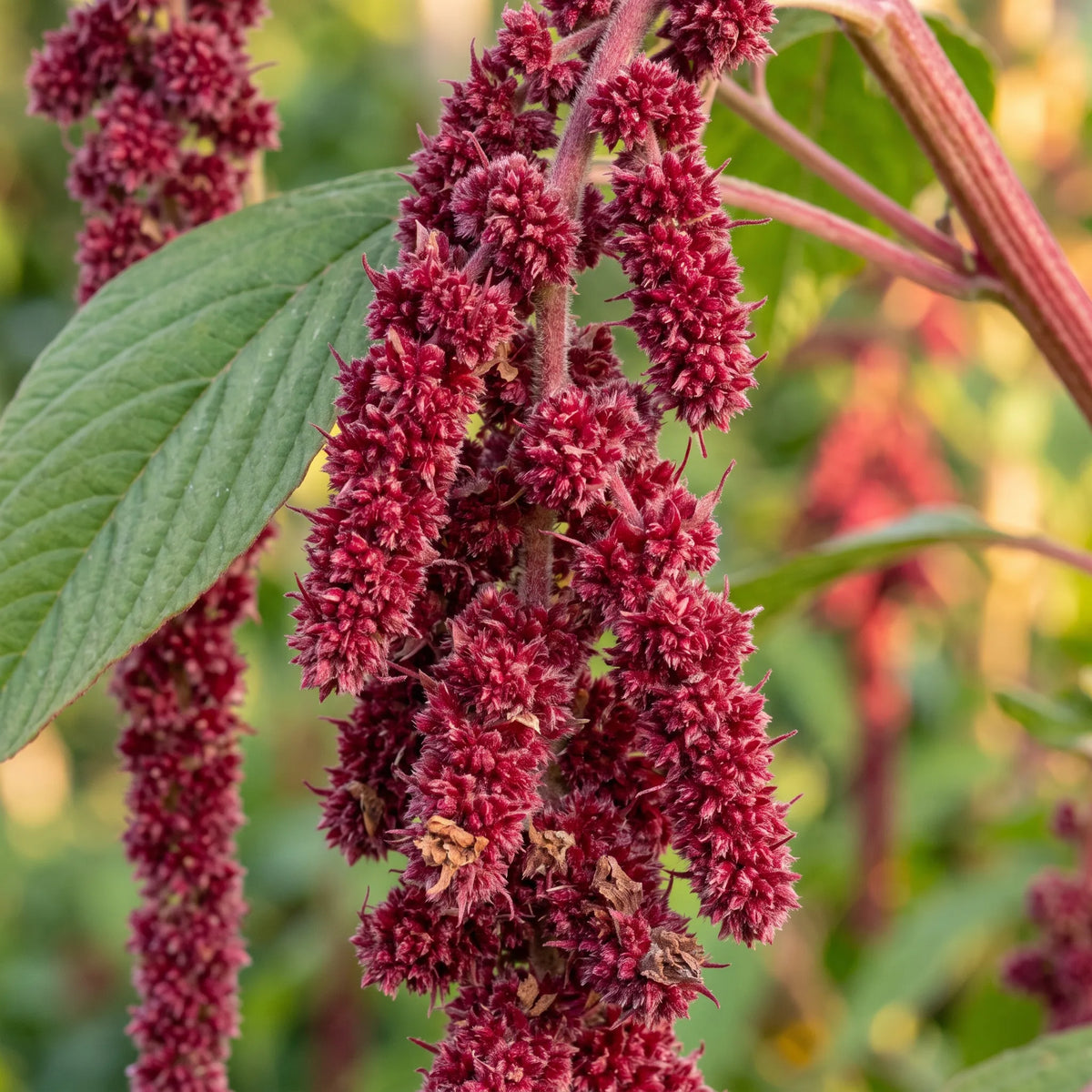
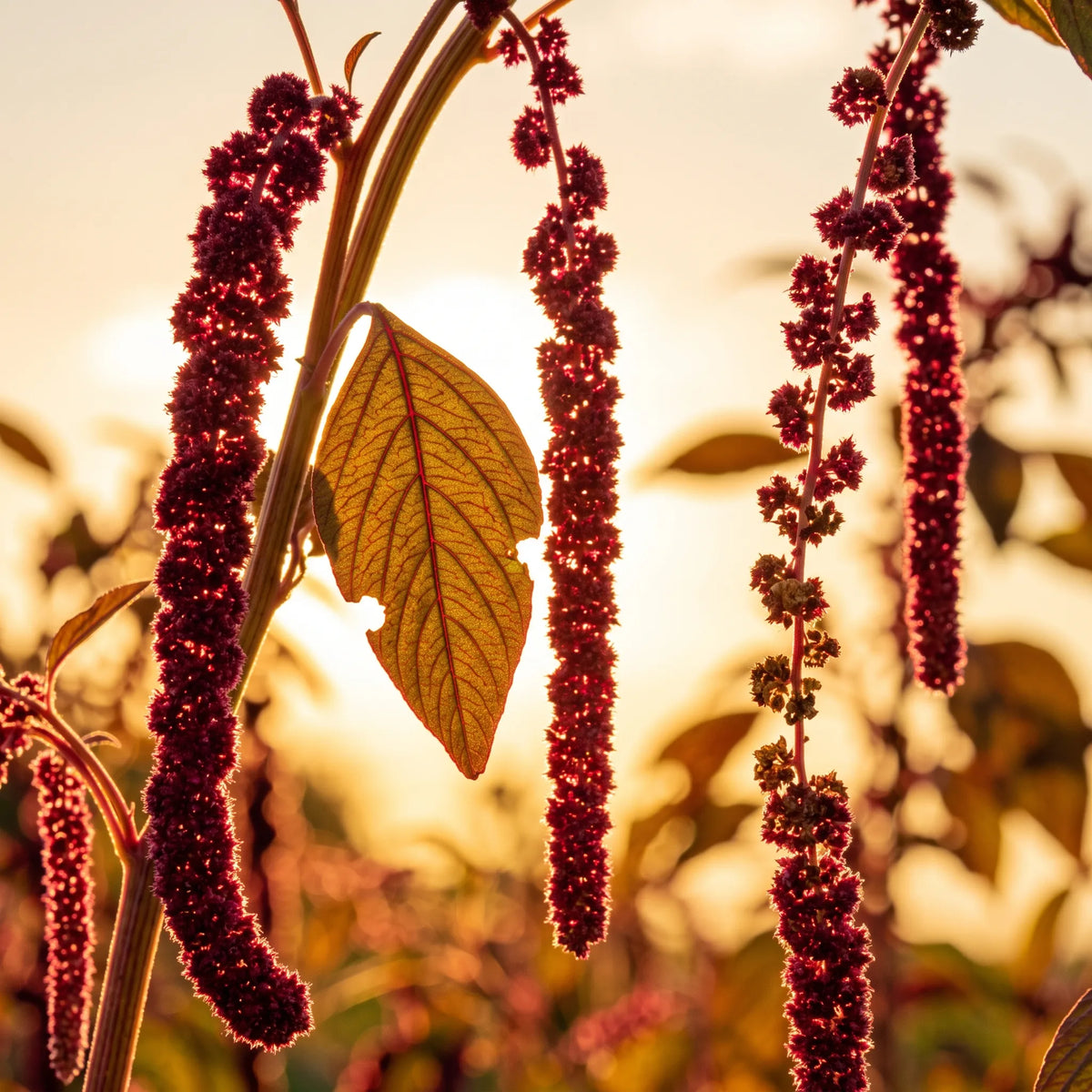
Spectacular clusters: long, drooping spikes in an intense red, all summer until the first frosts.
-
Generous growth: 1 to 1.5 metres tall, with abundant foliage that structures flower beds.
-
Dual purpose: a striking ornamental plant with edible, protein-rich seeds.
Sowing advice:
-
Position: full sun, with plenty of warmth.
-
Soil: light, well-drained and preferably rich. It appreciates fertile soil but tolerates ordinary soil and drought well once established. Important: wait until the soil has warmed up, as it dislikes the cold.
-
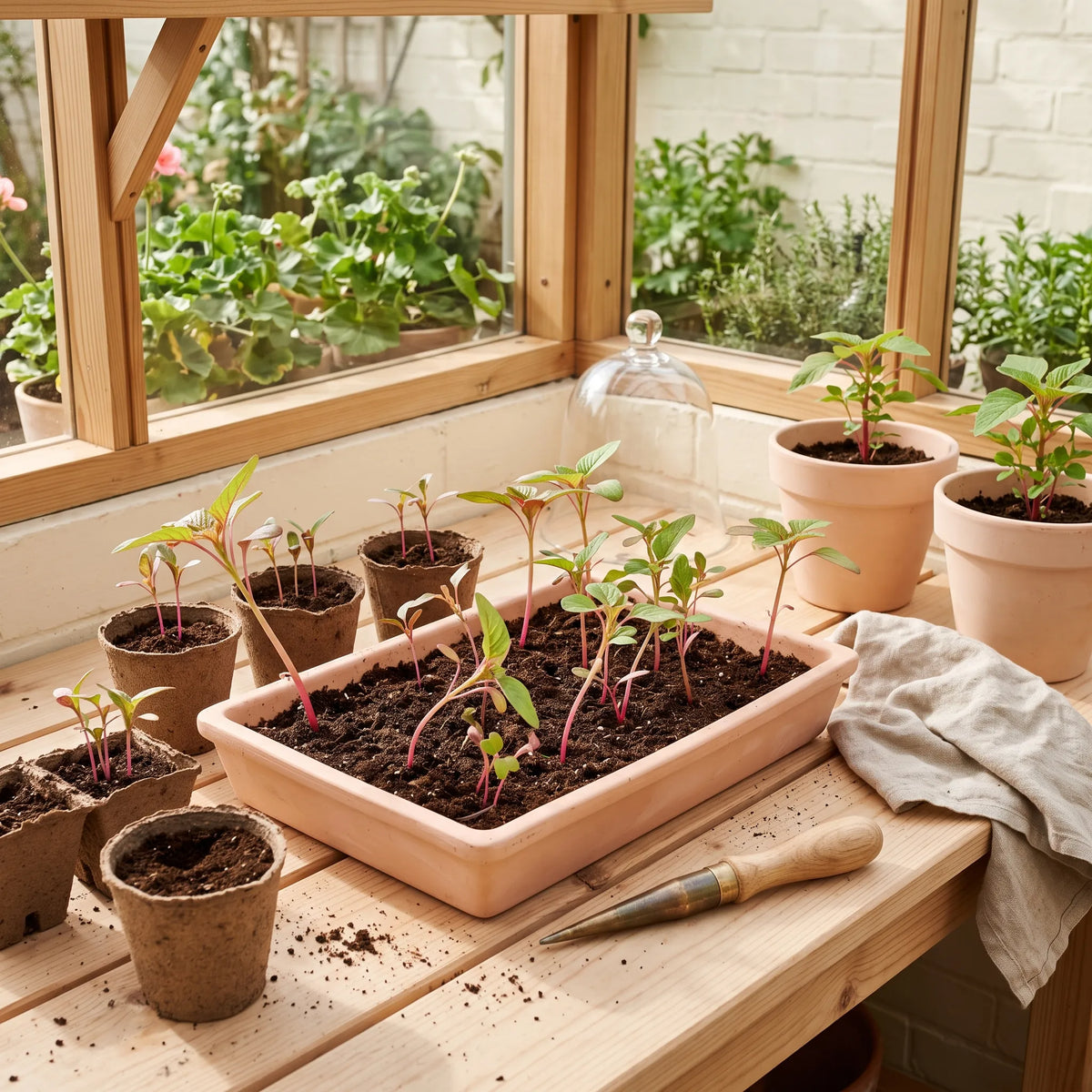
Method: no stratification required. Sow directly in the ground in spring after the last frosts, barely covering the tiny seeds, or sow in pots under cover from April onward. See how to sow your seeds.
Care advice:
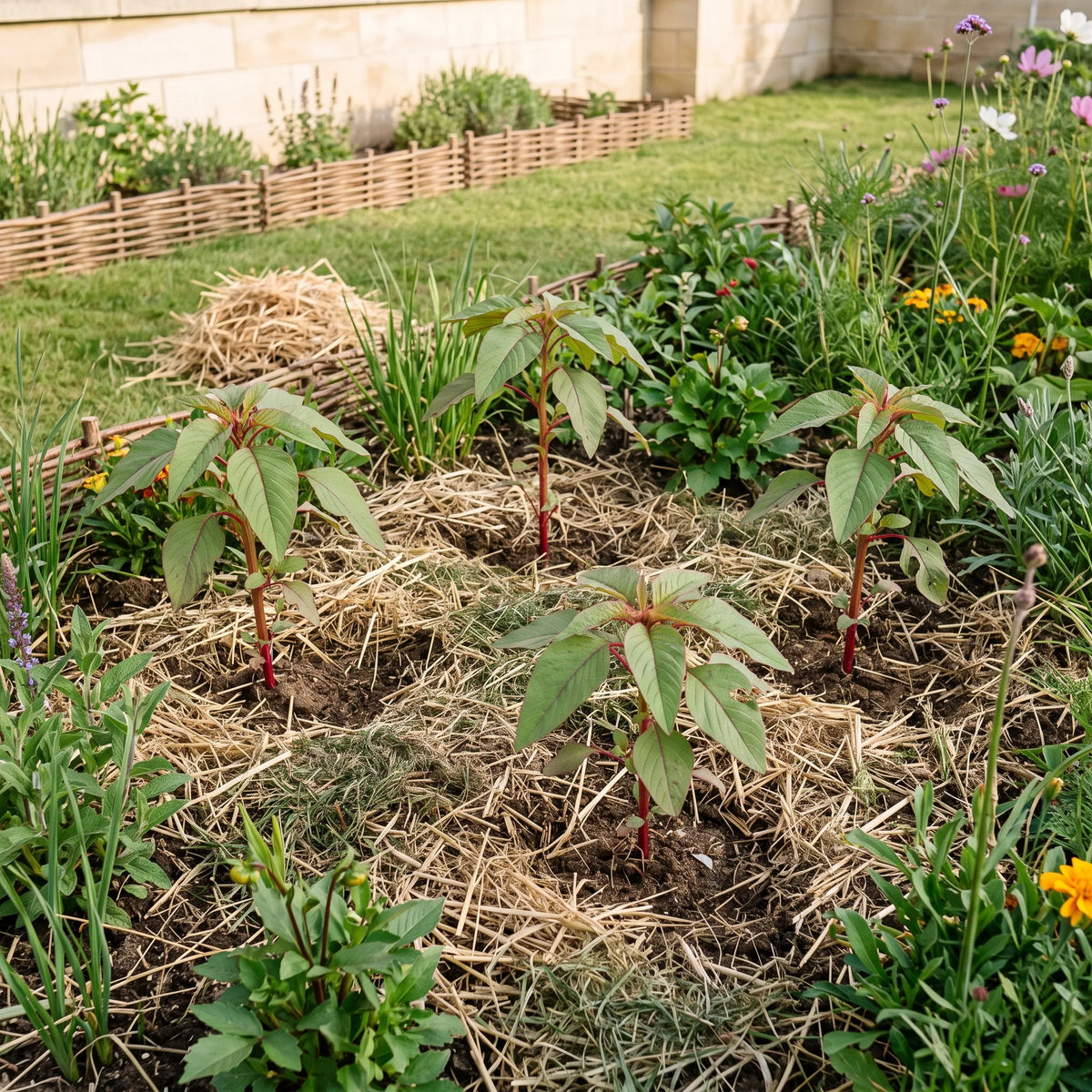
- Thin to 40 cm apart. Water moderately. Staking may be useful in windy locations, as the heavily laden flower stems can be heavy.
Harvesting advice:
- For the seeds, wait until the spikes dry and begin to release their seeds when rubbed, then cut them and shake them over a sheet. Expect several thousand seeds per plant.
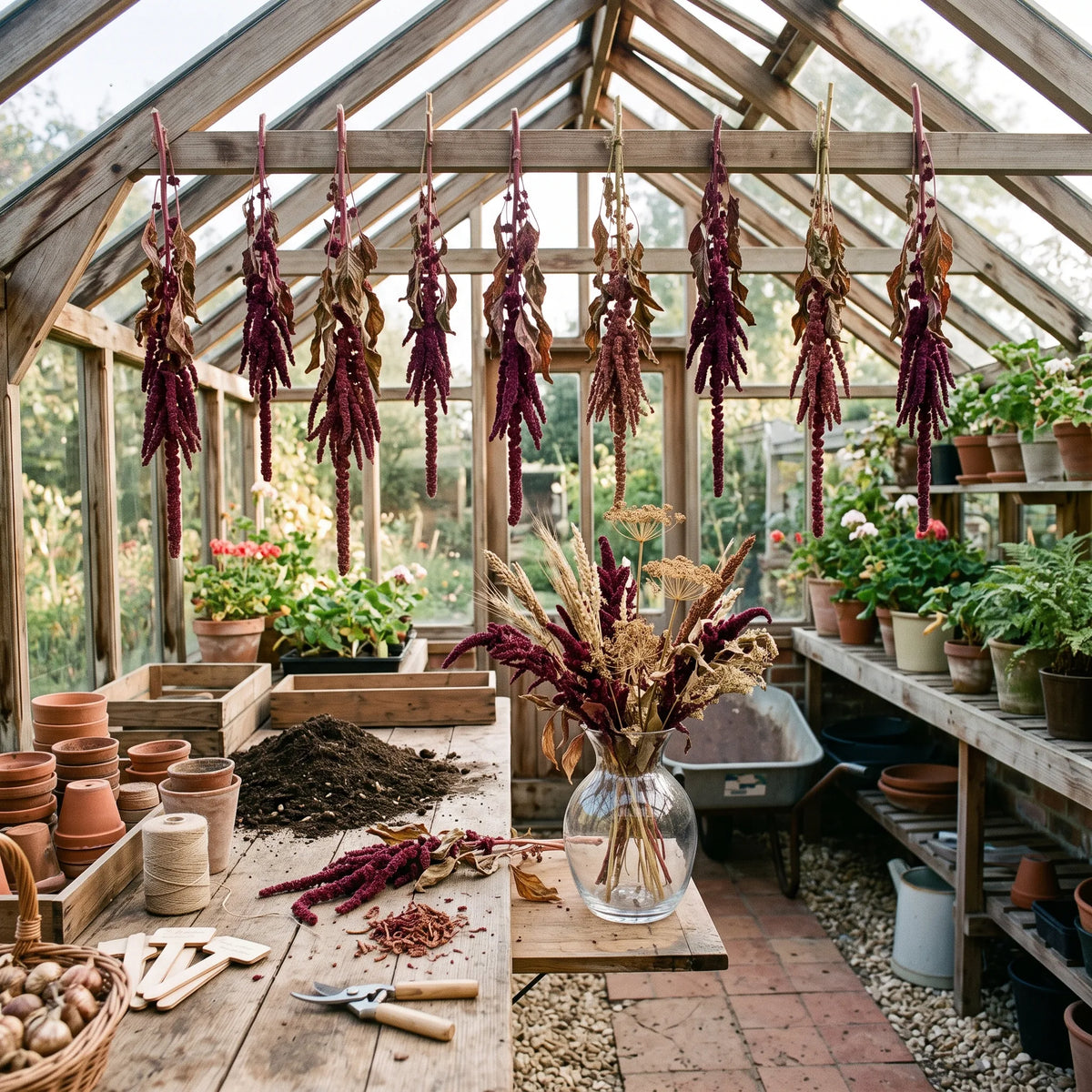
- For dried bouquets, cut the clusters at their peak colour and hang them upside down in the shade.
Beneficial combinations:
Benefits for biodiversity:
- Its countless small flowers grouped in spikes attract bees and hoverflies throughout the summer.
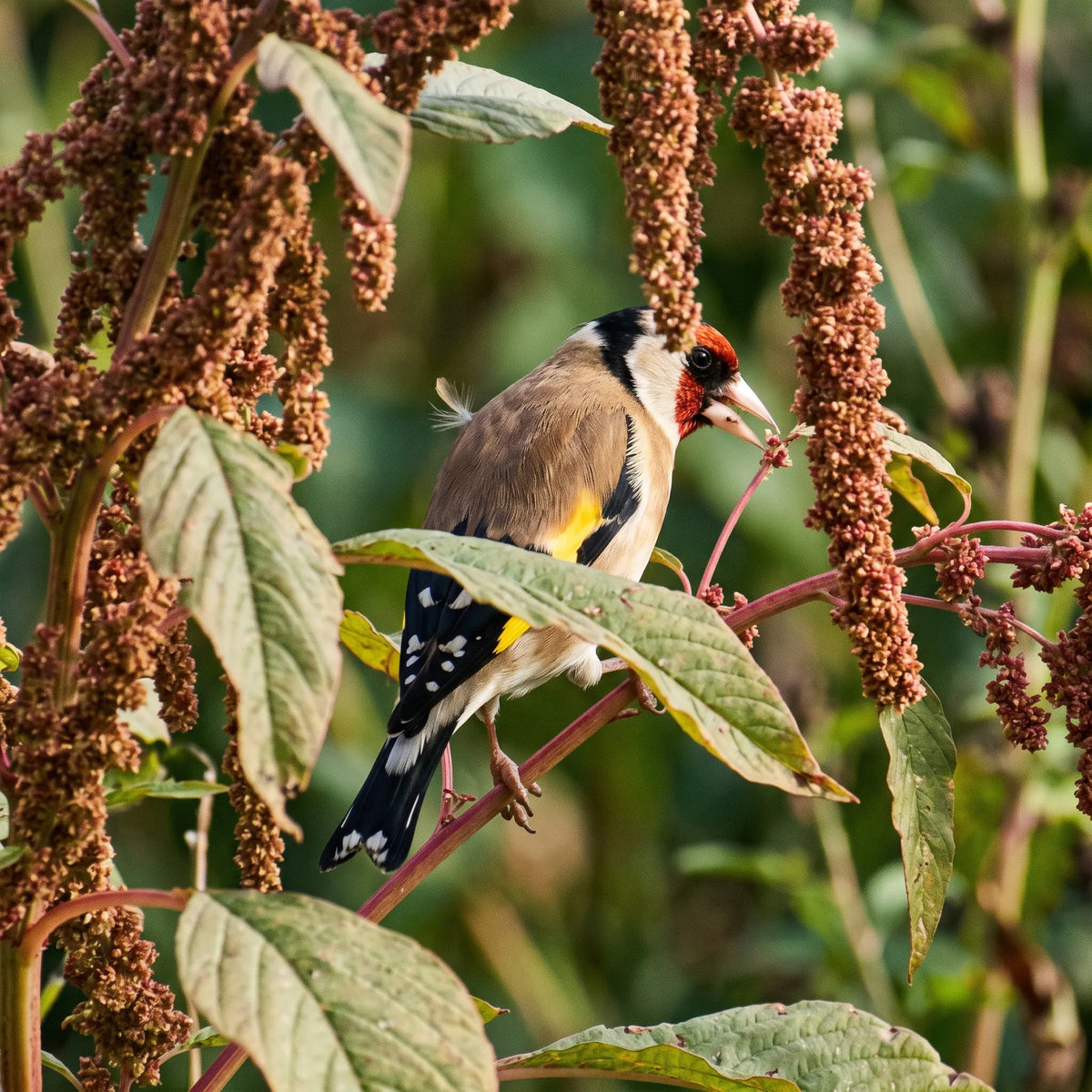
- Its seeds provide abundant food for seed-eating birds in autumn: leave a few stems standing, as goldfinches and greenfinches enjoy them.
Uses:
- Flower beds, the back of borders and bouquets, both fresh and dried, where its clusters retain their colour for a long time.
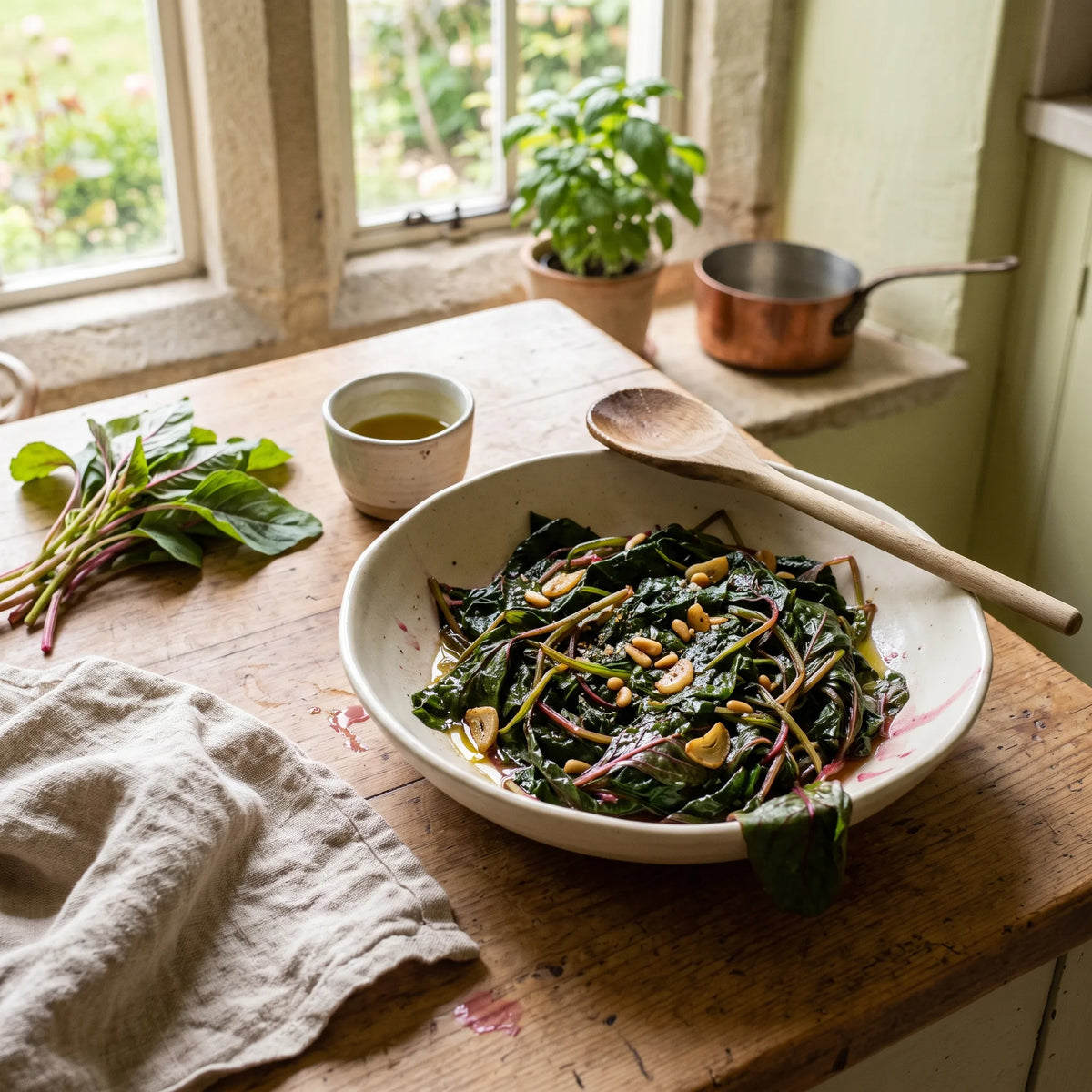
- Its gluten-free, protein-rich seeds can be cooked like quinoa or popped in a frying pan. The young leaves can be eaten like spinach. See our edible plants worth rediscovering.
Symbolism:
Its name comes from the Greek amarantos, “that which does not wither”: since antiquity, amaranth has symbolised immortality and eternal love. A sacred crop of the Incas and Aztecs, it held a central place in their rituals.
Harvesting your own seeds:
Let a few flower stems fully ripen on the plant, then rub them between your hands over a container and gently winnow them to separate the seeds from the chaff. A single plant will provide enough seed to resow for years. See how to store your seeds.
Commitment to Quality: at SemiSauvage - Permaculture, we grow and select our seeds with respect for all living things as our guiding principle. Based near the Auvergne Volcanoes, we choose open-pollinated, non-hybrid varieties, tested for their germination rate, carefully sorted and packaged, without any chemical treatment. Our conviction: to give gardeners back the ability to resow, year after year, seeds that truly belong to them.
A spectacular plant in the garden and a nourishing one on the plate: sow love-lies-bleeding amaranth.