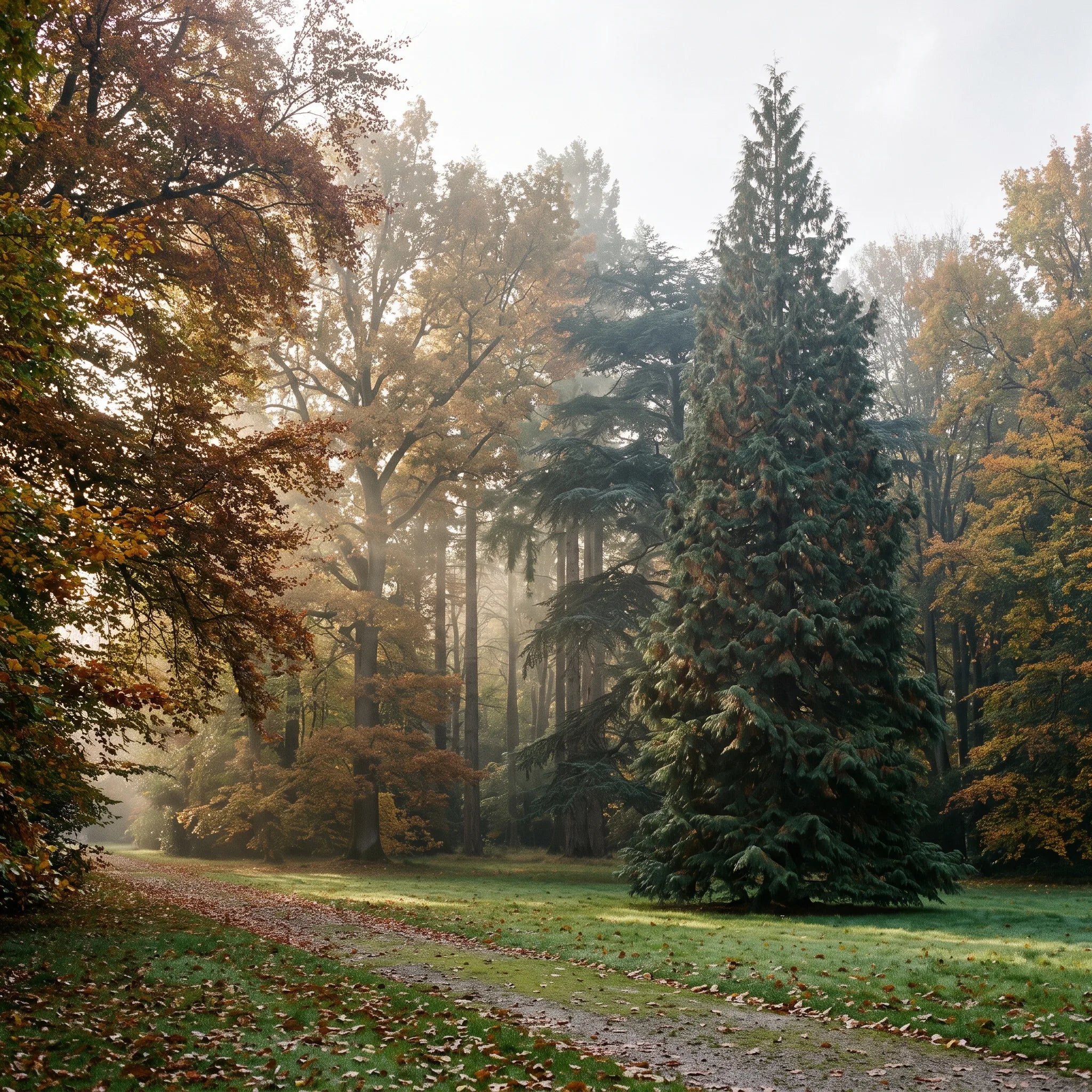
Thuja plicata
Western red cedar, giant arborvitae, giant cedar (not to be confused with true cedars), Lobb's thuja: this tree is the “tree of life” of the peoples of the North American Pacific coast, who made absolutely everything from it—dugout canoes, longhouses, totem poles, cordage, and clothing woven from bark. Its rot-resistant wood explains this central role.
Characteristics:
-
Fast growth: 30 to 60 cm per year in temperate climates, reaching up to 50 metres in favourable conditions.
-
Evergreen foliage: very dense, glossy green scales that release a balsamic fragrance when crushed.
-
Rot-resistant wood: naturally resistant to decay without treatment and highly valued for outdoor carpentry.
-
Very hardy: it tolerates temperatures down to -25 °C.
Precautions:
- Its foliage is not edible and may cause irritation with prolonged contact: wear gloves when carrying out heavy hedge pruning.
- Allow for its mature size and growth rate: as a hedge, it requires regular annual pruning to remain manageable.
Sowing advice:
-
Exposure: full sun to partial shade.
-
Soil: light, well-drained, preferably acidic to neutral, and above all kept cool—it comes from the rainy forests of the Pacific and appreciates atmospheric humidity. It tolerates drought well once established, but suffers during very dry summers in its early years.
-
Method: 30 to 60 days of cold stratification is necessary. Then sow on the surface or barely covered, in spring or autumn, in a pot or nursery bed.
Planting advice:
- Transplant in full sun or partial shade. For a hedge, space plants 80 cm to 1 m apart; as a specimen, allow plenty of room.
Care advice:
- Water regularly during the first year; afterwards, it becomes highly drought-resistant.
- Prune once or twice a year for a dense hedge. Never cut into bare old wood: unlike yew, it will not regrow from it.
Beneficial combinations:
- At its base, it welcomes woodland plants that appreciate light shade and cool conditions: ferns, heather, or foxglove.
Benefits for biodiversity:
- Its very dense, evergreen foliage provides winter shelter and nesting sites valued by birds, when deciduous hedges are bare.
- As a windbreak, it creates a sheltered microclimate that benefits the entire garden behind it.
Uses:
- Evergreen hedges, plant screens, windbreaks, or as a specimen. Its rot-resistant, lightweight, fragrant wood is sought after for cladding, decking, and outdoor furniture.
Symbolism:
A sacred tree of the Indigenous peoples of the American Northwest, who literally call it the “tree of life”, it symbolises protection, purification, and resilience.
Harvesting your own seeds:
Harvest the small upright cones as soon as they turn brown in autumn, before they open, then let them dry in a warm place: their scales will open on their own and release the winged seeds. See storing your seeds.
Commitment to Quality: at SemiSauvage - Permaculture, we grow and select our seeds with respect for all living things as our guiding principle. Based near the Volcanoes of Auvergne, we choose open-pollinated, non-hybrid varieties, tested for their germination rate, carefully sorted and packaged, with no chemical treatments. Our belief: to give gardeners back the ability to sow, year after year, seeds that truly belong to them.
Sales reserved for amateur gardeners seeking quality and authenticity.