Capsicum annuum
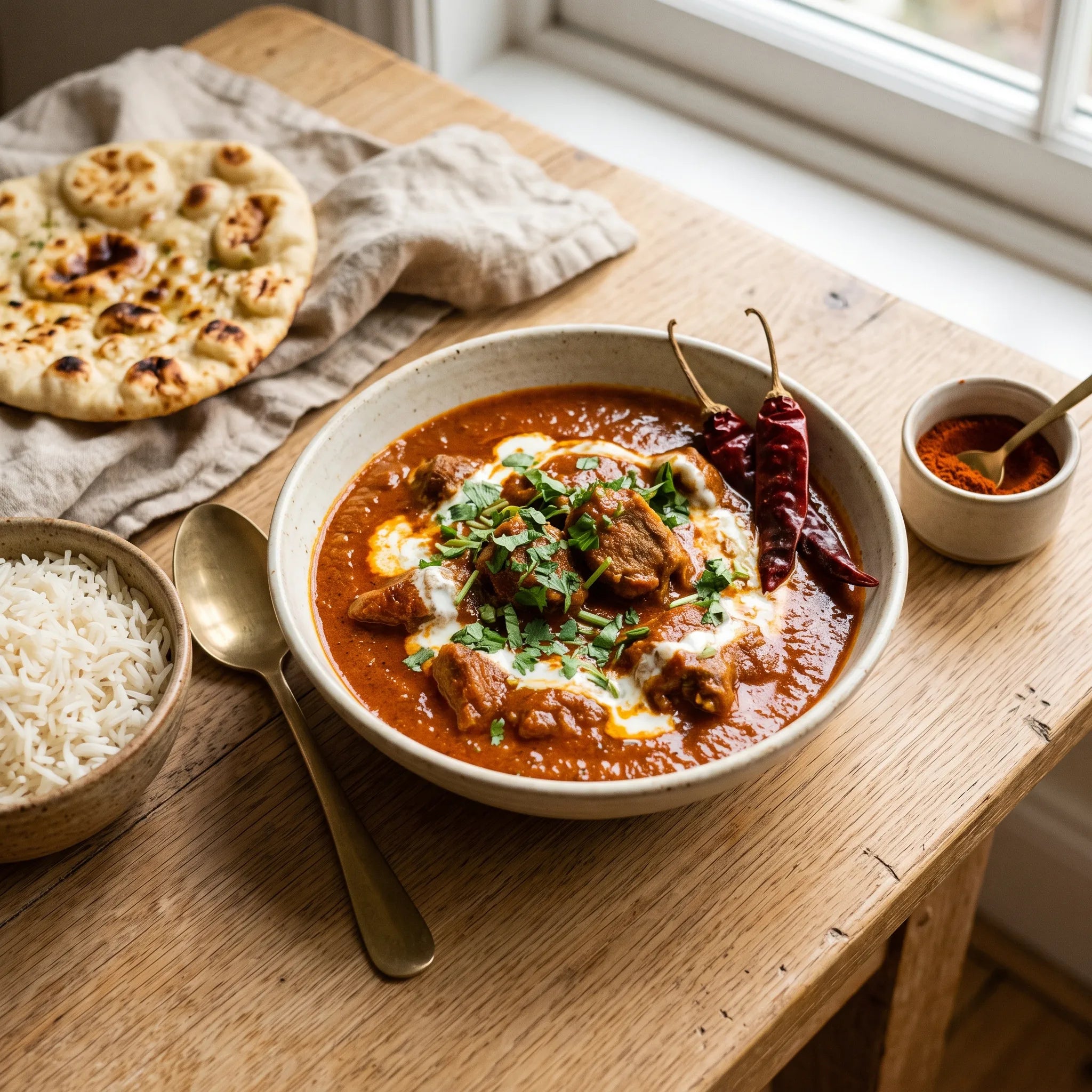
Kashmiri pepper, Kashmiri mirch: in Indian cuisine, it holds a special place. It is not used to burn but to dye — it is what gives tandoori chicken and rogan josh their deep red color, without making the dish inedible. A mild variety whose entire value lies in its color.
Characteristics:
-
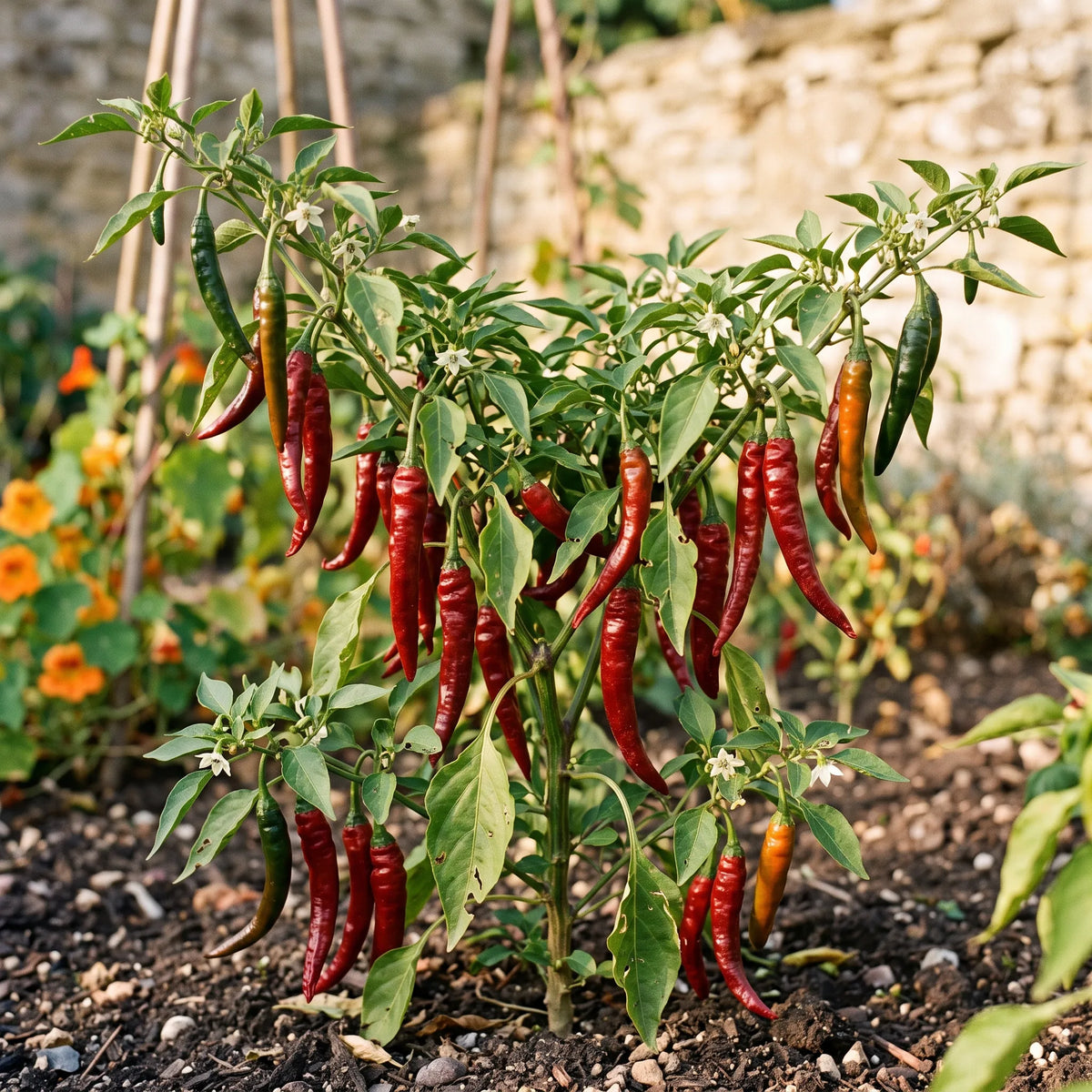
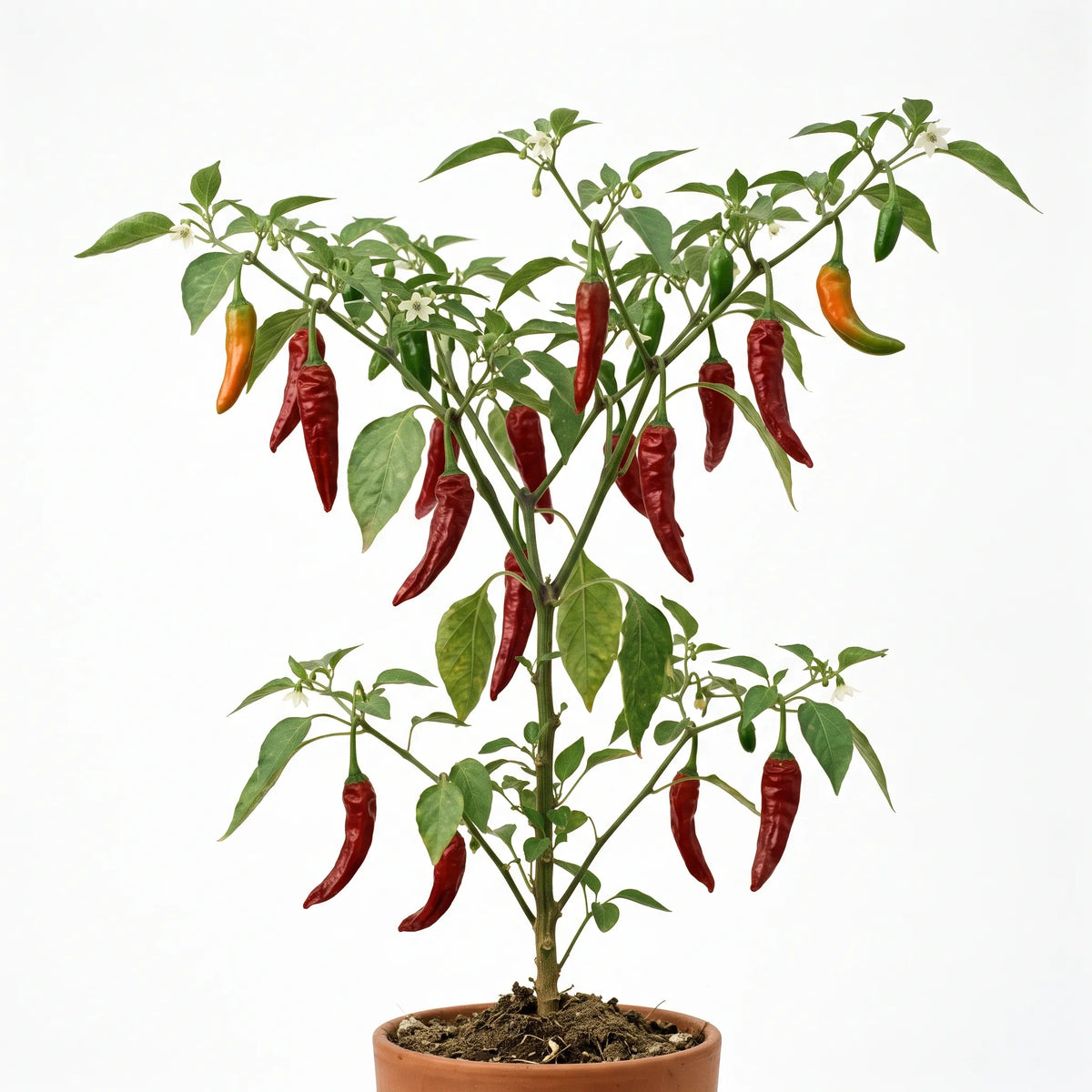
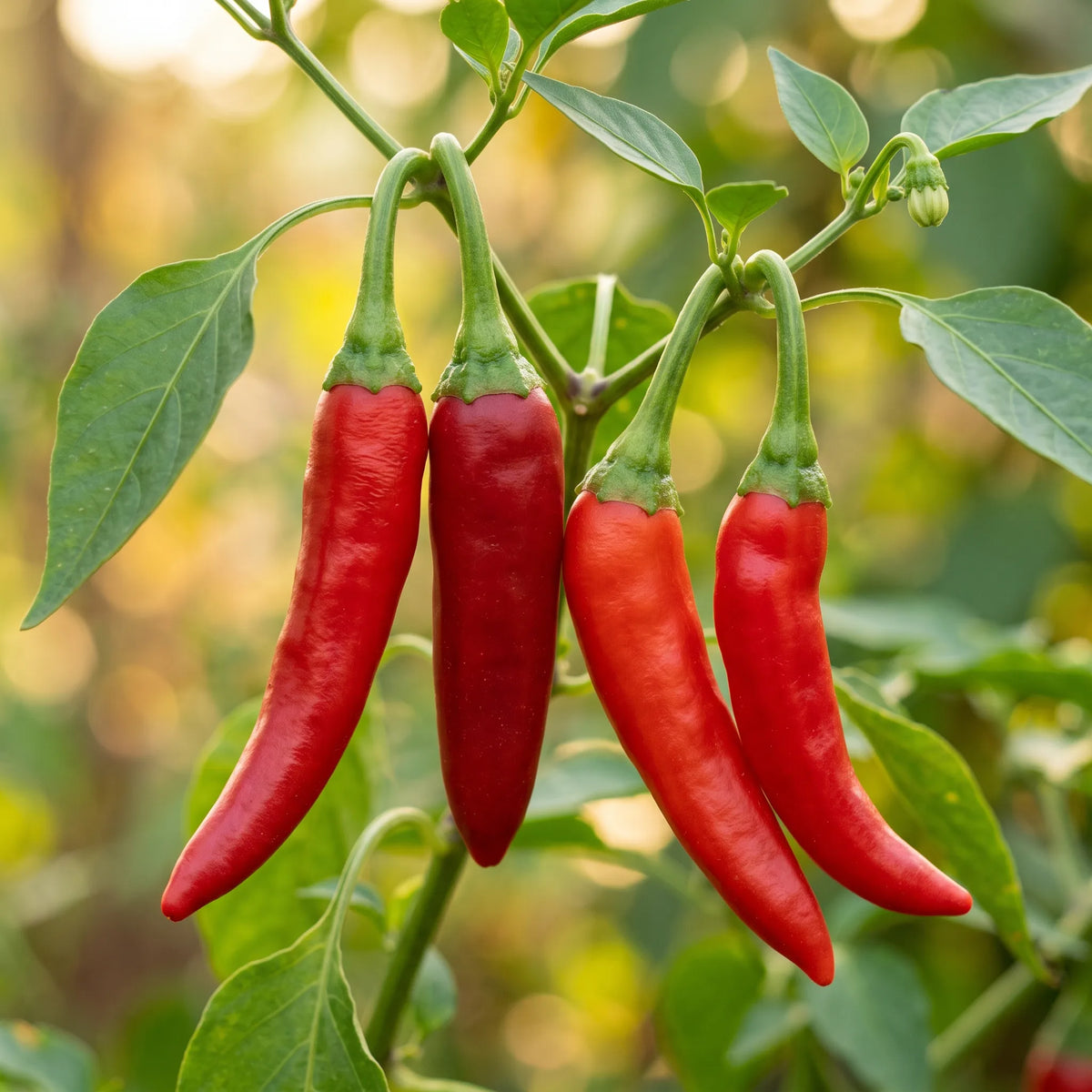
Intense red: its richness in pigments makes it an outstanding natural coloring agent.
-
Mild: only 1,000 to 2,000 Scoville units — a gentle heat, accessible to everyone.
-
Thin, wrinkled fruits: 6 to 8 cm, with fairly thin skin that dries easily.
-
Powder variety: it is when dried and ground that it truly comes into its own.
Precautions:
- Although mild, it contains capsaicin: avoid touching your eyes after handling it and wash your hands with soap.
- When grinding the dried fruits, protect yourself: chili dust irritates the eyes and respiratory tract.
Sowing advice:
-
Exposure: full sun and warmth, in a sheltered position.
-
Soil: rich, loose and well-drained, enriched with compost. It does not tolerate standing water.
-
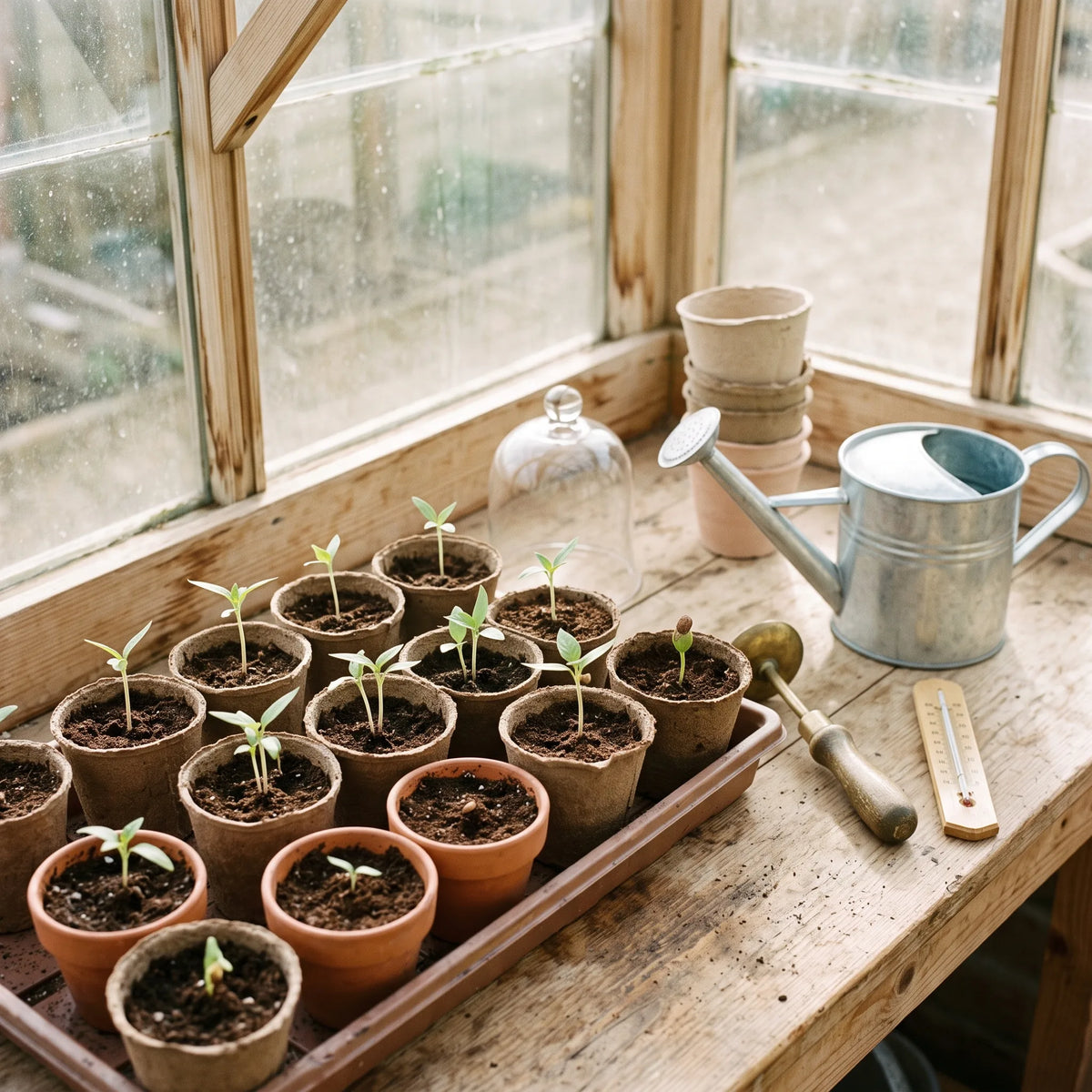
Method: sow from February to April under cover or indoors, at 20-25 °C — below 18 °C, the seeds will not germinate. Allow 2 to 3 weeks for germination. See how to sow your seeds.
Planting advice:
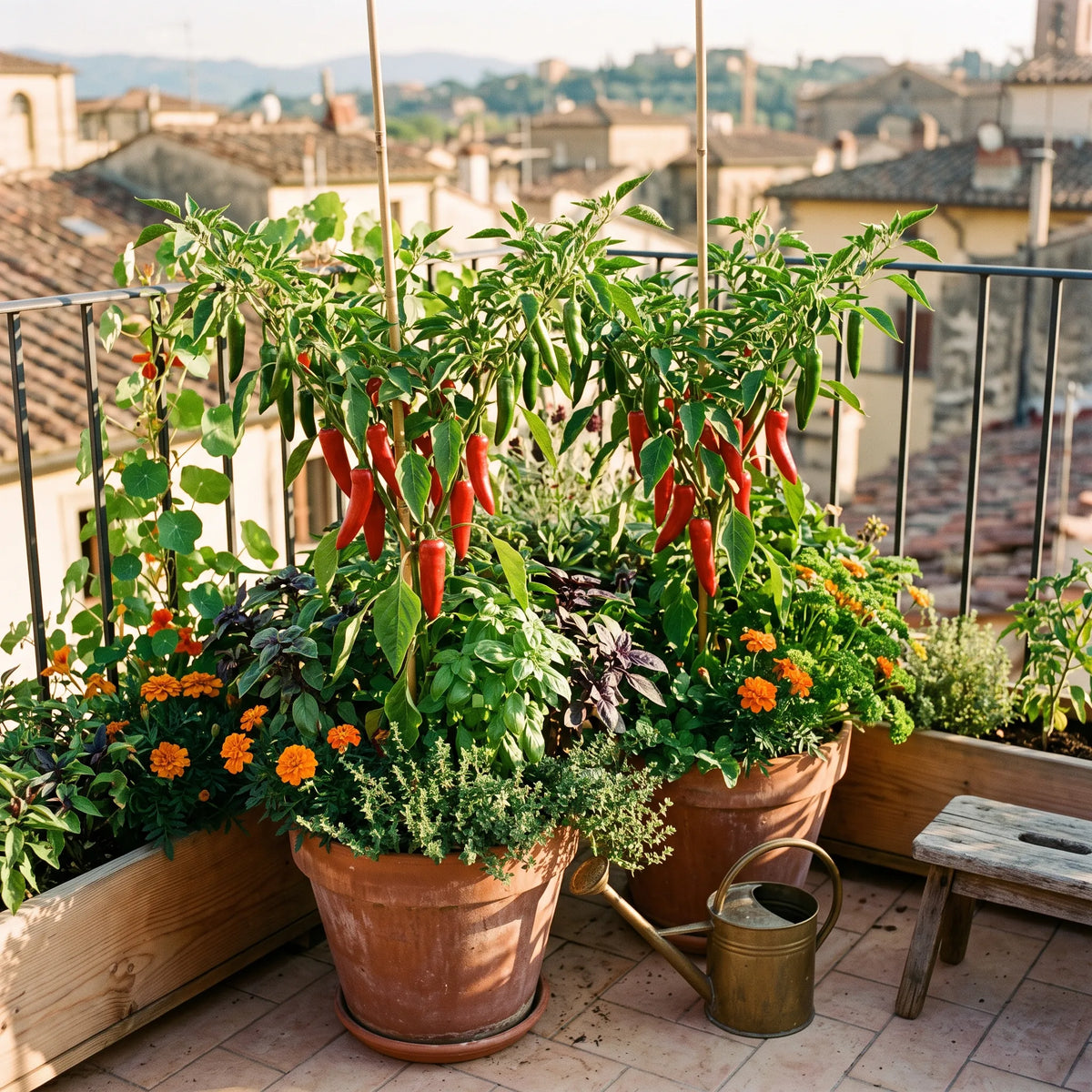
- Transplant into the ground when nighttime temperatures stay above 12 °C, spacing plants 50 cm apart. Unlike tomatoes, do not bury the stem: a buried crown will rot.
Care advice:
- Water regularly at the base, without excess. Mulch to maintain soil moisture.
- Bring the pot indoors before frost: the pepper is perennial and will regrow the following spring.
Harvest advice:
- Let the fruits turn completely red on the plant: for this variety, full maturity is essential for color intensity, which is its main attraction.
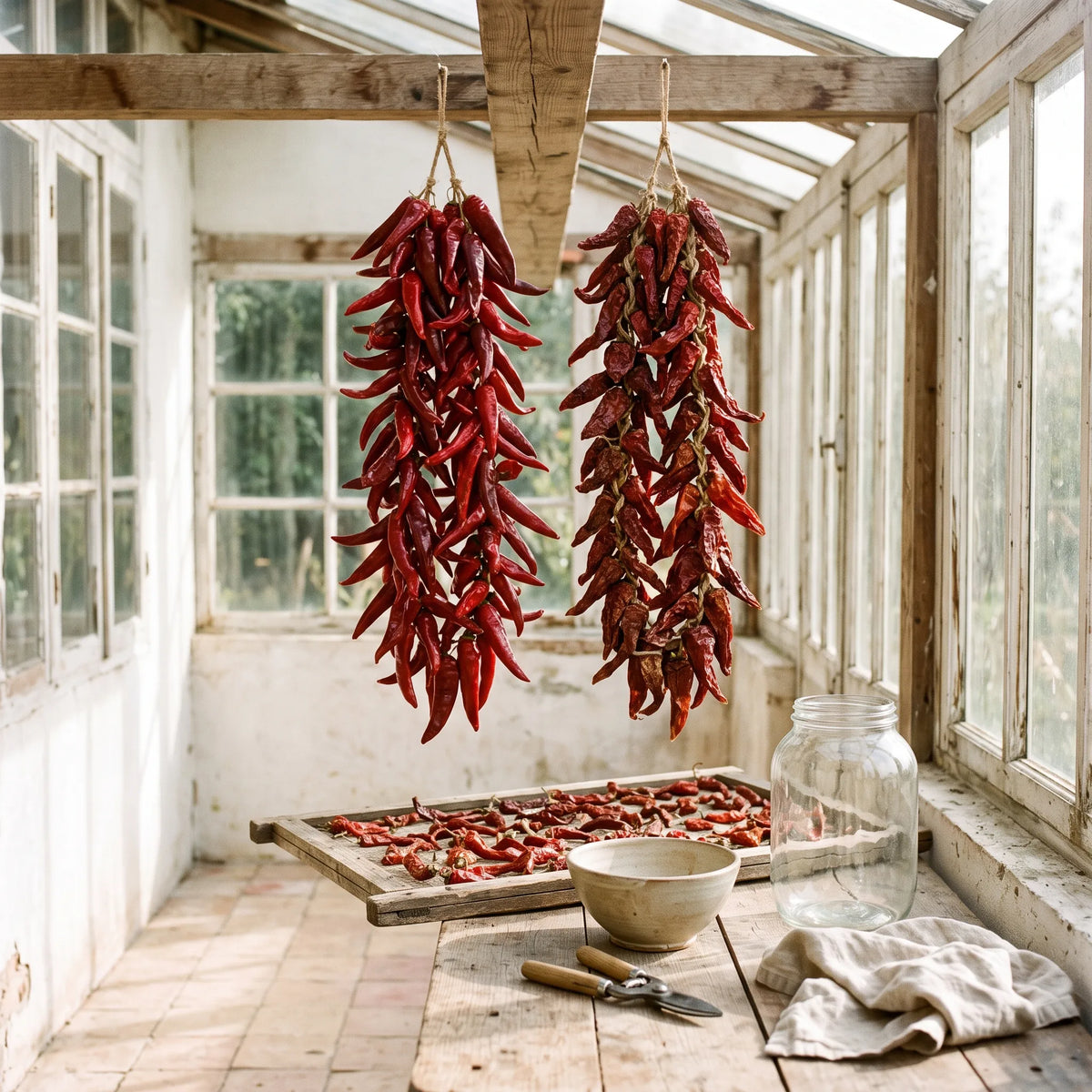
- Dry them strung together in a garland in a dry, well-ventilated place, away from direct light — sunlight fades the pigments. Grind them once they are brittle.
Beneficial companion plants:
Benefits for biodiversity:
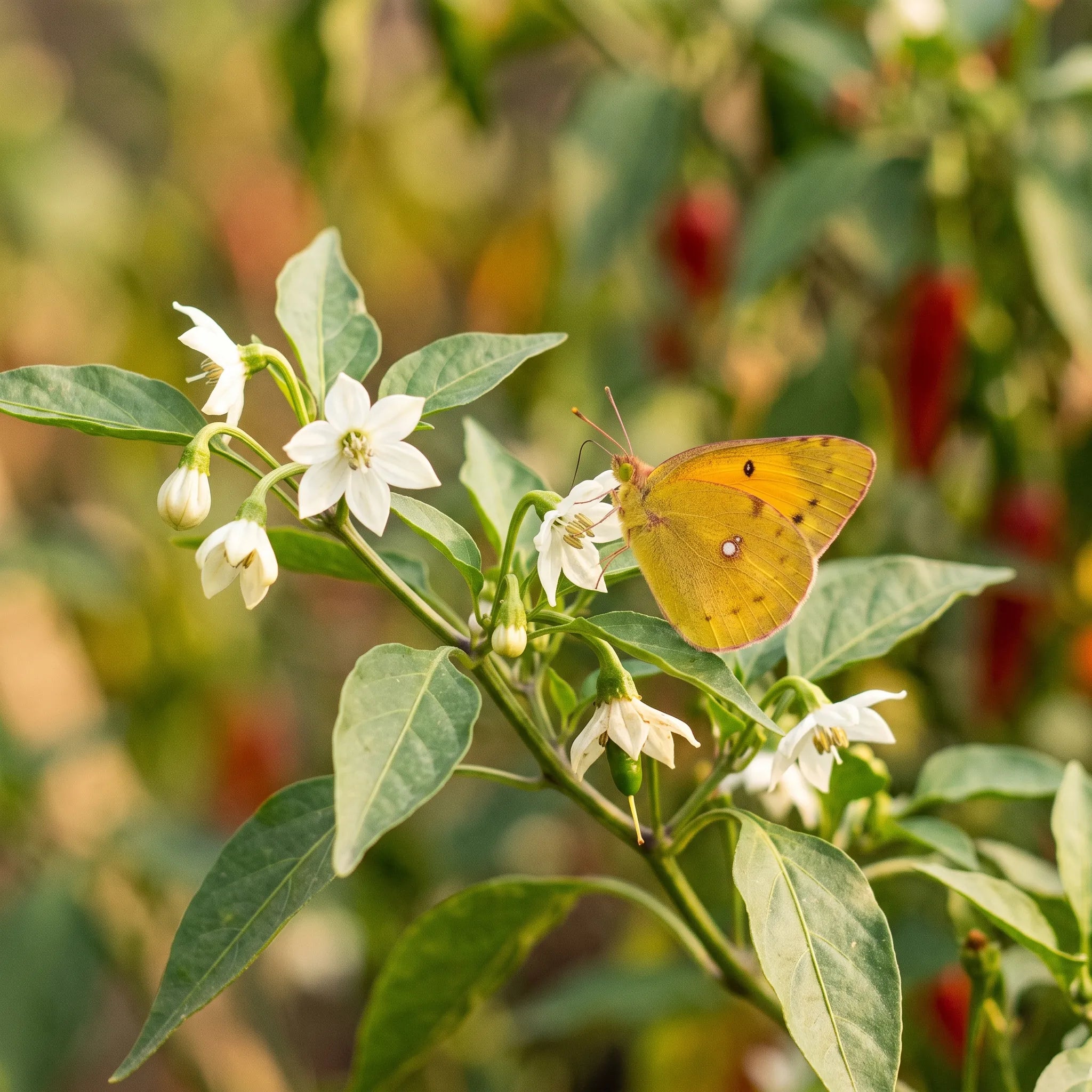
- Its white flowers are visited by bees and bumblebees all summer.
- A little-distributed, true-breeding variety in Europe, its cultivation broadens the diversity of the vegetable garden. See our rare and unusual seeds.
Uses:
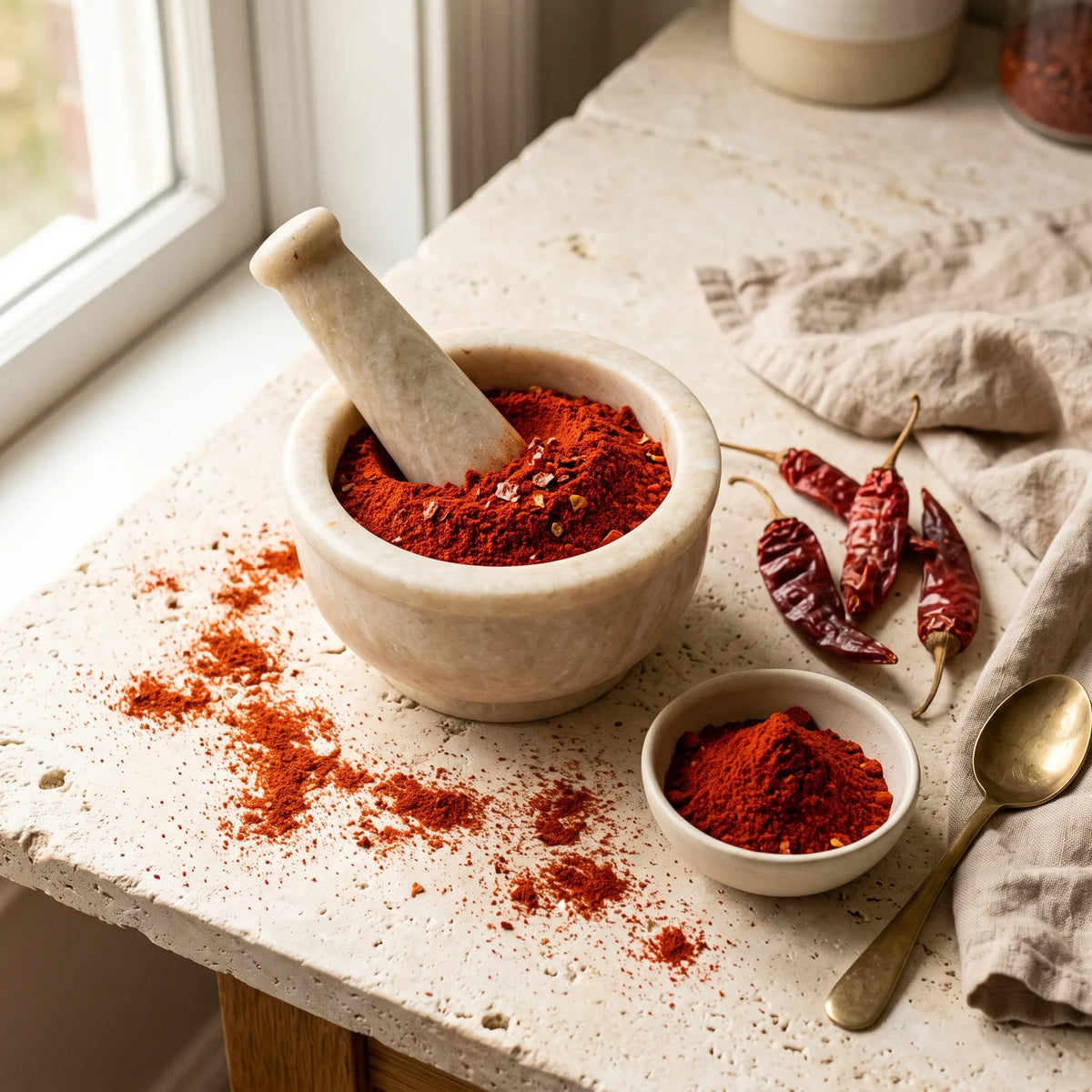
- Dried and ground in curries, tandooris, marinades and sauces. It provides a beautiful red color without the heat — very useful for cooking spicy dishes without the burn.
Harvesting your own seeds:
Open a fully red fruit, remove the seeds, rinse them and dry them flat. Be careful: peppers cross-pollinate easily. Isolate your seed plant if you are also growing hot varieties, or their heat may appear in your offspring. See saving your seeds.
Commitment to Quality: at SemiSauvage - Permaculture, we grow and select our seeds with respect for living things as our guiding principle. Based near the Auvergne Volcanoes, we choose true-breeding, non-hybrid varieties, tested for their germination rate, carefully sorted and packaged, with no chemical treatment. Our conviction: to give gardeners back the ability to resow, year after year, seeds that truly belong to them.
The color of Indian curries, without the burn.