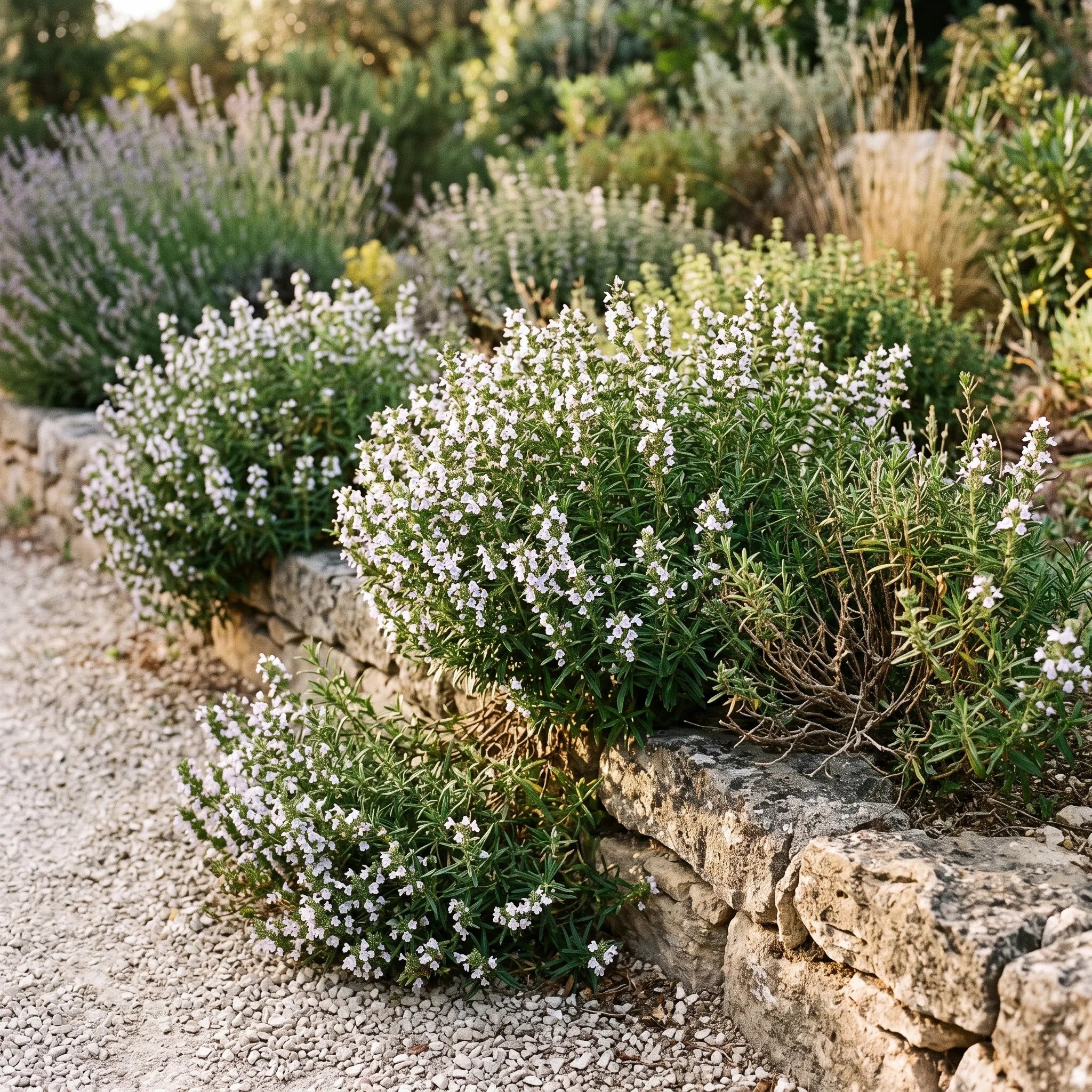
Satureja montana
Winter savory, perennial savory, donkey pepper, or pèbre d'ai in Provençal: this last name says everything about its peppery, powerful flavor. It is the traditional herb for legumes—broad beans, beans, and lentils—which it flavors and makes easier to digest, a use confirmed by centuries of peasant cooking.
Characteristics:
-
Peppery flavor: pungent and intense, it enhances meats, vegetables, and marinades.
-
Woody perennial: unlike annual savory, it returns every year and can be harvested almost year-round.
-
Bee-friendly flowering: small white or lilac flowers from July to October.
-
Drought-resistant: once established, it requires very little maintenance.
Sowing advice:
-
Exposure: full sun, without exception.
-
Soil: poor, dry, stony, or calcareous, and above all well drained. Like thyme, it is far more likely to die from winter moisture than from cold. In heavy soil, plant it on a mound or in a pot. Do not enrich the soil: lean soil concentrates its aroma.
-
Method: sow directly in the ground after the last frosts, or start in a seed tray indoors a few weeks earlier. Sow on the surface or barely cover: the tiny seeds need light to germinate. See how to sow your seeds.
Planting advice:
- Transplant with 30 cm spacing, in a rock garden, dry border, stone wall, or large pot.
Care advice:
- Water moderately, allowing the soil to dry out between waterings. No fertilizer.
- Prune lightly every spring without cutting into the old wood—it will not regrow. This prevents the plant from becoming bare in the center.
Harvesting advice:
- Pick the leaves throughout the season for fresh or dried use. For drying, harvest just before flowering, in dry weather, when the concentration of essential oils is at its highest.
Beneficial pairings:
- Planted near beans and broad beans, it is traditionally reputed to help keep black aphids away—the classic pairing in the peasant garden, useful both in the garden and on the plate. It also forms a Mediterranean planting with thyme and lavender. See our vegetable pairings for the kitchen garden.
Benefits for biodiversity:
- Its late flowering, from July to October, attracts bees and butterflies during a season when resources are becoming scarce.
- Its semi-evergreen foliage provides winter shelter for beneficial insects.
- Its drought resistance makes it a good candidate for water-saving gardens.
Uses:
- Indispensable in legume dishes, it also enhances grilled meats, game, stuffings, marinades, and goat cheeses—in Provence, it is traditionally rubbed onto tommes.
- A traditional medicinal plant, used in herbal medicine since antiquity. See our medicinal plants to sow.
Harvesting your own seeds:
Let a few flowering tops dry completely on the plant, then rub them over a container and winnow them: the seeds are extremely fine. See how to store your seeds.
Our commitment to Quality: at SemiSauvage - Permaculture, we grow and select our seeds with respect for living things as our guiding principle. Based near the Volcanoes of Auvergne, we choose reproducible, non-hybrid varieties, test them for germination rates, and sort and package them carefully, without any chemical treatment. Our conviction: to give gardeners back the ability to reseed, year after year, with seeds that truly belong to them.
The Provençals’ donkey pepper, the indispensable companion to beans.