Rudbeckia hirta
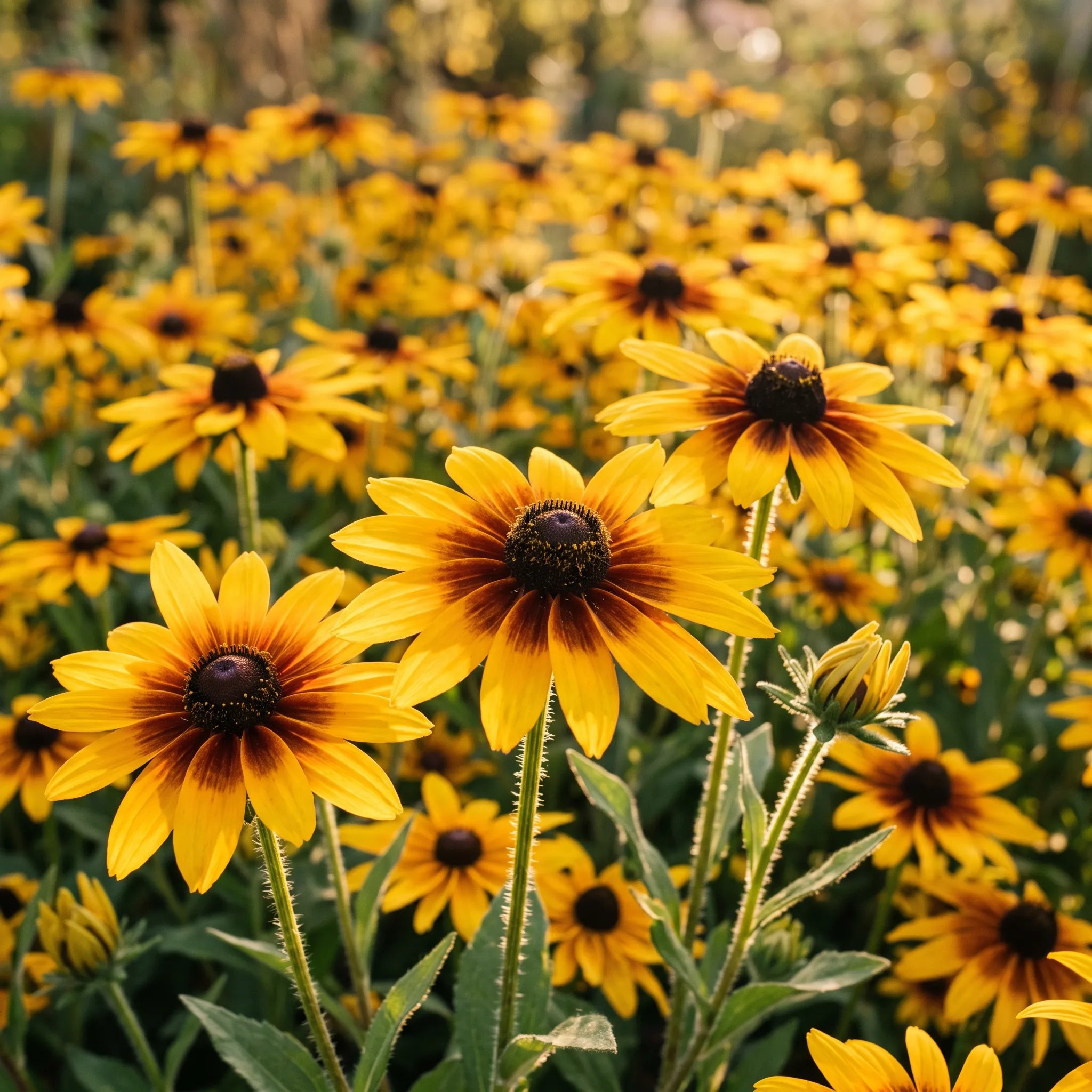
Hairy rudbeckia, yellow daisy, black-eyed Susan: this last name, translated from the English Black-eyed Susan, comes from the contrast between its golden-yellow petals and its raised brown-black center. The genus is named after Olof Rudbeck, a Swedish botanist and Linnaeus’s mentor, who was honored in this way.
Characteristics:
-
Generous flowering: large, bright-yellow daisies with a nearly black-brown center, from summer until the first frosts.
-
Very easy to grow: ideal for beginners, it requires little maintenance and tolerates variable conditions.
-
Excellent cut flower: remarkable vase life, lasting more than a week.
Sowing advice:
-
Exposure: sunny, essential for abundant flowering.
-
Soil: truly any type, even poor and stony, as long as it is well drained. It tolerates drought once established and mainly dislikes stagnant moisture in winter. No fertilization is needed.
-
Method: sow in spring, in pots under cover from March or directly in the ground after the last frosts, on the surface without covering: the seeds need light to germinate. See how to sow your seeds.
Care advice:
- Water regularly during dry periods in the first year. Remove faded flowers to extend flowering into autumn.
- Do not cut everything back in autumn: leave a few dried centers standing for wildlife and winter structure.
Beneficial combinations:
Benefits for biodiversity:
- Its broad, flat flower head provides an ideal landing strip: bees, hoverflies, and butterflies flock to it all summer.
- Its centers, left standing in winter, feed goldfinches and tits, which come to collect the seeds.
Uses:
- Beds, shrub borders, beside walls, or flower meadows. Excellent in summer bouquets.
Harvesting your own seeds:
Leave the centers to turn brown and dry completely on the plant, then crumble them over a container to release the small black seeds. Rudbeckia also readily self-seeds in the garden. See how to store your seeds.
Commitment to Quality: at SemiSauvage - Permaculture, we grow and select our seeds with respect for all living things as our guiding principle. Based near the Auvergne Volcanoes, we choose open-pollinated, non-hybrid varieties, tested for their germination rate, carefully sorted and packaged, without any chemical treatment. Our conviction: to give gardeners back the ability to resow, year after year, seeds that truly belong to them.
Add these rudbeckia seeds to your garden for an explosion of color from summer through autumn.