Daucus carota
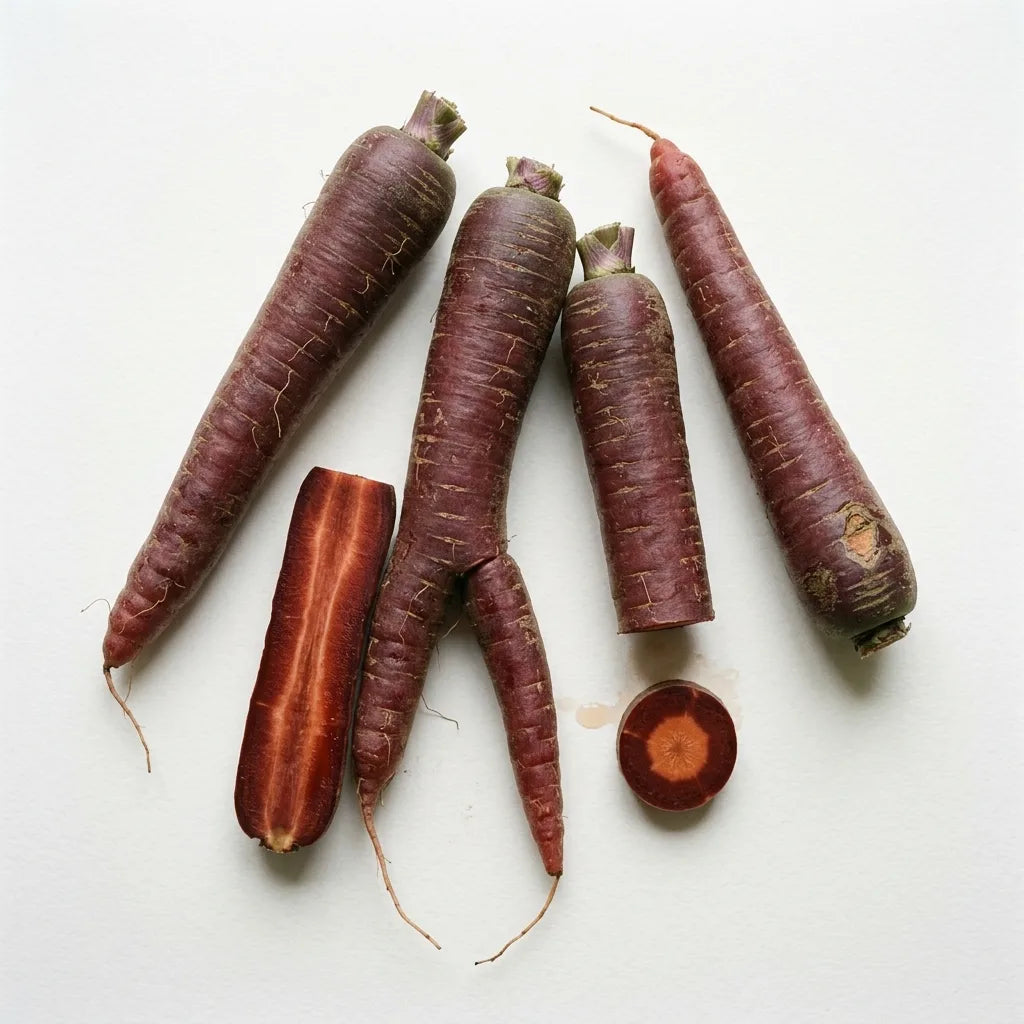
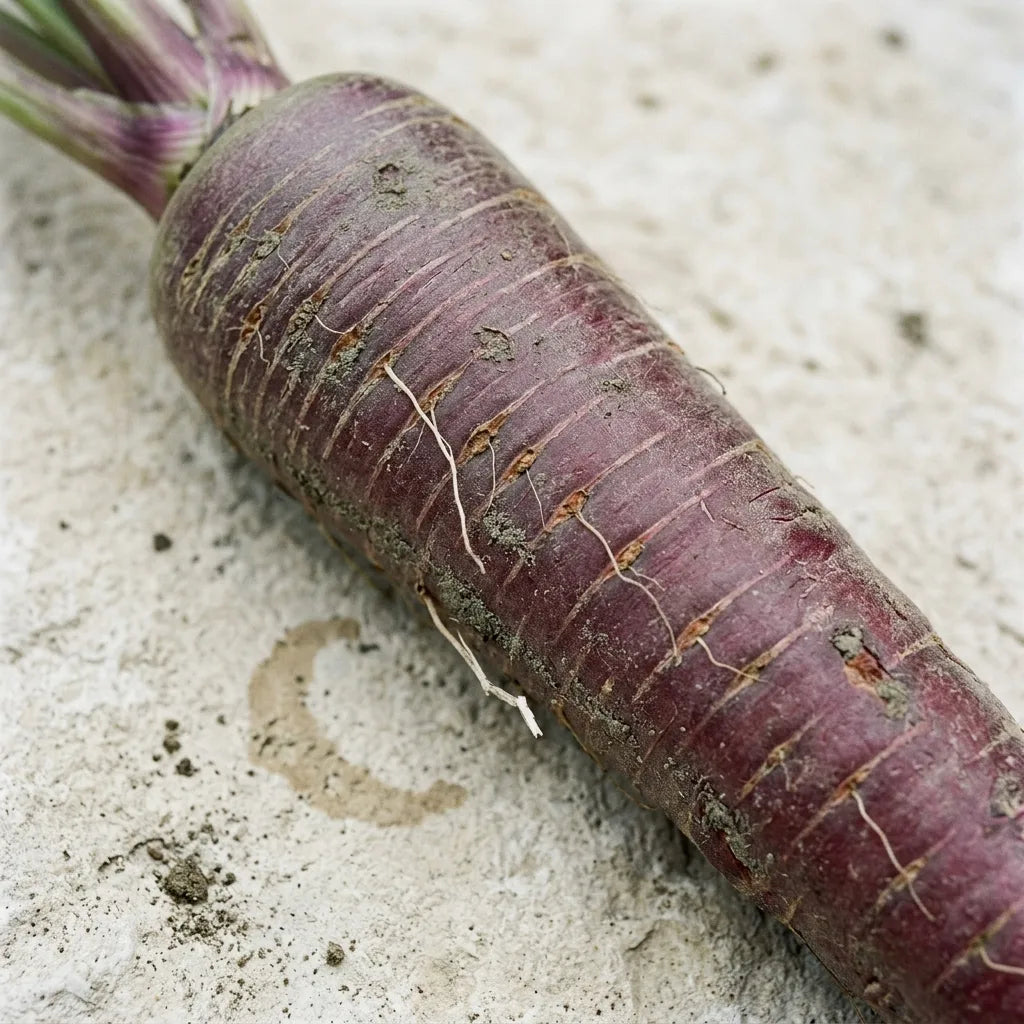
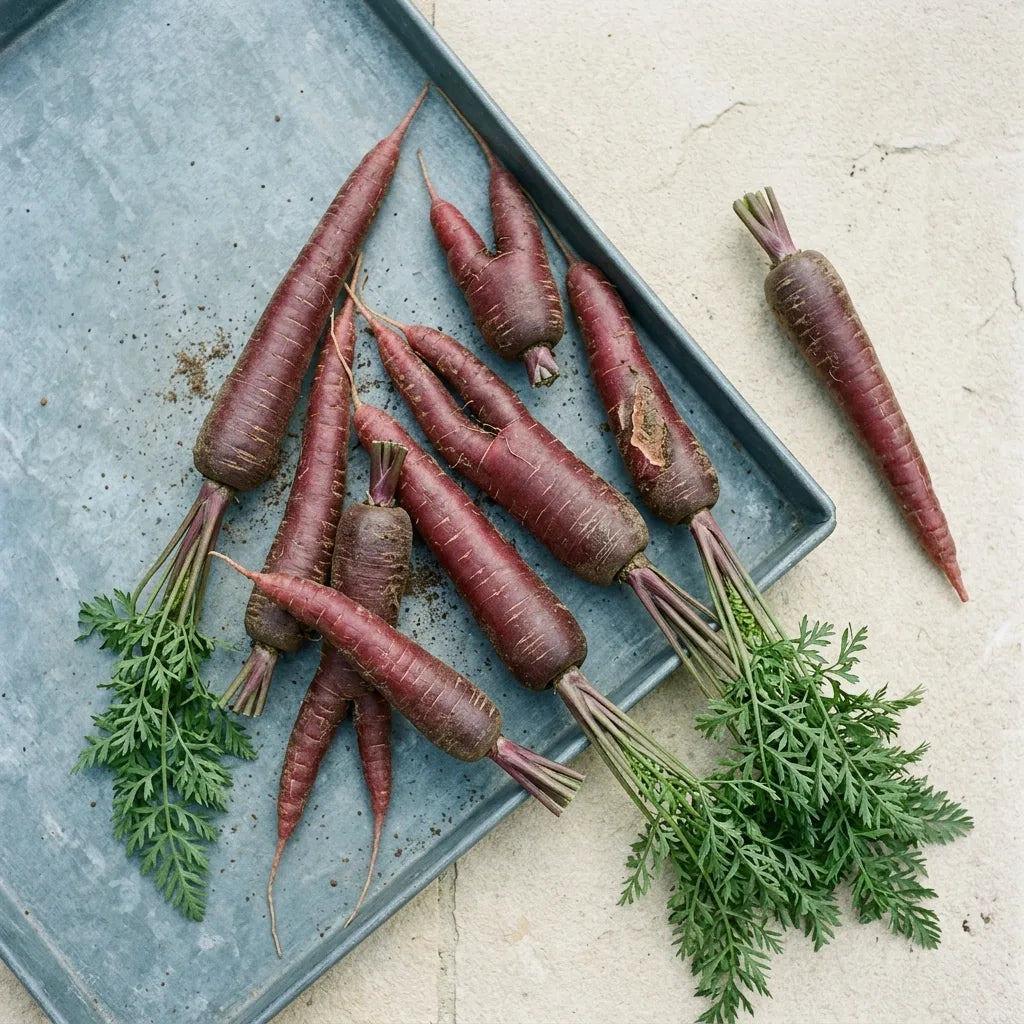
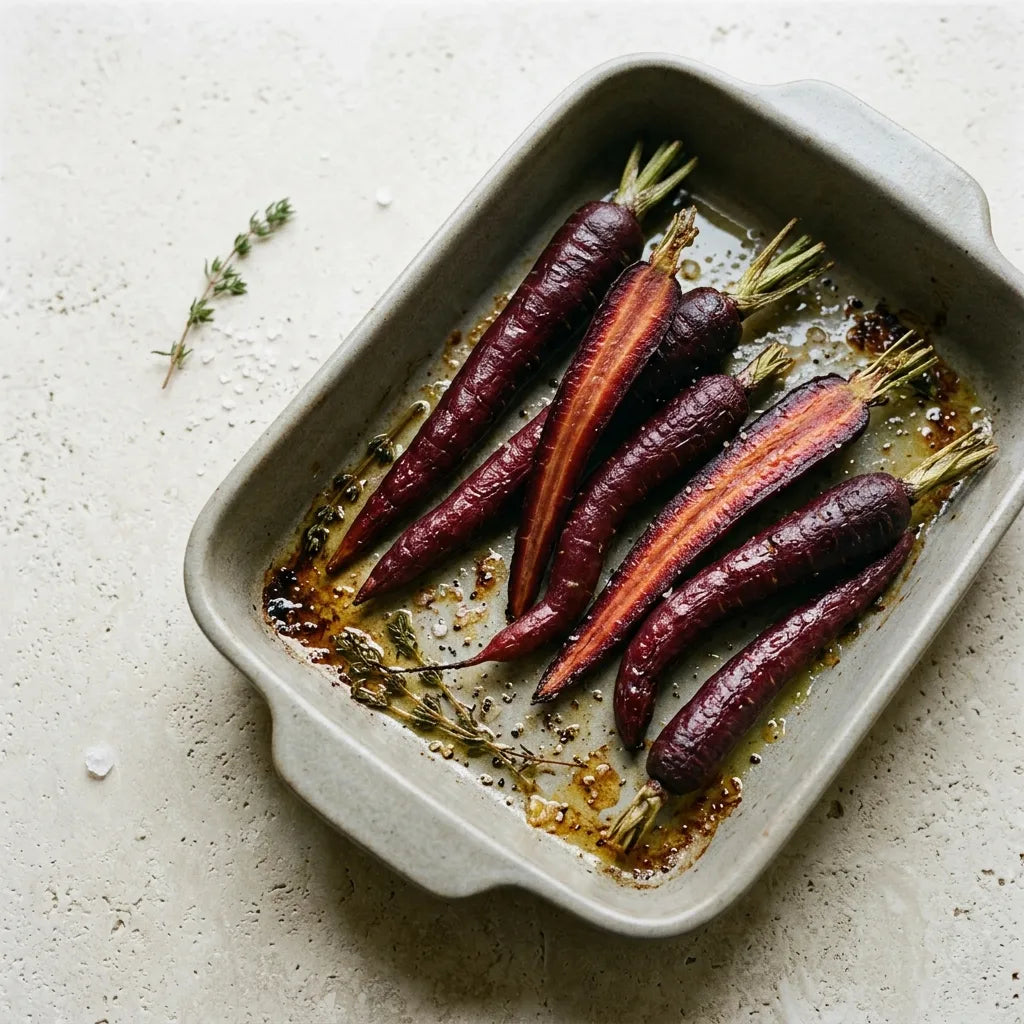
Long Blood Red Carrot, improved blood-red carrot: this old 19th-century variety has a rare quality among colored carrots—its deep red-orange flesh retains its color after cooking, whereas most purple varieties fade in the pan. That is reason enough for it to have made a comeback in chefs’ kitchens.
Characteristics:
-
Long-lasting color: purplish-red skin and deep red-orange flesh that withstands cooking.
-
Highly flavorful: more intense and sweeter than classic carrots.
-
Long, conical root: approximately 20 cm, evenly tapering to a blunt tip—it really is a long carrot and requires deep soil.
- Reproducible heirloom variety.
Sowing advice:
-
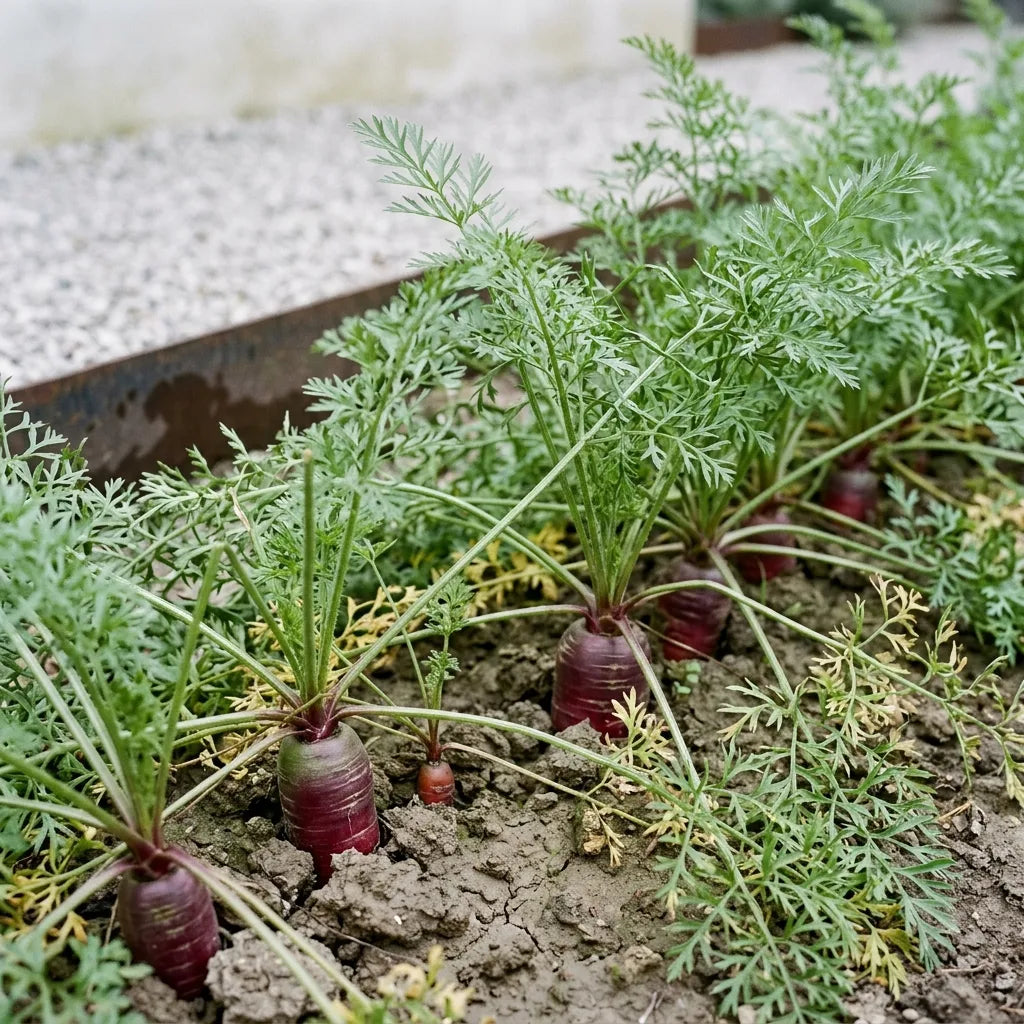
Exposure: sunny.
-
Soil: loose, light, deep and free of stones—its 20 cm root must be able to grow straight down, even more so than the Nantes, which is a half-long variety. In heavy or stony soil, grow it on a mound or in a deeply loosened bed. Avoid fresh manure, which causes the roots to fork.
-
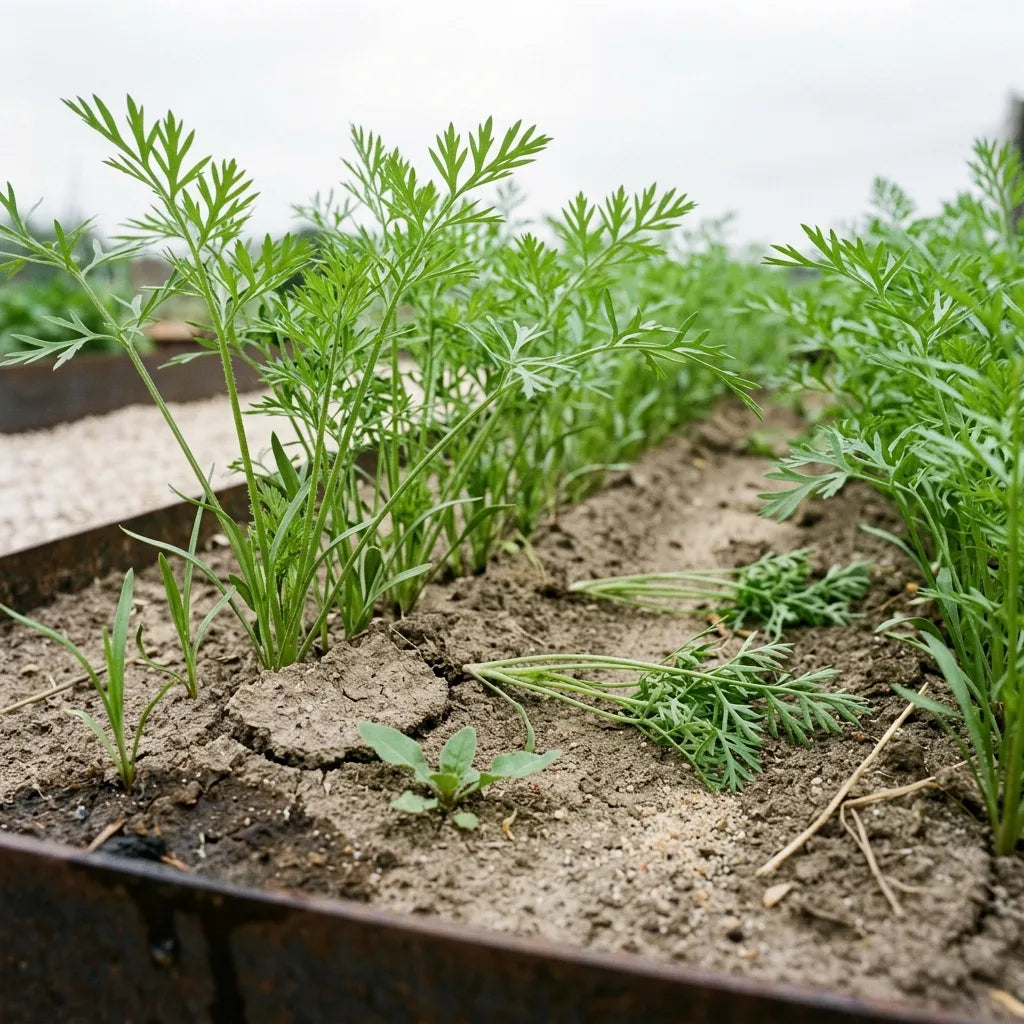
Method: for early carrots, sow from mid-February to the end of March under cover or in a cold frame. For summer harvests and storage carrots, sow from early May to the end of June. Always sow directly in place, in 1 cm-deep furrows: carrots do not transplant well. See how to sow your seeds.
Care advice:
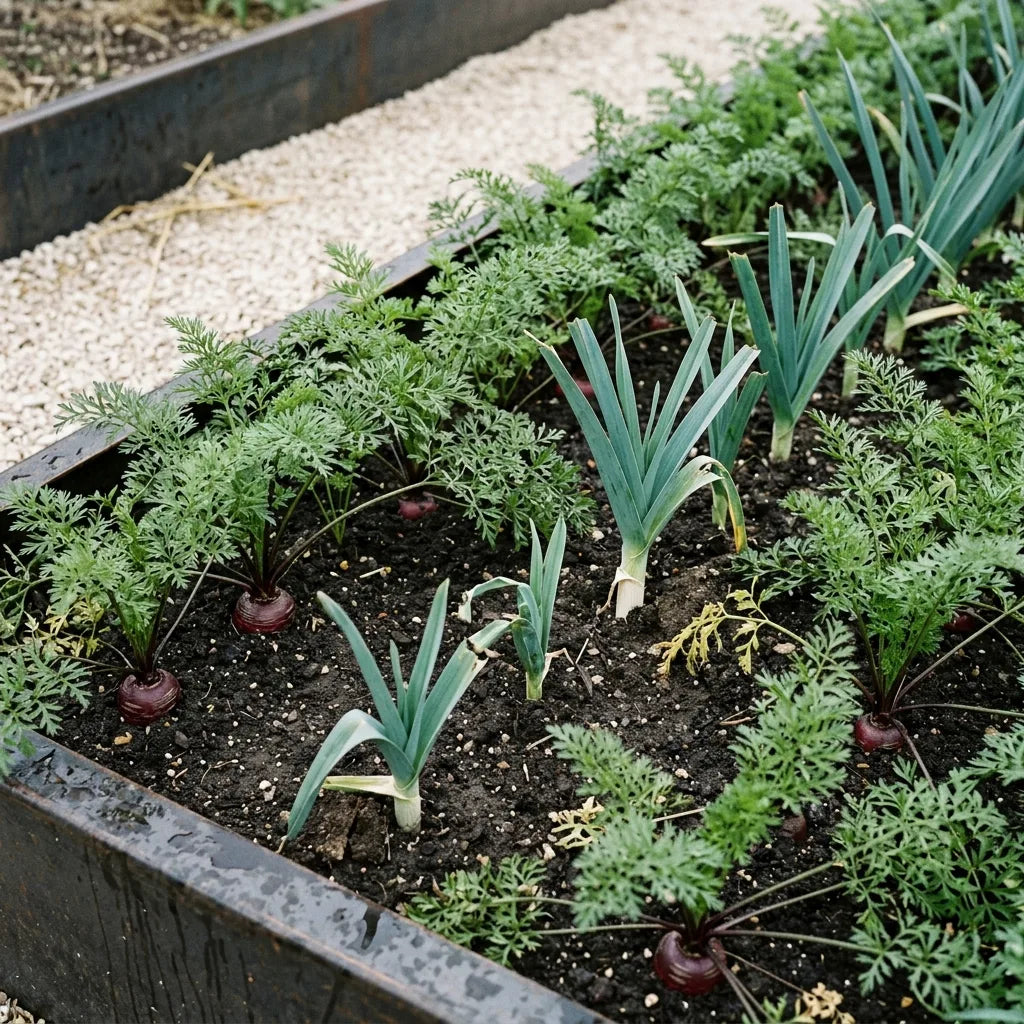
- Thin to 5 cm, preferably in the evening, immediately removing the waste, whose smell attracts carrot flies.
- Water regularly and evenly to prevent the roots from splitting.
Harvest advice:
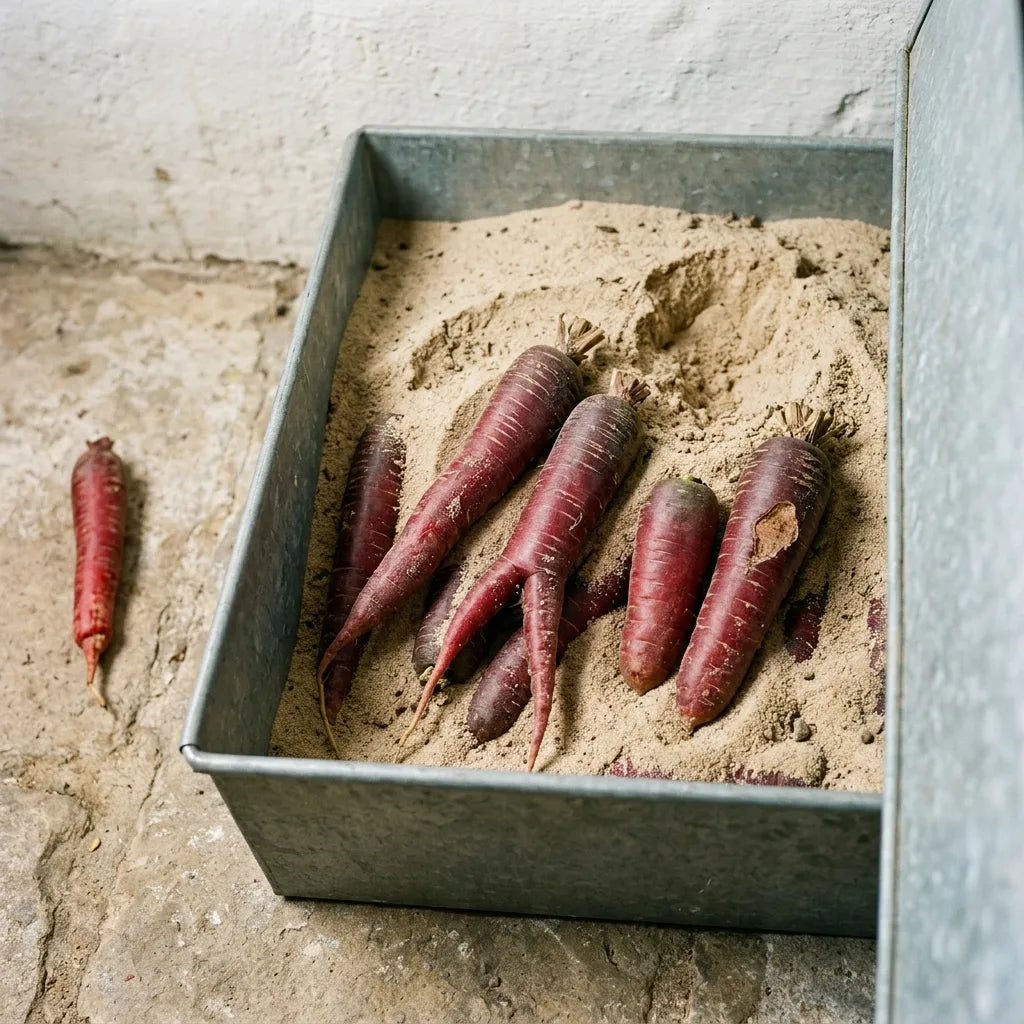
- Harvest as needed. Autumn carrots can be stored throughout the winter in a sand clamp, in a cool place.
Beneficial pairings:
Benefits for biodiversity:
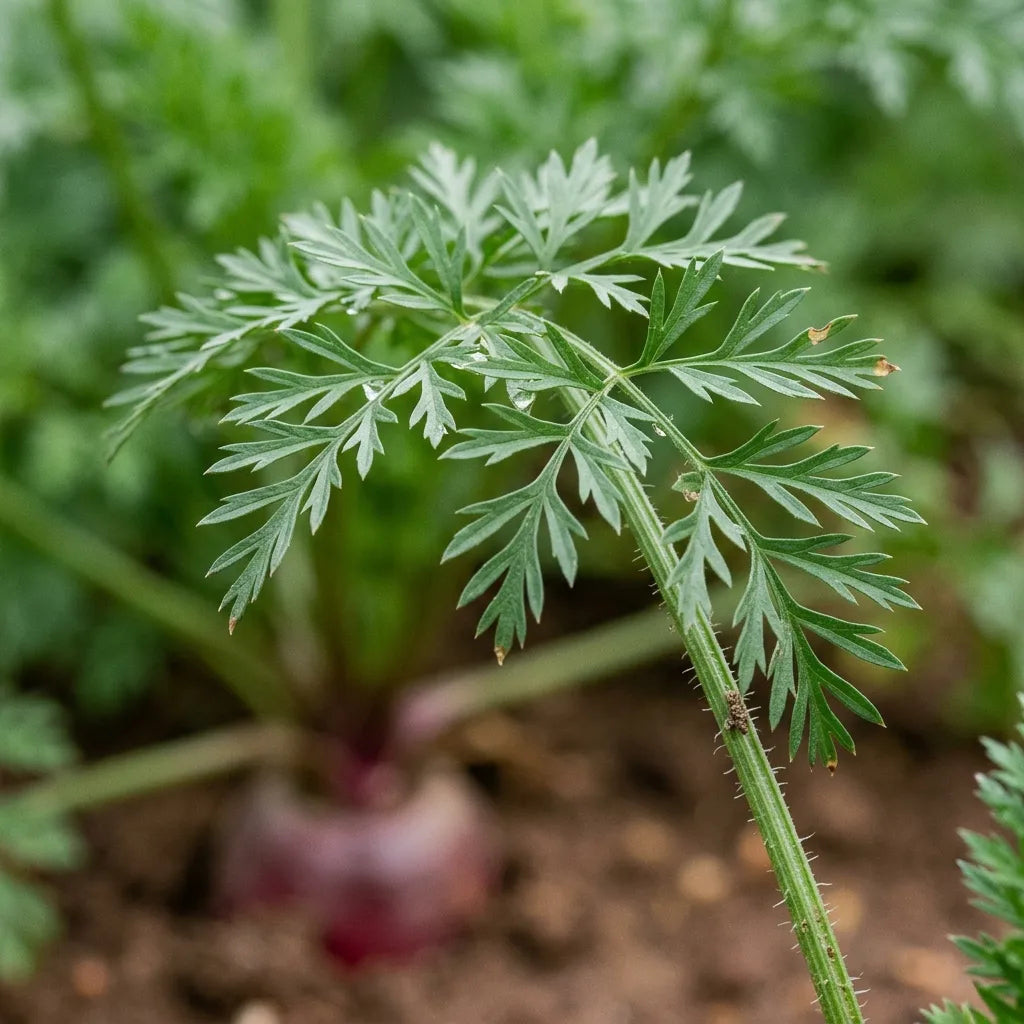
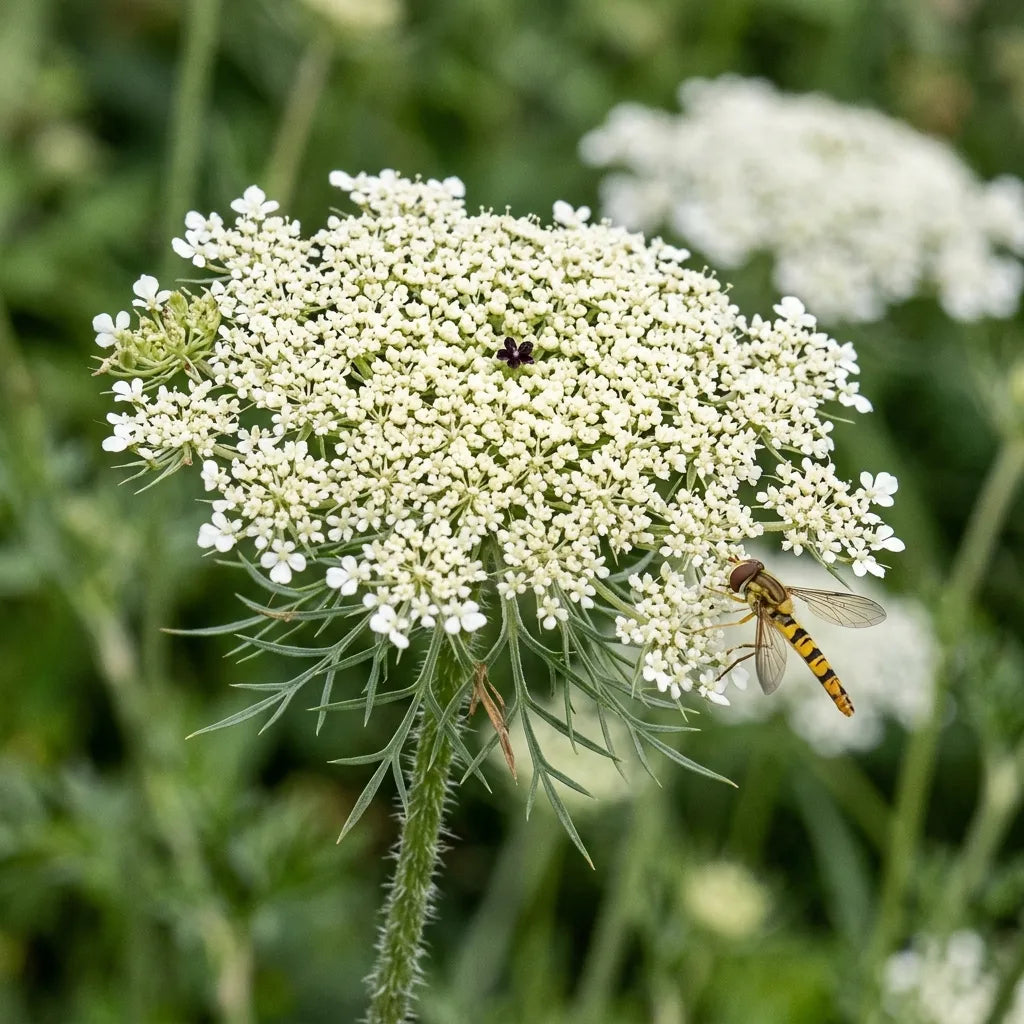
- Leave one plant to go to seed in its second year: its large white umbels attract hoverflies in large numbers, whose larvae devour aphids.
- Like all umbellifers, it is a host plant for swallowtail caterpillars.
Uses:
- Its ability to retain its color when cooked makes it a visual asset: roasted, in a velouté or mashed, it keeps its spectacular color. Excellent raw, grated into a salad.
Harvesting your own seeds:
Leave a few roots in the ground over winter: they will go to seed in their second year. Harvest the umbels when they turn brown and close up into a bird’s-nest shape. Beware of cross-pollination with wild carrot and other varieties. See saving your seeds.
Commitment to Quality: at SemiSauvage - Permaculture, we grow and select our seeds with respect for all living things as our guiding principle. Based near the Auvergne Volcanoes, we choose reproducible, non-hybrid varieties, tested for their germination rate, carefully sorted and packaged, with no chemical treatment. Our belief: to give gardeners back the ability to sow, year after year, seeds that truly belong to them.
An heirloom carrot that keeps its color all the way to the plate.