Cichorium intybus var. foliosum
Early mid-season endive, witloof chicory, chicon: it is probably the only vegetable born from an oversight. Around 1850, a Belgian grower left chicory roots in his cellar; when he returned, they had produced tender white shoots. Endive does not exist in the wild—it is made by the gardener, in two stages.
Characteristics:
-
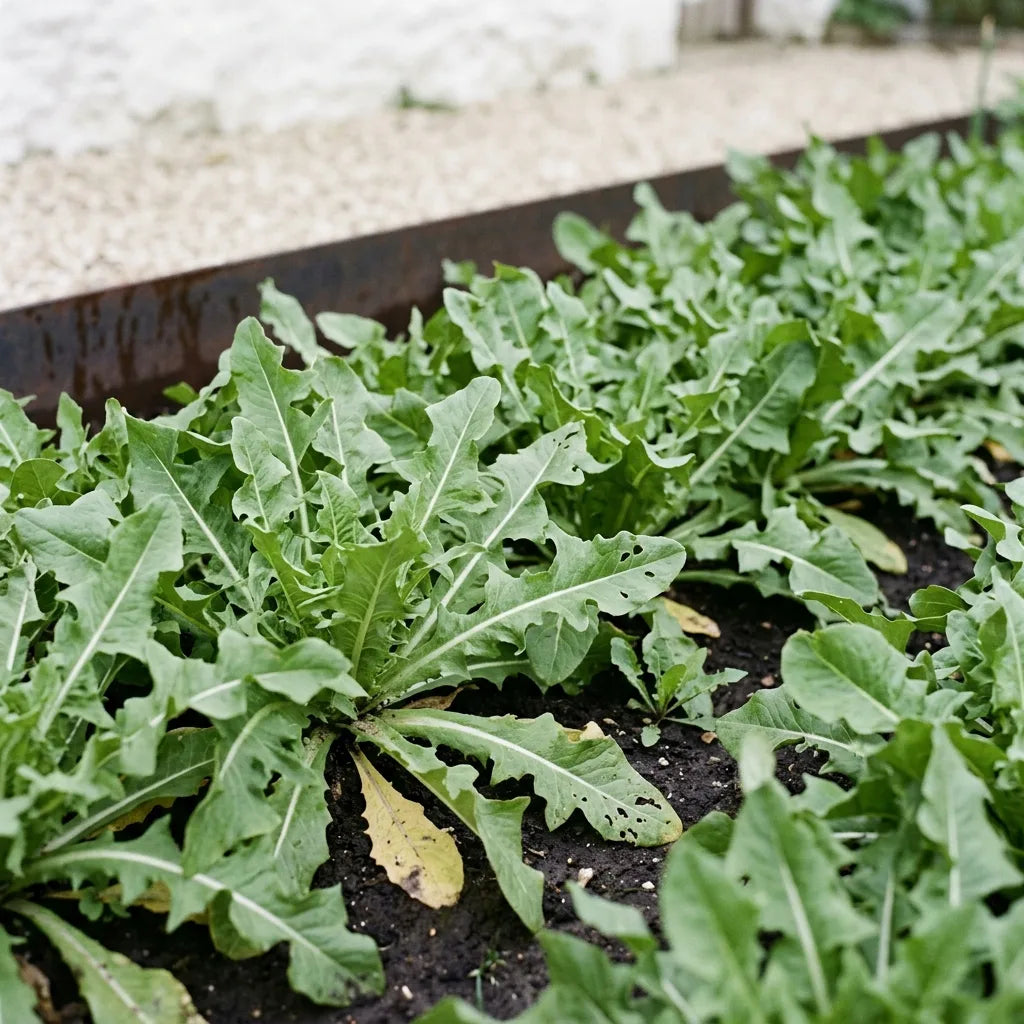
Two-stage cultivation: one season in the vegetable garden to develop the root, followed by forcing in darkness to produce the chicon.
-
Winter harvest: it arrives when the vegetable garden has almost nothing left to offer.
-
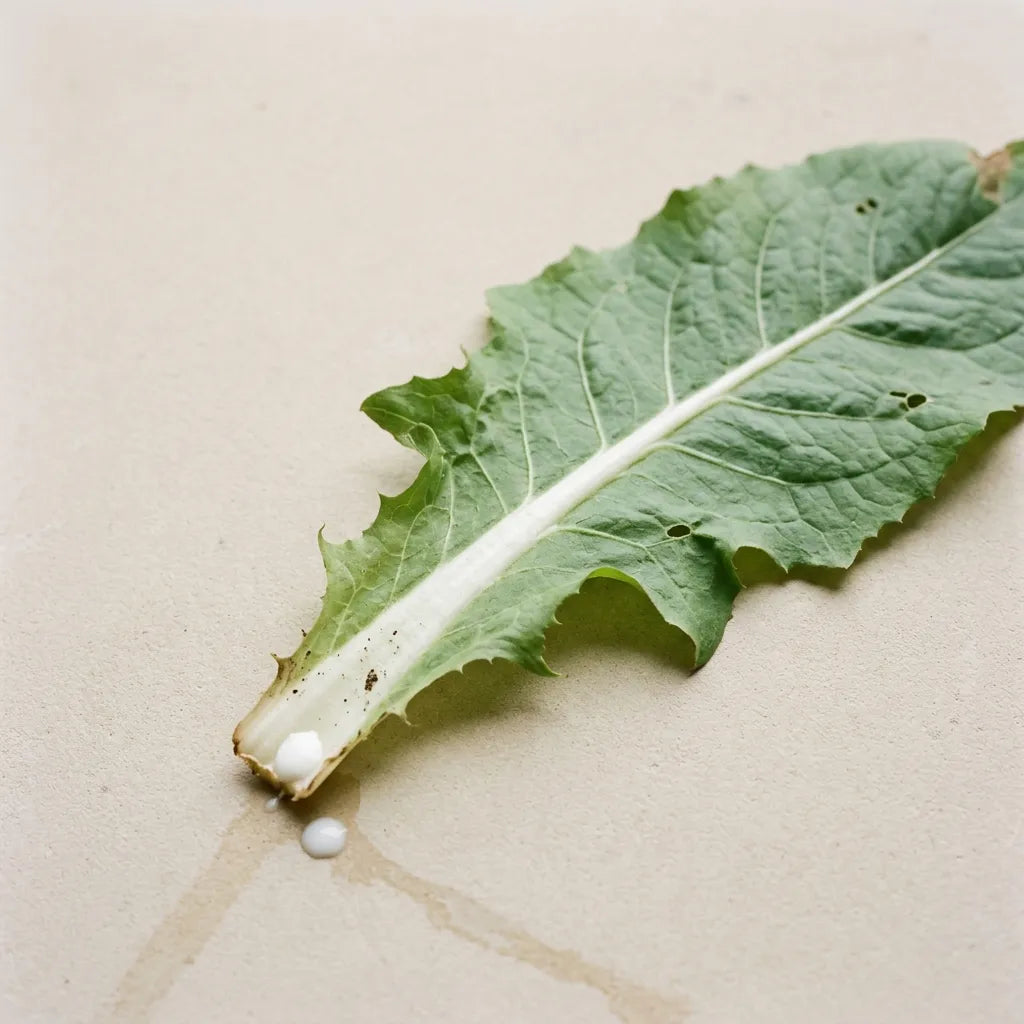
Bitter and crisp: a pronounced bitterness that diminishes with cooking.
-
Demanding but highly rewarding to grow, with a generous harvest as the result.
Sowing advice:
-
Exposure: sunny.
-
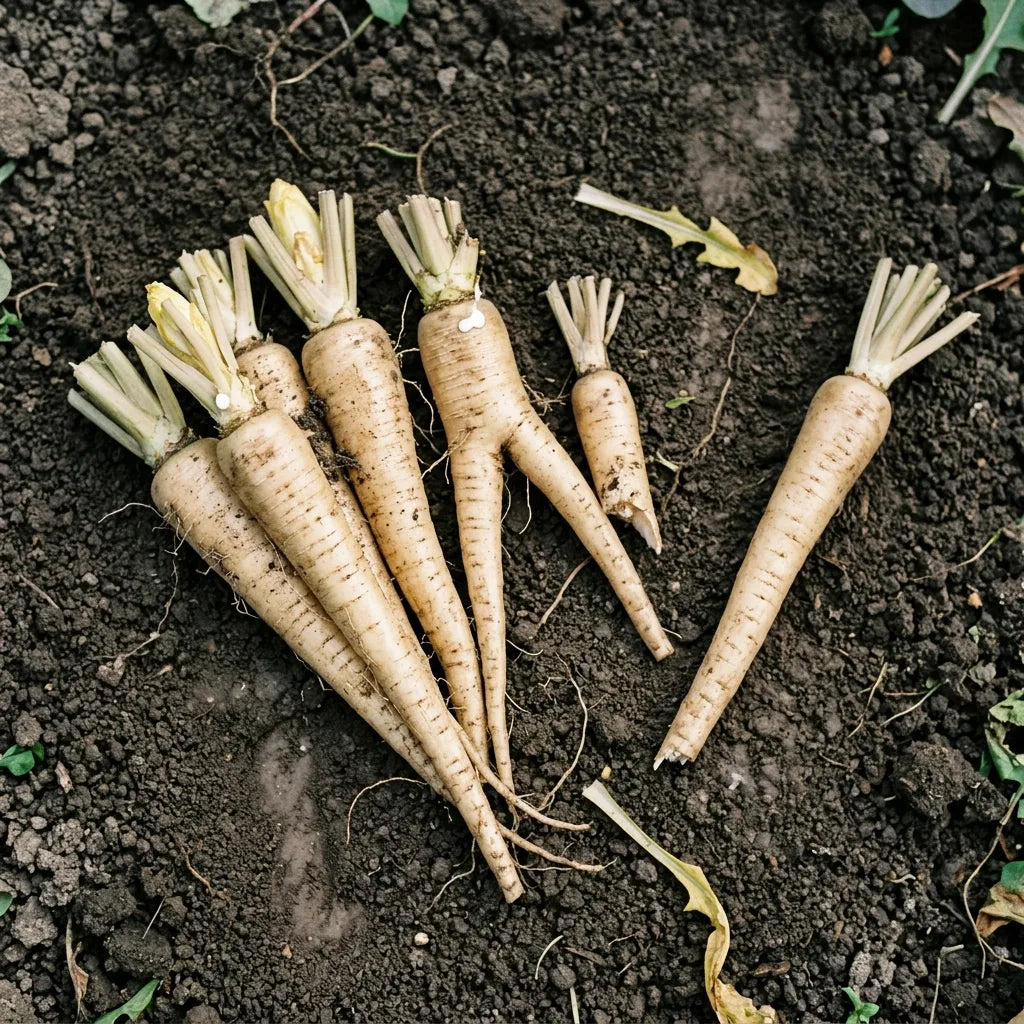
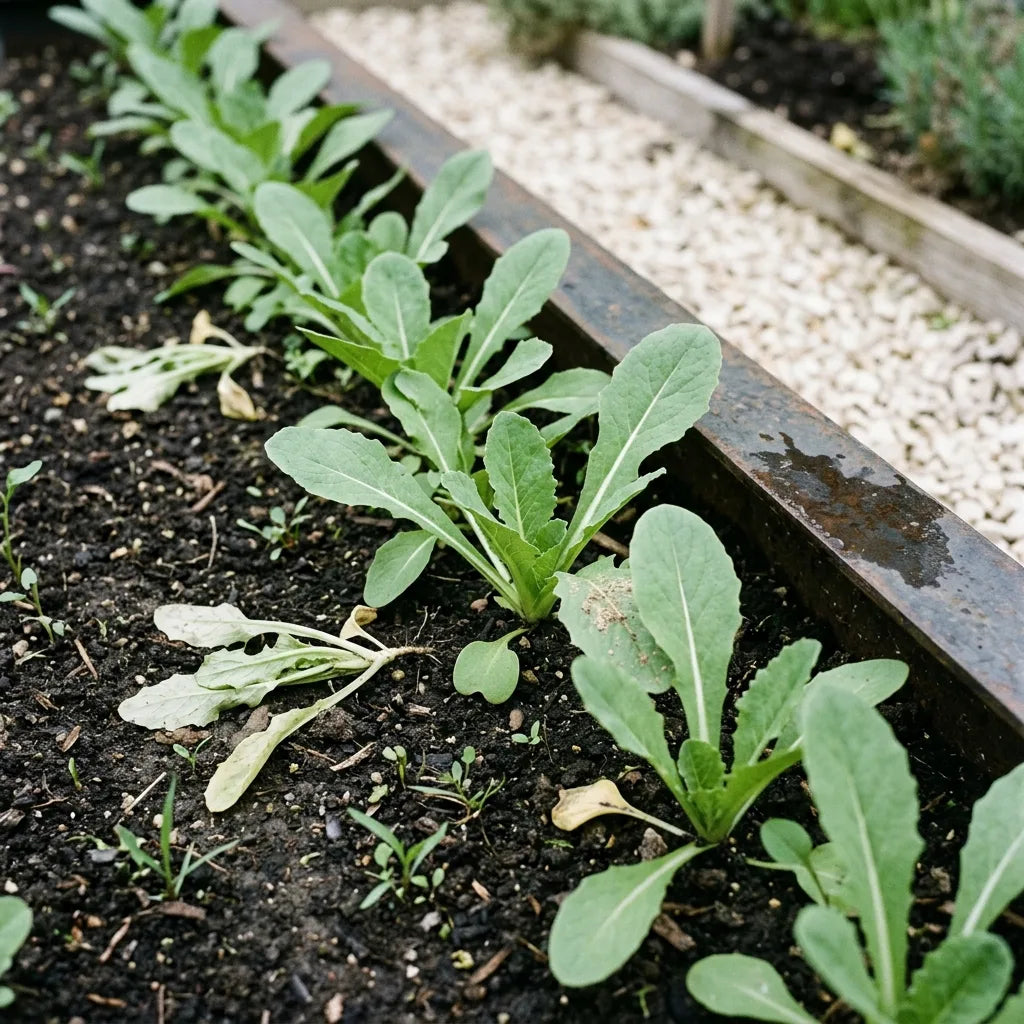
Soil: deep, loose, moist and free of stones—the root must grow straight down 20 to 25 cm. Crucially, do not add fresh manure or rich compost. Over-fertilized soil produces large, hollow roots that force poorly. Endive performs better in poor soil.
-
Method: sow from May to June, directly in place, 1 cm deep in rows 30 cm apart. Sowing too early causes the plants to bolt. See how to sow your seeds.
Care advice:
- Thin to 10 cm apart. Water moderately: the aim is a firm root, about the size of a carrot, not abundant foliage.
- Hoe regularly throughout the season.
Harvesting and forcing advice:
-
Step 1 — lifting: in October–November, after the first light frosts, lift the roots and cut the foliage to 2 cm above the crown, without damaging the center. Leave them to dry for a few days.
-
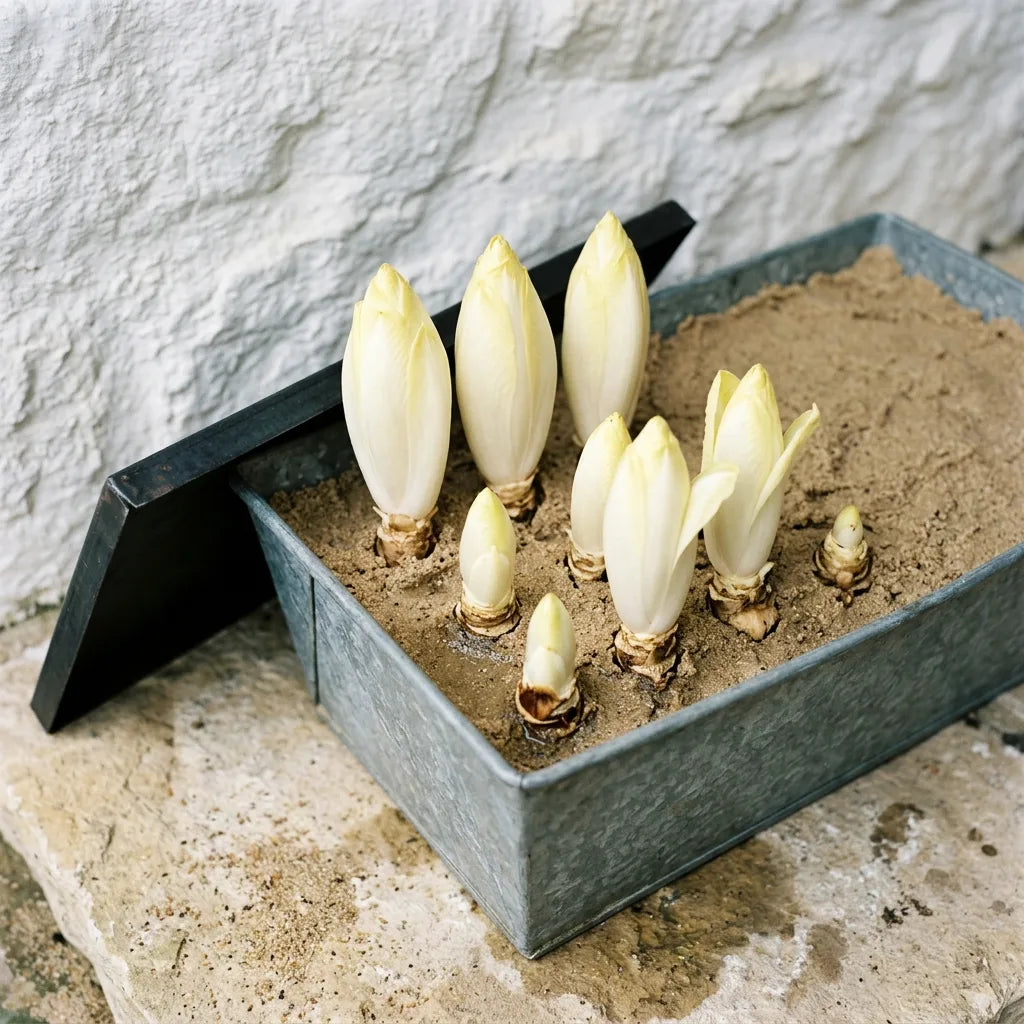
Step 2 — forcing: replant them closely together and vertically in a tray of sand or moist potting soil, in complete darkness and at around 15°C (in a cellar, garage, or under an overturned bucket). The slightest light turns the leaves green and makes them very bitter.
- Allow 3 to 5 weeks. Harvest the chicon by detaching it at the base of the root—the root can often produce a second, smaller chicon.
Beneficial associations:
- It is well suited to a bed following a legume, which will have left the soil loose without excess nitrogen. Grow it near wild chicory, from which it is directly descended. See vegetable garden associations.
Benefits for biodiversity:
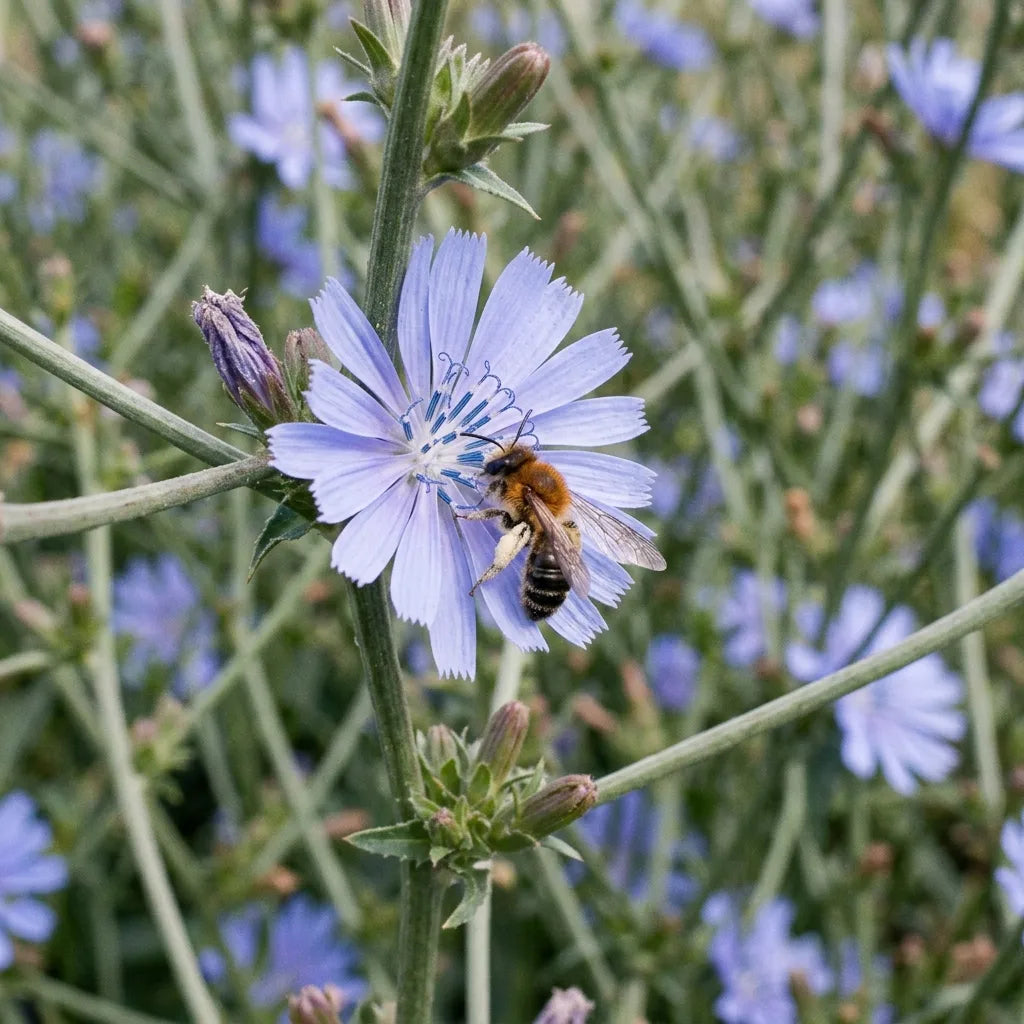
- Let one plant flower in its second year: its blue flowers, like those of wild chicory, are among the most visited by solitary bees and hoverflies.
- Its long taproot loosens the soil deeply for subsequent crops.
Uses:
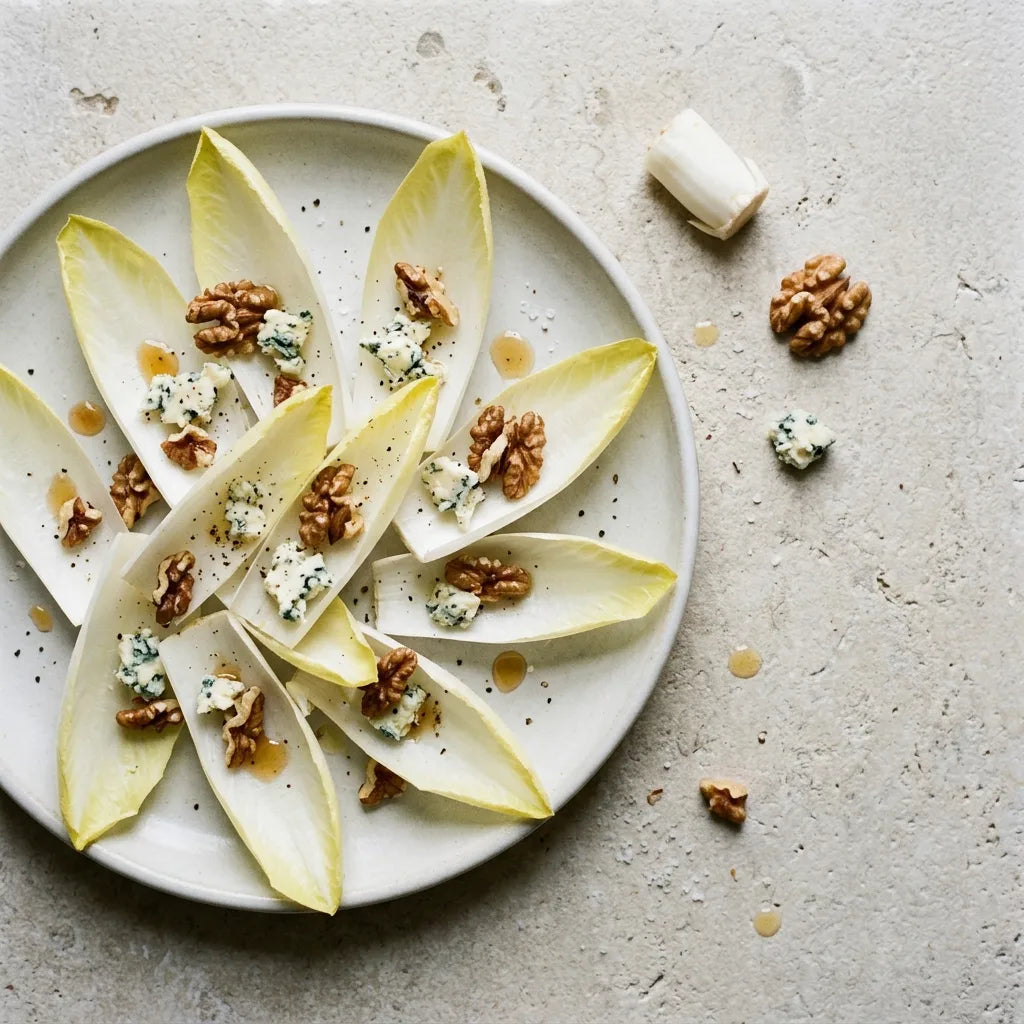
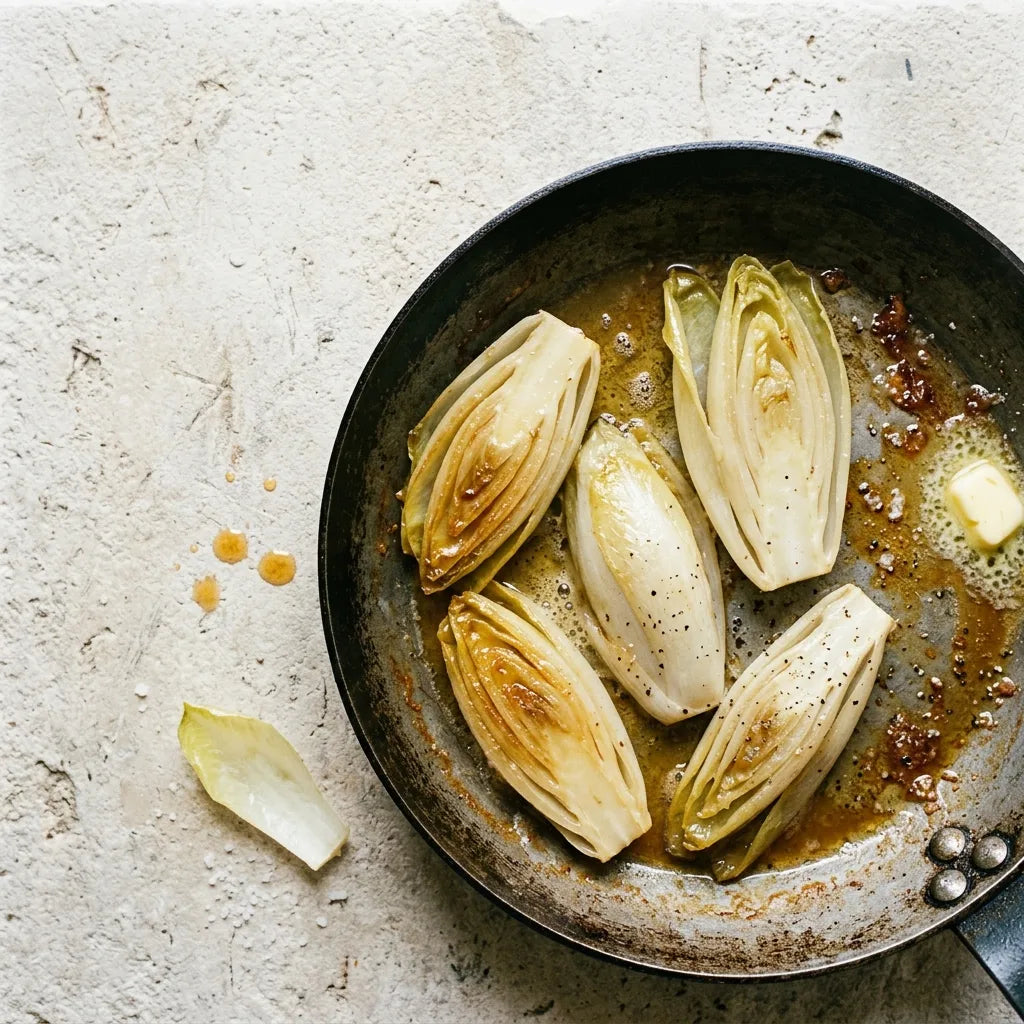
- Raw in a salad with walnuts and blue cheese, braised in butter, baked with ham, or caramelized in a tatin. Tip: remove the small hard cone at the base—it is where the bitterness is concentrated.
Harvesting your own seeds:
Replant an unused forced root in spring: it will produce blue flowers and then seeds during the summer. Harvest the dry flower heads. Note that it cross-pollinates with chicories and escaroles: isolate your seed plant. See saving your seeds.
Commitment to Quality: at SemiSauvage - Permaculture, we grow and select our seeds with respect for all living things as our guiding principle. Based near the Volcanoes of Auvergne, we choose open-pollinated, non-hybrid varieties, tested for their germination rate, carefully sorted and packaged, without any chemical treatment. Our conviction: to give gardeners back the ability to resow, year after year, seeds that truly belong to them.
The vegetable you make yourself, in the heart of winter.