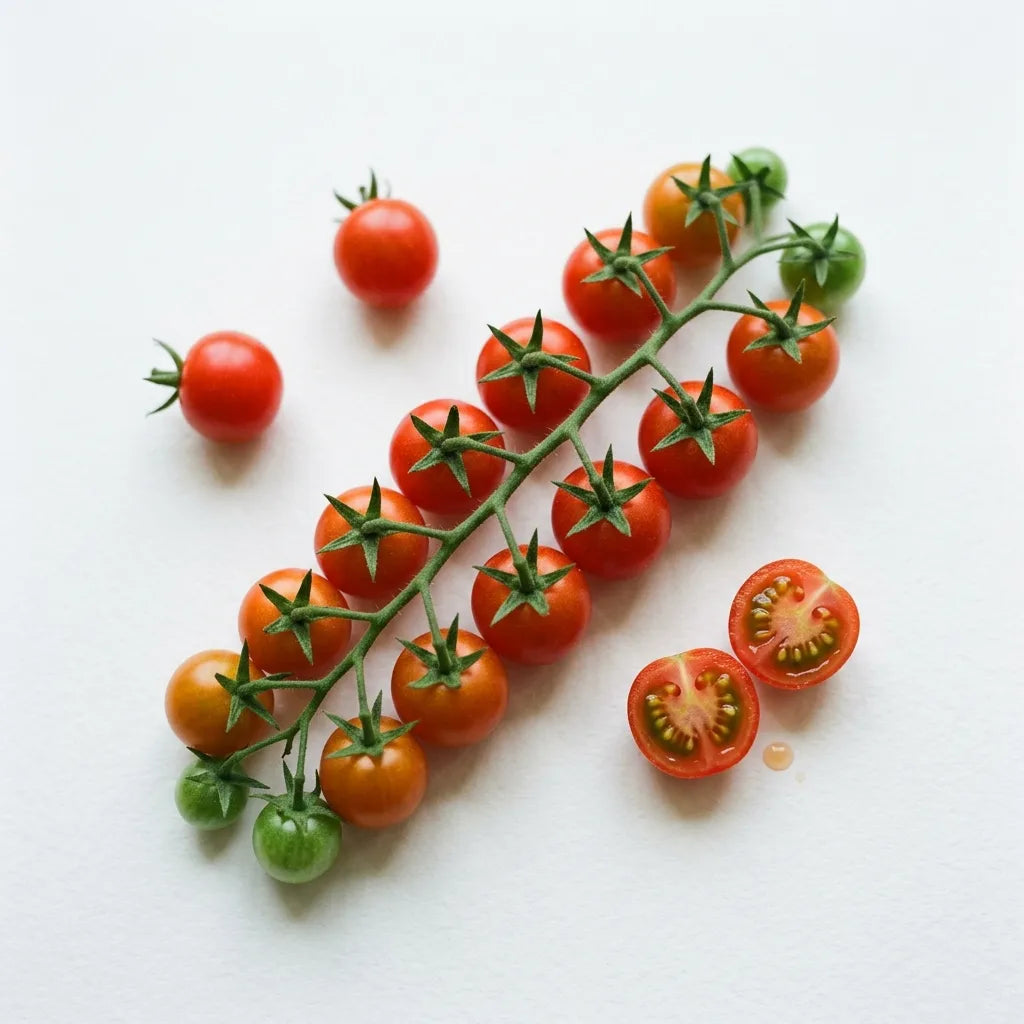
Solanum lycopersicum
Red Cherry Tomato, cocktail tomato, currant tomato: the most classic and reliable of cherry tomatoes. Sweet, early, and virtually indestructible, it produces hundreds of fruits on a single plant and thrives in conditions where large-fruited varieties fail — the ideal tomato for a first vegetable garden or balcony.
Characteristics:
-
Sweet fruits: small, bright-red spheres measuring 2 to 3 cm, growing in long clusters.
-
Early and productive: it starts producing early and continues without interruption until the first frosts.
-
Resistant: considerably less susceptible to disease than large-fruited varieties.
-
Perfect for pots: it grows very well on a balcony in a deep container.
Sowing advice:
-
Position: full sun, in the vegetable garden or on a balcony.
-
Soil: rich, loose, and well drained. Adding compost benefits it, although it is far less demanding than large-fruited varieties.
-
Method: sow from February to April under cover or indoors, at a minimum of 20°C — below this temperature, the seeds will not germinate. Cover with 5 mm of soil. Transplant into pots at the two-true-leaf stage, then outdoors after the last frosts. See how to sow seeds.
Planting advice:
- Transplant with 60 cm spacing. Bury the stem up to the first leaves: the tomato produces roots along the entire buried section, resulting in a more vigorous, drought-resistant plant.
- Install the stake or tomato cage at planting time, so you do not damage the roots later.
Care advice:
-
Always water at the base, never over the foliage, preferably in the morning: water on the leaves provides an entry point for blight. Apply a thick mulch.
- Water regularly and evenly: alternating drought and watering causes the fruits to split.
- With cherry tomatoes, removing suckers is optional: allowing the plant to bush out increases the number of fruits if you have enough space and adequate support.
- Rotate crops every three to four years.
Harvesting advice:
- Harvest the entire cluster when most of the fruits are fully red, or pick them as they ripen. Store at room temperature, never in the refrigerator, which destroys their flavor.
Beneficial companion plants:
Benefits for biodiversity:
- Its flowers are pollinated by vibration: only bumblebees, which can vibrate their wing muscles at the right frequency, make full use of them. Welcoming them directly improves your harvest.
- As an open-pollinated variety, it allows you to sow your own seeds year after year. See our heirloom tomatoes to grow from seed.
Uses:
- As an appetizer, in salads, on skewers, slow-roasted in the oven, or made into pickles. It is also the tomato that children pick and eat straight from the garden.
Harvesting your own seeds:
Take the pulp from a few fully ripe fruits and let it ferment for two to three days in a little water — this step breaks down the gelatinous coating that inhibits germination — then rinse: the healthy seeds sink to the bottom. Dry them flat. See how to store your seeds.
Commitment to Quality: at SemiSauvage - Permaculture, we grow and select our seeds with respect for living things as our guiding principle. Based near the Volcanoes of Auvergne, we choose open-pollinated, non-hybrid varieties, test them for germination rates, and carefully sort and package them without any chemical treatment. Our conviction: to restore gardeners' ability to resow, year after year, seeds that truly belong to them.
The most reliable tomato for beginners, and the most generous.