Thunbergia alata
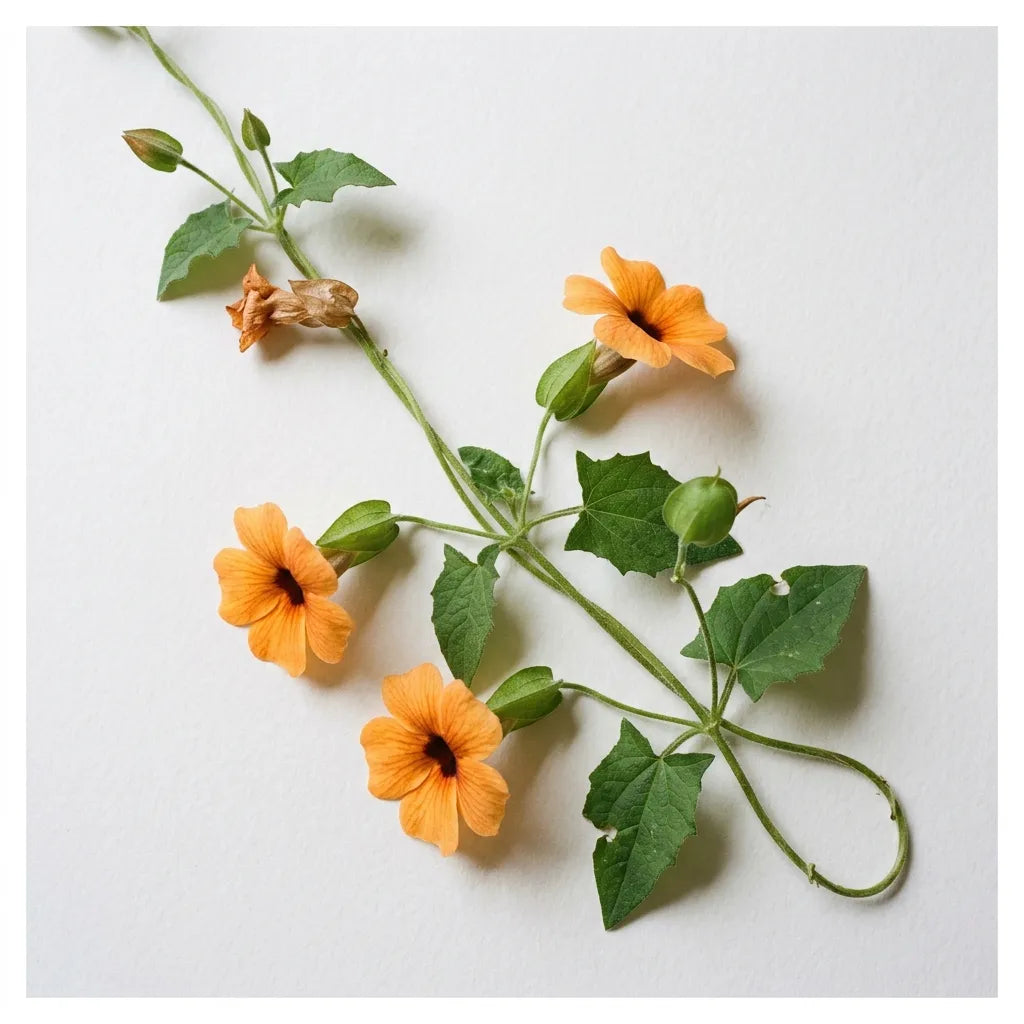
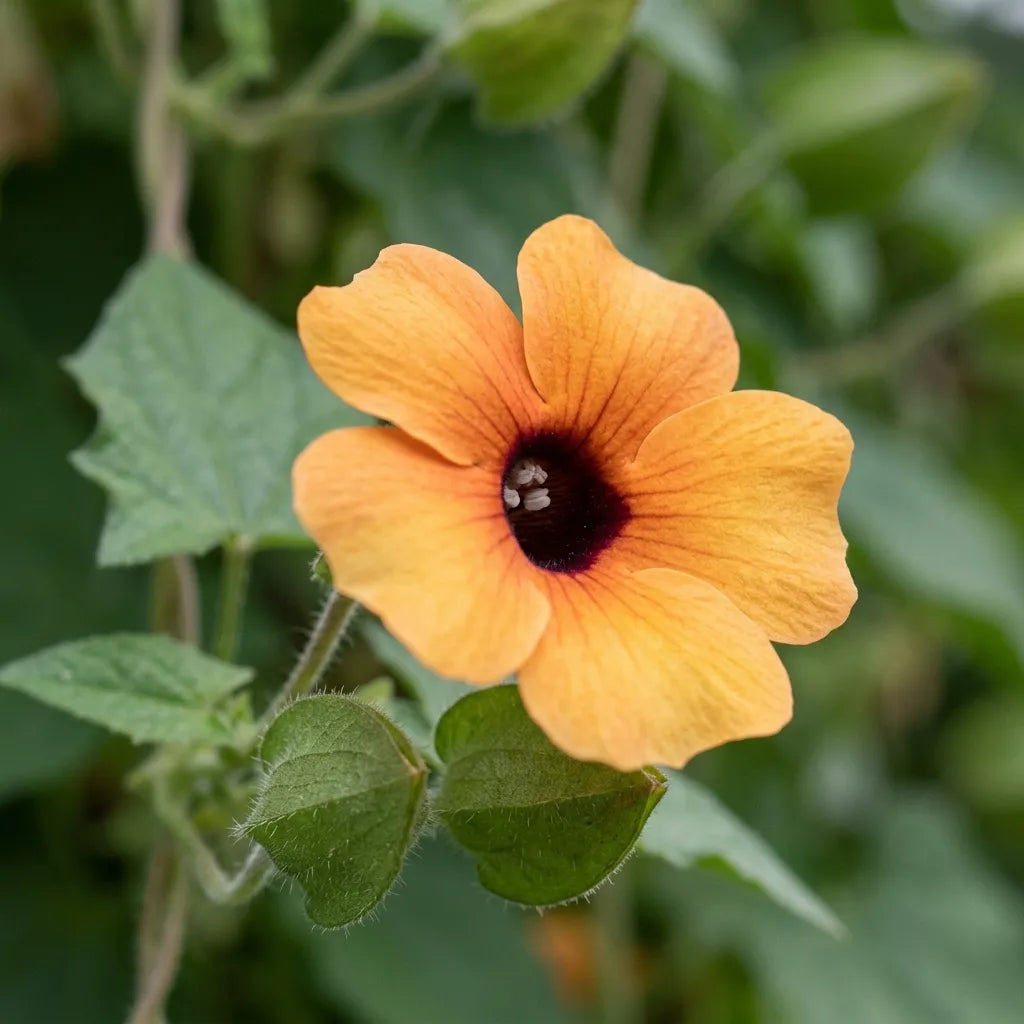
Black-eyed Susan vine, winged thunbergia, Suzanne's eye: native to East Africa, this climbing plant takes its name from the small dark brown-black throat at the center of each orange or golden-yellow corolla. The contrast is so striking that it looks like an eye, repeated hundreds of times across the plant for months.
Characteristics:
-
Abundant flowering: golden-yellow, orange, cream or white funnel-shaped flowers with dark brown centers, all summer long.
-
Fast growth: it covers a support in one season, reaching up to 2 meters.
-
Highly versatile: it can climb a support, trail from a hanging basket, or serve as ground cover.
Precautions:
- Not very hardy: it does not survive frost and is grown as an annual in our climates. However, it may flower again the following year if overwintered frost-free, or even bloom throughout the winter in a conservatory or heated greenhouse.
Sowing advice:
-
Exposure: sunny to light partial shade, with warmth — in very hot regions, shade during the hottest hours will prevent it from scorching.
-
Soil: rich, light, moist and well drained. This is a hungry plant that flowers all the better when well fed: in pots, use enriched potting soil. However, it dislikes drying out, which stops flowering abruptly.
-
Method: no stratification required. Sow in pots under cover from March at 20–22 °C, or directly in the ground from the end of April. Soaking the seeds in lukewarm water for 12 hours speeds up germination. See how to sow your seeds.
Planting advice:
- Transplant the young plants one and a half to two months after sowing, after the last frosts. Provide a support for the plant to twine around at planting time: railing, fence, trellis, pergola or pyramid-shaped stake in a bed.
Care advice:
- Water regularly, especially in pots and hanging baskets where the substrate dries out quickly: this is the key to continuous flowering.
- Remove faded flowers and pinch out young stems to make the plant bushier.
Beneficial combinations:
Benefits for biodiversity:
- The dark center of its flowers is not decorative by chance: it is a nectar guide that directs pollinators toward the center of the corolla. Bees and hoverflies flock to it all summer long.
- Its dense foliage on a support provides shelter appreciated by beneficial insects.
Uses:
- Pots, hanging baskets, balconies, trellises, pergolas, fences, beds with a stake or ground cover. Few plants offer so many uses.
Harvesting your own seeds:
Allow a few flowers to form their small beak-shaped capsules, then harvest them as soon as they turn brown, before they burst and scatter their seeds. See how to store your seeds.
Commitment to Quality: at SemiSauvage - Permaculture, we grow and select our seeds with respect for all living things as our guiding principle. Based near the Volcanoes of Auvergne, we choose reproducible, non-hybrid varieties, tested for their germination rate, carefully sorted and packaged, without any chemical treatment. Our belief: to give gardeners back the ability to resow, year after year, seeds that truly belong to them.
Add these black-eyed Susan vine seeds to your balcony or garden for nonstop blooms.