Ipomoea lobata (syn. Mina lobata, Quamoclit lobata)
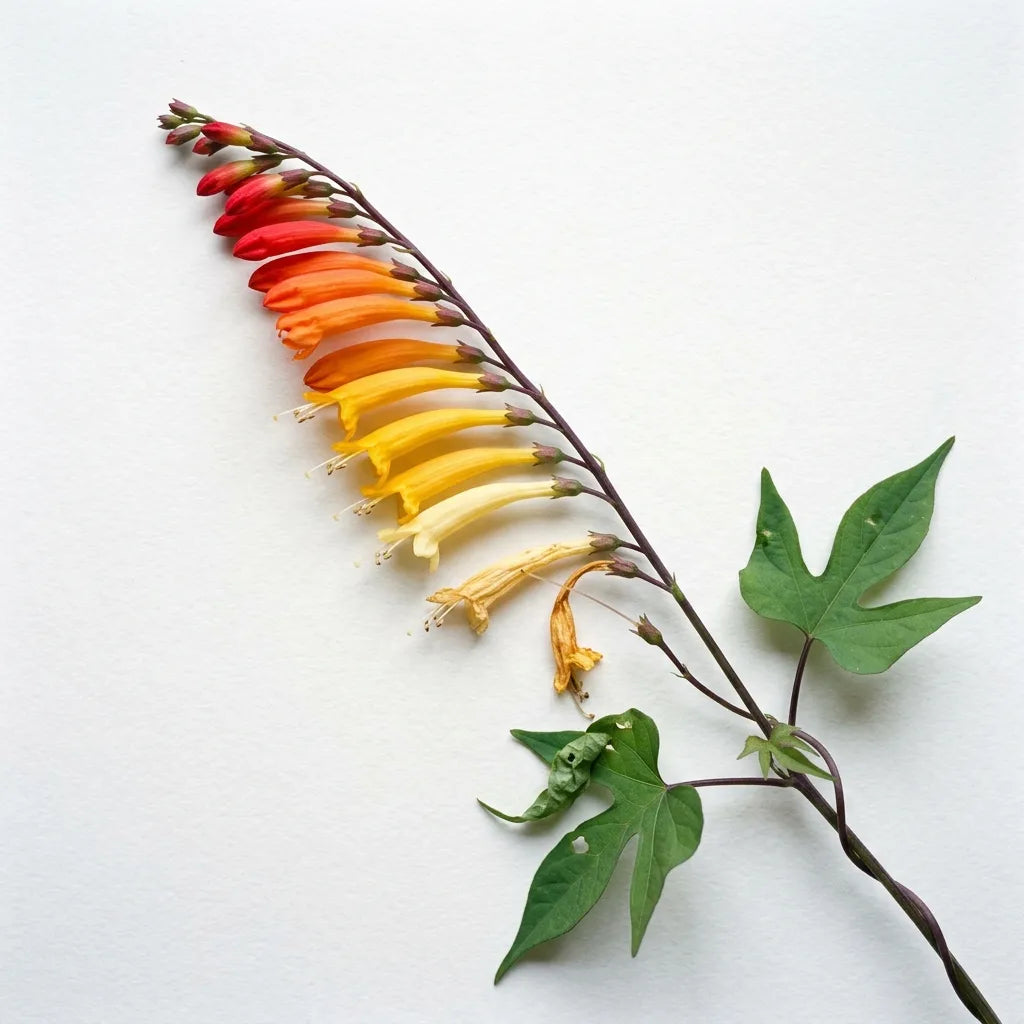
Indian plume, flame vine, fire vine, Spanish flag: its one-sided inflorescences are a living gradient. Each cluster simultaneously bears scarlet-red buds at the tip, orange flowers in the middle, and pale yellow flowers at the base—the colors becoming lighter as each flower opens. Hence its nickname, Spanish flag.
Characteristics:
-
Gradient inflorescences: one-sided clusters ranging from scarlet red to pale yellow, throughout the summer until the first frosts.
-
Rapid growth: vigorous climber that covers a support in a single season.
-
Non-hardy annual: must be sown every year in our climates.
Precautions:
- Like all morning glories, its seeds are toxic if ingested: do not consume them and keep them out of the reach of children and pets.
Sowing advice:
-
Exposure: sunny; it needs warmth to flower well.
-
Soil: light, well drained, ordinary to poor. Soil that is too rich encourages foliage at the expense of flowers: do not fertilize.
-
Method: no stratification is necessary, but soaking for 12 hours in lukewarm water significantly improves germination. Sow in pots from March onward (20–25 °C), or directly in the ground after the last frosts. See how to sow your seeds.
Planting advice:
- Provide support from the first leaves onward: the vine quickly seeks something to cling to and becomes tangled if left trailing on the ground.
Care advice:
- Water regularly but moderately. Guide the young stems onto their support during the first few weeks.
Beneficial pairings:
Benefits for biodiversity:
- Its nectar-rich tubular flowers attract butterflies and long-tongued bumblebees, as well as hawk moths at dusk.
- Its dense foliage on a support provides shelter appreciated by beneficial insects.
Uses:
- Covering fences, pergolas, trellises, and balcony railings. Its flowering stems also make beautiful, original bouquets.
Symbolism:
The Indian plume evokes exoticism and transformation through its changing colors within a single cluster—a plant metaphor for transition and movement.
Harvesting your own seeds:
Allow a few flowers to form seed capsules, then harvest them once they are brown and dry, before they open. Clearly label the packet, given the toxicity of the seeds. See storing your seeds.
Commitment to Quality: at SemiSauvage - Permaculture, we grow and select our seeds with respect for living things as our guiding principle. Based near the Volcanoes of Auvergne, we choose reproducible, non-hybrid varieties, test them for germination rates, and carefully sort and package them without any chemical treatment. Our conviction: to give gardeners back the ability to resow, year after year, seeds that truly belong to them.
Sales reserved for amateur gardeners seeking quality and authenticity.