Koelreuteria paniculata
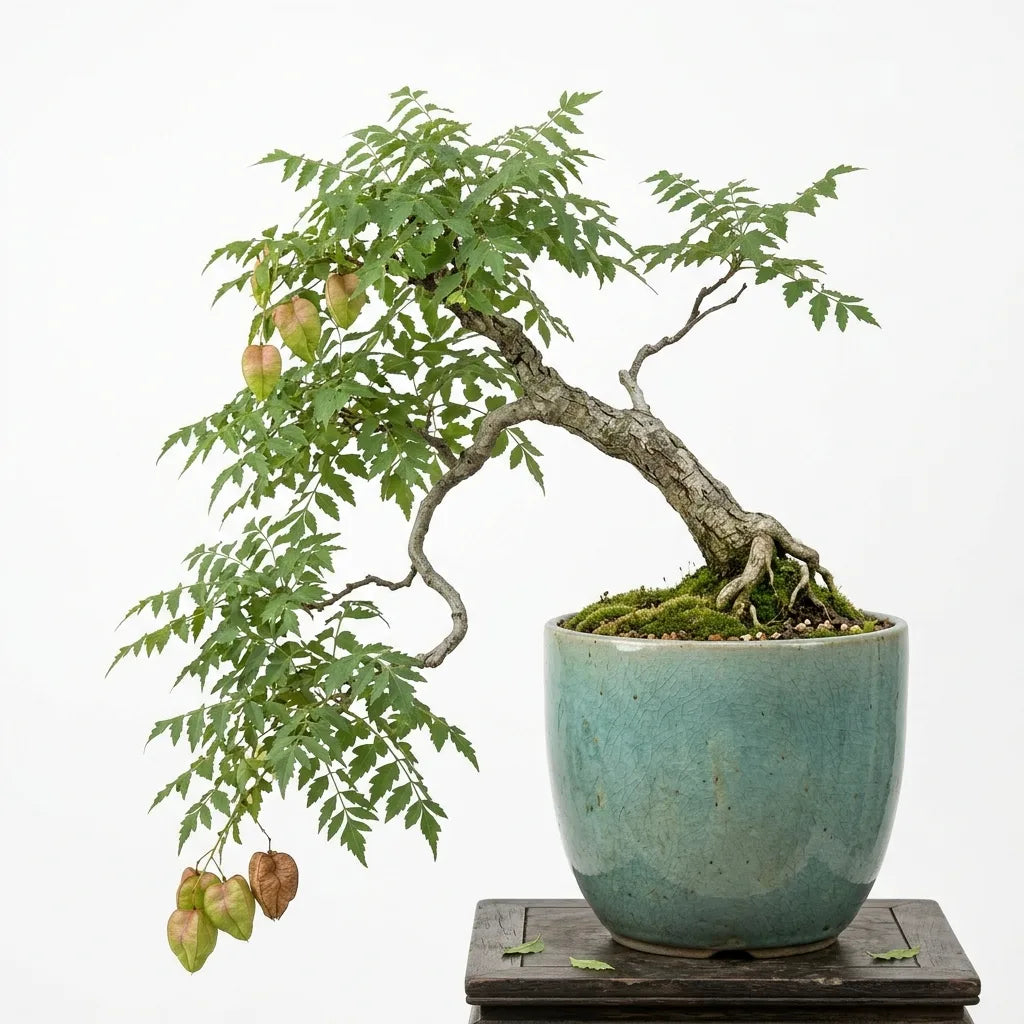
Soap tree, lantern tree, golden rain tree, koelreuteria: native to China, it has two names that sum up its two spectacles. In summer, a “golden rain” of yellow panicles covers its crown; in autumn, these flowers give way to lantern-shaped fruits, pink then brown, which remain on the tree for a long time.
Characteristics:
-
Yellow summer flowering: large upright panicles in July–August, at a time when few trees are in bloom.
-
Lantern fruits: translucent, swollen capsules that are highly decorative and remain until winter.
-
Small-garden tree: 6 to 8 metres, with a globular crown that becomes spreading with age and smooth grey bark.
-
Remarkable longevity: slow but steady growth; it can live for up to 200 years.
Precautions:
- The saponins present in its bark and fruit make them unsuitable for consumption. Their traditional use in Asia is domestic — making natural soap, hence its French name — and not culinary.
- It breaks dormancy late in spring: do not assume it is dead; it simply starts growing later than other trees.
Sowing advice:
-
Exposure: full sun, without compromise — hot summers produce the most abundant flowering.
-
Soil: compact or very porous, calcareous and rather dry. It tolerates difficult soils and drought remarkably well once established, but dislikes waterlogged or acidic soil. No fertilisation needed.
-
Method: its black seeds have a very hard seed coat. Lightly scarify them with a file or soak them for 24 hours in lukewarm water, then apply cold stratification for 2 to 3 months. Then sow in spring in a deep pot.
Planting advice:
- Transplant it while young to its permanent location, using a deep pot to accommodate its taproot. Its rounded form and moderate growth make it perfect for small gardens and urban courtyards.
- It is also suitable for bonsai — see our guide creating a bonsai from a seed.
Care advice:
- Water regularly during the first two years; afterward, the tree becomes self-sufficient. Minimal pruning, at the end of winter.
Beneficial combinations:
Benefits for biodiversity:
- Its midsummer flowering fills a lean period for pollinators, when most trees have finished flowering: it provides a valuable source of nectar during the driest season.
- Its dry lanterns shelter small insects in winter, while its light foliage allows sunlight to reach a flowering understory.
- Its tolerance of drought and compacted soils makes it a tree of the future for warming cities.
Uses:
- Ornamental tree for use as a specimen, in avenues or in small gardens, valued for its threefold appeal: summer flowering, decorative fruit and golden autumn foliage. Its lanterns are well suited to dried bouquets.
Symbolism:
In China, the soap tree was among the trees planted on the graves of scholars, according to a highly codified protocol hierarchy. Its longevity makes it a symbol of endurance and inheritance.
Harvesting your own seeds:
Open the dry lanterns in autumn: each contains three black seeds, round and hard as pearls. Dry them before scarification and winter stratification. See storing your seeds.
Commitment to Quality: at SemiSauvage - Permaculture, we grow and select our seeds with respect for living things as our guiding principle. Based near the Auvergne Volcanoes, we choose reproducible, non-hybrid varieties, tested for their germination rate, sorted and carefully packaged, with no chemical treatment. Our conviction: to give gardeners back the ability to sow again, year after year, seeds that truly belong to them.
A tree that flowers when the others have finished: add the soap tree to your garden.