Physalis ixocarpa (syn. Physalis philadelphica)
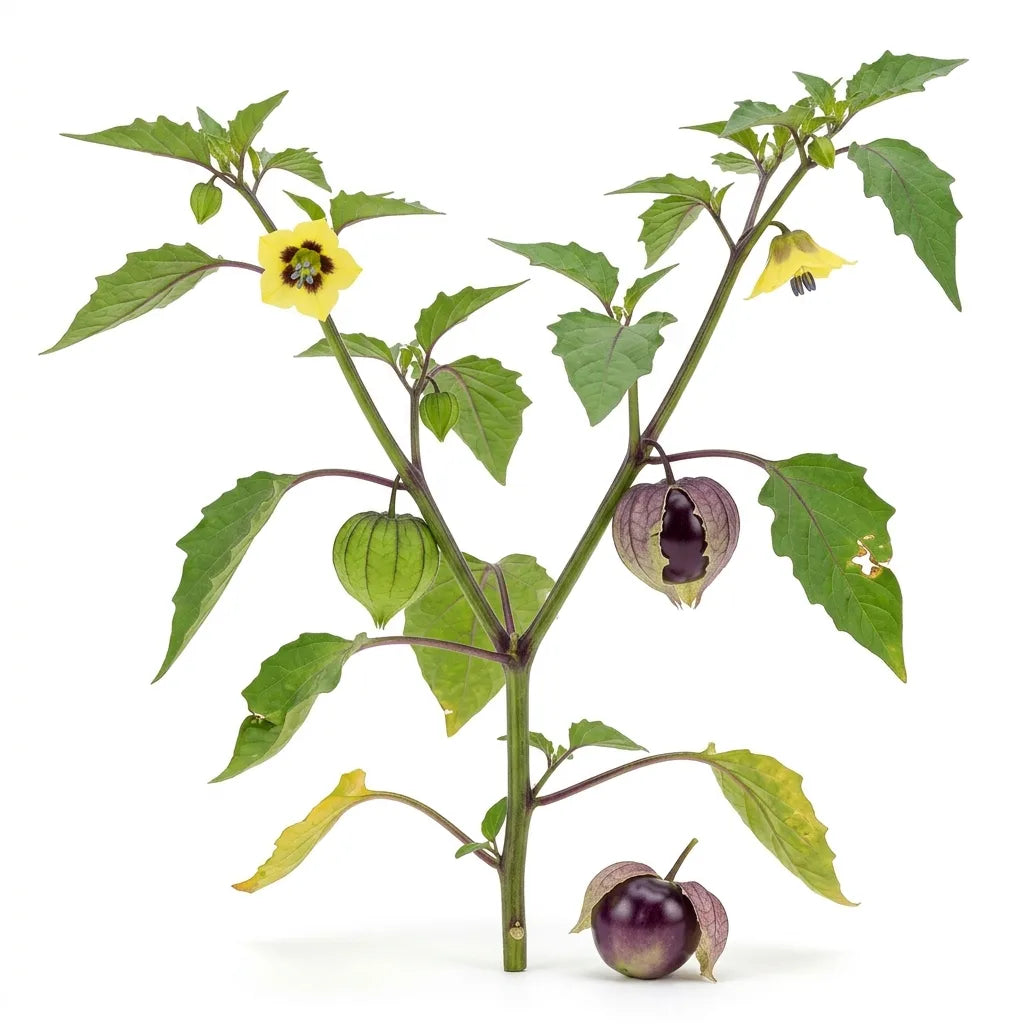
Purple tomatillo, violet tomatillo, purple fresadilla tomato: the same species as the green tomatillo, but in a spectacular color. As they ripen, the fruits turn a deep purple that sometimes reaches the heart of the flesh, and their flavor is distinctly milder, almost fruity—so much so that they can be eaten raw, which is rare for tomatillos.
Characteristics:
-
Purple fruits: up to 10 cm in diameter, with a papery husk that turns purple and then brown when ripe.
-
Milder flavor: less acidic than the green variety, it can be eaten raw or cooked.
-
Vigorous plant: an annual herbaceous plant 1.50 to 2 meters tall, with harvesting 75 to 85 days after sowing.
Precautions:
- Do not eat the immature fruits or the foliage: like all nightshades, they contain alkaloids.
- Important: the tomatillo is self-sterile. Plant at least two plants to obtain fruit; a solitary plant will flower but never produce fruit.
- A frost-tender plant, destroyed by the first frosts.
Sowing advice:
-
Exposure: full sun, in a warm location—it is a plant of Mexican origin.
-
Soil: rich, loose, moist and well drained. A heavy feeder like its cousin the tomato, it benefits from an addition of compost. It does not tolerate standing moisture.
-
Method: sow in pots under cover from March at 20-25 °C, covering the seeds with a thin layer of substrate, then transplant after the last frosts. See how to sow your seeds.
Planting advice:
- Transplant 80 cm to 1 m apart, with sturdy staking. Remember that at least two plants are needed for cross-pollination.
Care advice:
- Water regularly at the base and mulch. Full sun intensifies the purple color of the fruits.
Harvesting advice:
- Harvest when the husk has turned brown and the fruit displays its beautiful purple color. Unlike the green tomatillo, it can be left to ripen further to enjoy its sweetness.
Beneficial companions:
Benefits for biodiversity:
- Its self-sterility makes it entirely dependent on pollinators: its presence in the vegetable garden is an excellent reason to welcome bees and bumblebees.
- Its yellow flowers with dark markings are visited throughout the summer.
Uses:
- Raw in salads thanks to its mild flavor, or cooked in salsa, sauces, ratatouille and simmered dishes. Its purple color makes a striking impression on the plate.
Saving your own seeds:
Crush a few fully ripe fruits in a little water, leave them to ferment for two to three days, then rinse them: the healthy seeds will sink to the bottom. Dry them before storing. Be careful, as tomatillos cross-pollinate very easily: isolate your seed plants if you are also growing the green tomatillo. See how to store your seeds.
Commitment to Quality: at SemiSauvage - Permaculture, we grow and select our seeds with respect for all living things as our guiding principle. Based near the Volcanoes of Auvergne, we choose open-pollinated, non-hybrid varieties, tested for their germination rate, carefully sorted and packaged, without any chemical treatment. Our belief: to give gardeners back the ability to resow, year after year, seeds that truly belong to them.
Add an exotic and colorful touch to your vegetable garden with these purple tomatillo seeds.