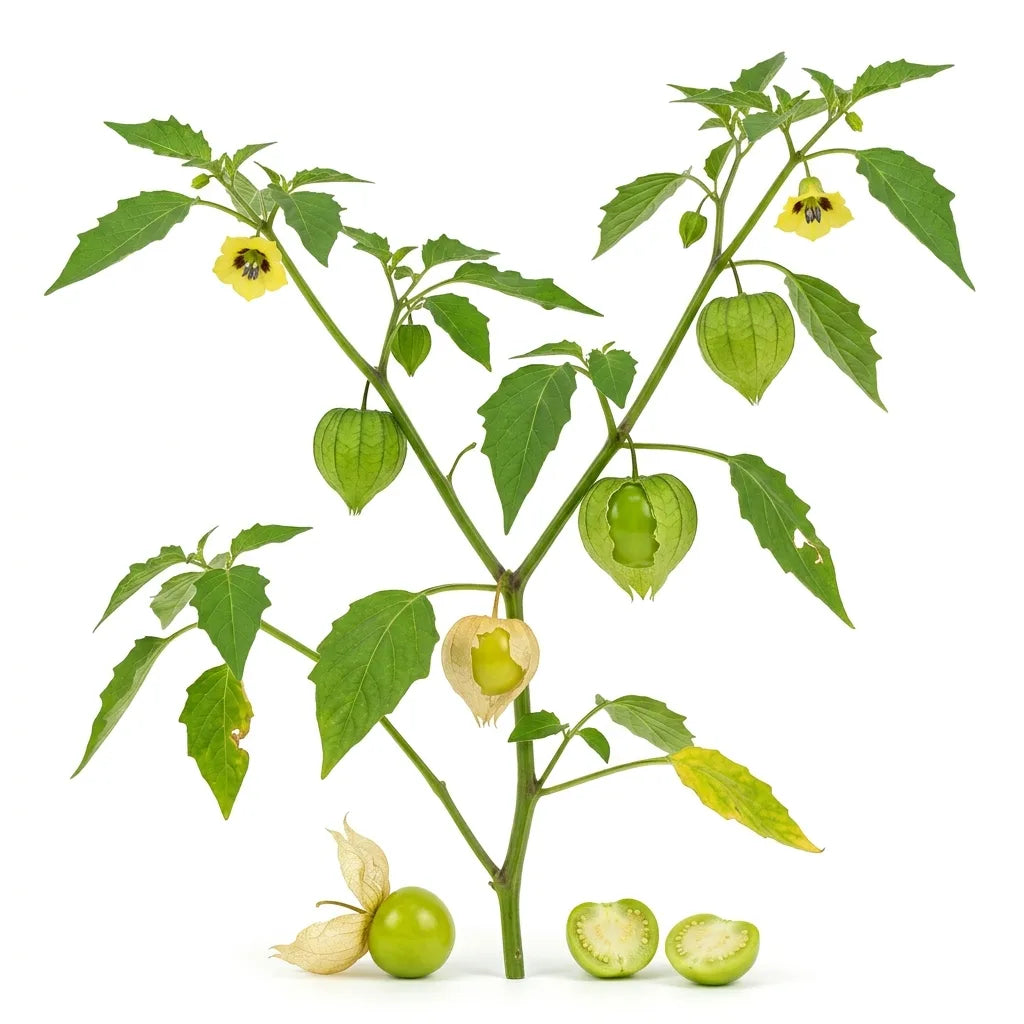
Physalis ixocarpa (syn. Physalis philadelphica)
Green tomatillo, tomatillo, Mexican green tomato, miltomate: it is the soul of salsa verde, the Mexican sauce that nothing can truly replace. Domesticated by the Aztecs long before the tomato, it bears a tangy fruit wrapped in a papery husk that must be removed before cooking—and whose slightly sticky surface simply rinses clean with lukewarm water.
Characteristics:
-
Generous plant: a highly productive annual herbaceous plant growing 1.5 to 2 metres tall.
-
Husked fruits: up to 10 cm in diameter, they gradually fill their papery husk as they ripen.
-
Short cycle: 75 to 85 days from sowing to harvest.
Precautions:
- Do not eat the immature fruits or foliage: like all nightshades, they contain alkaloids.
- Important: the tomatillo is self-incompatible. At least two plants must be grown to produce fruit; a single isolated plant will produce nothing.
- Frost-tender plant, destroyed by the first frosts.
Sowing advice:
-
Position: full sun and warmth.
-
Soil: rich, loose, moist and well drained. Like the related tomato, it is a hungry plant: adding compost at planting benefits it. It does not tolerate standing water.
-
Method: sow in pots under cover from March, or directly in the ground when nighttime temperatures reach 18 °C and daytime temperatures reach 25 °C. Cover the seeds with a thin layer of growing medium or sand and keep them moist until germination. See how to sow your seeds.
Planting advice:
- Transplant after the frosts, spacing plants 80 cm to 1 m apart, and provide sturdy support: stems laden with fruit bend easily.
- Remember to plant at least two plants side by side to ensure cross-pollination.
Care advice:
- Water regularly at the base, without wetting the foliage. Mulch to retain moisture.
Harvest advice:
- Harvest when the fruit completely fills its husk and begins to split it open, while it is still deep green: this is when its acidity is perfect for salsa. If overripe, it becomes yellowish and bland.
Beneficial companion plants:
- It naturally accompanies other ingredients of Mexican cuisine in the vegetable garden: peppers, coriander and maize. Marigolds planted at its base help limit nematodes. Avoid growing it after tomatoes or potatoes. See companion planting in the vegetable garden.
Benefits for biodiversity:
- Being self-incompatible, it depends entirely on pollinators to produce fruit: growing it provides an additional reason to welcome bees and bumblebees into the vegetable garden.
- Its yellow flowers with dark centres are visited throughout the summer.
Uses:
- An essential base for salsa verde and Latin American sauces, also delicious roasted, in ratatouille or soup.
Saving your own seeds:
Crush a few very ripe fruits in a little water, leave them to ferment for two to three days, then rinse them: the healthy seeds will sink to the bottom. Dry them before storing. Be careful, as tomatillos cross readily between varieties: isolate your seed plants if you also grow the purple variety. See how to save your seeds.
Commitment to Quality: at SemiSauvage - Permaculture, we grow and select our seeds with respect for living things as our guiding principle. Based near the Volcanoes of Auvergne, we choose open-pollinated, non-hybrid varieties, tested for germination rates, carefully sorted and packaged, with no chemical treatment. Our belief: to give gardeners back the ability to resow, year after year, seeds that truly belong to them.
Add a touch of Mexican authenticity to your vegetable garden with these green tomatillo seeds.