Ruta graveolens
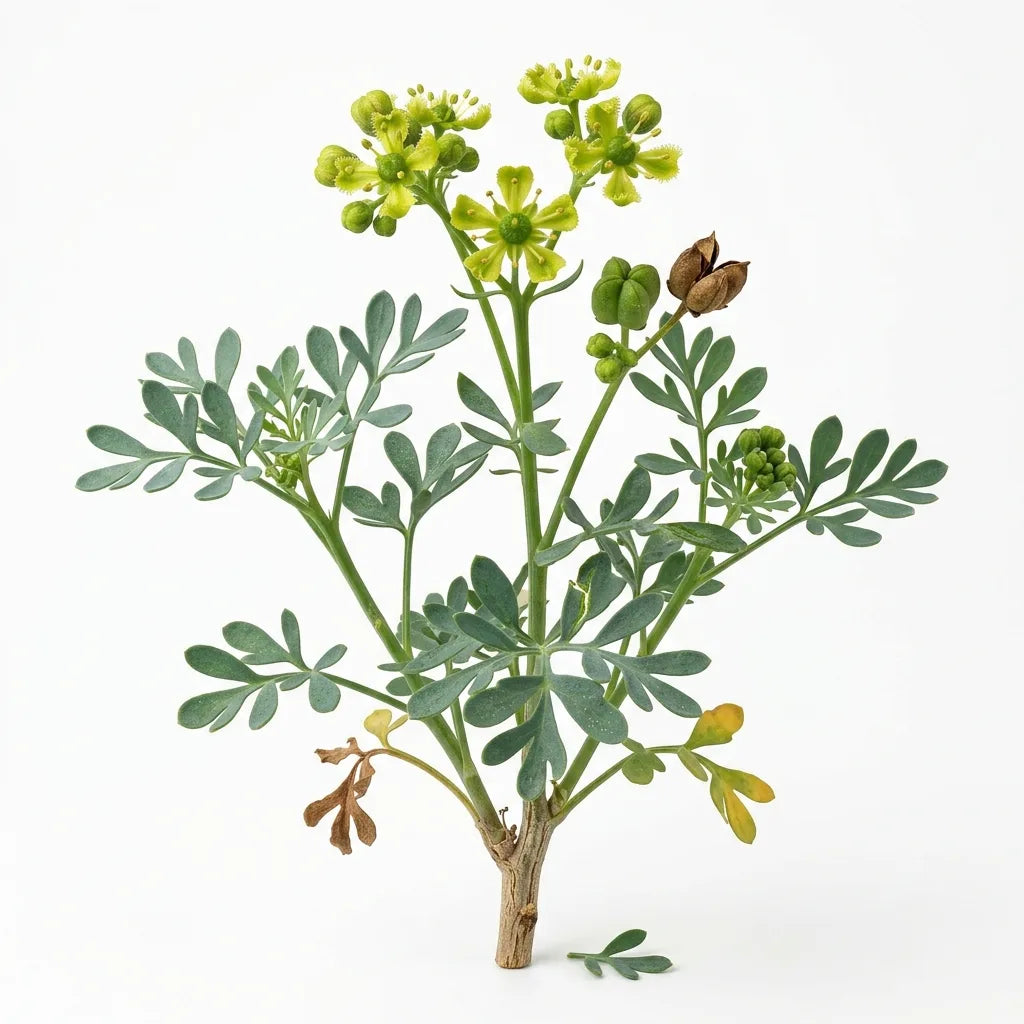
Stinking rue, herb-of-grace, witches’ herb: few plants carry such a loaded reputation. In the Middle Ages, it was hung by doors to ward off evil spirits as well as insects, and its bluish leaves, with their powerful fragrance, were used to flavor salads and sauces. Today, it is above all a magnificent rock-garden perennial, with highly graphic evergreen foliage.
Characteristics:
-
Remarkable foliage: finely divided, with a very distinctive glaucous blue-green color, evergreen all year round.
-
Hardy perennial: it adapts to all soils and is remarkably drought-resistant once established.
-
Yellow flowering: small greenish-yellow flowers in corymbs, in summer.
Precautions:
-
Handling: the sap of common rue is highly photosensitizing. On contact with the skin followed by exposure to sunlight, it can cause severe burns and blisters (phytophotodermatitis), sometimes several hours later. You must wear gloves and long sleeves when pruning or harvesting it, preferably in overcast weather, and wash your hands thoroughly afterward.
-
Ingestion: all parts of the plant are toxic in uncontrolled doses. Its historical culinary use involved only minute quantities. Do not consume it, and keep it out of reach of children and pets.
- Avoid planting it along paths or walkways where it could be brushed against in sunny weather.
Sowing advice:
-
Position: full sun, in a warm, open location.
-
Soil: poor, dry, stony, or calcareous, and above all very well drained. It thrives where few plants can survive and is particularly sensitive to stagnant winter moisture. Do not enrich the soil: poor soil strengthens its compact habit and fragrance.
-
Method: the seeds require cold stratification to germinate well. Then sow them in pots under cover in spring, on the surface because they need light to germinate, and transplant them afterward.
Planting advice:
- Transplant into a rock garden, bank, or dry border, spacing plants 40 cm apart. Excellent in pots for controlling its location.
Care advice:
- No watering once established. Prune lightly at the end of winter to maintain a compact habit — wearing gloves and in overcast weather.
Beneficial companions:
- It shares the requirements of other dry rock-garden plants such as true lavender, with which it creates a water-efficient Mediterranean bed. See our drought-resistant plants.
- Its powerful scent makes it a traditional repellent plant for the garden — see our repellent plants.
Benefits for biodiversity:
- It is the host plant of the Old World swallowtail, one of our largest and most beautiful butterflies: its green-and-black striped caterpillars feed exclusively on it, along with a few other umbellifers. Sowing it provides a nursery for this emblematic species.
- Its summer yellow flowers attract small bees and hoverflies.
Symbolism:
Known as “herb-of-grace,” rue was a symbol of repentance and protection in the Middle Ages and was used in blessing rituals. Shakespeare mentions it in Hamlet as the herb of remembrance and regret.
Harvesting your own seeds:
Let the capsules turn brown and split open in a star shape on the plant, then shake them over a container — wearing gloves. See saving your seeds.
Commitment to Quality: at SemiSauvage - Permaculture, we grow and select our seeds with respect for all living things as our guiding principle. Based near the Auvergne Volcanoes, we choose open-pollinated, non-hybrid varieties, test them for germination rates, and carefully sort and package them without any chemical treatment. Our conviction: to give gardeners back the ability to resow, year after year, seeds that truly belong to them.
A distinctive plant with unique bluish foliage, best planted in a dry, sunny corner of the garden.