
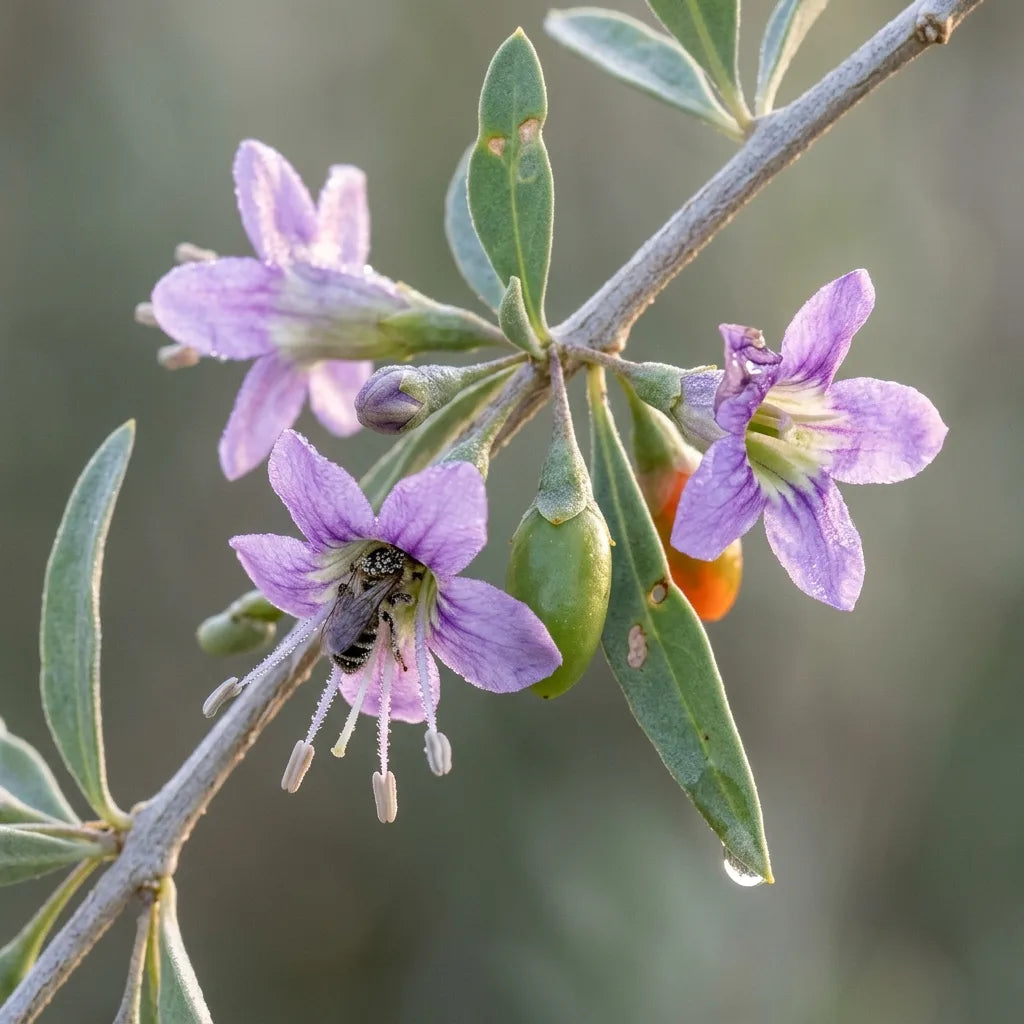

Lycium barbarum
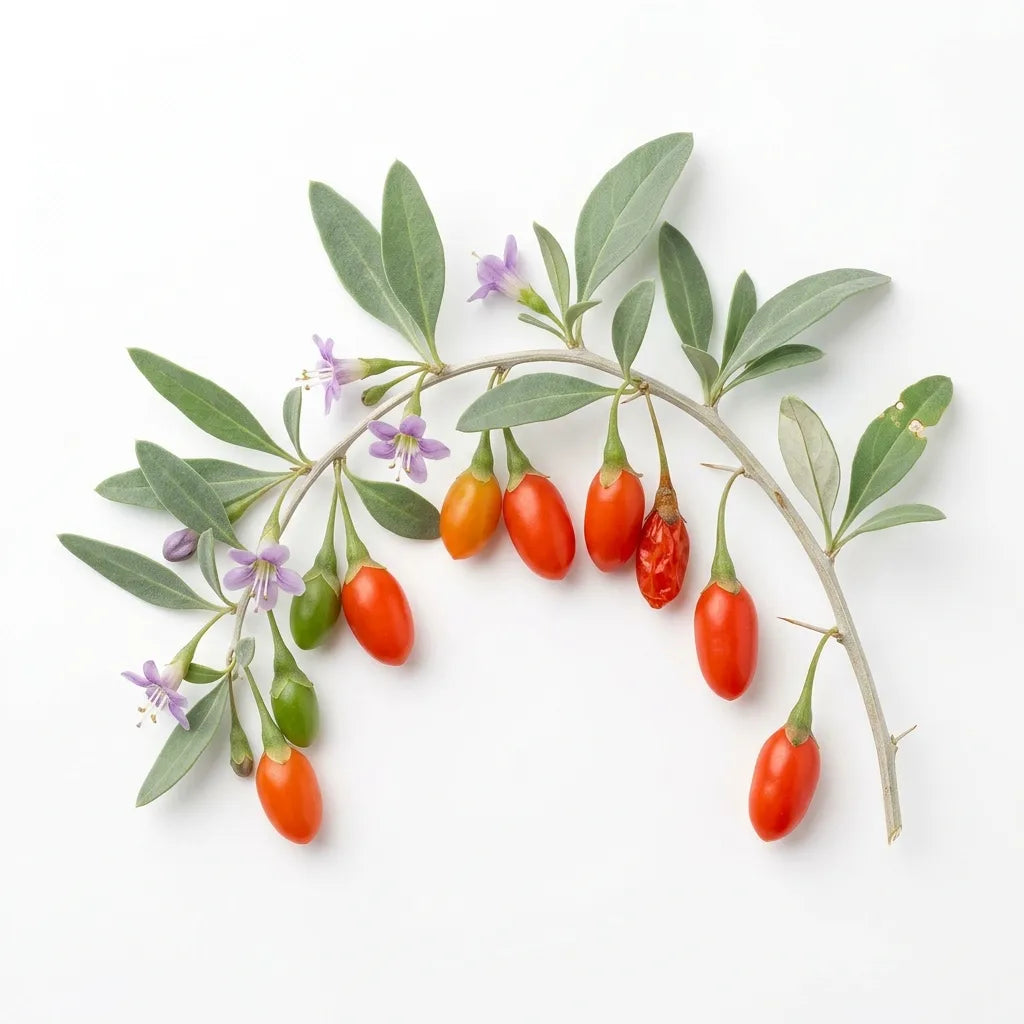
Goji, common boxthorn, goji berry, Barbary boxthorn: cultivated for centuries in the Chinese region of the Yellow River, this shrub was present in Europe long before its recent surge in popularity — it could be found in French hedgerows under the name boxthorn, often without anyone knowing that its small red berries were edible.
Characteristics:
-
Tangy red berries: small and elongated, they can be eaten fresh or dried.
-
Hardy perennial shrub: it tolerates temperatures down to -15 °C and requires little.
-
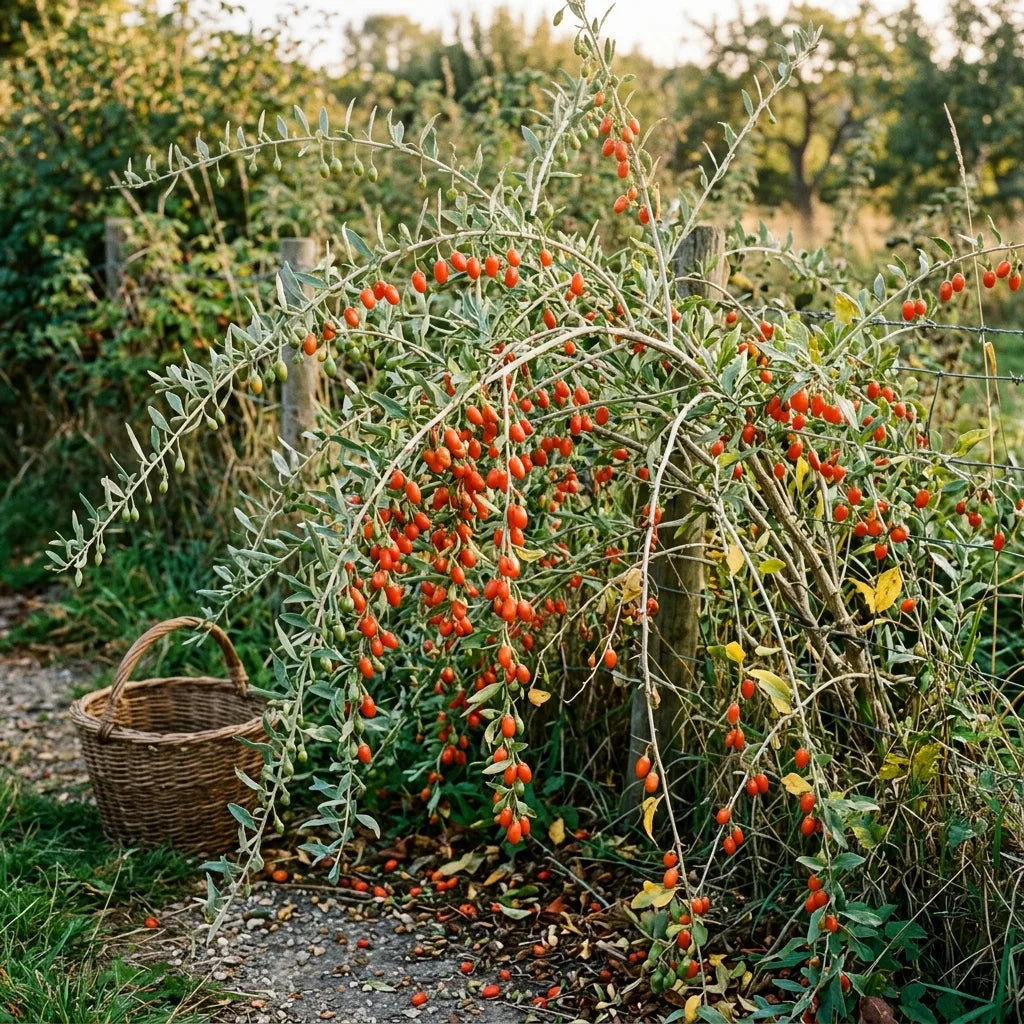
Arching growth: its long, flexible stems can be trained or allowed to cascade.
-
Highly adaptable: it tolerates poor, dry and even slightly saline soils.
Precautions:
- It spreads by suckers and self-seeds easily: plan to monitor it regularly, or grow it in a container, if you do not want it to spread.
- Like all members of the nightshade family, its foliage should not be eaten. Only the ripe berries are edible.
Sowing advice:
-
Exposure: full sun, essential for good fruit production.
-
Soil: ordinary soil, even poor or stony, but above all well drained. It tolerates alkaline soil and drought once established, but dislikes waterlogged conditions. Fertilizing is unnecessary: soil that is too rich produces foliage at the expense of berries.
-
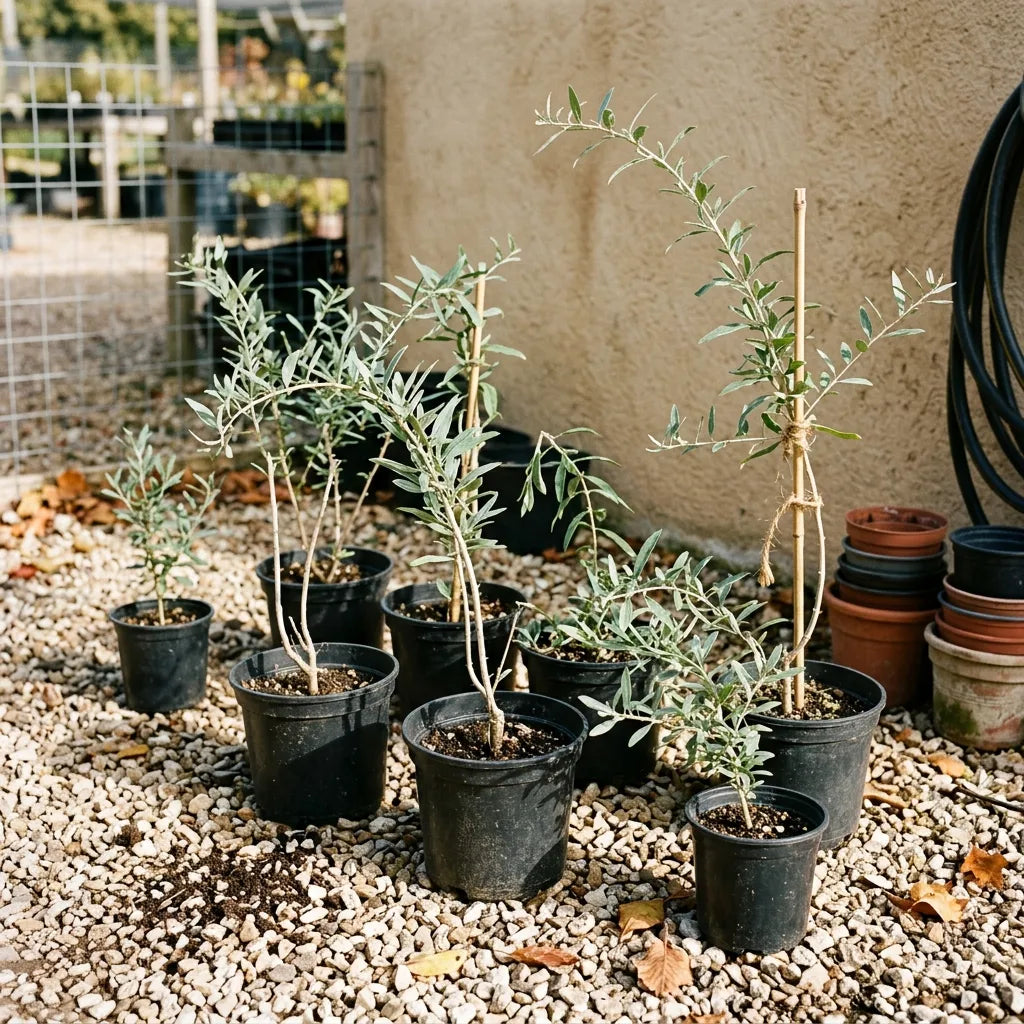
Method: cold stratification for 3 to 4 weeks significantly improves germination. Then sow in autumn (October to December) or spring (March to April), in the ground or in a pot, barely covering the tiny seeds. See how to sow your seeds.
Planting advice:
- Transplant with 1.50 m spacing, or train it along a wall or fence: its flexible stems are easy to guide and make harvesting easier.
Care advice:
- Water moderately, only during the first few years and then in cases of prolonged drought.
-
The key task: prune at the end of winter to open up the plant and shorten the long stems. Goji fruits on the current year's wood: annual pruning significantly increases production.
- Allow two to three years before the first berries appear on a seed-grown plant.
Harvesting advice:
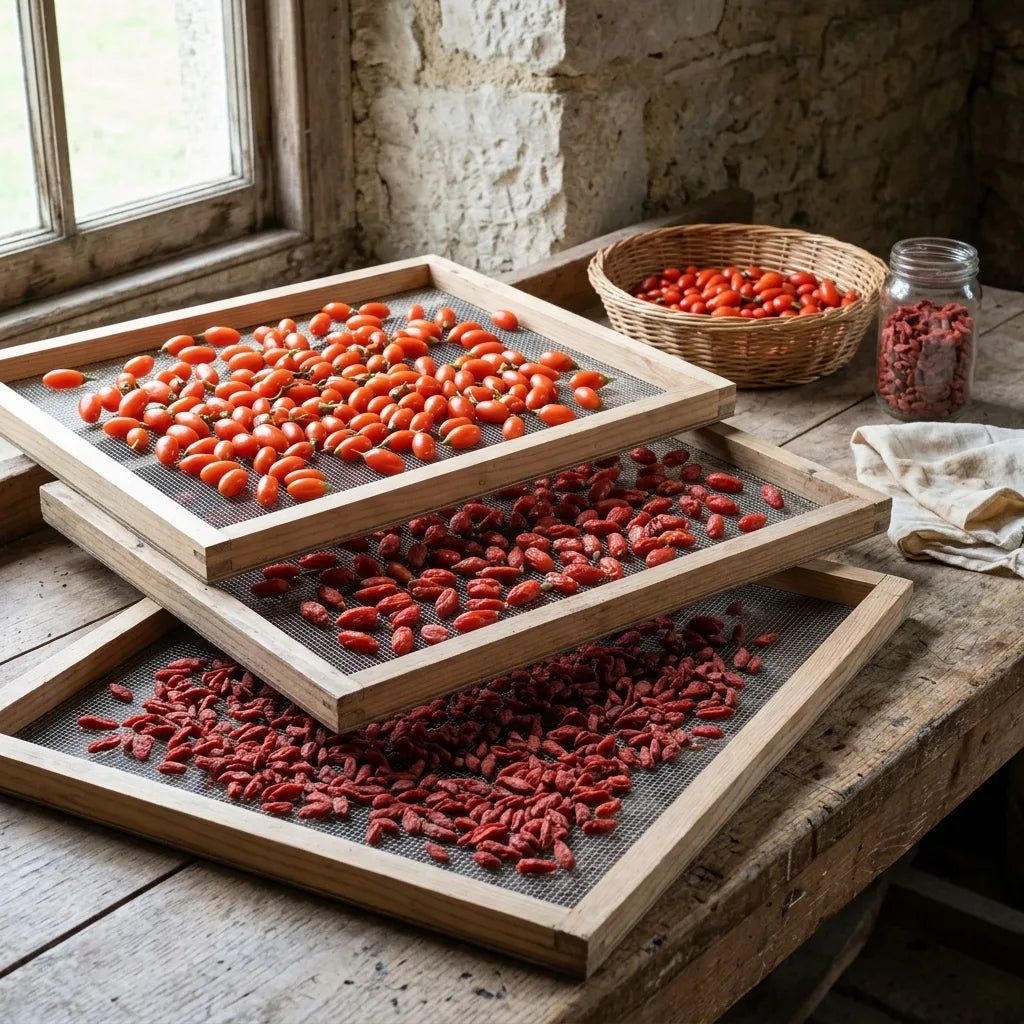
- Harvest the berries when they are deep red and soft, from July to October, in stages. They freeze well and dry very easily in a dehydrator or in a very low oven.
Beneficial combinations:
Benefits for biodiversity:
- Its small purple flowers, produced throughout the summer, are heavily visited by bees and bumblebees over a long period.
- Its berries feed birds in autumn, and its dense growth provides welcome shelter in an informal hedge.
- Its drought tolerance makes it a good candidate for water-wise gardens.
Uses:
- Dried berries added to breakfast cereals, used like raisins, or rehydrated in water or tea. Fresh, they can be eaten straight from the shrub.
- Traditional medicinal plant in Chinese herbal medicine. See our medicinal plants to sow.
Harvesting your own seeds:
Crush a few ripe berries in a little water, rinse to separate the tiny seeds from the pulp, then dry them flat on paper before storing. See storing your seeds.
Commitment to Quality: at SemiSauvage - Permaculture, we grow and select our seeds with respect for all living things as our guiding principle. Based near the Auvergne volcanoes, we choose reproducible, non-hybrid varieties, tested for their germination rate, sorted and carefully packaged, without any chemical treatment. Our belief: to give gardeners back the ability to resow, year after year, seeds that truly belong to them.
A hardy and generous shrub, ideal for training along a wall.