Gomphrena haageana
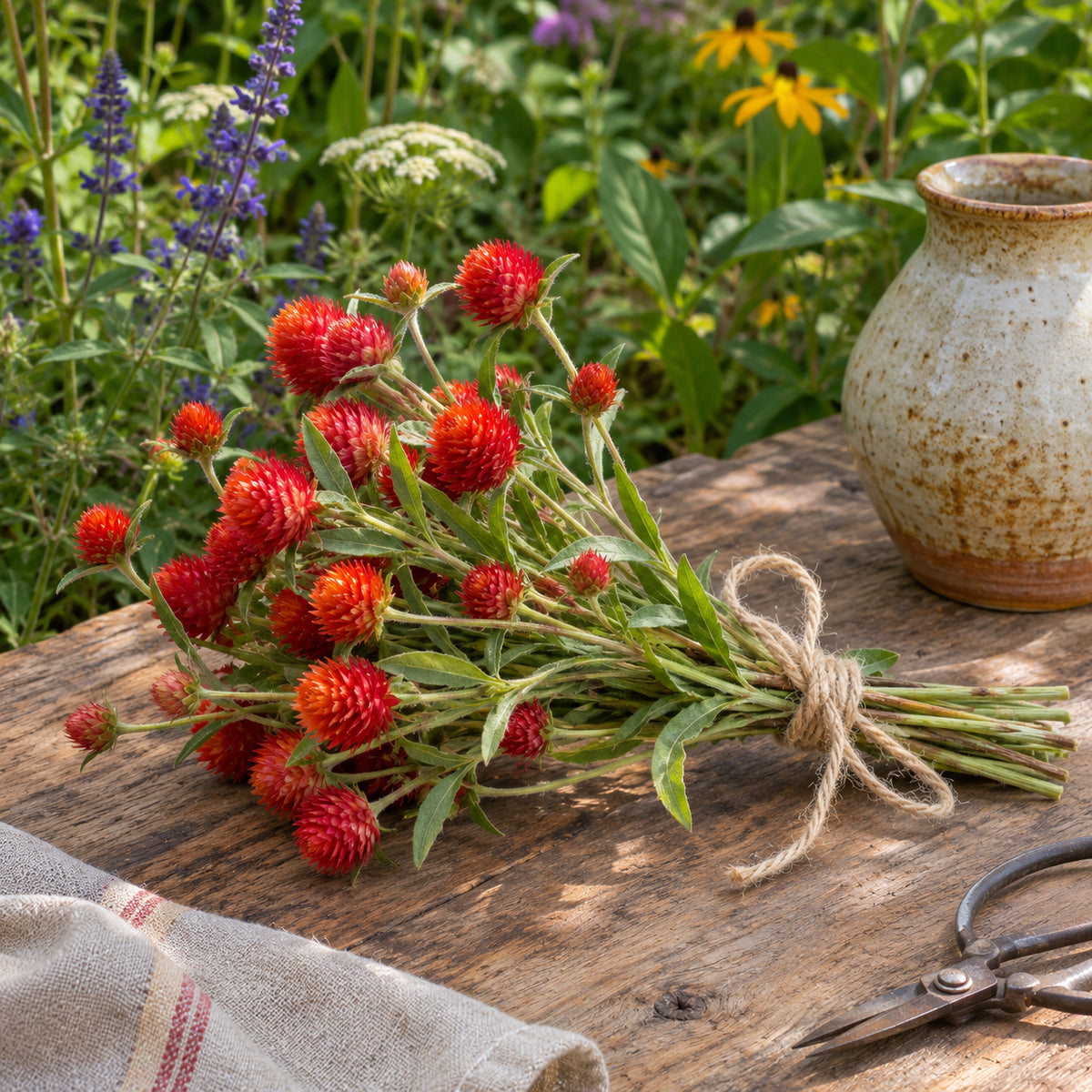
Rio globe amaranth adds touches of orange-red to flower beds, with small flower heads borne on slender, branching stems. Their papery texture comes from the bracts surrounding the tiny flowers. This distinctive feature also makes them suitable for dried bouquets: the plant can extend the garden’s colors long after summer. Grown as an annual in our climate, this gomphrena particularly enjoys warmth and sunny locations.
Characteristics:
- Small flower heads in warm shades, on a branching plant.
- Opposite leaves with a slight covering of hairs.
- Flowers for flower beds, fresh bouquets, and drying.
Sowing tips:
-
Timing: Start seedlings under cover six to eight weeks before planting them outdoors. Provide steady warmth of 21 to 26 °C.
-
Tip: Sow in fine potting mix, cover very lightly, then moisten without waterlogging. A cold seed tray saturated with water is not suitable for this heat-loving plant.
-
Transplanting: Keep young plants in a bright spot, gradually acclimate them to outdoor conditions, and wait until after the last frost to plant them outside.
Find the preparation steps in our guide to sowing methods.
Growing and care tips:
Plant Rio globe amaranth in full sun, in soil that drains well. Give the branched stems room to grow without being overshadowed by their neighbors. Water at planting and while the roots establish; once the plants are established, adjust watering to the soil conditions. In pots, check more often to see whether the growing medium has dried out. Remove faded flowers or cut a few stems for bouquets, while saving some flower heads to produce seeds.
Flowering and harvest:
Flowering lasts through the summer and may continue into early fall, depending on the climate and sowing date. For drying, choose fully open, still-colorful flower heads on a dry day. Remove the lower leaves, gather the stems into small, loose bundles, then hang them upside down in a dry, airy place out of direct sunlight. A large, tightly packed bundle retains more moisture.
Garden uses:
Place a few stems in a narrow vase, or pair them with grasses and other dried flowers. In the garden, their small size contrasts with flat flowers or broad foliage. In a diverse border near the vegetable garden, give them a sunny spot: dense neighboring growth would reduce the available light.
Collecting your own seeds:
Cut flowers for bouquets before the seeds are fully mature. Leave several heads on healthy plants until they turn brown and dry. Each small, papery structure holds a single-seeded fruit. Cut the dry heads over a container, finish drying them in a sheltered spot, then gently rub them and separate the debris. Label the harvest with its botanical name and year, and keep it separate from other globe amaranths. See our tips for storing harvested seeds.
Commitment to Quality:
At SemiSauvage, we offer open-pollinated seeds to grow diversity in the garden. This packet contains at least 80 seeds, packaged in France. The dates given are guidelines to adapt to your climate, soil, and the conditions of the season.
A flower to grow both for warm accents in the flower bed and for bouquets to keep.