Solanum melongena “Rotonda Bianca”
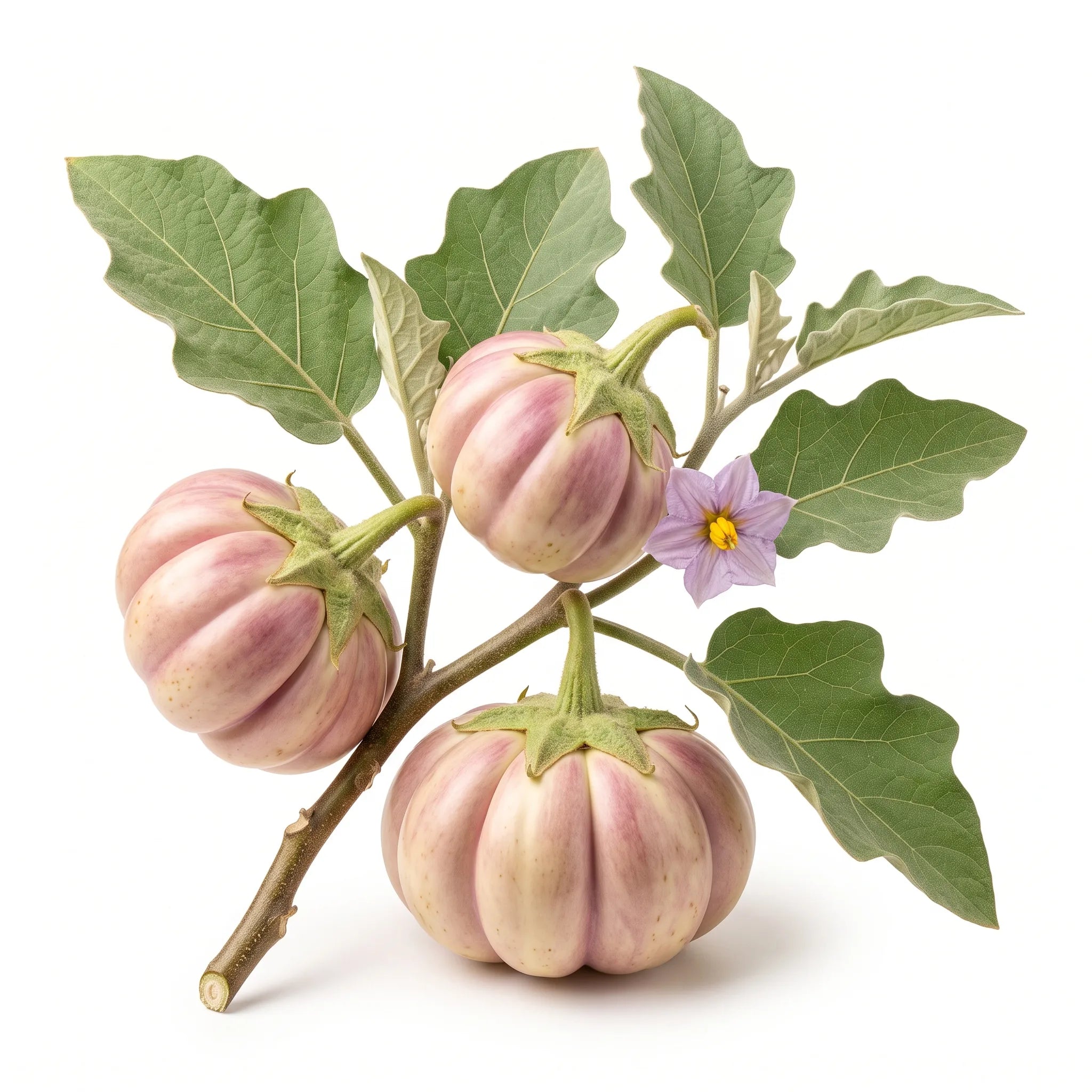
Rotonda Bianca eggplant, round white eggplant, egg-shaped eggplant: this type of variety is why the eggplant gets its English name, eggplant — the first ones introduced to Europe were white and egg-shaped. Its flesh is milder, creamier, and above all less bitter than that of black varieties, with significantly fewer seeds.
Characteristics:
-
White, round fruits: a traditional Italian variety, highly decorative.
-
Mild, creamy flesh: barely bitter, so salting to draw out excess moisture is unnecessary.
-
Easy to grow: suitable for gardens as well as terraces and balconies in a large pot.
-
Thin skin: no need to peel it; it softens during cooking.
Precautions:
- Like all nightshades, its foliage and immature fruits contain solanine and must not be eaten. Only well-formed fruits are edible, and they must always be cooked.
- Frost-tender and sensitive to cold: it suffers as soon as nighttime temperatures drop below 12 °C.
Sowing advice:
-
Exposure: warm, sunny, and sheltered from the wind.
-
Soil: very rich in humus, deep, moist, and well drained. This is an extremely hungry plant: a generous supply of well-rotted compost is crucial for fruiting.
-
Method: sow indoors in pots from February onward, at 24-26 °C — a critical point: eggplant germinates poorly below 20 °C and is far more demanding than tomatoes. See how to sow your seeds.
Planting advice:
- Transplant after the frosts, spacing plants 60 cm apart, and provide a stake: stems laden with round, heavy fruits bend easily.
Care advice:
- Water regularly at the base without wetting the foliage. Mulch generously.
- In our climate, limit the plant to 4 or 5 fruits by pinching out the stem above the last one: you will get truly developed eggplants rather than a succession of unfinished ones.
Harvesting advice:
- Harvest when the fruit is completely white, firm, and shiny. As soon as it turns yellow or becomes dull, it is overripe: its flesh becomes bitter and full of hard seeds.
Beneficial companion plants:
Benefits for biodiversity:
- Its purple flowers require buzz pollination: only bumblebees, which can vibrate their muscles at high frequency, are capable of it. Welcoming them into the garden directly improves your harvest.
- Growing colorful heirloom varieties helps preserve cultivated diversity.
Uses:
- Its round shape makes it the perfect eggplant for stuffing. It is also excellent roasted in thick slices, grilled, in parmigiana, or as a dip. Always cooked, never raw.
Saving your own seeds:
Leave one fruit well beyond the eating stage, until it turns yellow and wrinkles. Then remove the seeds, rinse them, and dry them. Since eggplant is mostly self-pollinating, cross-pollination remains limited. See how to save your seeds.
Commitment to Quality: at SemiSauvage - Permaculture, we grow and select our seeds with respect for all living things as our guiding principle. Based near the Volcanoes of Auvergne, we choose open-pollinated, non-hybrid varieties, test them for germination rates, and carefully sort and package them, without any chemical treatment. Our conviction: to give gardeners back the ability to resow, year after year, seeds that truly belong to them.
The white eggplant of Italian vegetable gardens, mild and made for stuffing.