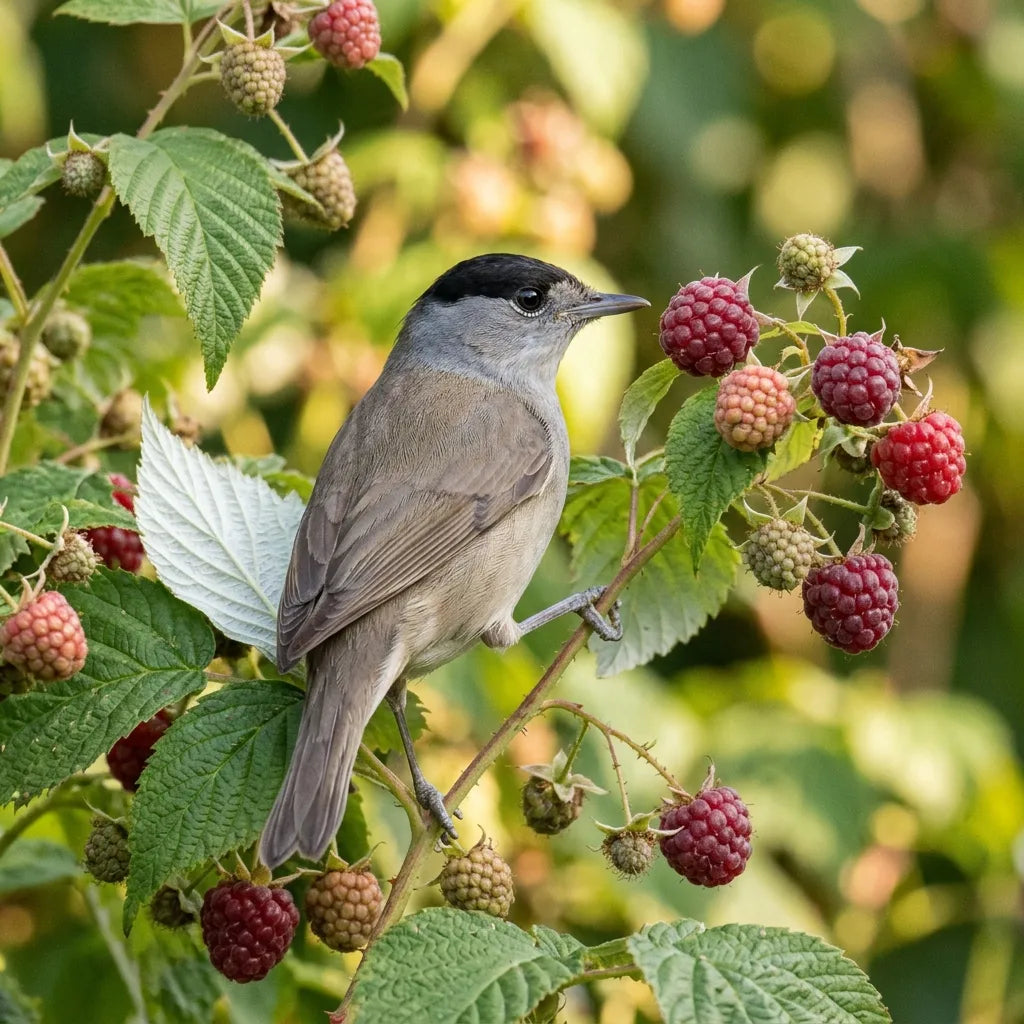
Rubus idaeus
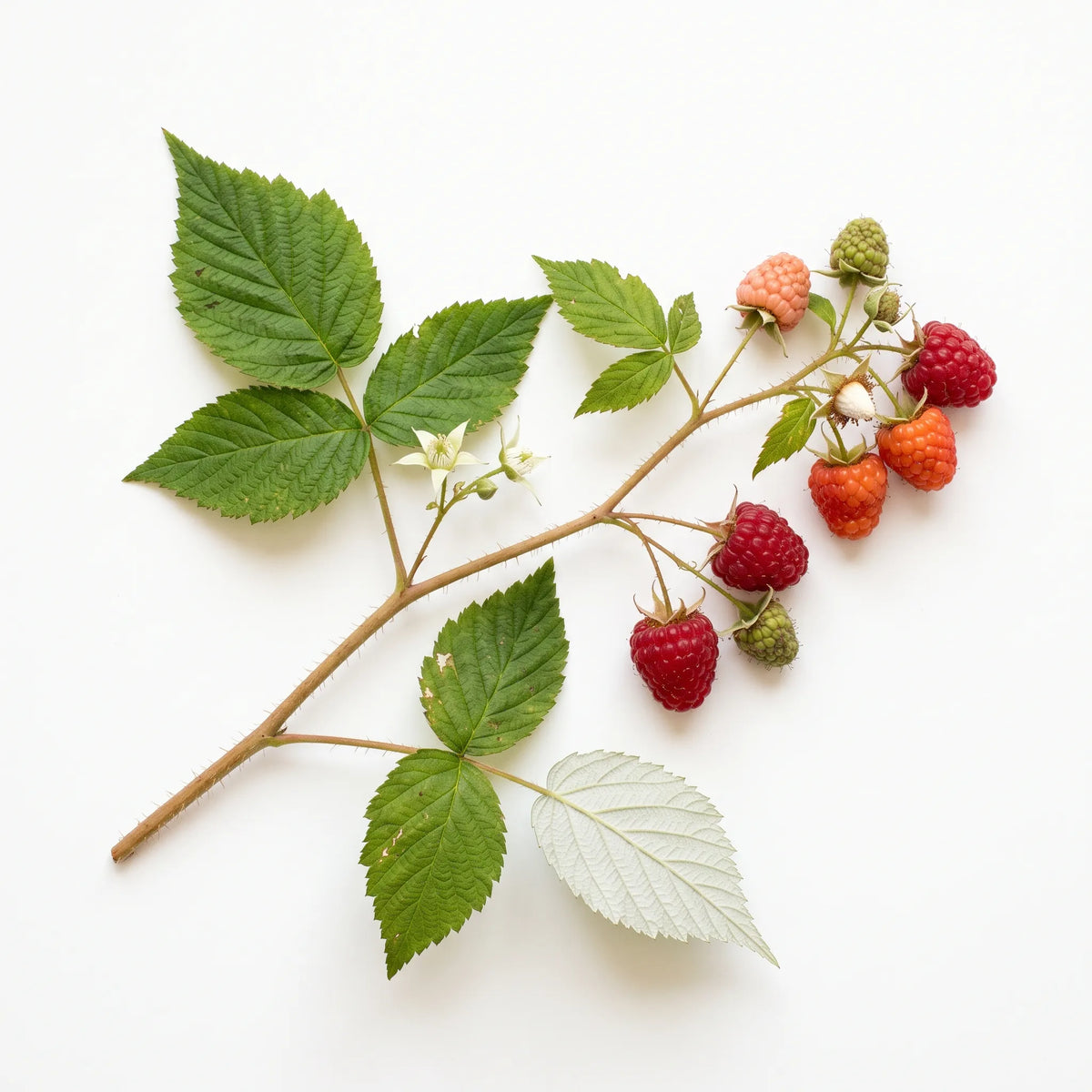
Wild raspberry, Ida bramble, woodland raspberry: its species name comes from Mount Ida in Crete, where legend held that it grew in abundance. Much smaller than cultivated raspberries, the wild raspberry far surpasses them in fragrance — it tastes of mountain edges and clearings.
Characteristics:
-
Highly fragrant fruit: smaller than those of horticultural varieties, but distinctly more aromatic.
-
Suckering subshrub: it gradually forms a dense clump through its suckers.
-
Very hardy: as a mountain plant, it tolerates harsh winters without protection.
-
Undemanding: it adapts to most soils, provided they remain moist.
Good to know:
- The raspberry produces suckers vigorously and expands its clump year after year. Plan for an edging barrier or check the suckers annually if you want to contain it.
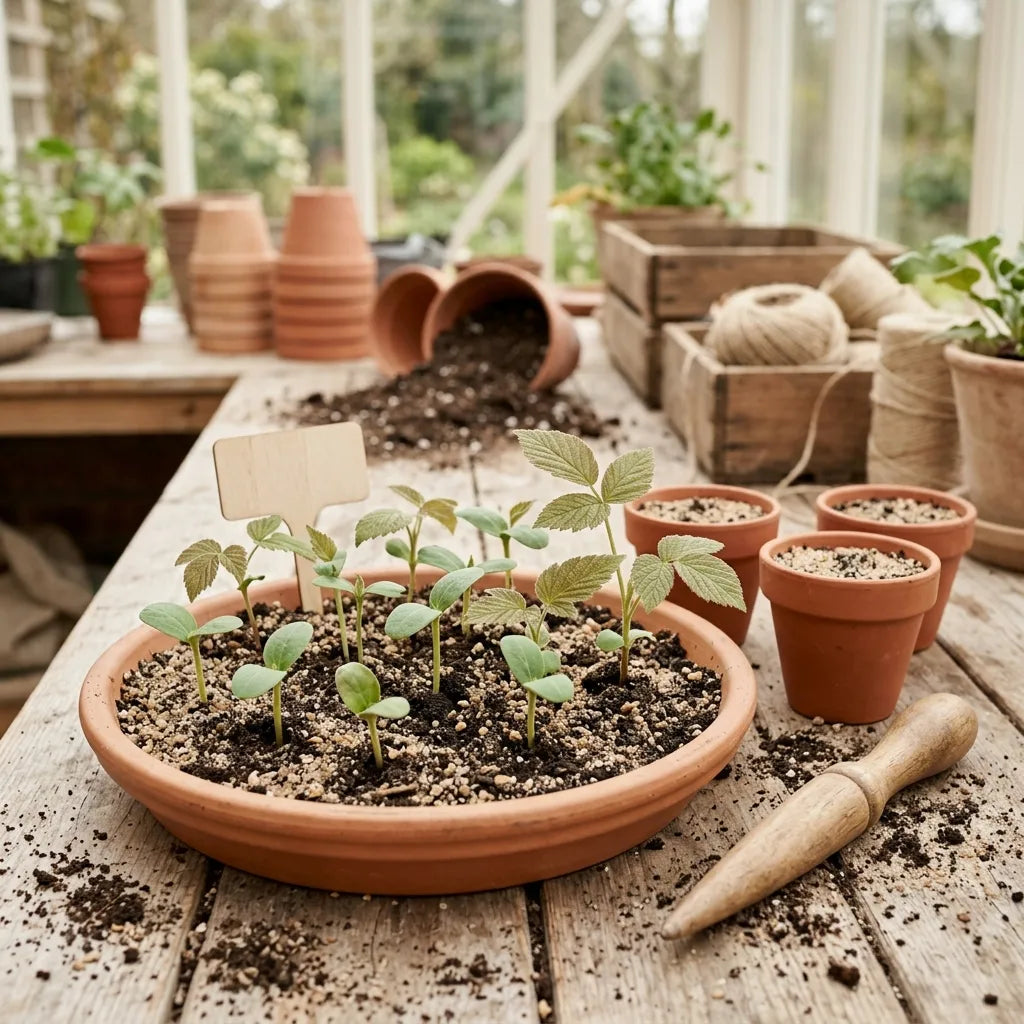
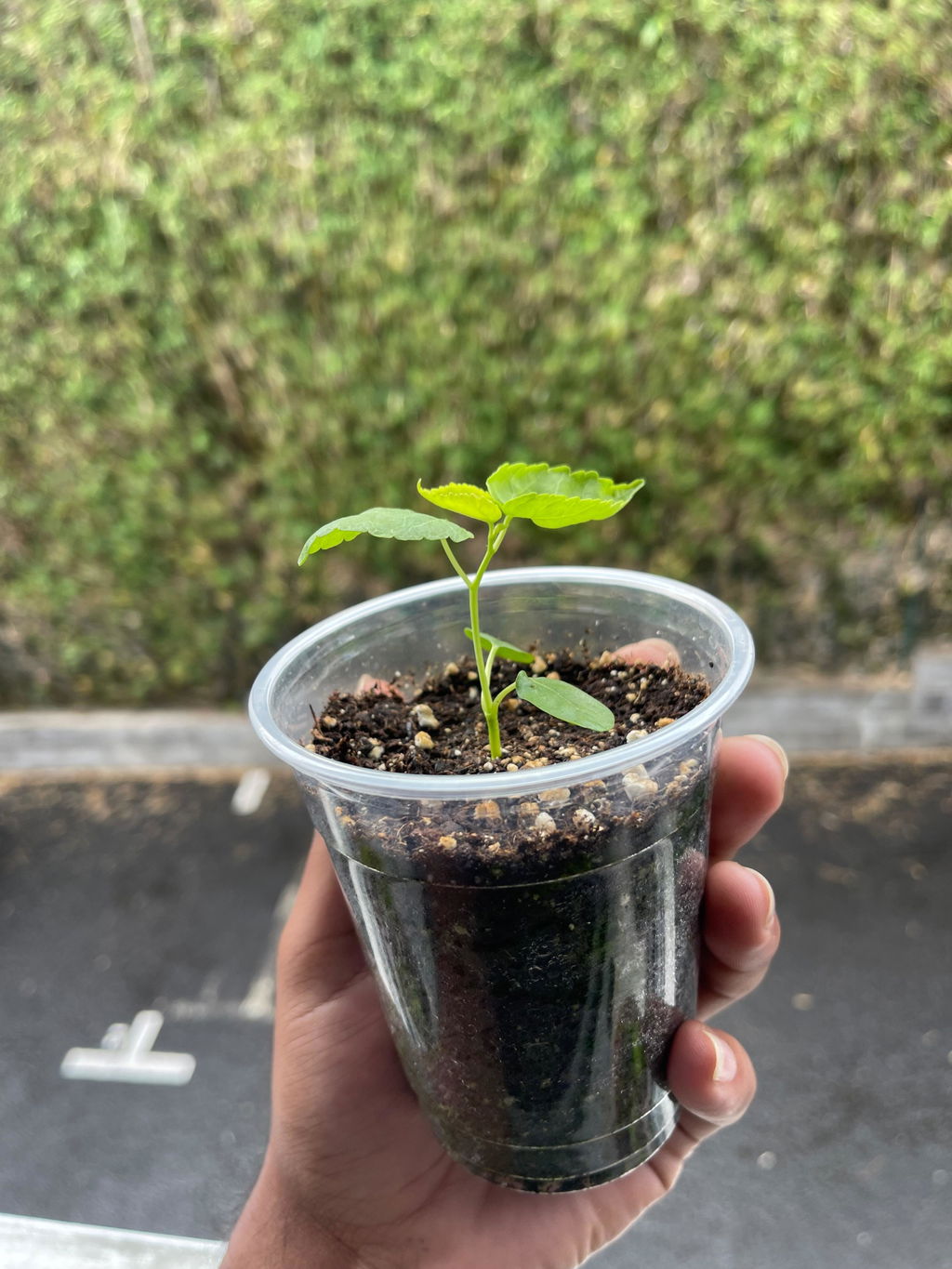
- Growing from seed requires patience: expect to wait two to three years before the first harvests, whereas a purchased plant produces from its first year. In return, you get plants perfectly adapted to your soil.
Sowing advice:
-
Exposure: sunny or lightly shaded, sheltered from the wind. In hot regions, partial shade suits it better: it is a high-altitude plant that suffers during heatwaves.
-
Soil: rich, light, humus-rich and above all moist, preferably slightly acidic. It dislikes heavy clay soils and chalky soil, which causes the foliage to turn yellow. Avoid lawns, where grasses compete fiercely with it.
-
Method: cold stratification for 4 to 6 weeks is necessary to break dormancy. Then sow in pots in spring, covering the seeds very lightly. Germination is slow and irregular: do not discard your pots too soon. See how to sow seeds.
Planting advice:
- Transplant along the edge of the vegetable garden or at the woodland edge, spacing plants 60 to 80 cm apart. Mulch generously as soon as you plant: its roots are shallow and vulnerable to drying out.
Care advice:
- Keep the soil moist without waterlogging it, especially during hot weather. Here, mulching is more than just a convenience.
-
Pruning: wild raspberry fruits on second-year canes. Cut the canes that have borne fruit right down to ground level at the end of the season, and keep the young green shoots of the current year for the following harvest.
- Adding compost around the base each autumn maintains its vigor.
Harvesting advice:
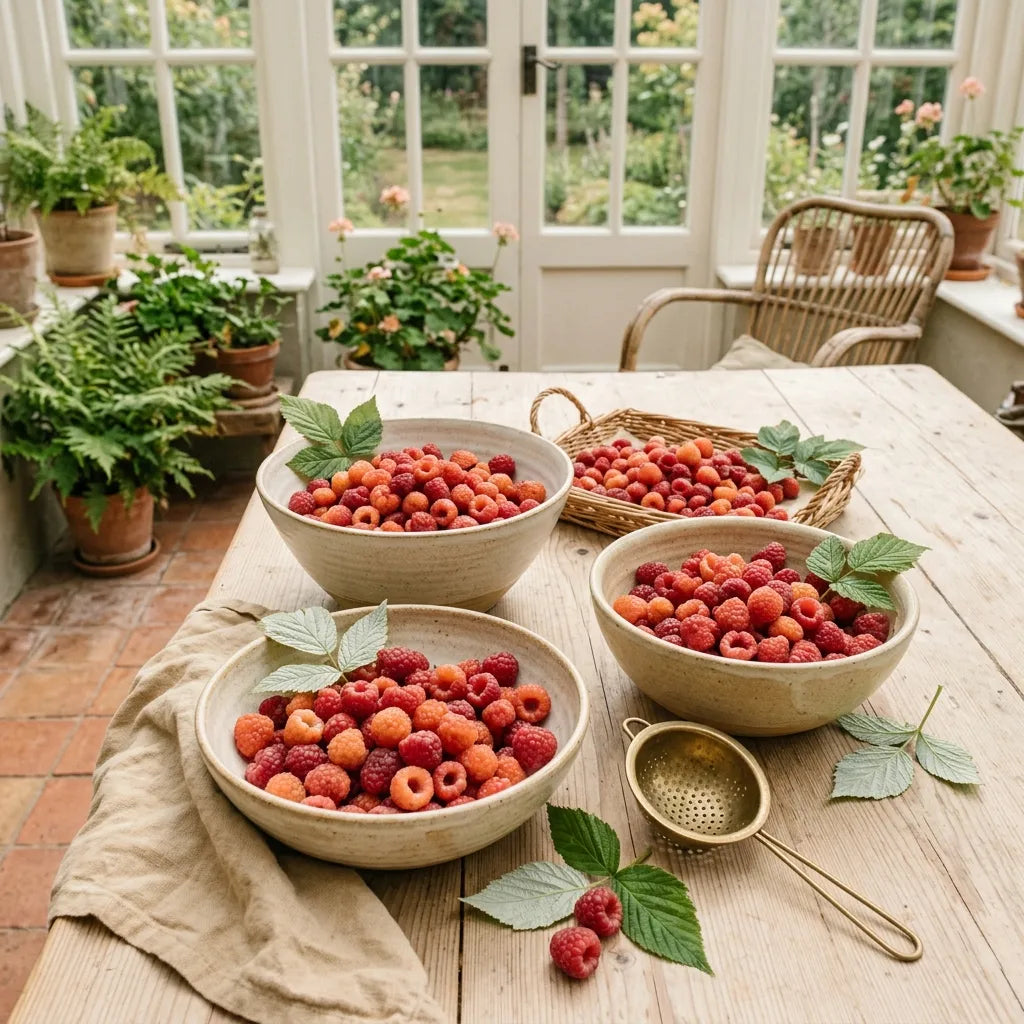
- The raspberry detaches from its receptacle by itself when ripe — if it resists, wait. Pick in the morning, after the dew has evaporated.
- It keeps for a very short time: eat, process or freeze it the same day.
Beneficial pairings:
Benefits for biodiversity:
- Its discreet white flowers are among the most visited by bees: raspberry honey is highly regarded by mountain beekeepers.
- Its dense clump provides welcome nesting shelter for songbirds, while its fruit feeds blackbirds and thrushes.
Uses:
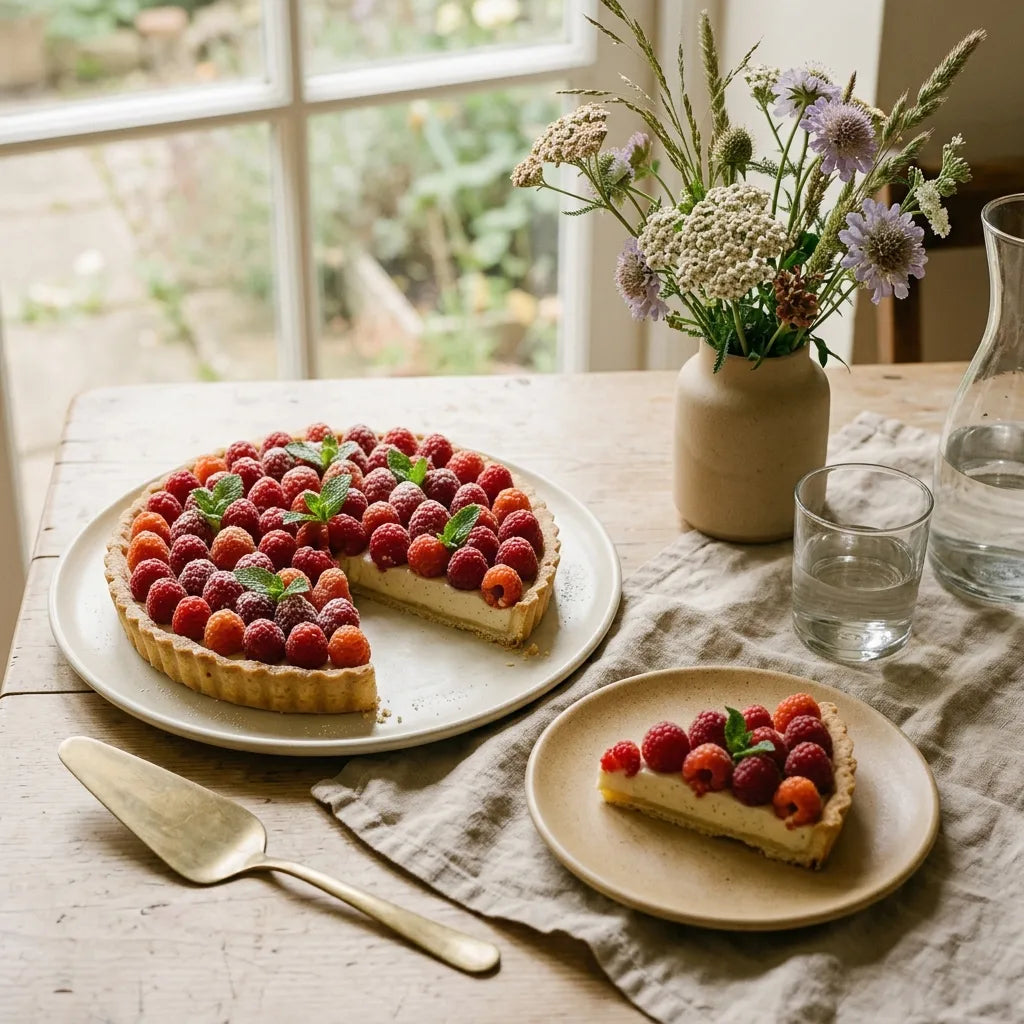
- Freshly picked, in jam, coulis, syrup or frozen. Its intense fragrance means that a small amount goes a long way.
- The leaves dry well for herbal tea, a traditional use in the countryside.
Harvesting your own seeds:
Crush very ripe raspberries in a little water, rinse several times to separate the seeds from the pulp, then dry them flat before winter stratification. Raspberry plants can also be propagated very easily by removing their suckers. See how to store your seeds.
Commitment to Quality: at SemiSauvage - Permaculture, we grow and select our seeds with respect for all living things as our guiding principle. Based near the Auvergne Volcanoes, we choose reproducible, non-hybrid varieties, tested for their germination rate, carefully sorted and packaged, without any chemical treatment. Our belief: to give gardeners back the ability to resow, year after year, seeds that truly belong to them.
The fragrance of mountain clearings, brought right into the garden.