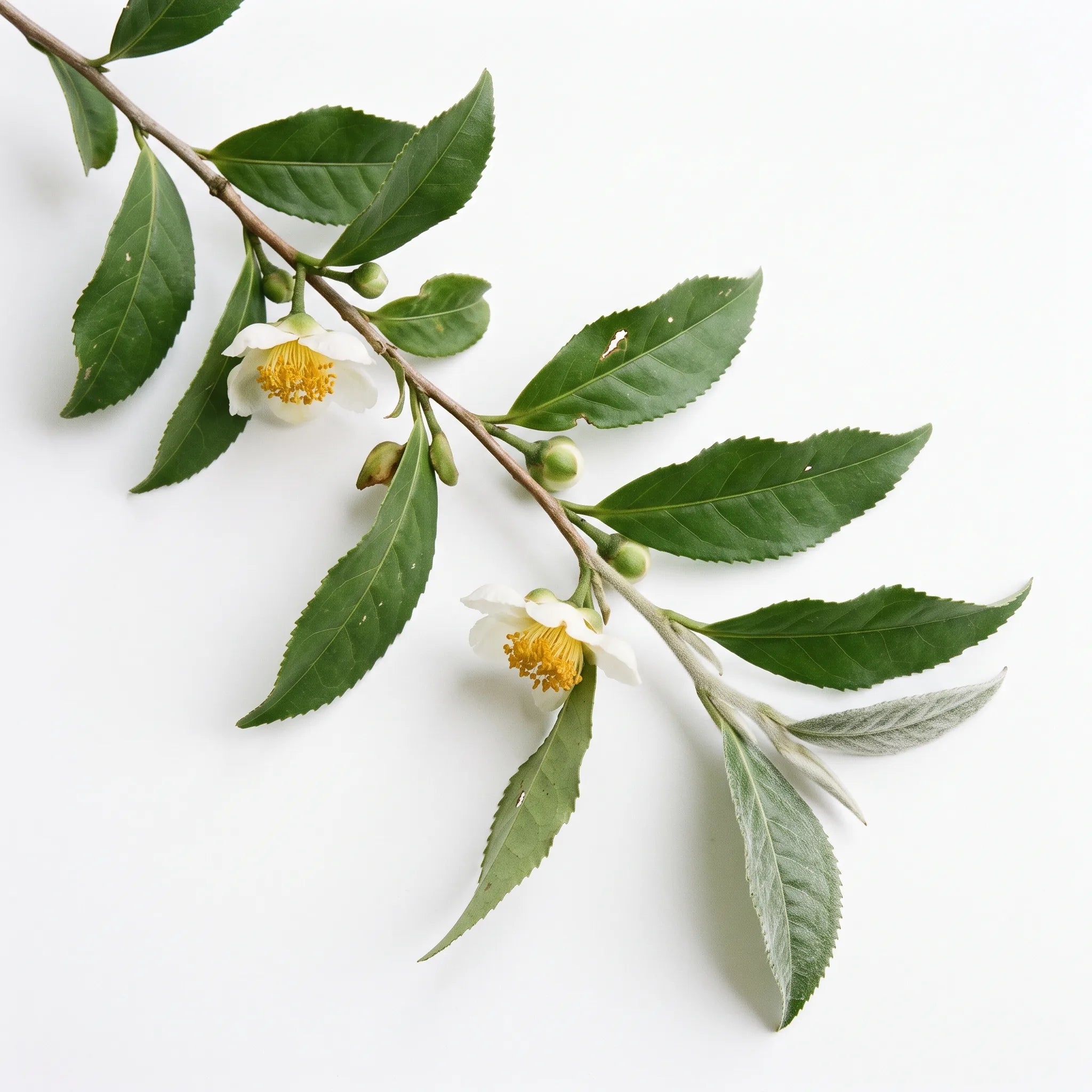
Camellia sinensis
Tea plant, tea tree, tea camellia: green tea, black tea, white tea, oolong — they all come from this one and the same species. It is not the plant that changes, but the processing of the leaves after picking: the degree of oxidation makes all the difference. Growing your own tea plant therefore means being able to produce any of these teas.
Characteristics:
-
Evergreen shrub: glossy, leathery, dark green leaves that are decorative all year round.
-
One species, every tea: the type of tea depends solely on the processing after harvest.
-
Autumn flowering: small, fragrant white flowers with yellow centers, like a miniature camellia.
-
Can be grown in a pot: it can easily be kept at 1 to 1.5 m.
Precautions:
- It dislikes lime, both in the soil and in irrigation water: use rainwater or demineralized water, otherwise its foliage may turn yellow.
- Hardy to approximately -10 °C once well established, but young plants are fragile: protect them from severe frost during their first few years.
Sowing advice:
-
Position: bright partial shade or gentle sunlight, protected from scorching sun and drying winds. It prefers mild, humid climates.
-
Soil: acidic (ericaceous soil), rich in humus, light, and well drained. This is the decisive factor: it declines in alkaline soil. In a pot, a mixture of ericaceous soil and compost works well.
-
Method: these seeds do not require cold stratification, unlike many temperate species. Soak them for 24 to 48 hours in lukewarm water — the ones that sink are the most viable — then sow them 2 cm deep in a substrate kept warm and moist (20-25 °C). Germination is slow and irregular: allow 1 to 3 months. Sow them fresh, as their germination capacity declines rapidly. See how to sow your seeds.
Planting advice:
- Transplant into a pot at least 30 cm wide, or plant in the ground in mild regions and acidic soil. Growing in an unheated greenhouse works very well.
Care advice:
- Water regularly with lime-free water, maintaining high ambient humidity. Mulch around the base.
- Prune lightly each spring to keep it compact and stimulate the production of young shoots — these are the ones harvested.
Harvesting advice:
- Pick only the terminal bud and the next two young leaves — this is the universal rule in tea gardens, and the one that produces the finest teas. Older leaves are bitter.
- For green tea, steam or pan-fry the leaves immediately to stop oxidation, then dry them. For black tea, let them wilt, roll them between your hands, and leave them to oxidize for a few hours before drying. Allow 3 to 4 years before the first worthwhile harvest.
Beneficial combinations:
- It shares the acidic-soil requirements of other ericaceous plants, such as heather, with which it forms a harmonious bed.
Benefits for biodiversity:
- Its late, fragrant autumn flowering provides nectar and pollen for the last pollinators of the season — a rare resource at this time of year.
- Its evergreen foliage shelters insects in winter, like that of other camellias.
Uses:
- Processed and dried leaves for producing your own tea, green, white, or black depending on the method. It is also an attractive ornamental plant in a pot or an ericaceous bed.
Harvesting your own seeds:
After flowering, the shrub forms woody capsules that open at maturity to reveal one to three large, round seeds. Harvest them as soon as they open and sow them quickly: they keep for only a few months. See how to store your seeds.
Commitment to Quality: at SemiSauvage - Permaculture, we grow and select our seeds with respect for living things as our guiding principle. Based near the Volcanoes of Auvergne, we choose reproducible, non-hybrid varieties, tested for their germination rate, sorted, and carefully packaged, without any chemical treatment. Our belief: to give gardeners back the ability to resow, year after year, seeds that truly belong to them.
Growing your own tea: an adventure in patience, and a beautiful plant to enjoy in the meantime.