Cynara scolymus
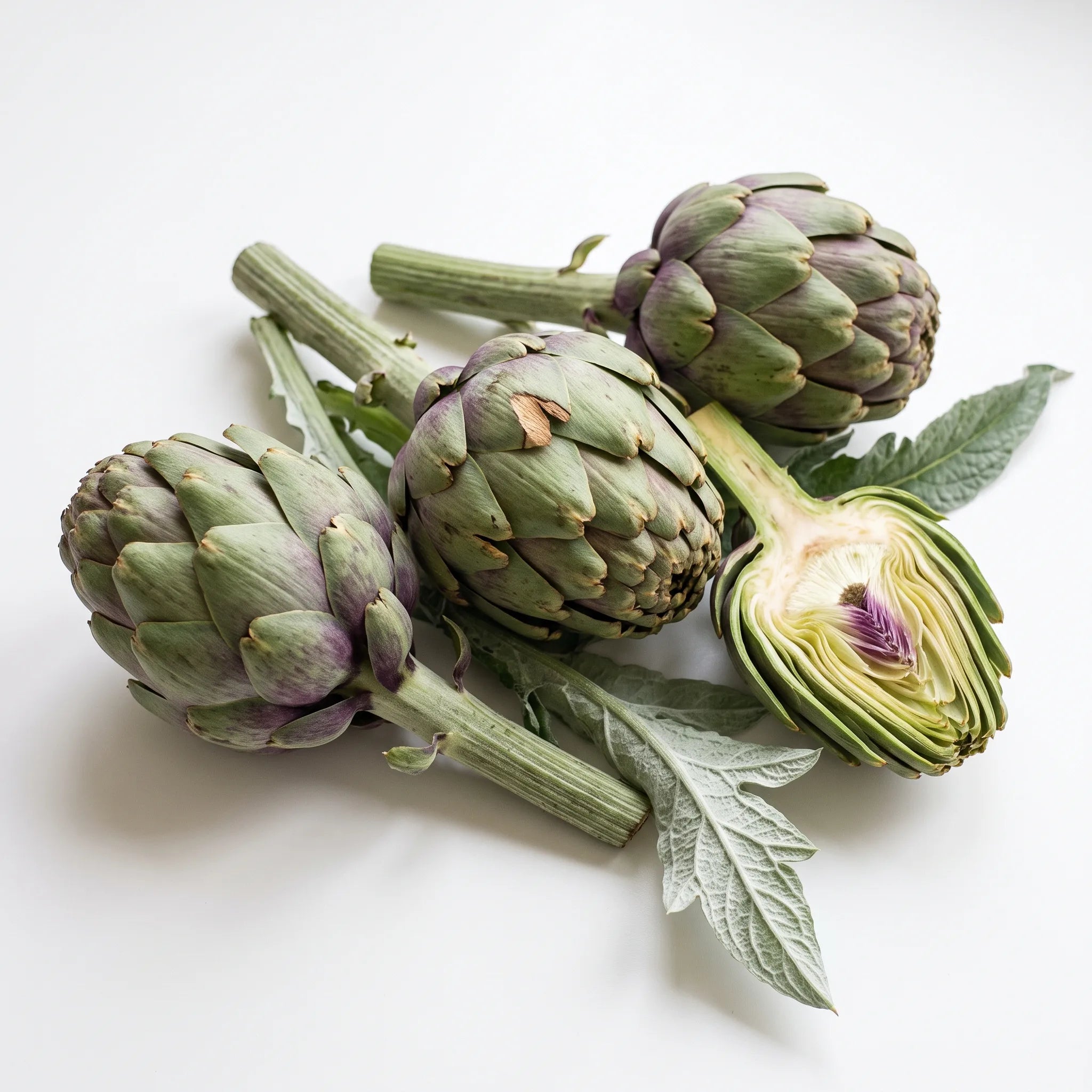
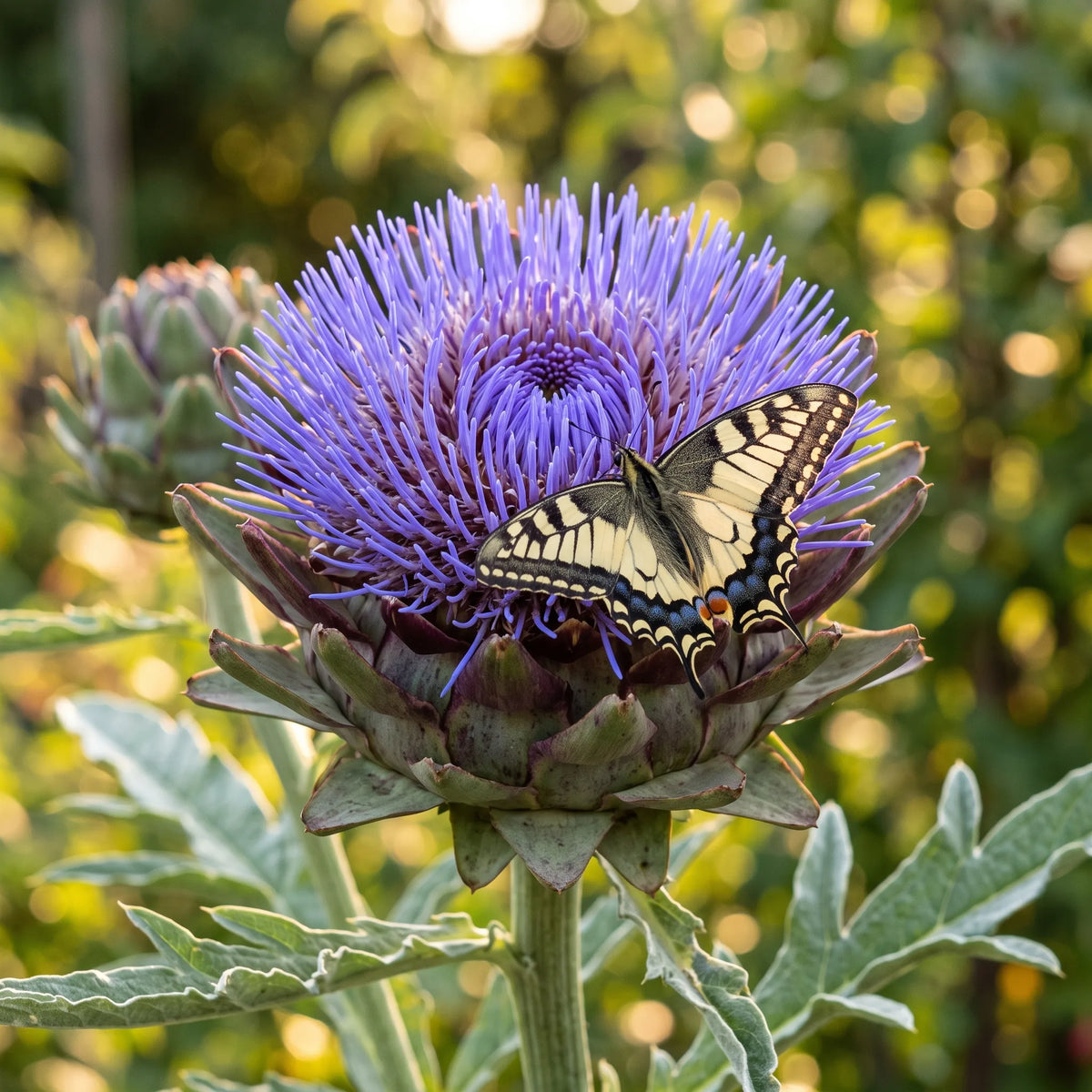
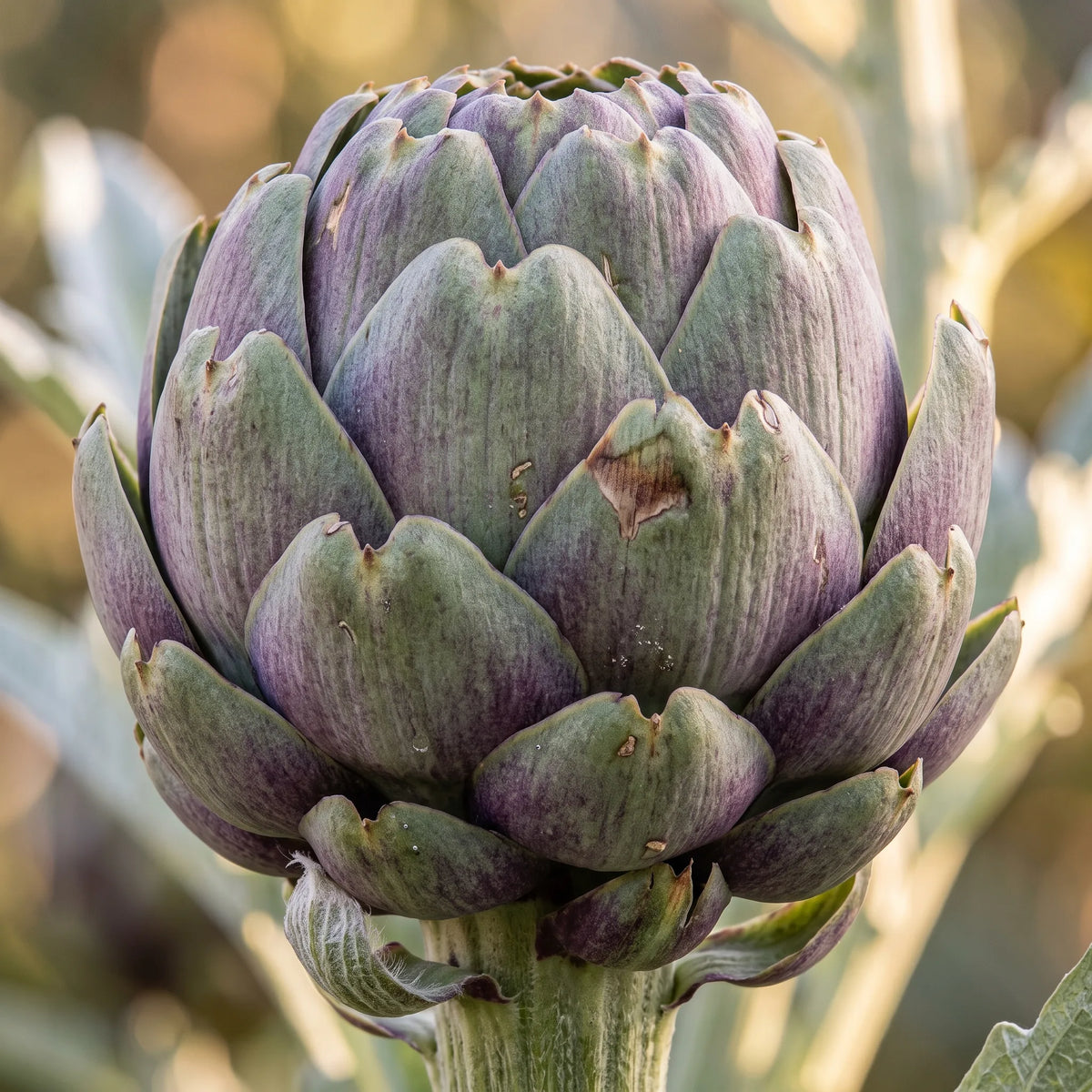
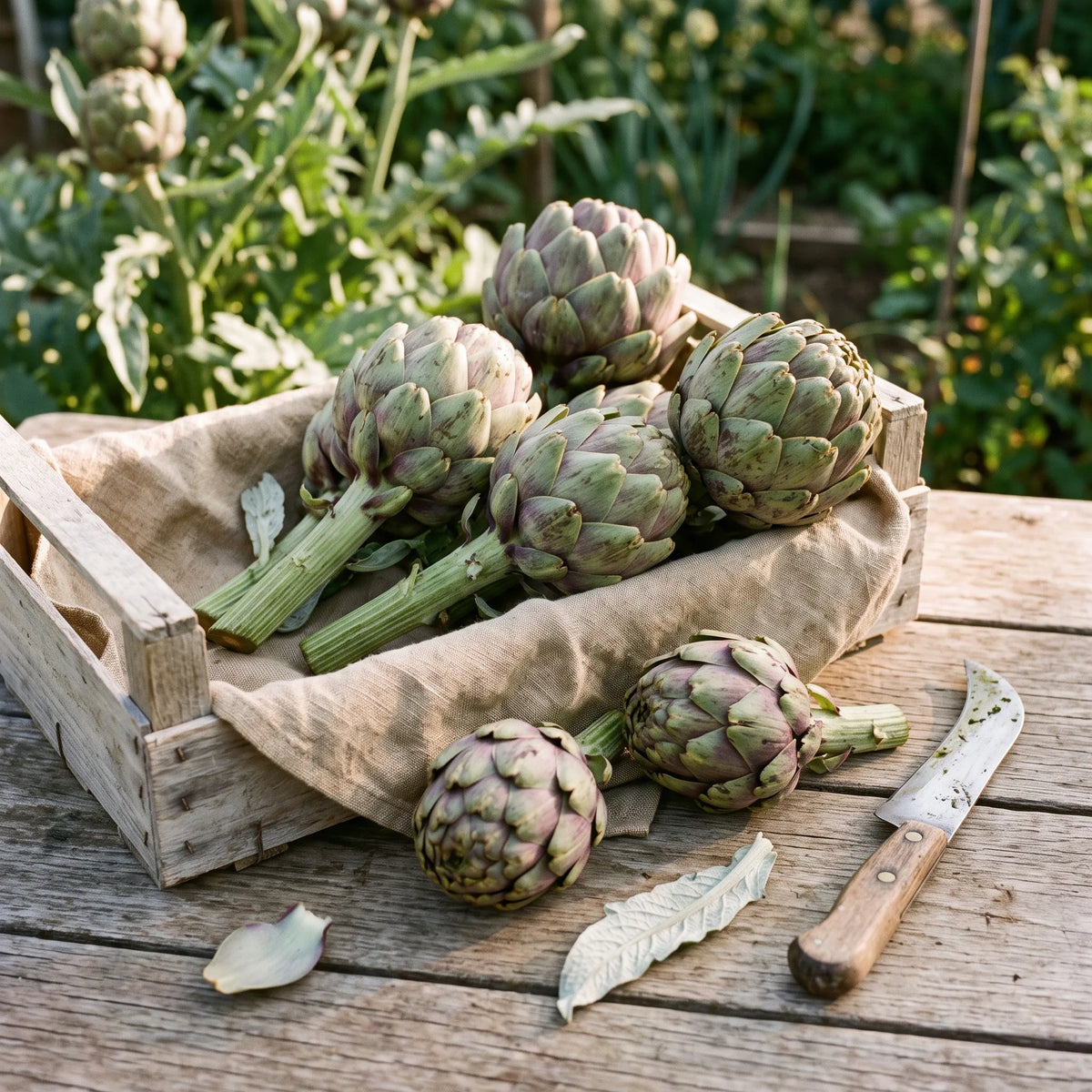
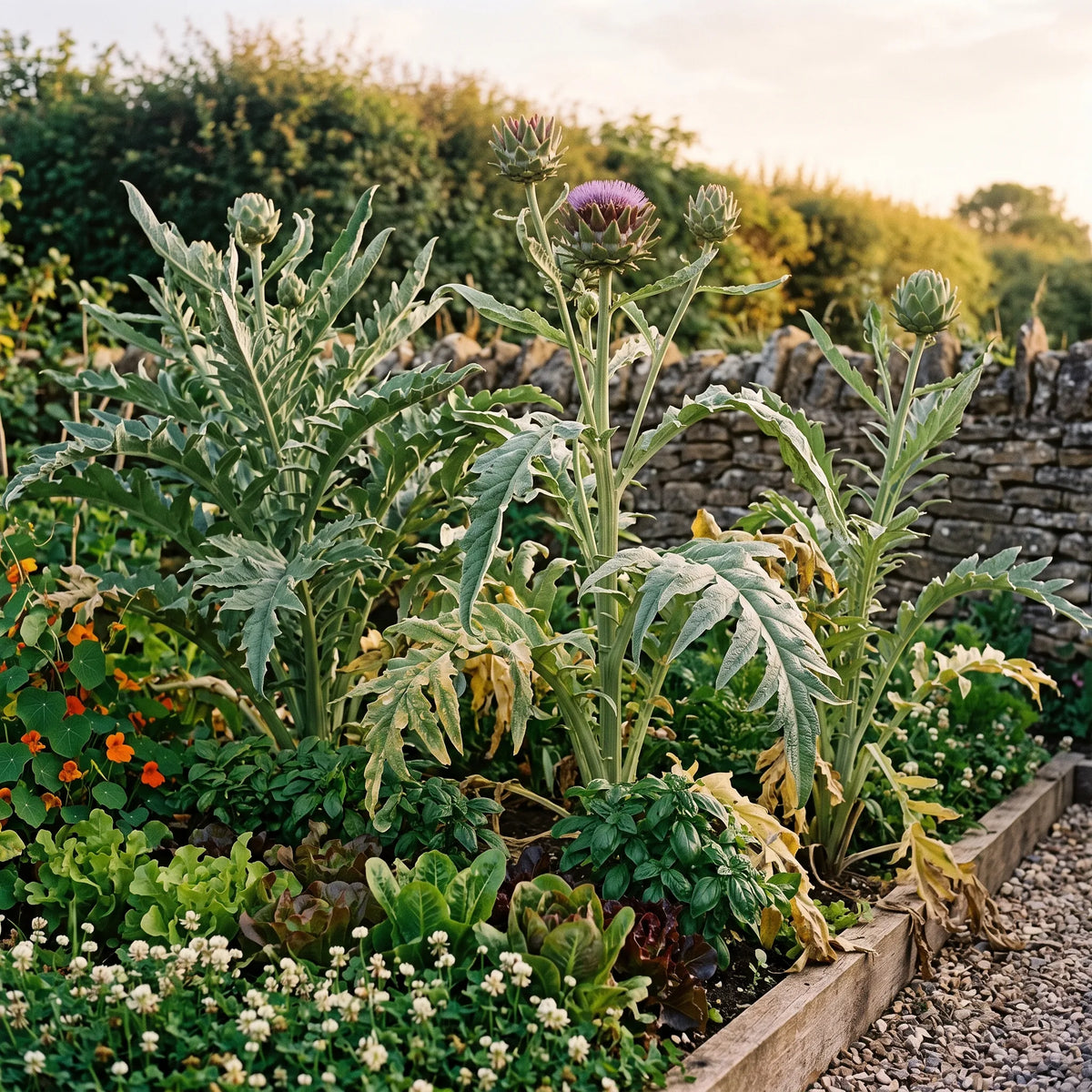
Artichoke, globe artichoke: what we eat is actually an unopened flower bud — left on the plant, it opens into a spectacular, immense blue-violet flower head, very similar to that of the thistle from which it descends. A plant that is both edible and remarkably ornamental, whose finely cut, silvery foliage deserves a place in flower beds just as much as in the vegetable garden.
Characteristics:
-
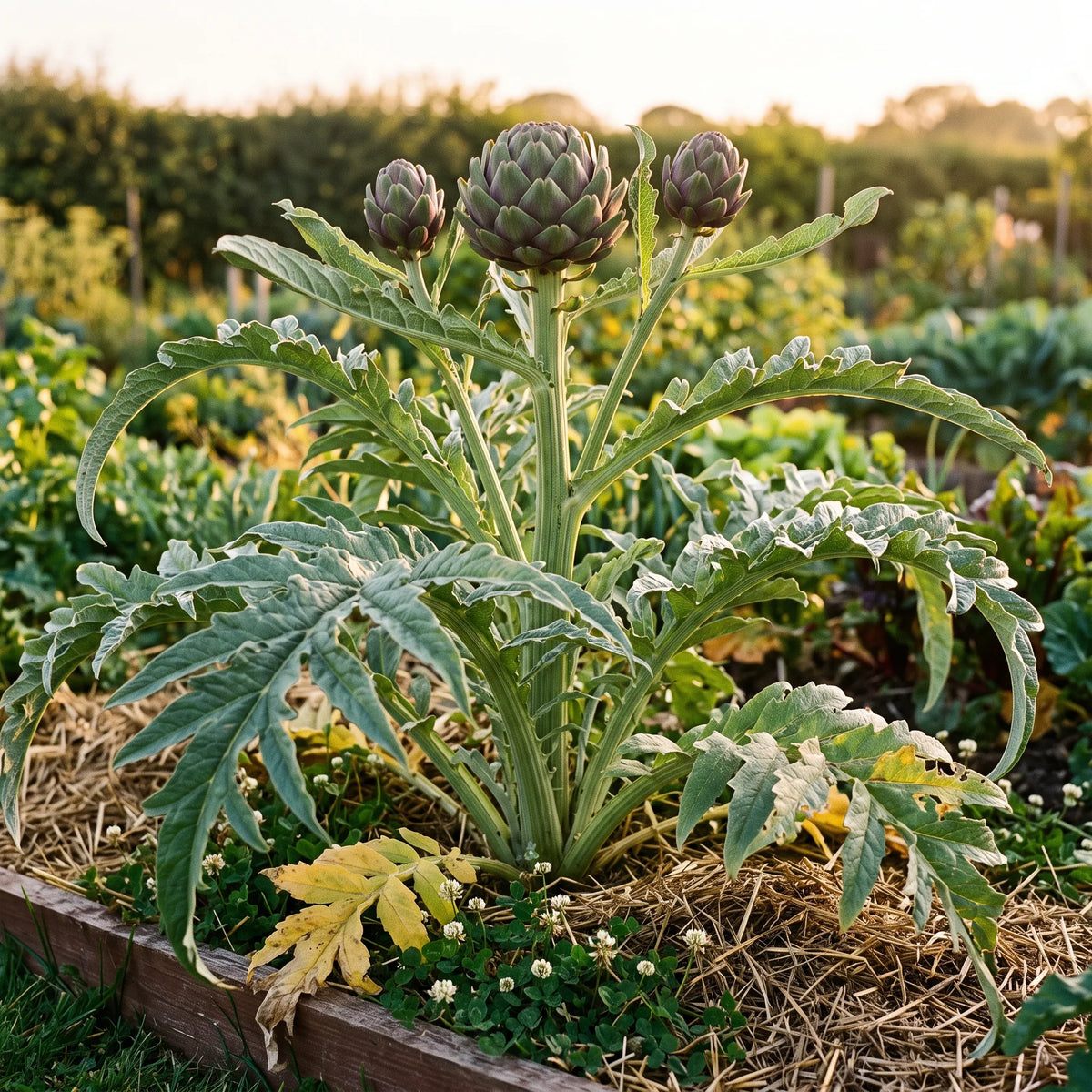
Majestic growth: large, deeply cut silver leaves, reaching up to 1.50 m in height and spreading just as wide.
-
Perennial: a clump produces for 4 to 5 years before needing to be renewed from rooted offsets.
-
Spectacular flowers: an immense blue-violet flower head if a bud is allowed to open, lasting several weeks.
-
Hardy down to -10 °C, provided it is protected from the wind.
Sowing advice:
-
Position: sunny, in a temperate climate and sheltered from cold winds.
-
Soil: deep, fertile, loose and well-drained. This is a hungry plant that appreciates a generous addition of compost. Critical point: it is much more afraid of winter moisture than of cold — in heavy soil, plant it on a mound.
-
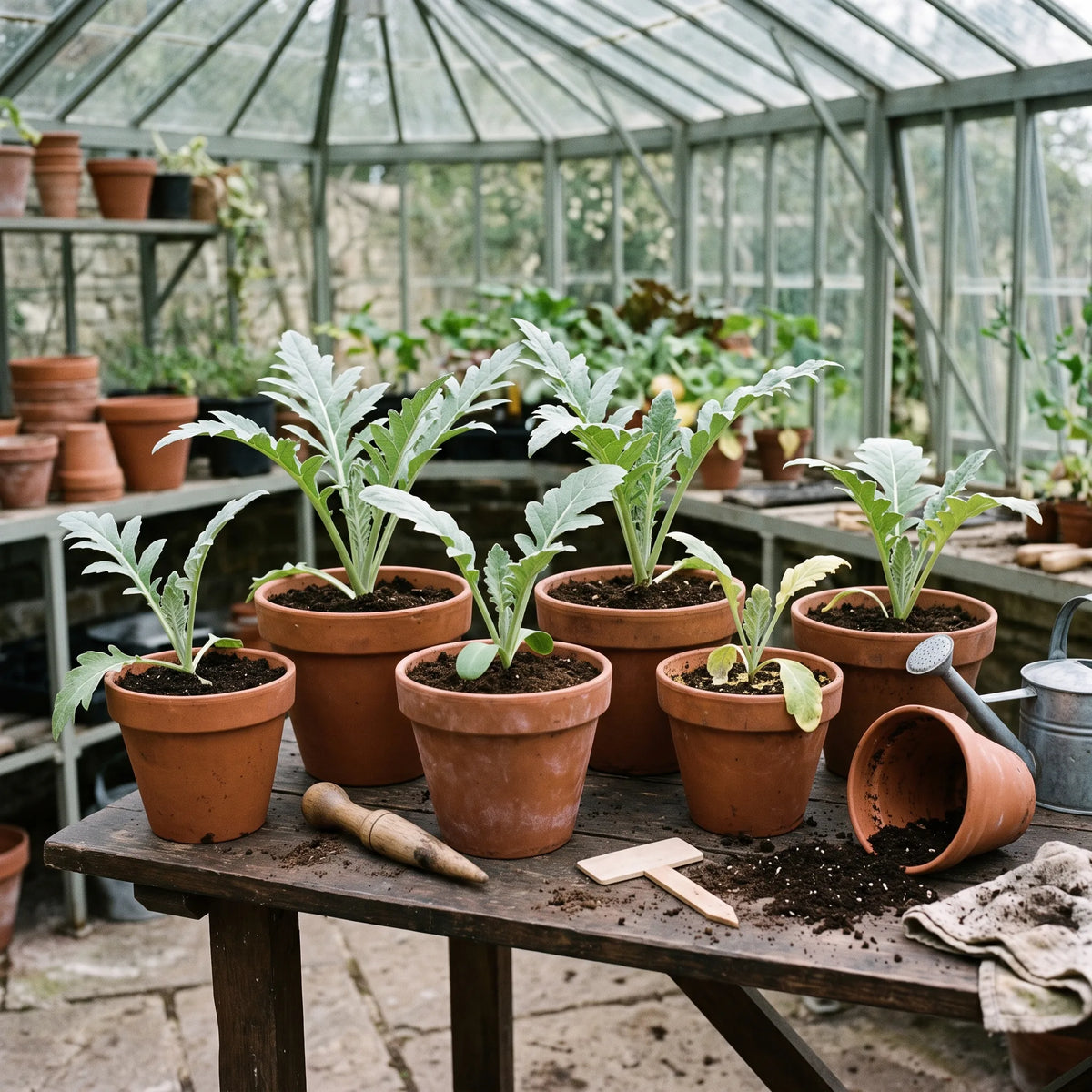
Method: sow from February to March in pots at 18–20 °C, or directly in the ground after the last frosts, at a depth of 1 or 2 cm. Keep the soil moist without waterlogging it during growth. See how to sow seeds.
Planting advice:
- Transplant with at least 1 metre between plants: they become very large. The first harvest generally takes place in the second year.
Care advice:
- Water regularly to keep the soil moist without waterlogging it. Mulch around the base.
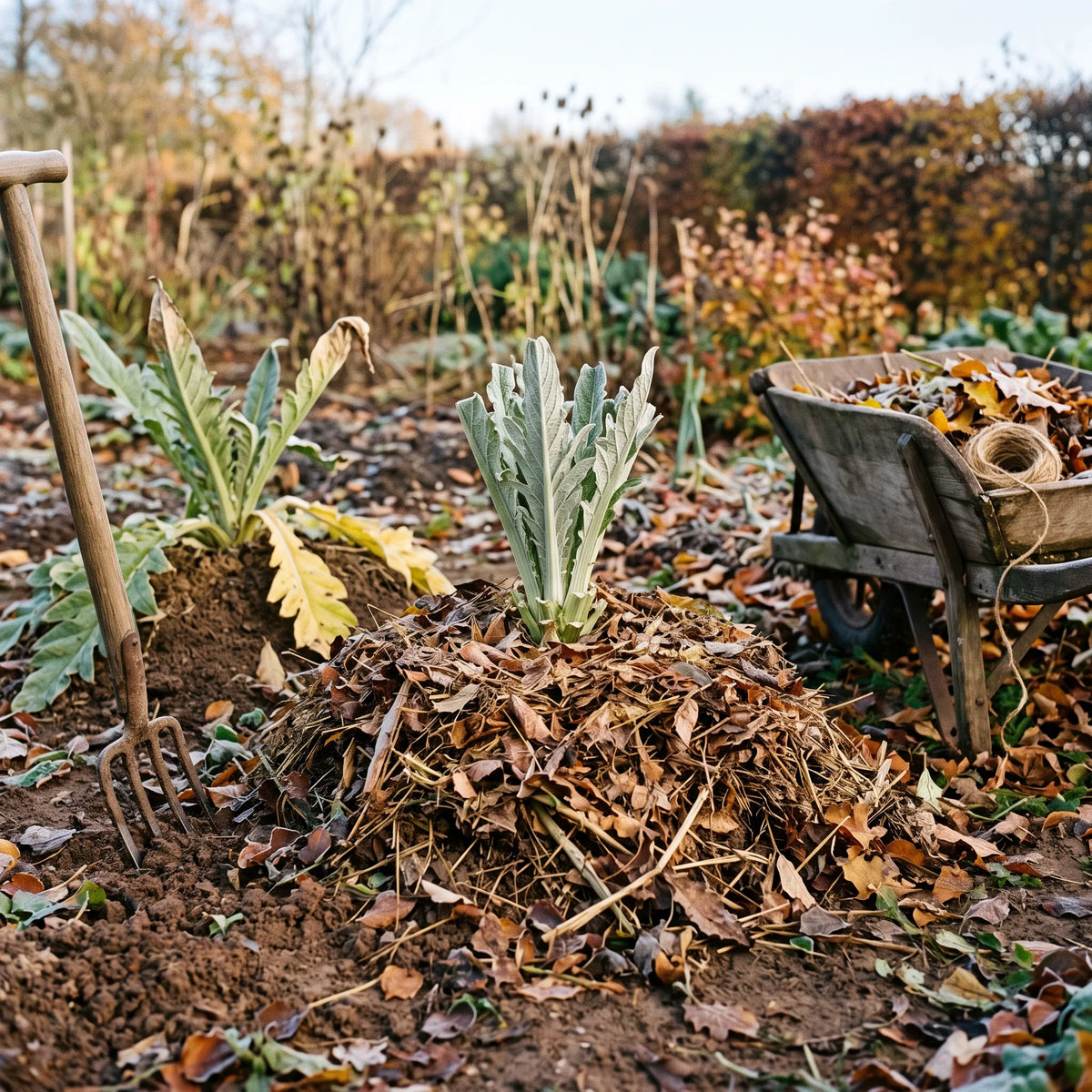
- In cold regions, mound soil around the base and cover the crown with a thick mulch before winter: this determines whether it survives.
- Renew the planting every 4 to 5 years by taking rooted lateral offsets in spring.
Harvesting advice:
- Cut the heads with 10 cm of stem, before the scales begin to spread apart: after this stage, the choke develops and the heart becomes tough.
- Harvest the central head first; the smaller side heads will follow.
- Leave one or two for flowering: the spectacle is worth the sacrifice.
Beneficial companions:
Benefits for biodiversity:
- Let one or two heads flower: their immense blue-violet flower heads are among the most visited flowers in the vegetable garden, literally covered with bumblebees for weeks.
- Its seeds then feed goldfinches, whose name says enough about their attachment to this family of plants.
Uses:
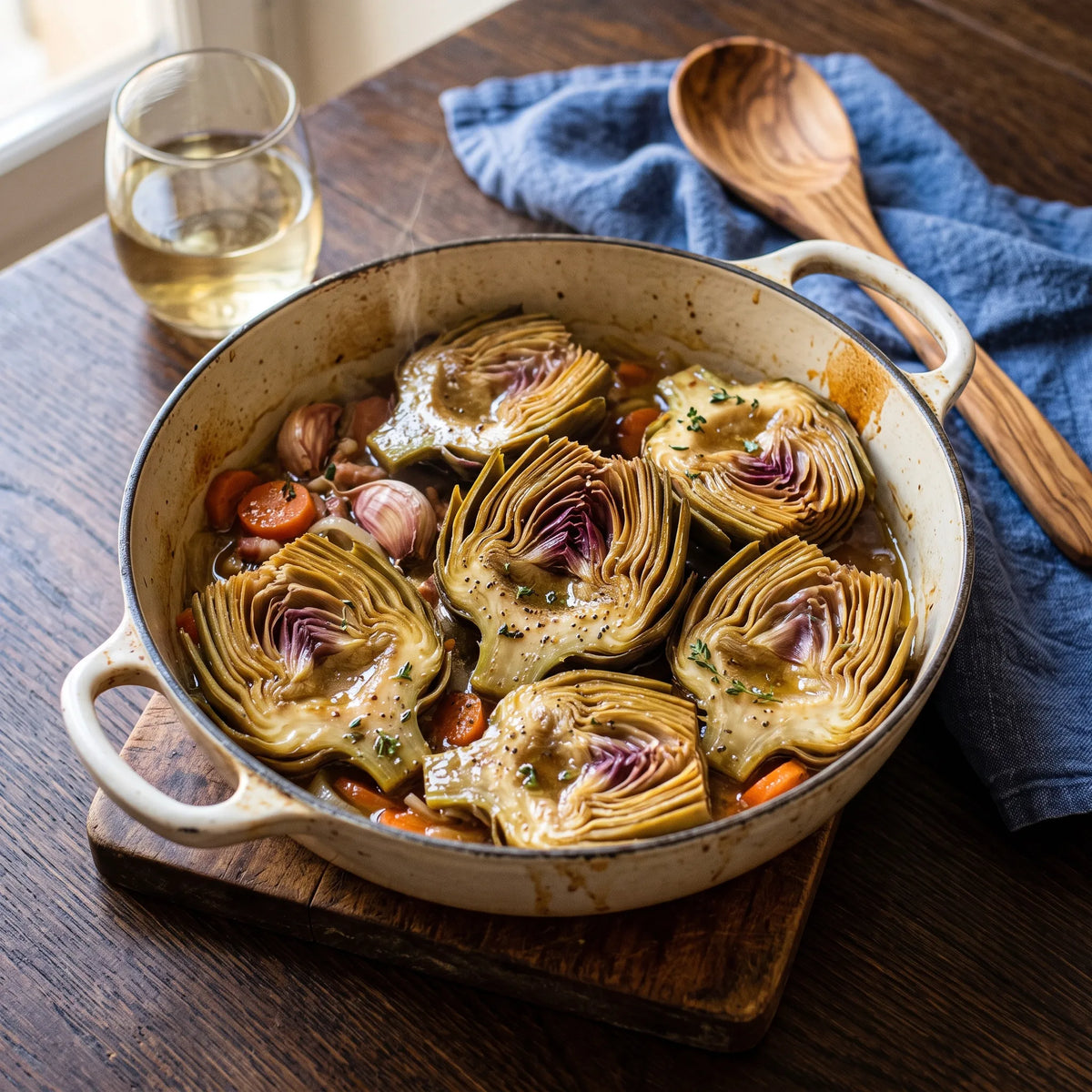
- Heads cooked in water or steamed, hearts pan-fried or prepared à la barigoule; very young poivrade artichokes can be eaten raw with salt. Dried flowering heads make superb long-lasting bouquets.
Harvesting your own seeds:
Let a head flower fully and then form its tufted achenes, which should be harvested when dry. Note: seedlings produce variable plants — propagation by rooted offsets remains the reliable method for reproducing a good specimen. See saving your seeds.
Commitment to Quality: at SemiSauvage - Permaculture, we grow and select our seeds with respect for all living things as our guiding principle. Based near the Auvergne Volcanoes, we choose open-pollinated, non-hybrid varieties, tested for their germination rate, sorted and carefully packaged, with no chemical treatment. Our belief: to give gardeners back the ability to resow, year after year, seeds that truly belong to them.
A noble vegetable and a spectacular plant, equally at home in the vegetable garden and the flower bed.