Brassica rapa “Rond de Nancy”
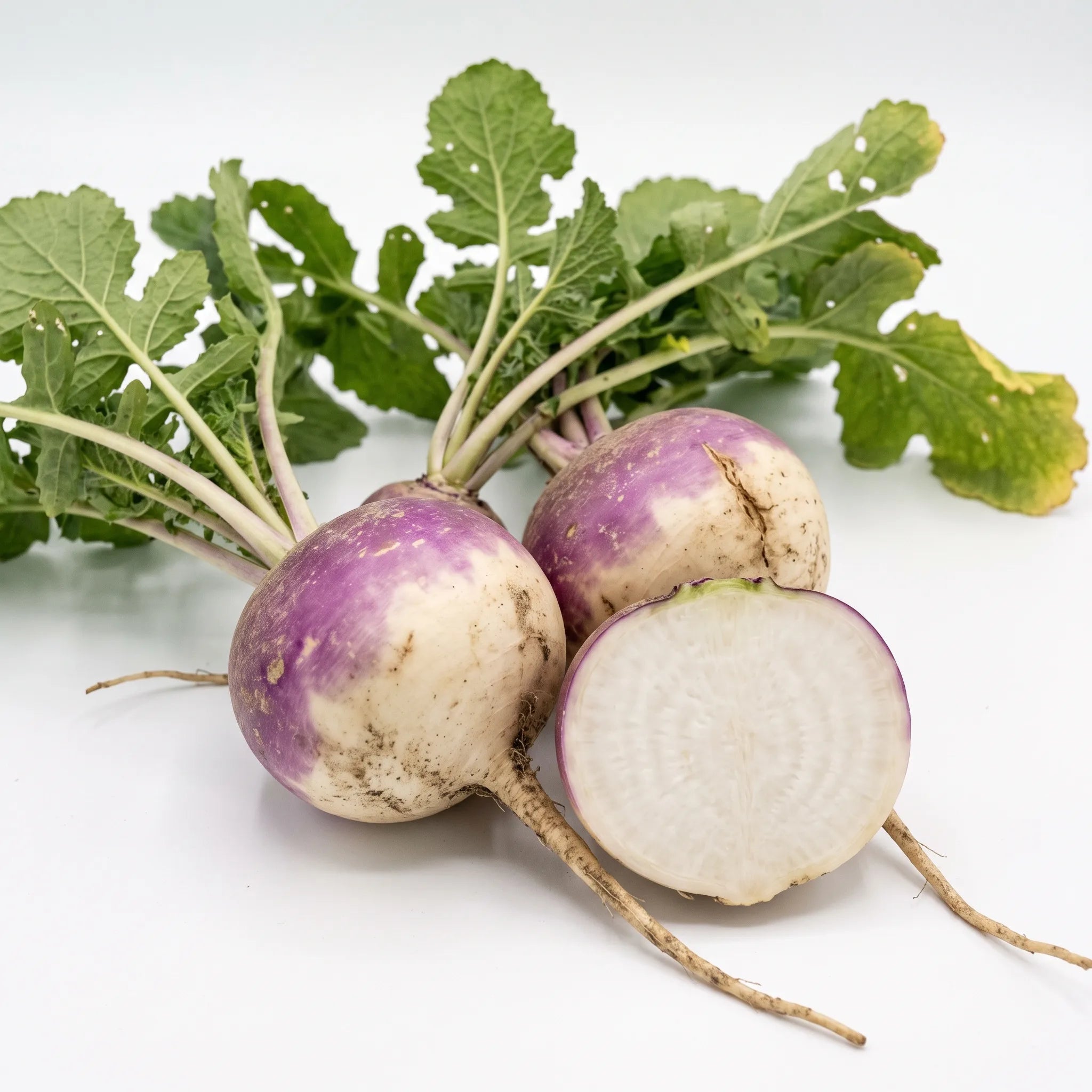
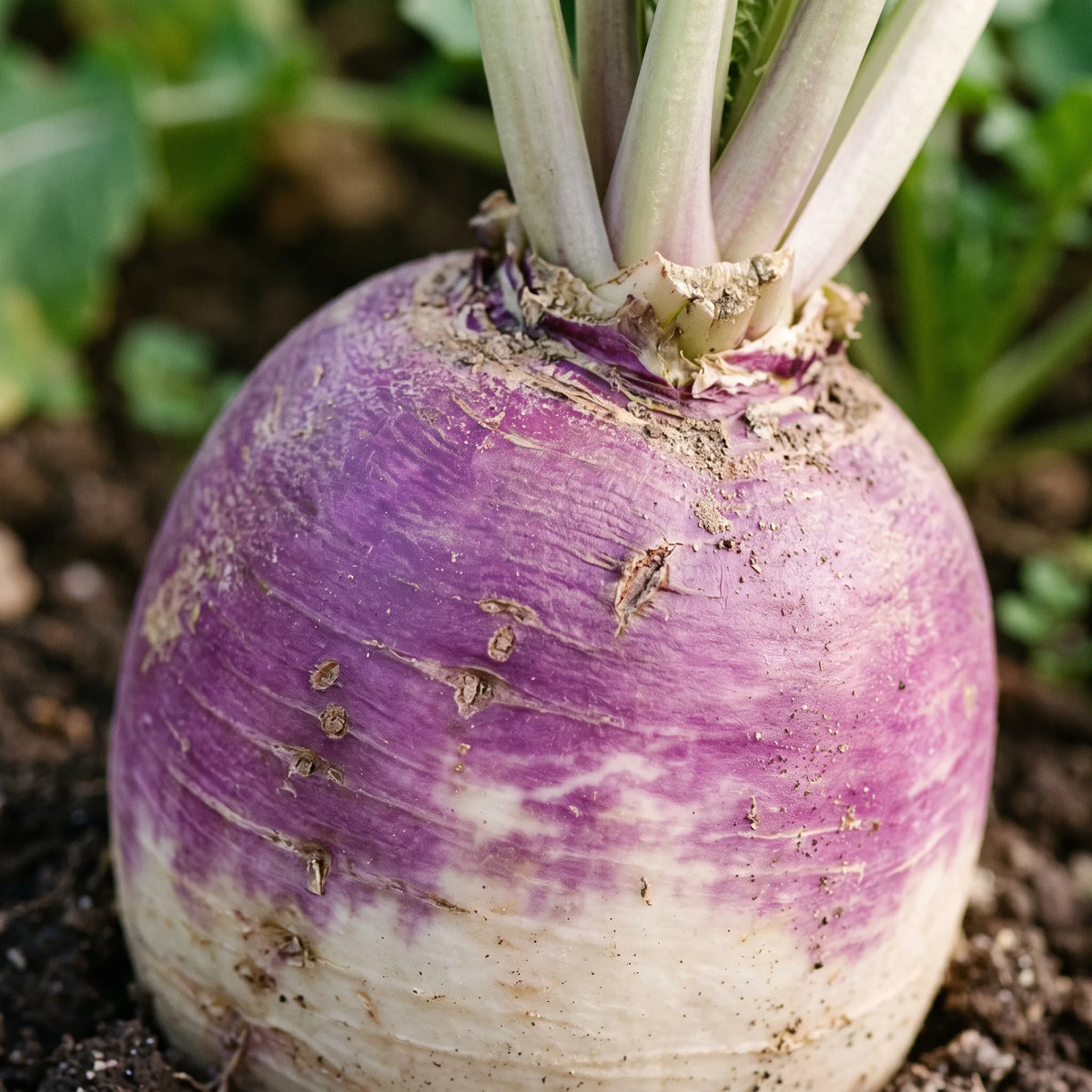
Rond de Nancy turnip, a white turnip with a purple shoulder, or “rave”: this old Lorraine variety stands out for its speed—allow six to eight weeks from sowing to harvest. Its white flesh is mild and sweet, without the pungency that earned turnips their unfair reputation as a famine food.
Characteristics:
-
Round root with a purple shoulder: white, tender, and sweet flesh.
-
Very fast growth: only 6 to 8 weeks from sowing to plate.
-
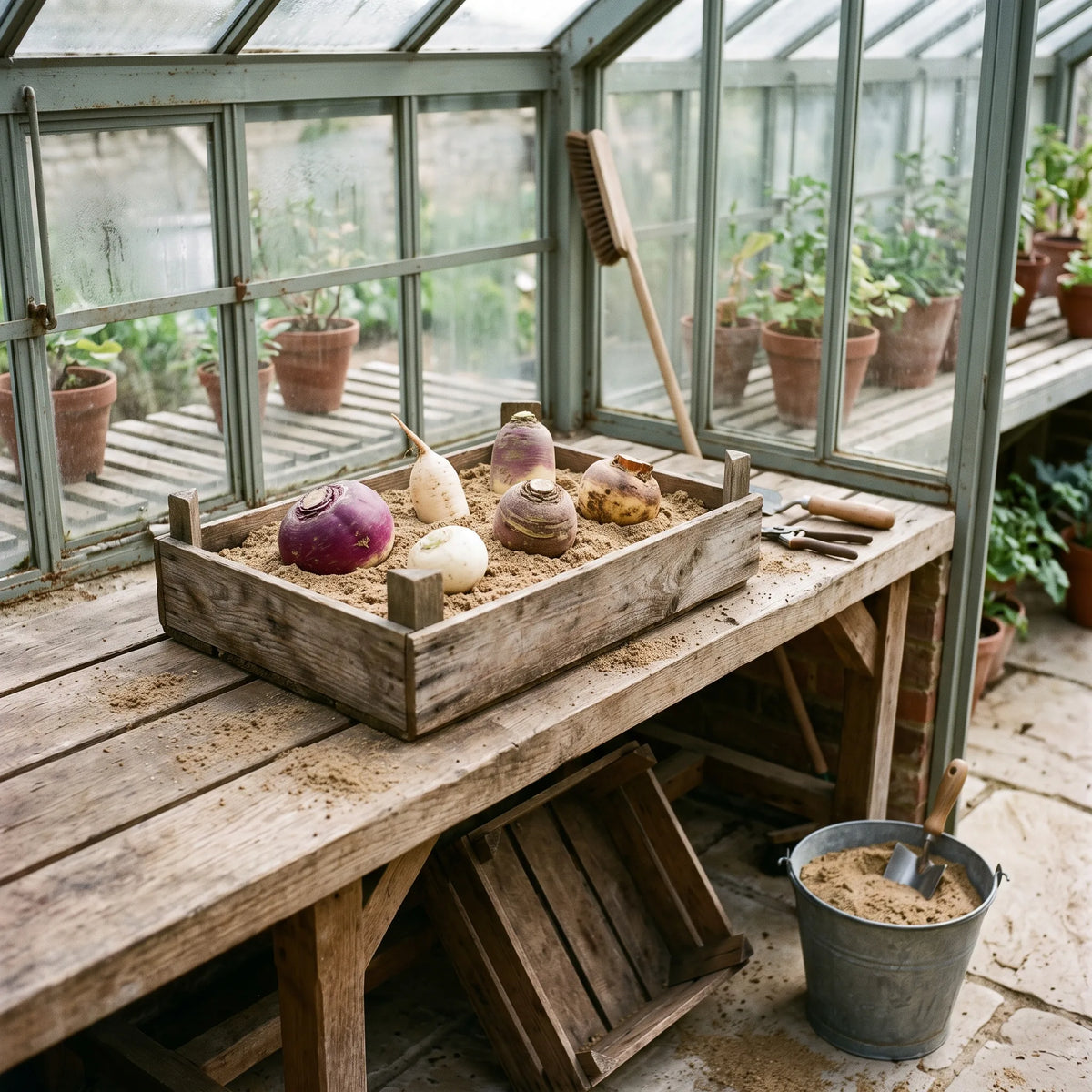
Very long harvest period: from May to November, with good winter storage.
-
Hardy and easy to grow: it tolerates cold well and requires little care.
Sowing advice:
-
Exposure: sunny, or partial shade in midsummer.
-
Soil: cool, loose, deep, and stone-free, lightly enriched with well-rotted compost. Never add fresh manure, which causes the roots to fork.
-
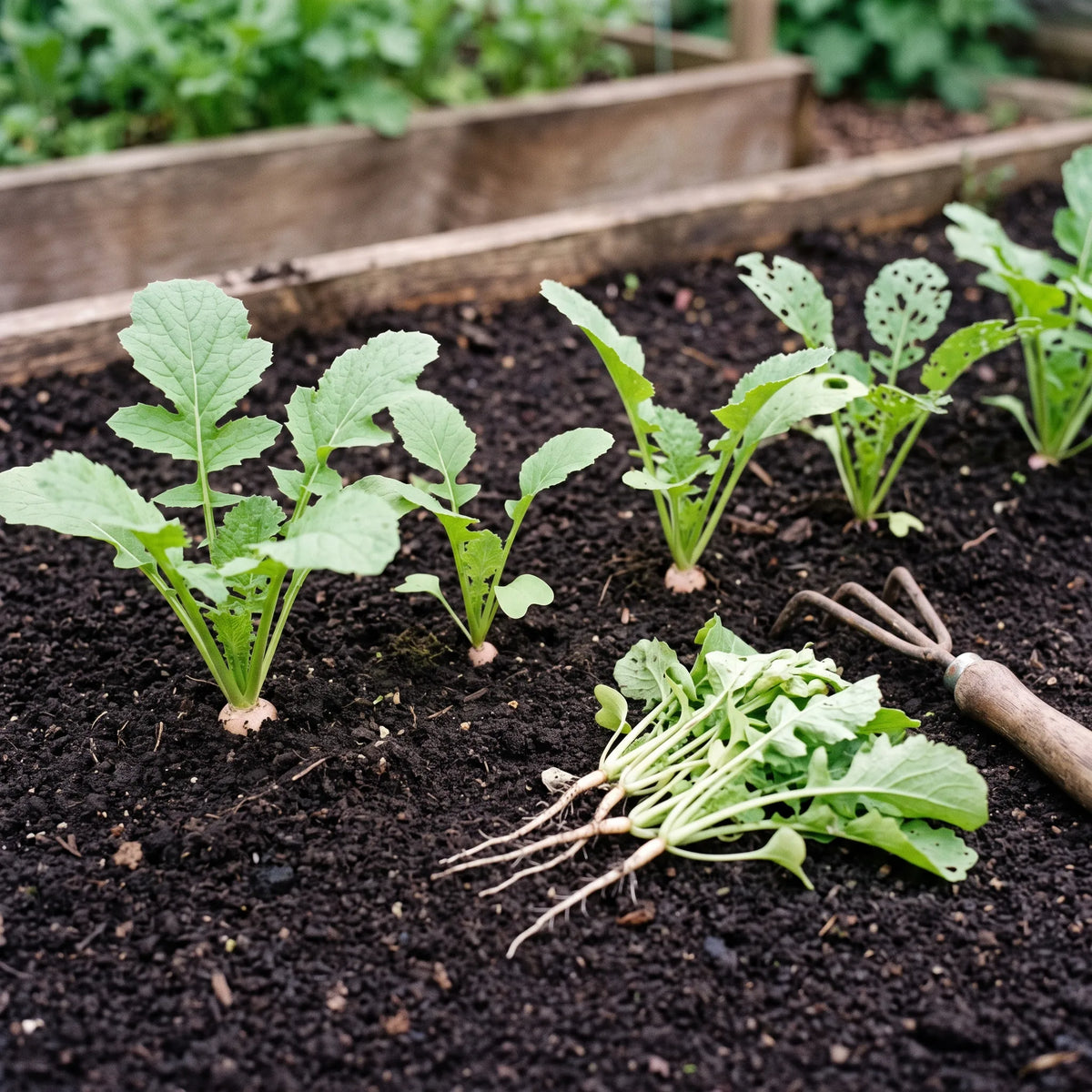
Method: sow directly in place—the turnip does not transplant—at a depth of 1 cm, in rows spaced 25 cm apart. It can be grown outdoors or under cover. Stagger sowings every three weeks. See how to sow your seeds.
Care advice:
- Thin to 10 cm apart. The key point: water regularly and never allow the soil to dry out. A thirsty turnip becomes pungent, hollow, and fibrous—this is the number one cause of disappointment.
- Mulch to retain moisture.
Harvesting advice:
- Harvest young, when about the size of a tennis ball. If left to grow larger, it becomes fibrous and loses its mildness.
- Do not throw away the tops: they can be used in soup or pesto and are delicious.
Beneficial companion plants:
Benefits for biodiversity:
- Its rapid growth makes it an excellent transitional crop for filling an empty bed and preventing bare soil.
- If allowed to flower, it produces clusters of highly nectar-rich yellow flowers that are valuable in spring.
Uses:
- Grated raw or mixed with other raw vegetables, butter-glazed, in a hotpot, soup, or stew—and of course with duck, the classic pairing. Young leaves can be eaten raw in salads or used in soup.
Saving your own seeds:
As a biennial, it goes to seed in its second year: leave a few roots in the ground over winter, then harvest the brown, dry seed pods. Beware: it cross-pollinates with other Brassica rapa, particularly Chinese cabbage. See how to save your seeds.
Commitment to Quality: at SemiSauvage - Permaculture, we grow and select our seeds with respect for all living things as our guiding principle. Based near the Volcanoes of Auvergne, we choose open-pollinated, non-hybrid varieties, test them for germination rates, and carefully sort and package them, without any chemical treatment. Our belief is that gardeners should regain the ability to resow, year after year, seeds that truly belong to them.
A fast-growing, mild old-fashioned vegetable waiting to be rediscovered.