Bassia scoparia (syn. Kochia scoparia)
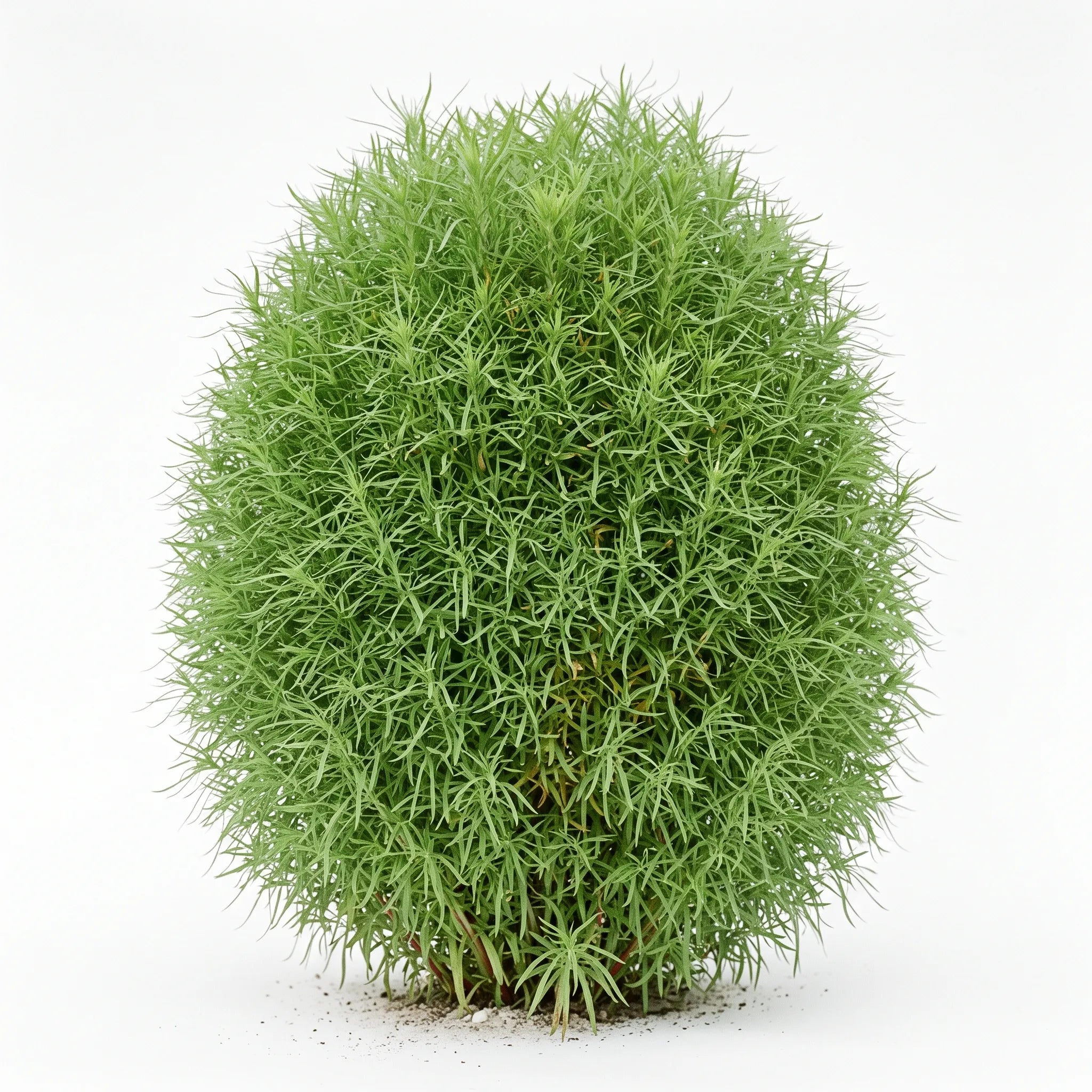
Broom kochia, summer cypress, false cypress: its first name comes from the use our ancestors made of it, tying its dry stems together to make brooms. In the garden, it forms perfect cones of greenery in a single season, bursting into red in autumn—a botanical firework display grown from a simple spring sowing.
Characteristics:
-
Sculptural shape: naturally conical and dense habit, 40 to 130 cm tall, with no pruning required.
-
Autumn display: its soft green, feathery foliage turns orange, then red and finally purple at the end of summer.
-
Fast growth: an annual that reaches its mature size in a single season, including in pots.
Precautions:
- This plant reseeds very easily and can become invasive: cut the plants back before the seeds fully mature if you do not want it to spread, and do not allow it to colonize the surrounding natural habitats.
Sowing advice:
-
Exposure: full sun, essential for autumn coloration.
-
Soil: truly any type, even poor, dry, sandy or saline soil—it is one of the most tolerant plants around, capable of growing where nothing else survives. No fertilization is needed; it has no use for it.
-
Method: sow directly after the last frosts, on the surface without covering: its seeds need light to germinate. Simply firm the soil. Neither waterlogging nor stratification. Thin to 40 cm apart. See how to sow seeds.
Care advice:
- None. Once established, it does without watering and maintains its conical shape on its own.
Benefits for biodiversity:
- Its dense root system is used to combat soil erosion and stabilize bare ground.
- It is among the plants studied in phytoremediation for its ability to remove certain elements from degraded soils.
- Its extreme drought tolerance makes it an interesting candidate for water-wise gardens.
Uses:
- Ornamental in borders, temporary summer hedges or pots. Its dry stems were traditionally used to make brooms.
- In Japan, its prepared seeds make tonburi, a garnish appreciated for its caviar-like texture, sometimes nicknamed “field caviar.”
Harvesting your own seeds:
The seeds form abundantly in the leaf axils in autumn: simply shake the dry stems over a container. Be careful, the plant reseeds itself very generously—harvest before dispersal if you want to control its spread. See how to store your seeds.
Commitment to Quality: at SemiSauvage - Permaculture, we grow and select our seeds with respect for all living things as our guiding principle. Based near the Volcanoes of Auvergne, we choose reproducible, non-hybrid varieties, tested for their germination rate, carefully sorted and packaged, with no chemical treatment. Our conviction: to give gardeners back the ability to resow, year after year, seeds that truly belong to them.
Treat yourself to a summer cypress and its spectacular autumn blaze, achieved in a single season.