Cucumis melo var. cantalupensis
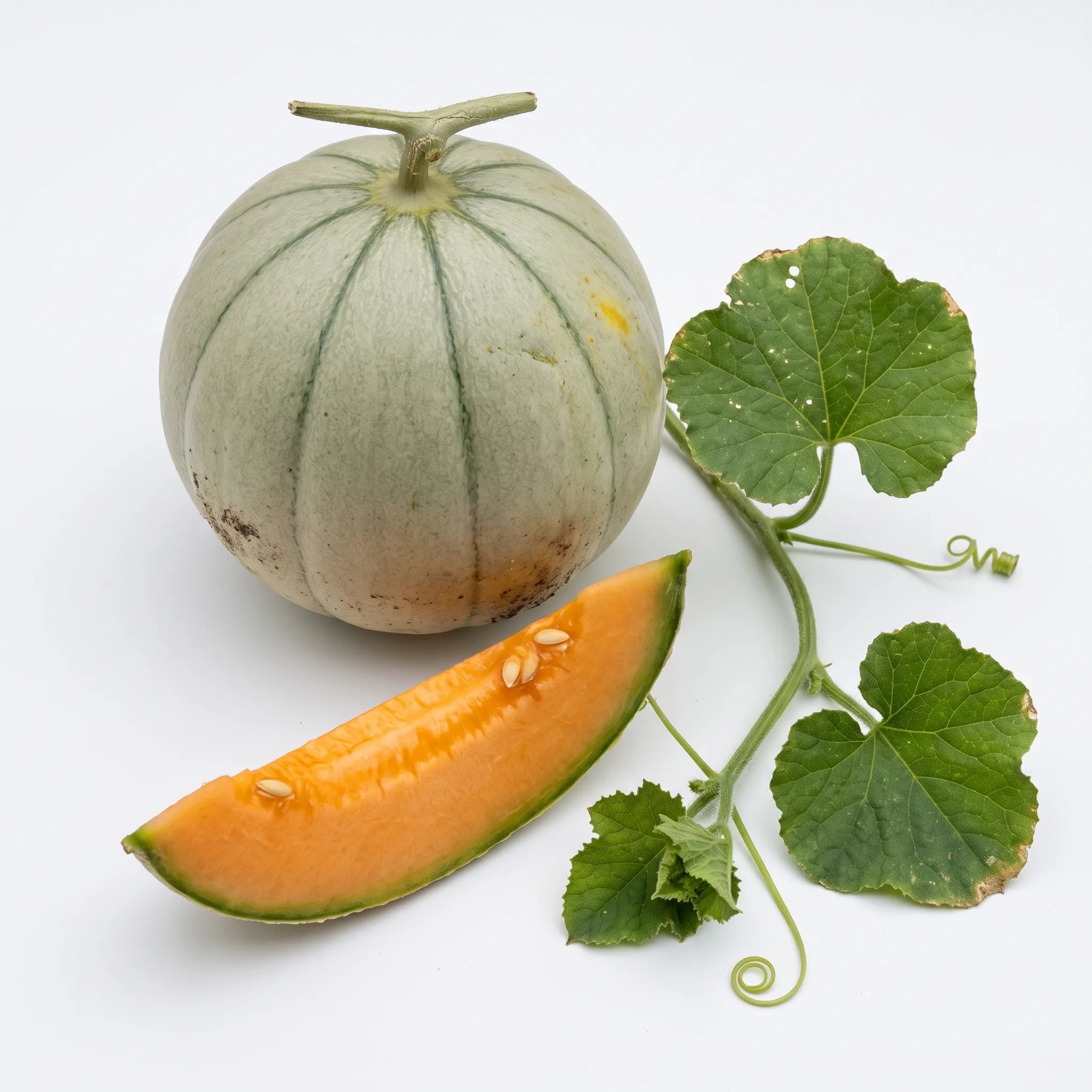
Charentais melon, Charentais cantaloupe: this is the quintessential French melon, developed at the beginning of the 20th century in the Charentes region. Smooth skin marked with green ribs, tender orange flesh, intense fragrance—it shaped the idea of what a good melon should be for generations.
Characteristics:
-
Fragrant orange flesh: tender, juicy, and very sweet when fully ripe.
-
Good-sized fruit: round and slightly ribbed, ideal for sharing.
-
Reference variety: the taste of summer melon, in a reliable, seed-saving form.
Sowing advice:
-
Position: very sunny and sheltered from the wind—heat is the key requirement for a sweet melon.
-
Soil: rich, deep, humus-rich, well-drained, and kept moist. Melons are heavy feeders: a generous addition of mature compost is essential. They tolerate lime well but dislike standing water around the crown.
-
Method: sow from mid-March to May in pots under cover at 20–25 °C, 2 cm deep, placing the seed on its edge. Direct sowing is reliable only in very warm regions. See how to sow seeds.
Planting advice:
- Transplant after the last frosts, spacing plants 1 metre apart, on a low mound to improve drainage and warm the soil. Dark mulch noticeably speeds up fruit production.
Care advice:
- Water regularly during growth, then reduce watering considerably as soon as the fruits begin to swell: this concentrates the sugars. Too much water at the end of the growing cycle produces bland melons.
- Pinch out the main stem above the 2nd leaf, then pinch the side shoots, to encourage fruiting. Limit each plant to 4 or 5 fruits.
- Place a tile or board under each fruit to keep it away from damp soil.
Harvesting advice:
- Melons do not continue to ripen after picking: the unmistakable sign is the circular cracking that appears around the stem, accompanied by a distinct fragrance. The fruit will then detach almost by itself.
Beneficial companions:
Benefits for biodiversity:
- Its yellow flowers depend entirely on bees for fruit production: without pollinators, there are no melons. Growing it is an excellent reason to plant nectar-rich flowers nearby.
- Its spreading foliage covers the soil and protects it from drying out in summer.
Uses:
- As a starter with cured ham, for dessert, in fruit salad, or as a chilled soup. Its roasted seeds make a tasty snack.
Harvesting your own seeds:
Take the seeds from a perfectly ripe melon, rinse them to remove the pulp, and dry them flat for several days. Be aware that melons cross readily between varieties: isolate your seed plant. See saving your seeds.
Commitment to Quality: at SemiSauvage - Permaculture, we grow and select our seeds with respect for all living things as our guiding principle. Based near the Auvergne Volcanoes, we choose open-pollinated, non-hybrid varieties, tested for their germination rate, carefully sorted and packaged, with no chemical treatment. Our belief: to give gardeners back the ability to resow, year after year, seeds that truly belong to them.
The taste of summer, grown in your own garden.