Campsis radicans
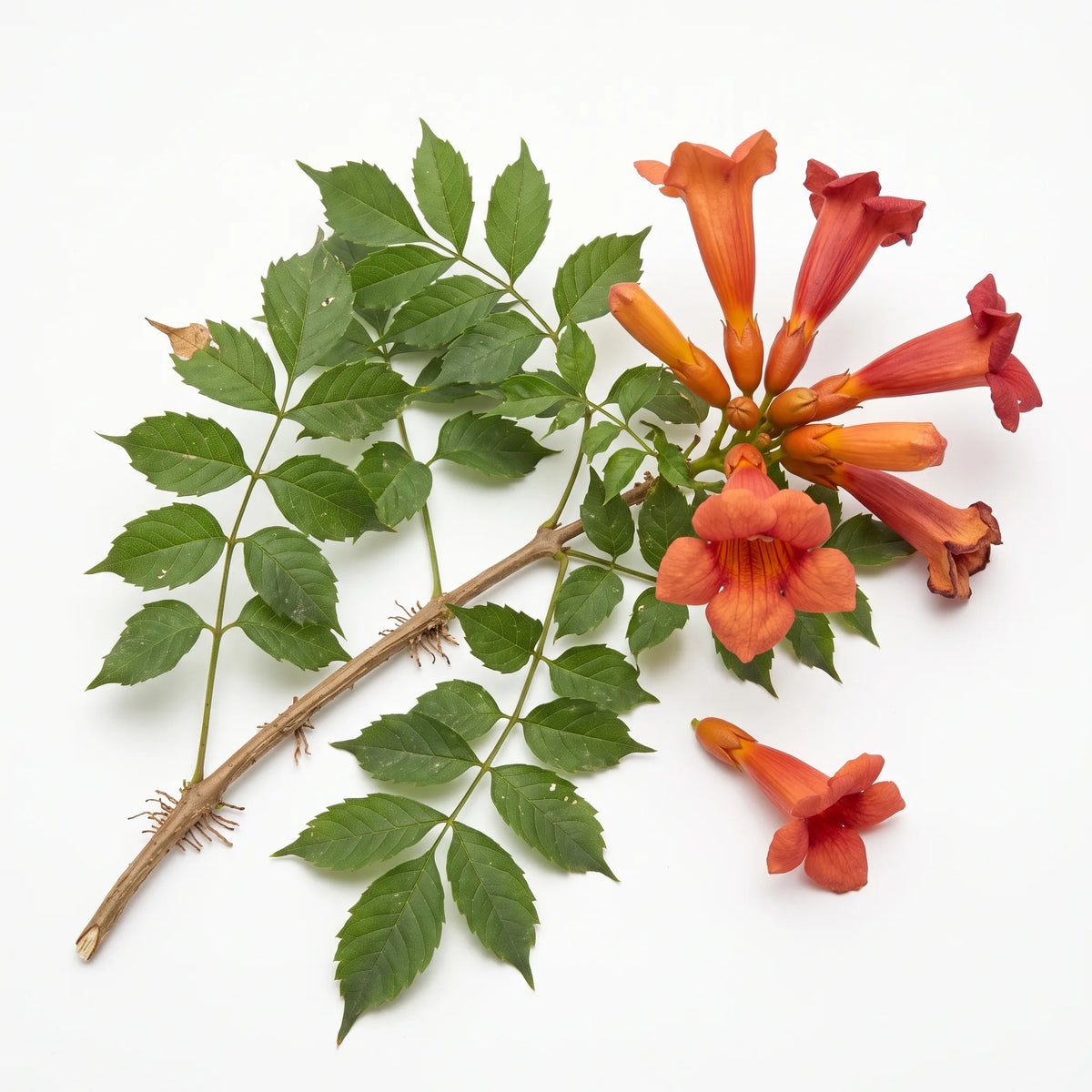
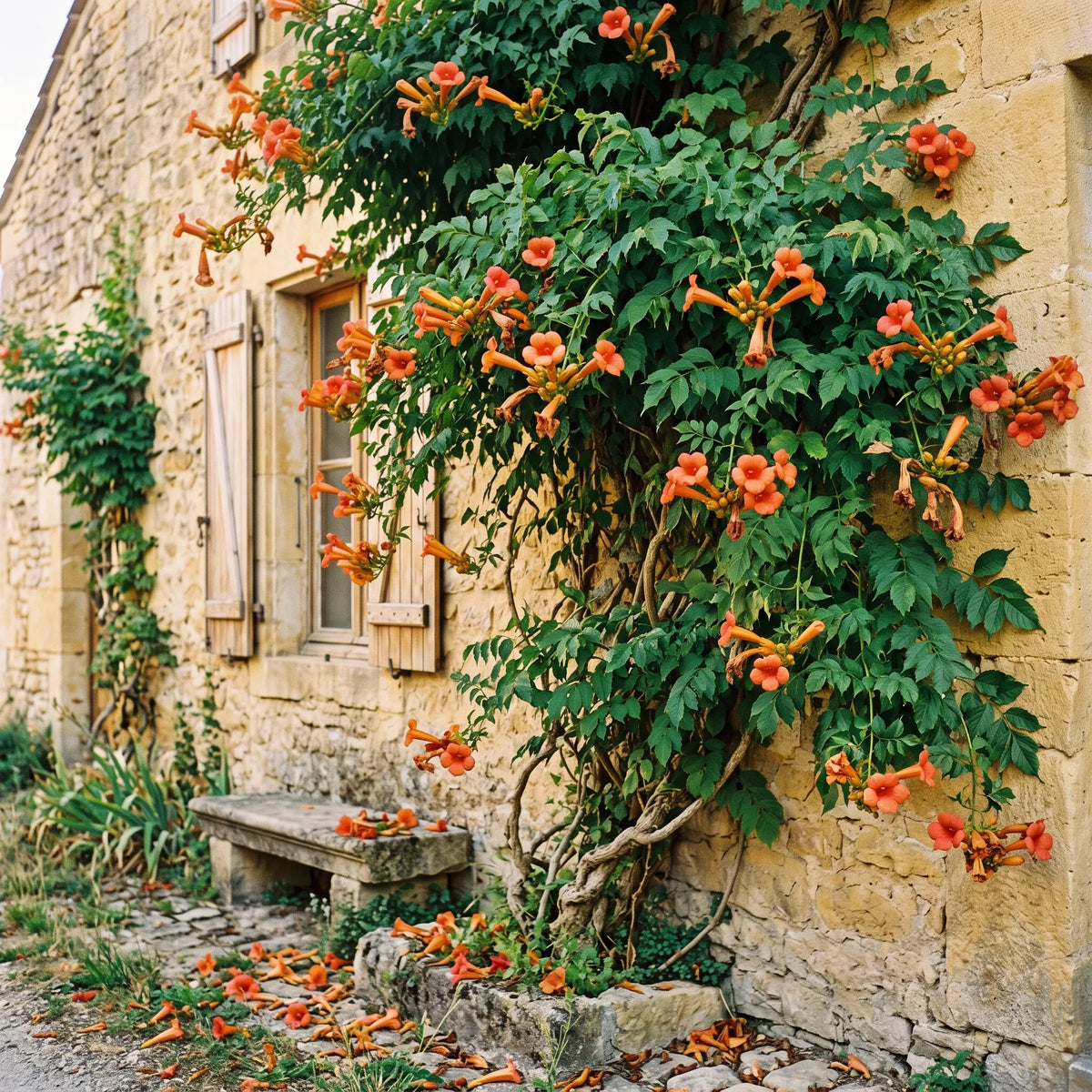
Virginia jasmine, trumpet vine, Virginia trumpet vine, flame vine: despite its name, it has nothing to do with jasmine. This North American climber attaches itself to walls with true sucker roots and covers façades with bright orange trumpets in midsummer, at a time when few climbers are still flowering.
Characteristics:
-
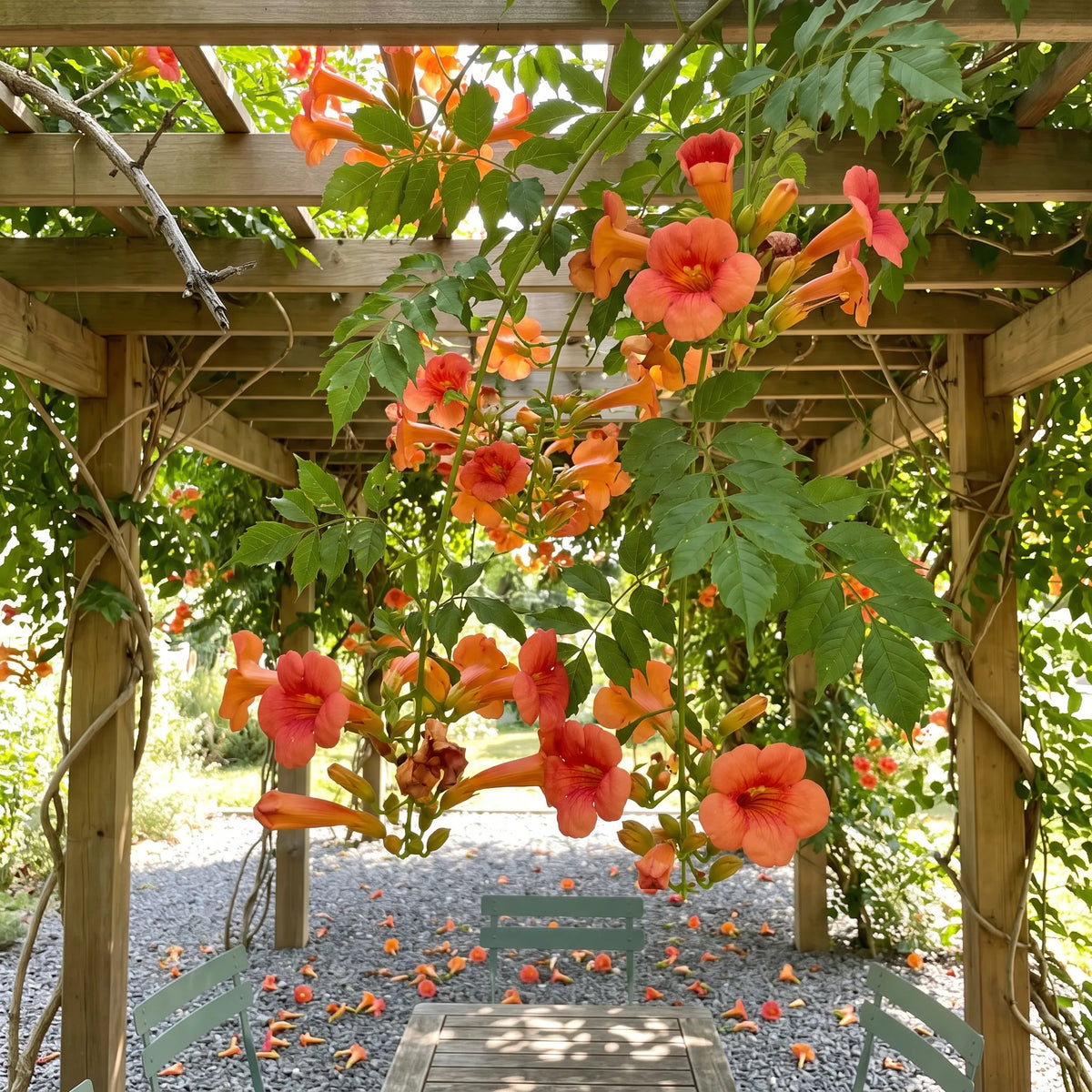
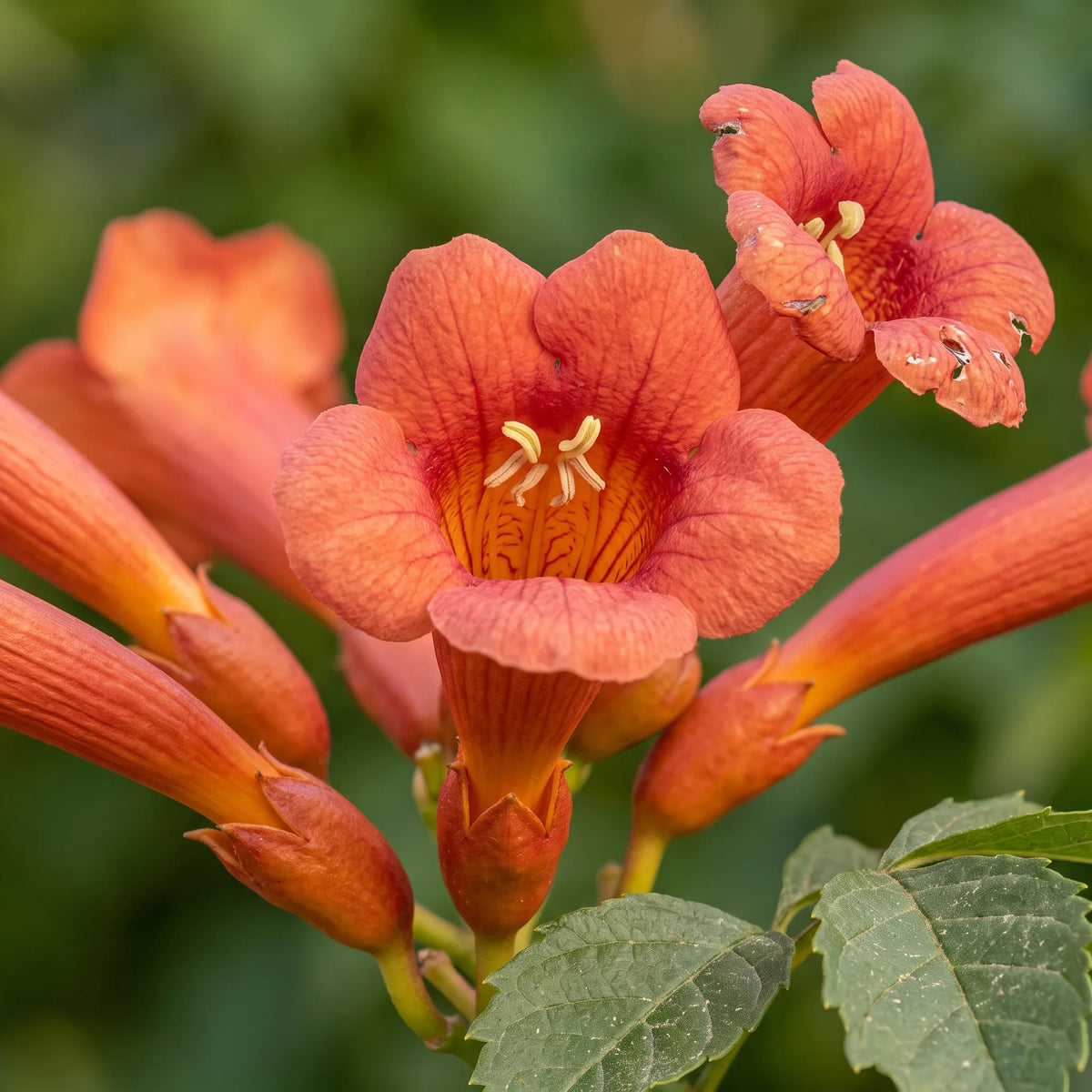
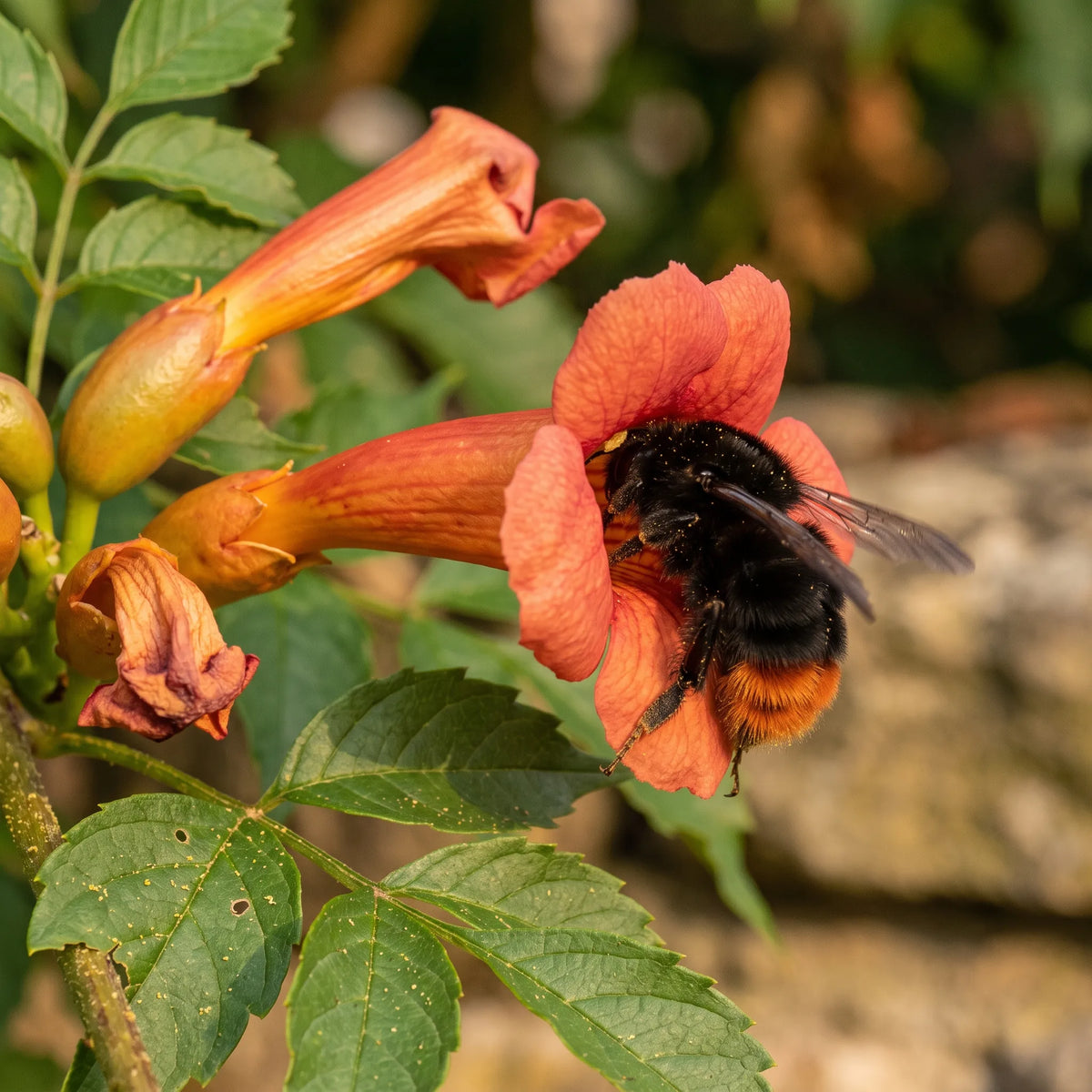
Spectacular flowering: large bright orange trumpets grouped in clusters, from July to September.
-
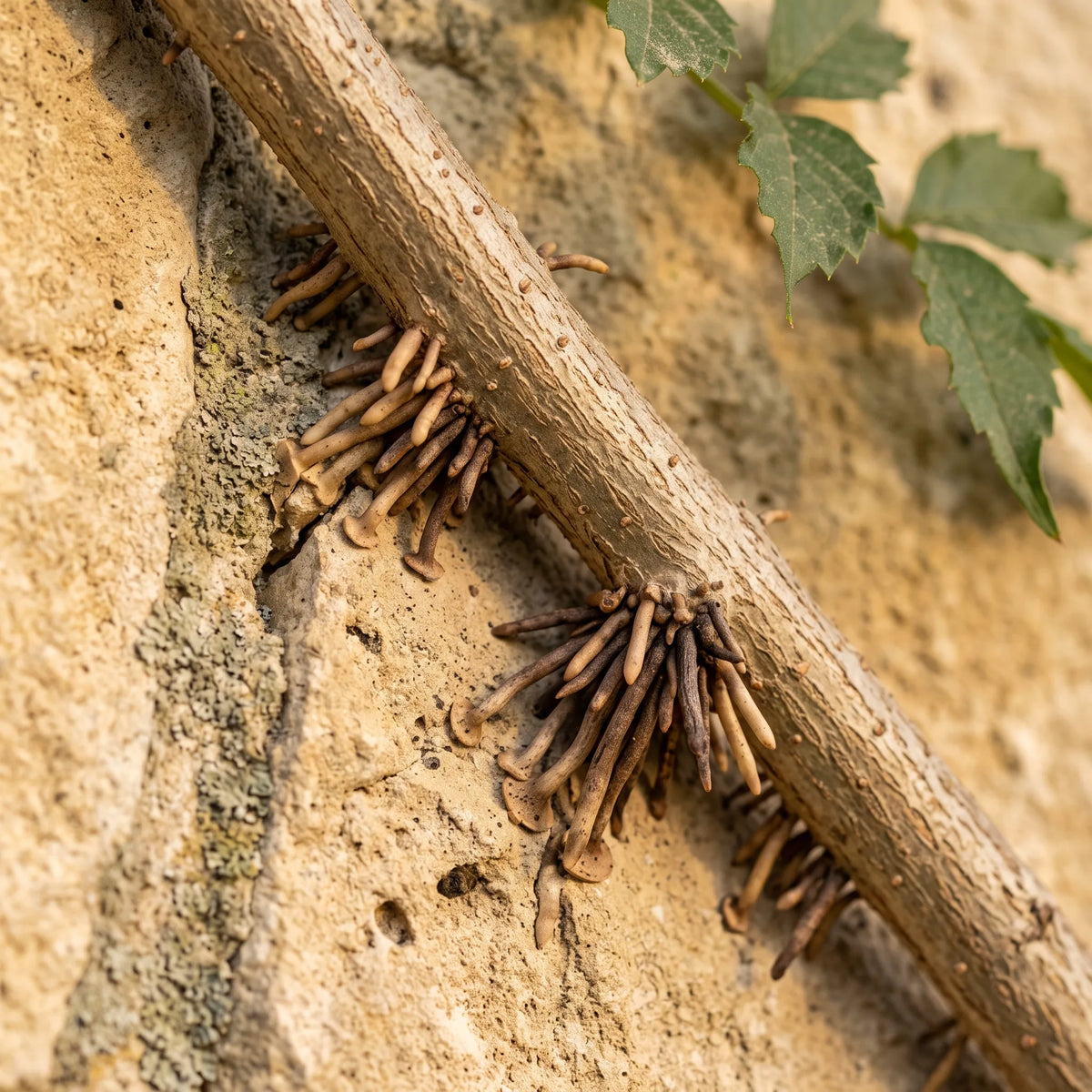
Self-supporting climber: it attaches itself with aerial roots, without support or training.
-
Highly adaptable: it withstands heat, drought, salty winds, and air pollution.
-
Hardy: down to around -10 °C in good conditions, and lower once well established.
Precautions:
- Its sap and foliage can cause itching and redness in sensitive people: wear gloves when pruning it and wash your hands afterward.
- Its vigorous growth requires monitoring: it produces suckers some distance from the plant, and its aerial roots can penetrate fragile render or get under roof tiles. Reserve it for sound walls and prune it every year.
Sowing advice:
-
Exposure: full sun, preferably on a warm wall — this is essential for abundant flowering.
-
Soil: ordinary, well-drained soil, even poor or stony. Important: do not fertilize. In soil that is too rich, it produces masses of foliage and flowers little, a very common problem with this plant.
-
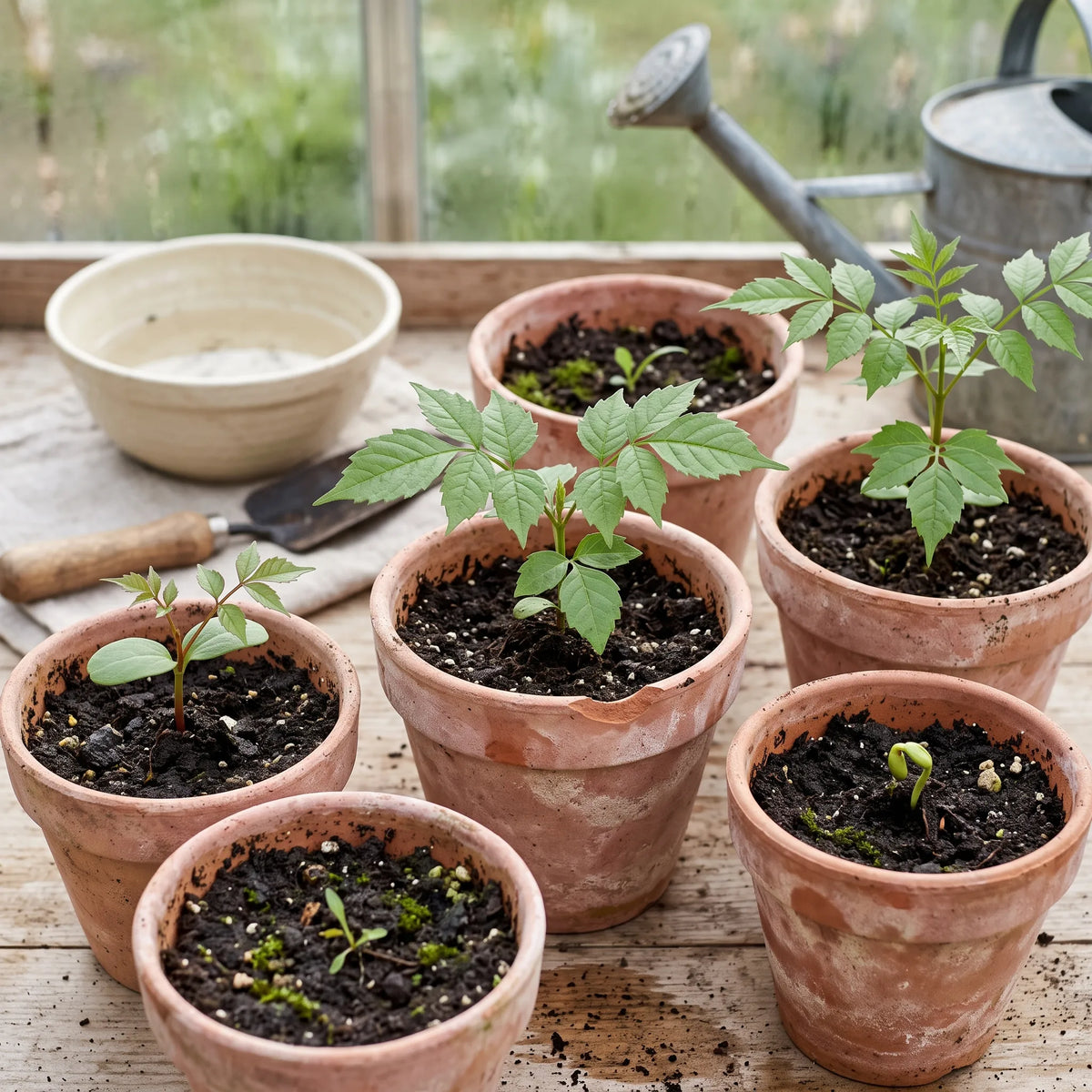
Method: sow in spring, in pots, after soaking the seeds for 24 hours in lukewarm water. A few weeks of cold stratification improves even germination. See how to sow your seeds.
Planting advice:
- Plant it at the foot of a wall, arbor, or sturdy trellis: when mature, it becomes heavy. Keep it away from gutters and roofs.
- It can also be grown as ground cover or trained into a small tree on a stake with patience.
Care advice:
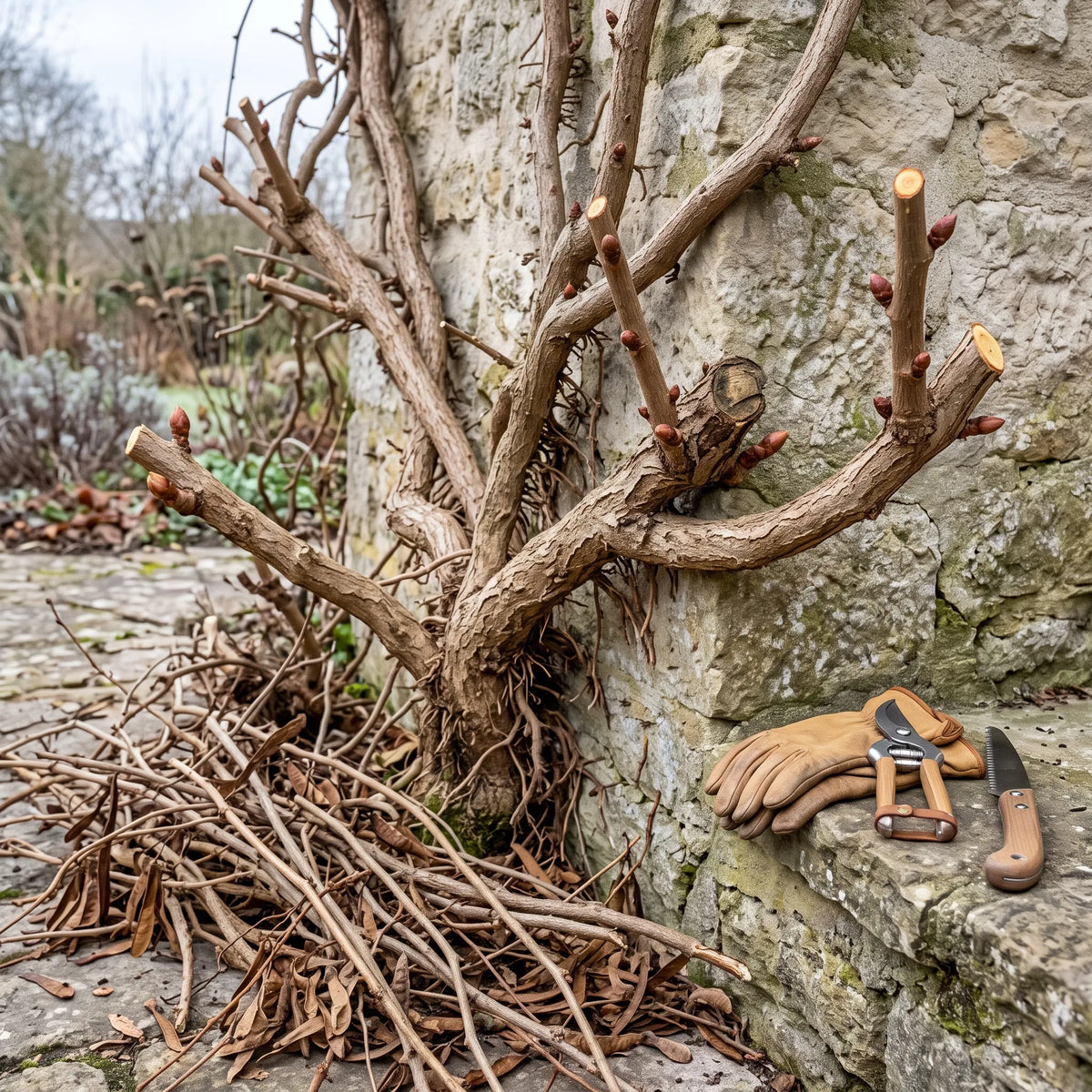
- Prune it hard in late winter, leaving 2 or 3 buds on the main branches: it flowers on new wood, and this severe pruning produces the best flowering.
- Be patient: a young plant often takes 3 to 5 years to flower for the first time.
- Remove suckers every year to keep it in place.
Beneficial combinations:
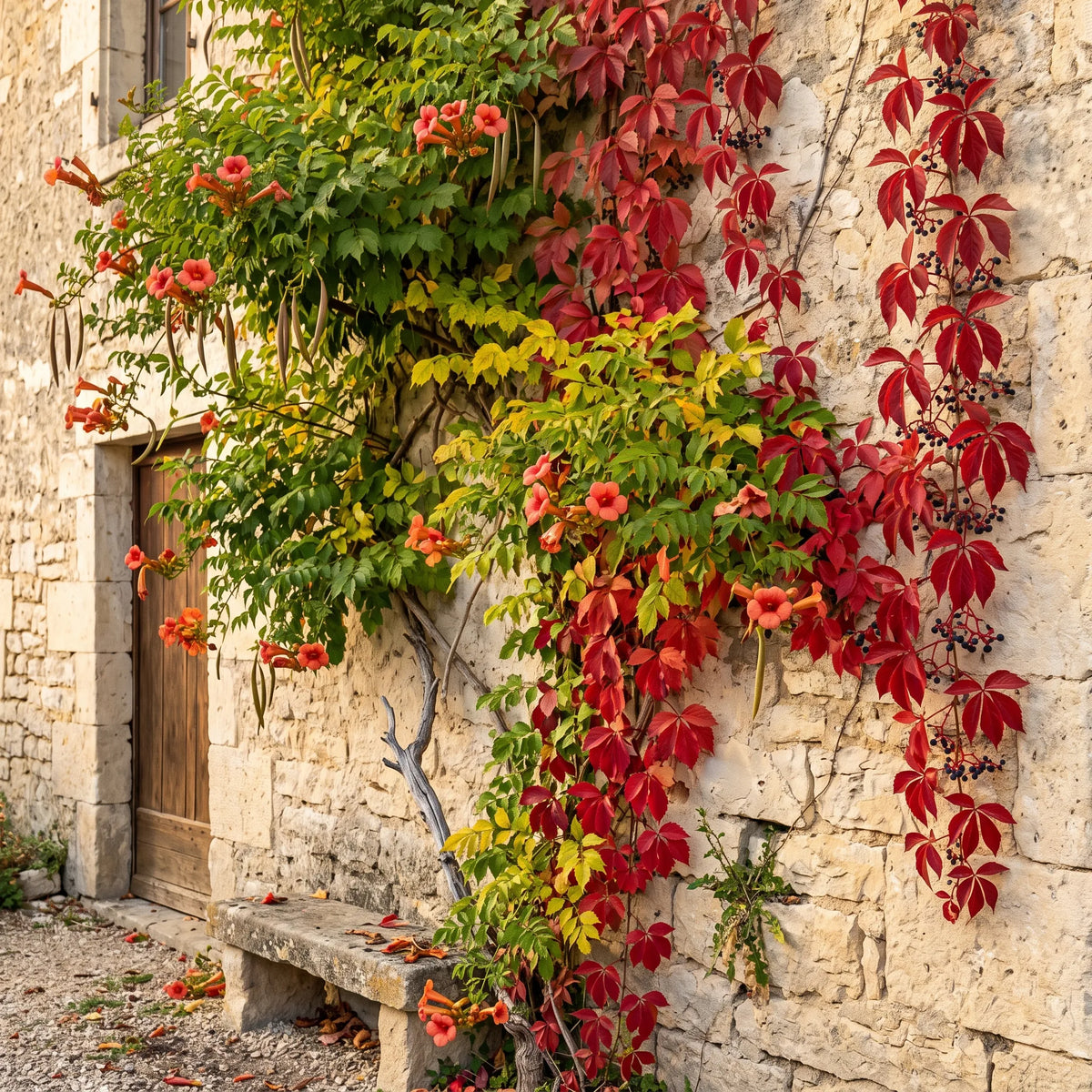
- On a large wall, it can share space with Virginia creeper, whose autumn red takes over when its flowering ends.
Benefits for biodiversity:
- Its nectar-filled trumpets are designed for hummingbirds in its native America. In our climates, large bumblebees and hawk moths literally dive into them.
- Its late flowering, in the heart of summer, fills a quiet period for pollinators.
- Its dense foliage on a wall provides shelter for birds and beneficial insects.
Uses:
- Covering walls, façades, arbors, pergolas, and trellises. One of the few climbers to flower so generously in midsummer.
Harvesting your own seeds:
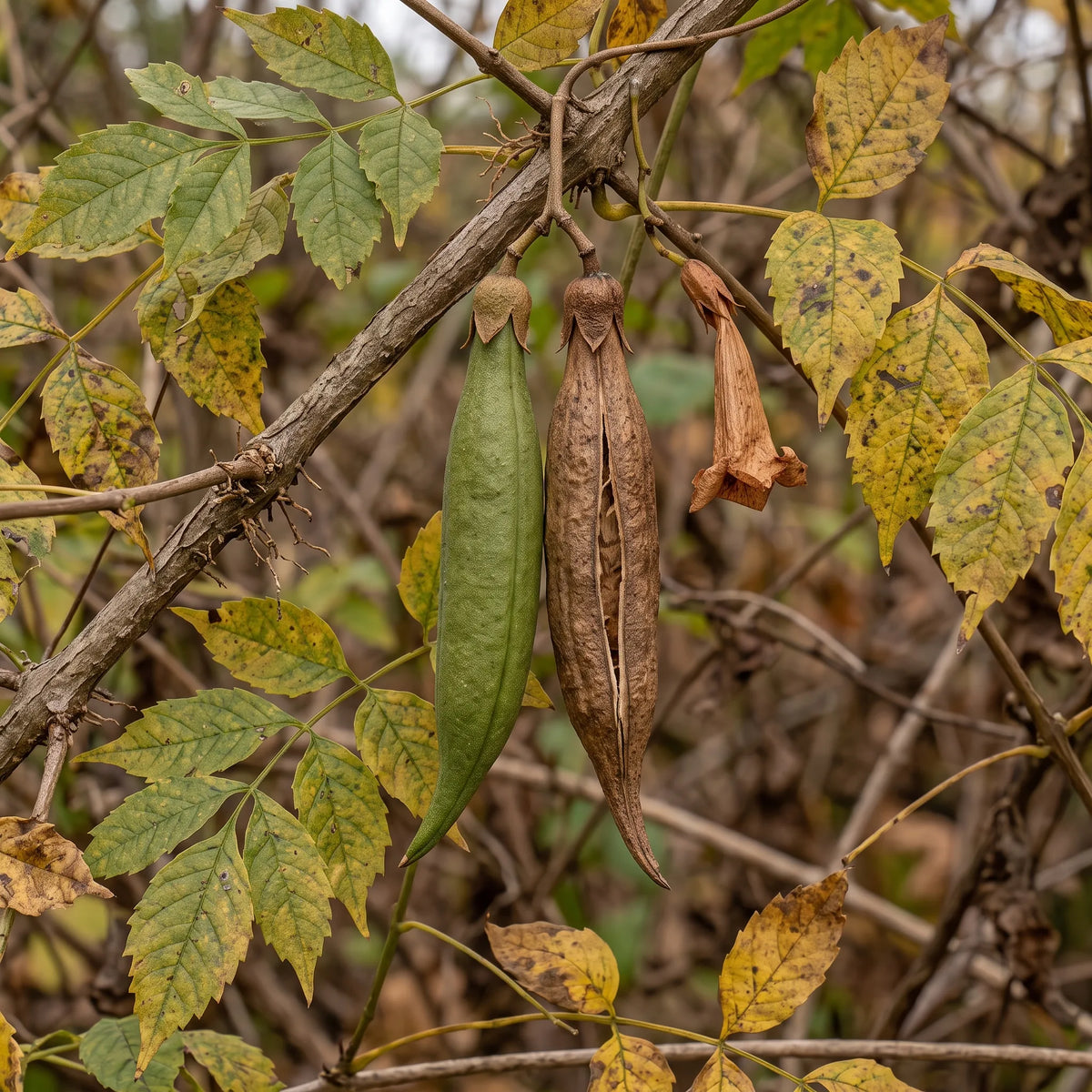
After flowering, it produces long, slender pods. Harvest them dry from the plant, before they open: they release winged, papery seeds that are carried away by the wind. See how to store your seeds.
Commitment to Quality: at SemiSauvage - Permaculture, we grow and select our seeds with respect for all living things as our guiding principle. Based near the Auvergne Volcanoes, we choose reproducible, non-hybrid varieties, tested for their germination rate, carefully sorted and packaged, with no chemical treatment. Our belief: to give gardeners back the ability to resow, year after year, seeds that truly belong to them.
Set a bare wall ablaze with orange trumpets in the heart of summer.