Parthenocissus quinquefolia
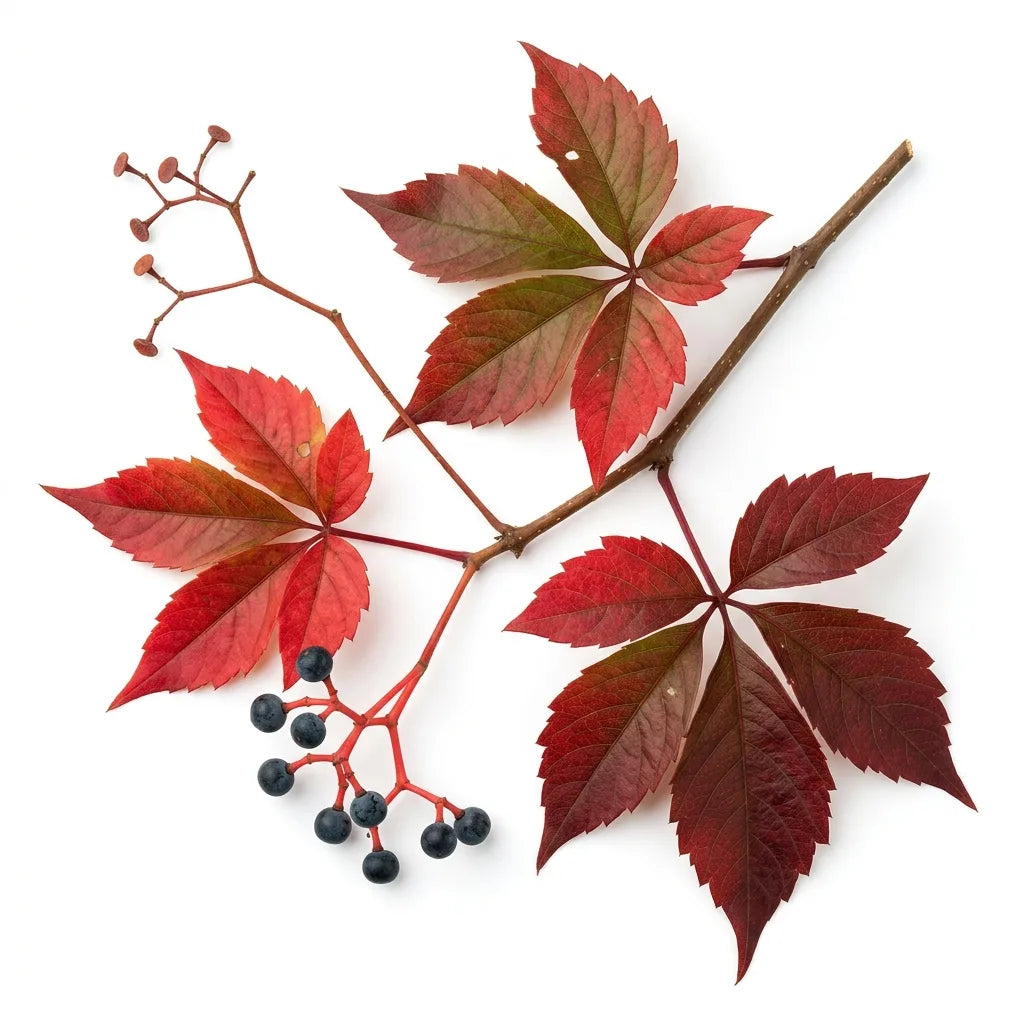
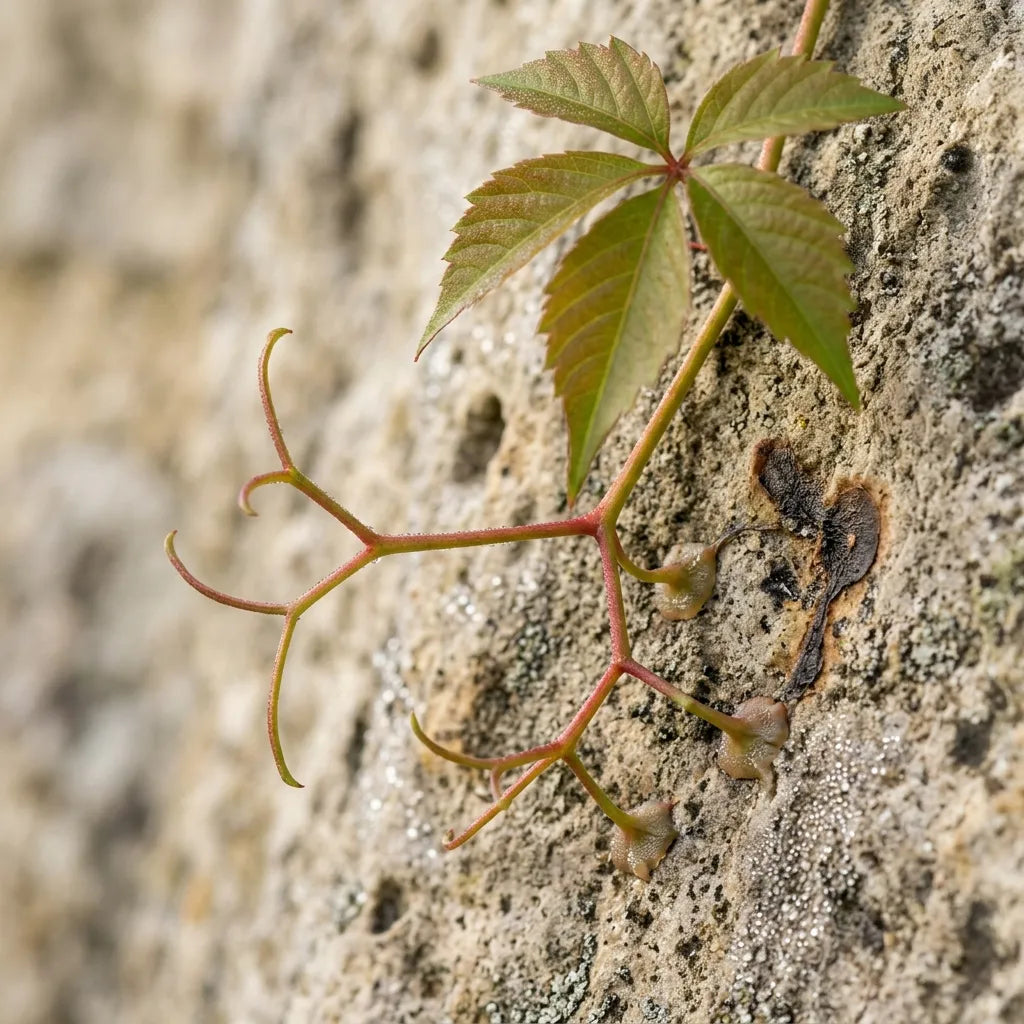
Virginia creeper, five-leaved Virginia creeper: native to North America, it climbs without any support thanks to tiny adhesive discs at the tips of its tendrils—a mechanism so effective that it has inspired research into industrial adhesives. Its genus name actually means “virgin ivy” in Greek, although it is not an ivy at all.
Characteristics:
-
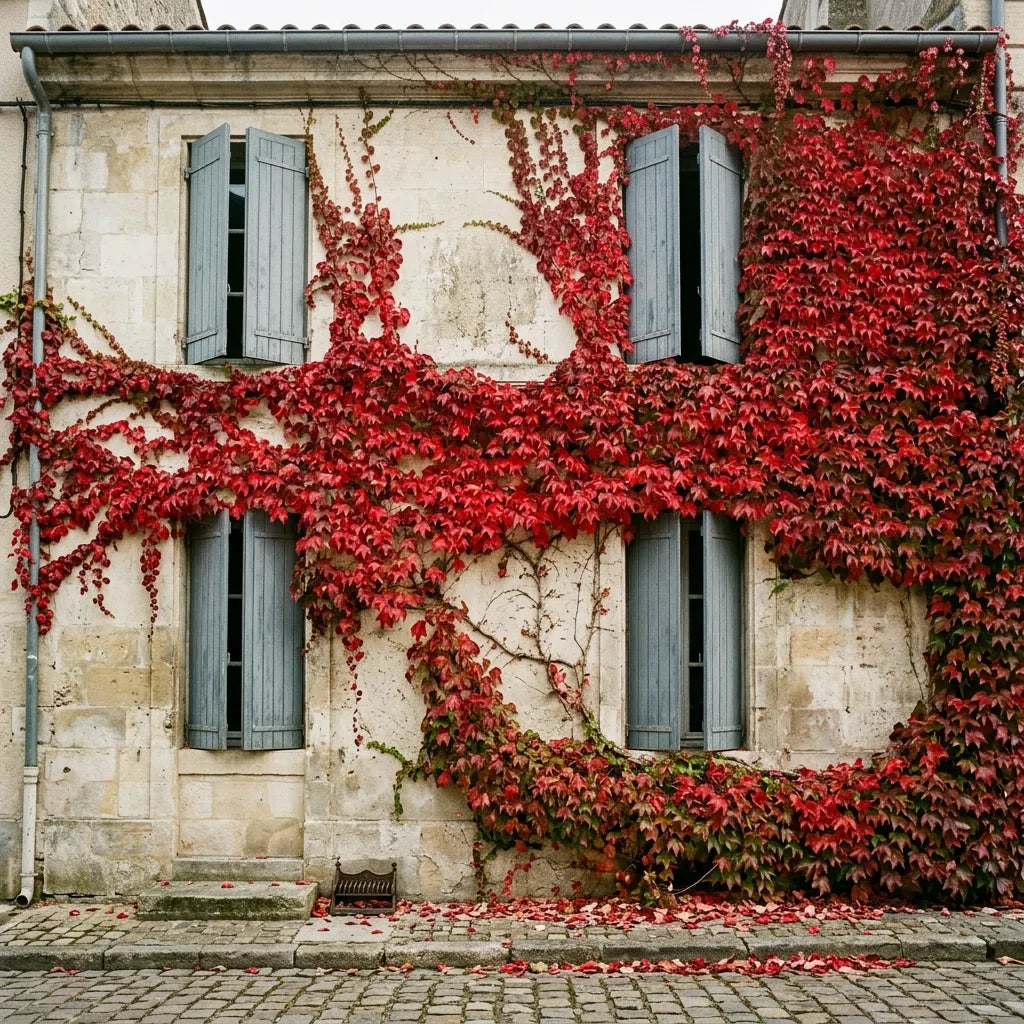
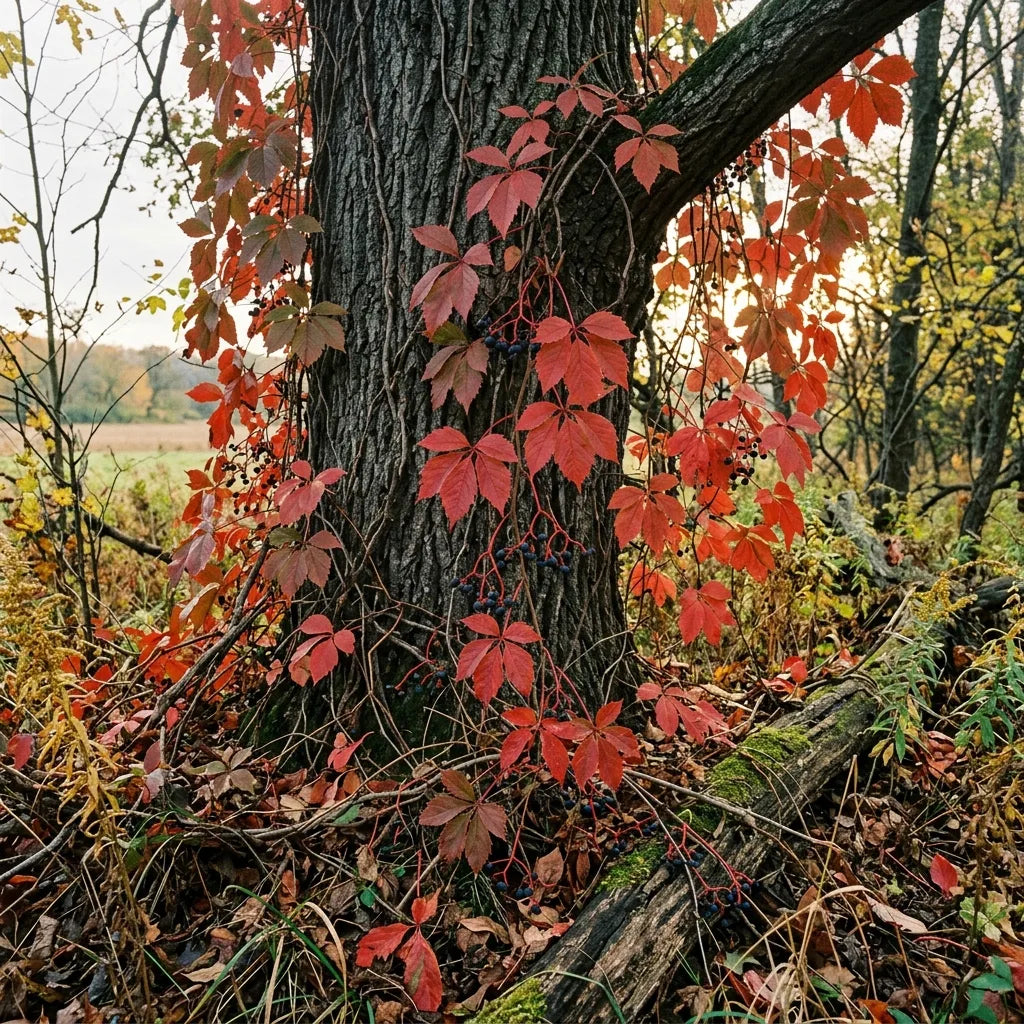
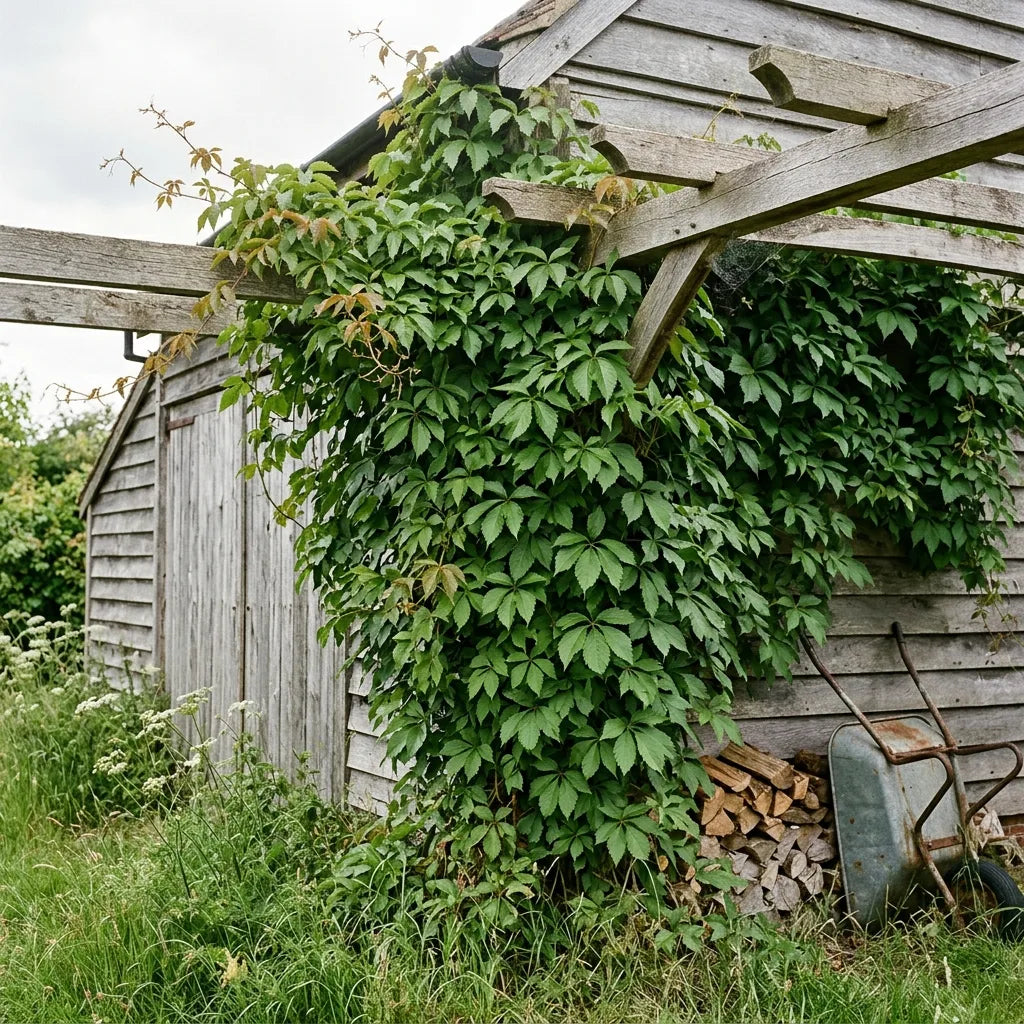
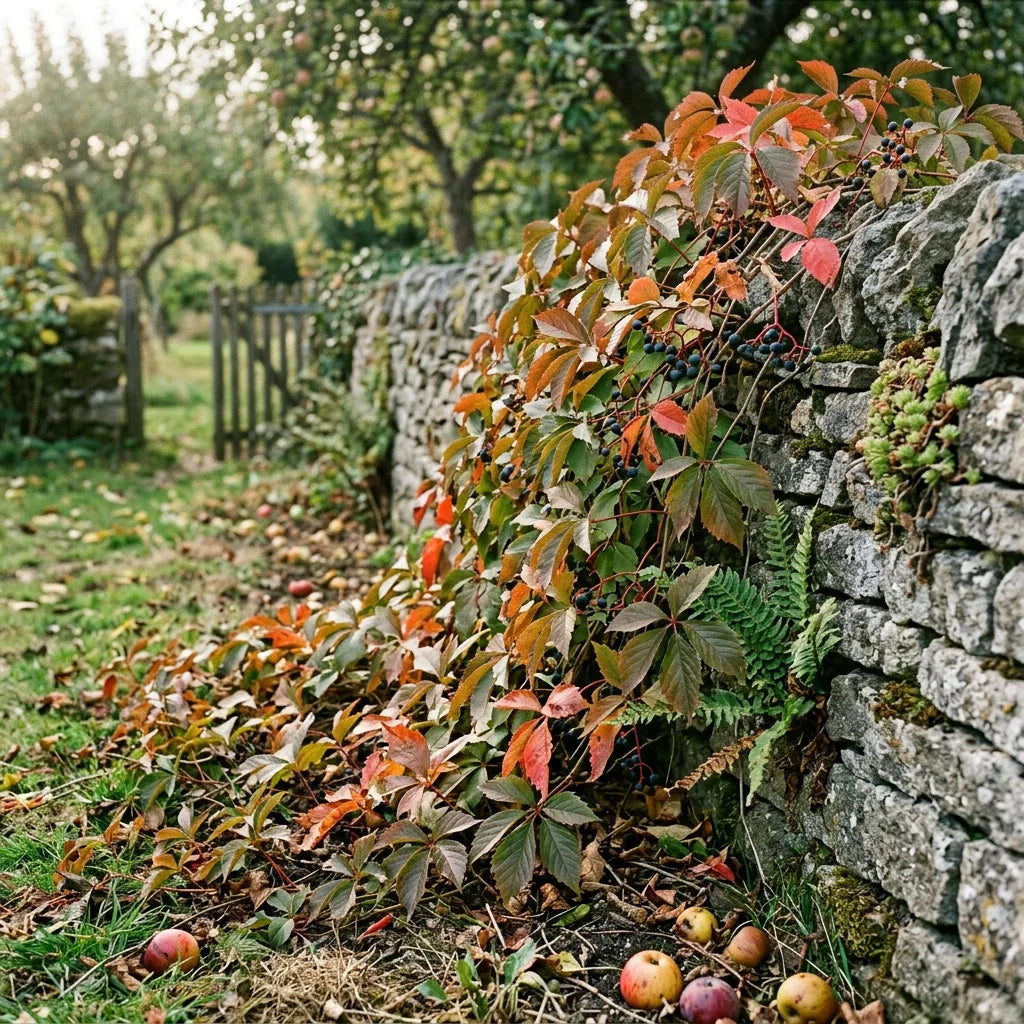
Spectacular foliage: dense green in summer, it blazes scarlet red to purple in autumn, creating one of the garden’s most beautiful displays.
-
Fast growth: it quickly covers façades, walls, and trellises, reaching more than 10 metres.
-
Surface attachment: its adhesive discs stick to the support without ever penetrating it—that is the key difference from ivy.
-
Very hardy: once established, it requires practically no watering or maintenance.
Virginia creeper and façades: the difference from ivy
- Unlike ivy, which attaches itself with true clinging roots that work their way into mortar joints and gradually widen them, Virginia creeper attaches with simple adhesive discs sitting on the surface. It penetrates neither joints, render, nor stone. On sound masonry, it causes no structural damage.
- The only useful precaution concerns already fragile surfaces: on blistering render or poorly bonded plaster, the pull of the adhesive discs may eventually lift patches—as any heavy climber could. On a wall in good condition, there is no problem.
-
To remove it cleanly: never pull it off by hand, as this would leave marks. Cut the stems at the base, let them dry on the wall for several weeks, then brush away the dead adhesive discs with a stiff brush. The render remains intact.
Precautions:
-
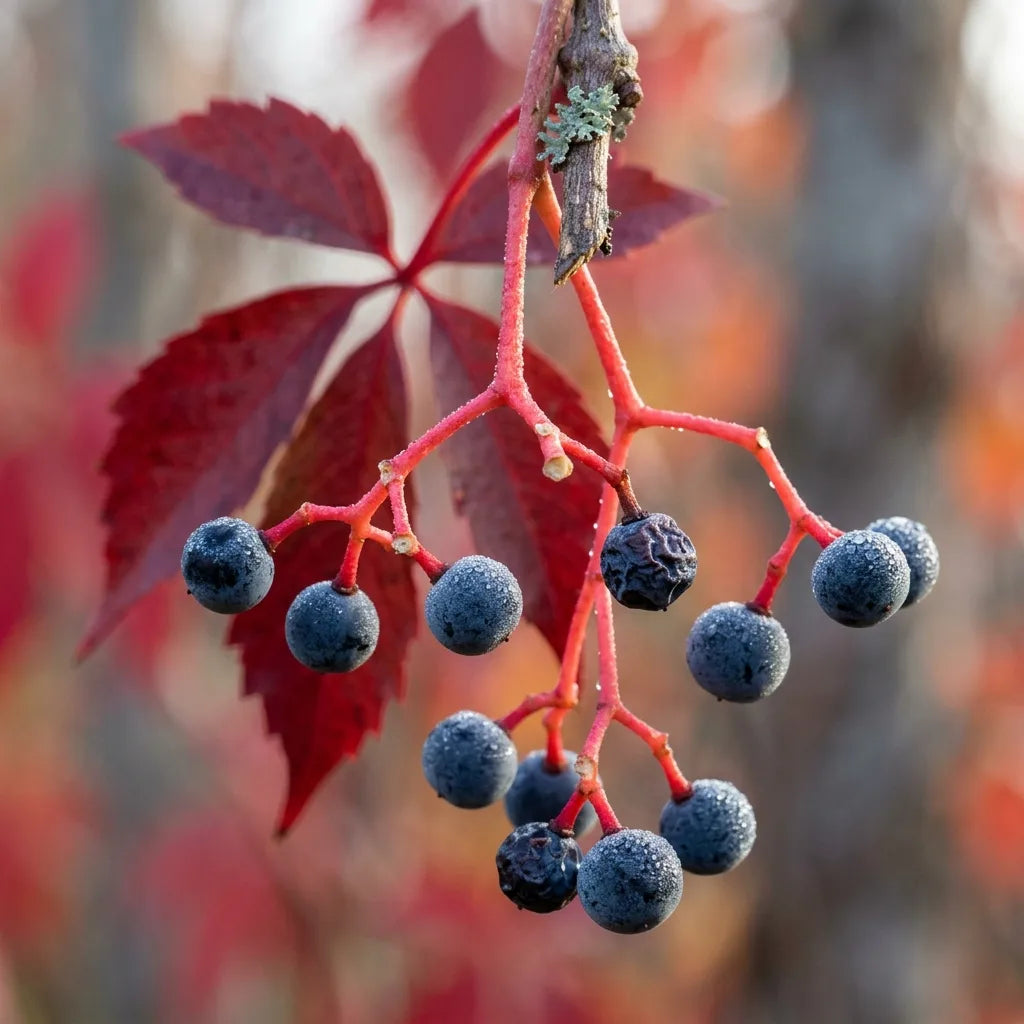
Its blue-black berries are not edible: although it belongs to the same family as grapevines, its fruits contain oxalate crystals and cause digestive problems. Keep them out of the reach of young children.
- Its vigour requires monitoring at height: do not let it reach gutters or slip beneath roof tiles, where its stems may lift the roofing.
Sowing advice:
-
Position: full sun to partial shade—the brighter the position, the more intense the autumn colours.
-
Soil: virtually any type, even poor or chalky, provided it is well drained. It is one of the least demanding climbers there is. Ordinary soil is more than sufficient.
-
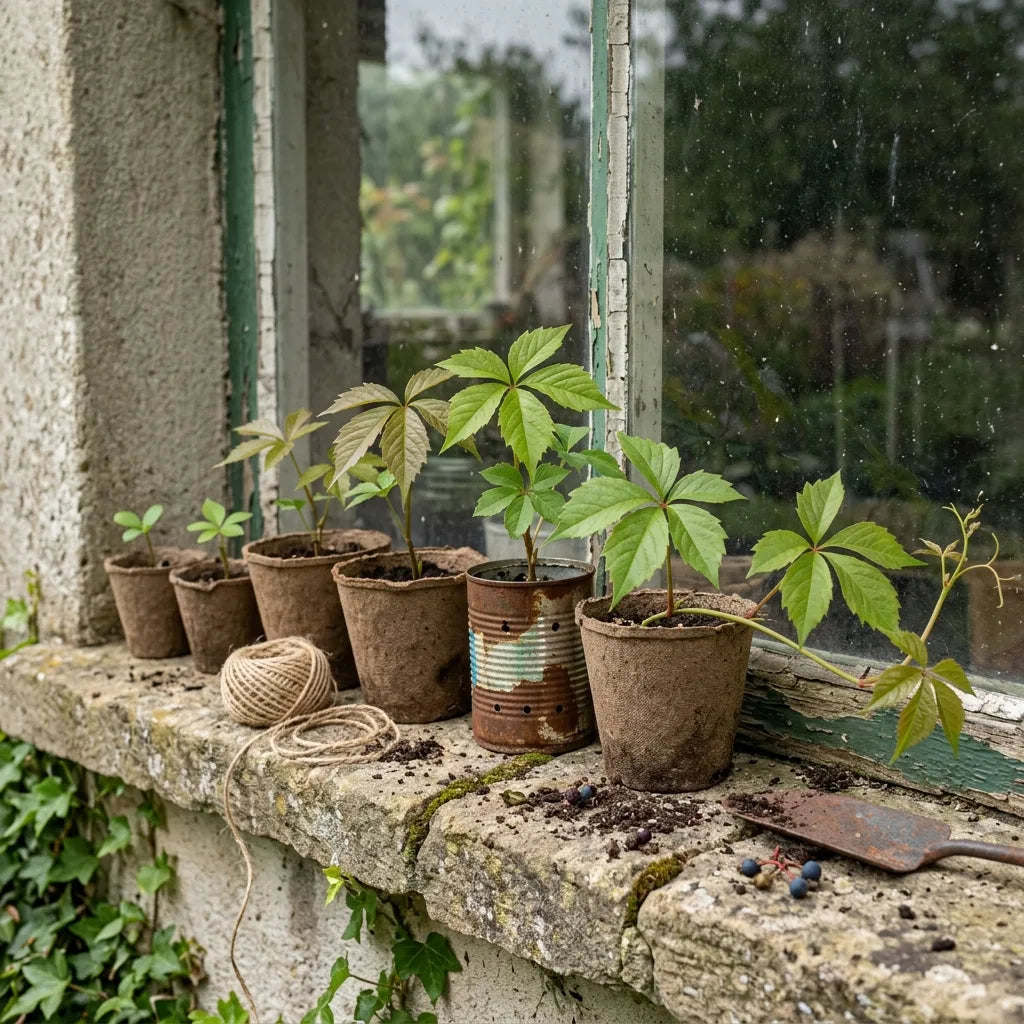
Method: 2 to 3 months of cold stratification is necessary to break dormancy. Then sow in March–April, in pots or directly in the ground, in well-drained soil.
Planting advice:
- Transplant at the foot of the support to be covered, about 30 cm from the wall to leave room for the roots. Guide the first stems; after that, it will manage by itself.
- If you would rather not attach anything to the wall, stretch stainless-steel cables a few centimetres from the façade: it will grow just as well, while allowing the wall to breathe.
Maintenance advice:
- Water during the first year; after that, watering becomes unnecessary in the ground.
- Prune every winter to contain its spread and keep it away from openings and roofs.
Beneficial combinations:
- It combines well with other vigorous climbers over a large area, such as hops, whose deciduous foliage lets in light in winter at the same time. At its base, light-shade perennials benefit from the coolness it creates.
Benefits for biodiversity:
- Its dense foliage on a wall provides shelter and a highly sought-after nesting site for birds, as well as a winter refuge for many insects.
- Its berries, toxic to us, are nevertheless a popular autumn food for blackbirds and thrushes.
- Its inconspicuous flowers are surprisingly rich in nectar and buzz with bees in July.
Uses:
- Covering façades, walls, trellises, pergolas, and fences. Its dense foliage noticeably cools south-facing walls in summer, while its deciduous nature allows the sun to return to the façade from autumn onwards—a sunshade that adjusts itself to the seasons.
Harvesting your own seeds:
Harvest the fully ripe berries in autumn—with gloves—crush them in a little water, and rinse to separate the seeds from the pulp. Dry them before winter stratification. See storing your seeds.
Commitment to Quality: at SemiSauvage - Permaculture, we grow and select our seeds with respect for all living things as our guiding principle. Based near the Auvergne Volcanoes, we choose open-pollinated, non-hybrid varieties, tested for their germination rates, carefully sorted and packaged, without any chemical treatment. Our belief: to give gardeners back the ability to resow, year after year, seeds that truly belong to them.
A scarlet autumn wall, without ivy’s drawbacks.