Sorghum bicolor subsp. nigrum
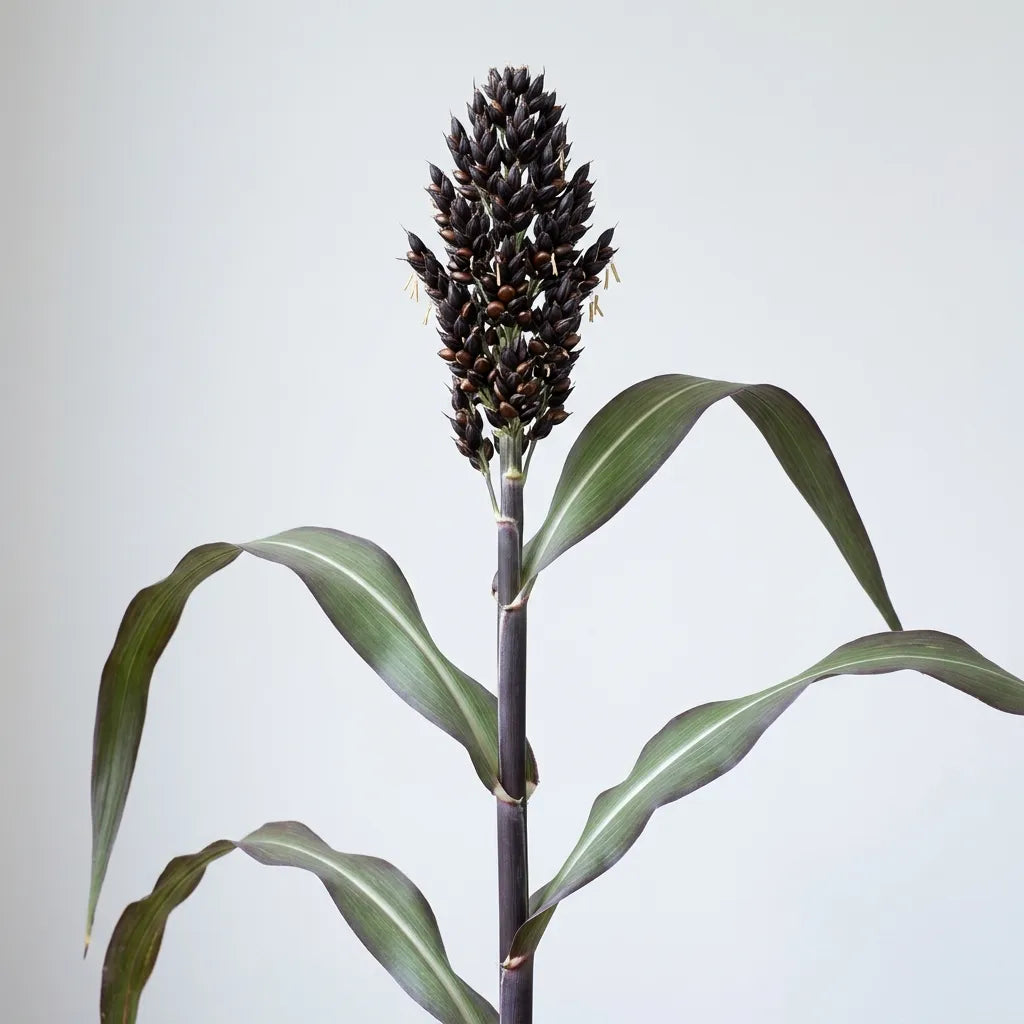
Black sorghum, black African sorghum, great millet: cultivated in Africa for more than five thousand years, sorghum is the world’s fifth-largest cereal crop, yet it is almost unknown in our gardens. This black form adds striking ornamental value to its nutritional interest: purple-black to black stems and dark panicles that give structure to a flower bed like few annual plants can.
Characteristics:
-
Graphic silhouette: upright purple-black stems reaching 2 meters, topped with very decorative dark panicles at the end of the season.
-
Rapid growth: complete cycle in 4 to 5 months, producing substantial biomass.
-
Drought-resistant: its deep root system allows it to withstand dry summers without difficulty.
Precautions:
- Like all sorghums, the young shoots and regrowth after cutting contain cyanogenic compounds and must not be given to animals as fodder. Only mature grains and the fully developed plant are suitable for animal feed.
Sowing advice:
-
Exposure: sunny; it needs warmth.
-
Soil: ordinary and well-drained, even poor — this is a cereal of arid regions and is remarkably undemanding. Important point: wait until the soil has warmed up (15 °C minimum); sowing in cold soil causes the seeds to rot.
-
Method: no stratification required. Sow directly in the ground in spring after the last frosts, or in pots from March–April under cover, burying the seeds 1–2 cm deep. See how to sow your seeds.
Care advice:
- Water moderately: it tolerates drought very well once established. Thin to 20–30 cm apart.
Harvesting advice:
- Harvest the panicles when the grains are hard and the stems begin to turn yellow. Protect them from birds with netting or a paper bag: they take an interest in them before you do.
Beneficial pairings:
- Grow with legumes such as white clover, which enriches the soil with the nitrogen it needs in abundance.
- Its sturdy stems serve as natural supports for light climbers, following the principle of the Native American “Three Sisters.” See companion planting in the vegetable garden.
Benefits for biodiversity:
- Its grains provide abundant food for seed-eating birds in autumn and winter if a few panicles are left standing.
- An excellent summer ground cover and biomass producer, it structures the soil through its deep roots and fits well into crop rotations. See green manures.
- Its drought tolerance makes it a crop for the future in water-wise gardens.
Uses:
- The grains can be made into gluten-free flour, popped like popcorn, or fermented to make traditional African beverages.
- In the ornamental garden, its dark flower stalks add a remarkable graphic touch, and its panicles are popular in dried arrangements.
Symbolism:
Sorghum symbolizes resilience and adaptation to arid environments. A nourishing cereal for entire peoples where wheat fails, it embodies the connection between agricultural traditions and cultivated biodiversity.
Harvesting your own seeds:
Leave a few panicles to fully ripen on the plant until the grains are hard, then cut them and dry them in a sheltered place before threshing them by hand. See how to store your seeds.
Commitment to Quality: at SemiSauvage - Permaculture, we grow and select our seeds with respect for living things as our guiding principle. Based near the Auvergne Volcanoes, we choose reproducible, non-hybrid varieties, tested for their germination rate, carefully sorted and packaged, without any chemical treatment. Our conviction: to give gardeners back the ability to resow, year after year, seeds that truly belong to them.
Sale reserved for amateur gardeners seeking quality and authenticity.