Allium schoenoprasum
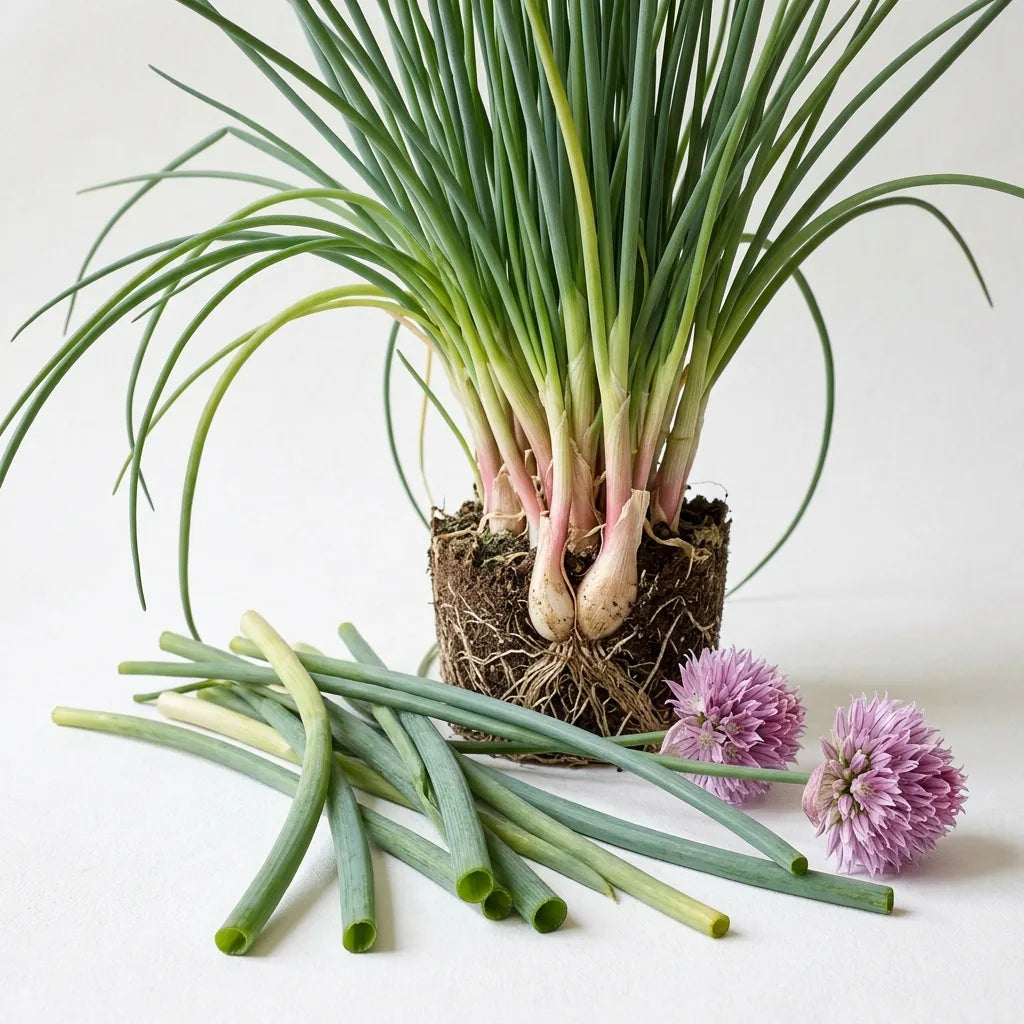
Broad-leaved chives, giant chives, civet: they are the same species as common chives, but selected for their noticeably thicker stems. The advantage is very practical in the kitchen: more to chop in the same harvesting time, and a more pronounced presence in dishes.
Characteristics:
-
Thicker stems: easier to harvest and chop than classic chives.
-
Edible flowers: spherical pink-purple flower heads, highly decorative and attractive to pollinators.
-
Very hardy: withstands temperatures down to -20 °C and returns every year without protection.
-
Dual purpose: aromatic in the vegetable garden, ornamental in borders, flower beds or along paths.
Sowing advice:
-
Exposure: full sun to partial shade.
-
Soil: cool, loose, fertile, substantial and well drained. Unlike bulb onions, it appreciates nutrient-rich soil that stays cool: adding compost produces fuller clumps and thicker stems.
-
Method: sow from spring to early summer, 1 cm deep, in pots or directly in the ground. Germination is a little slow; allow two to three weeks. See how to sow your seeds.
Planting advice:
- Transplant in clumps of several plants, spaced 20 cm apart — it makes much more impact when grouped than when planted alone. Perfect along paths, in flower beds or on a windowsill.
Care advice:
- Water regularly to keep the soil cool: this prevents the leaves from turning yellow and becoming tough.
-
Useful tip: cut the entire clump back to 5 cm after flowering. It regrows within fifteen days with fresh, tender foliage, two to three times per season.
- Divide the clump every 3 years in spring to rejuvenate it.
Harvesting advice:
- Cut the stems with scissors 2 cm above the soil, never by pinching them halfway up: cut ends turn yellow and the clump becomes depleted.
- It freezes very well when chopped; drying, on the other hand, causes it to lose most of its aroma.
Beneficial companions:
Benefits for biodiversity:
- Its pink pom-poms are heavily visited by bees, bumblebees and butterflies in spring — let part of the clump flower rather than cutting it all back.
- Its sulfur compounds naturally reduce pest pressure on neighboring crops.
Uses:
- Chopped raw and added at the last moment: salads, raw vegetables, soups, sauces, fresh cheeses and omelets. Cooking destroys its aroma. Its flowers can be separated into florets to decorate salads, or used to flavor vinegar, which they turn pink.
Harvesting your own seeds:
Leave a few flower heads to dry completely on the plant, then shake them over a container: the black seeds will come free from the capsules. Sow them quickly, as their germination capacity drops after one year. See how to store your seeds.
Commitment to Quality: at SemiSauvage - Permaculture, we grow and select our seeds with respect for all living things as our guiding principle. Based near the Auvergne Volcanoes, we choose open-pollinated, non-hybrid varieties, tested for their germination rate, carefully sorted and packaged, with no chemical treatments. Our belief: to give gardeners back the ability to sow, year after year, seeds that truly belong to them.
All the flavor of chives, with more to harvest.