Apium graveolens var. dulce
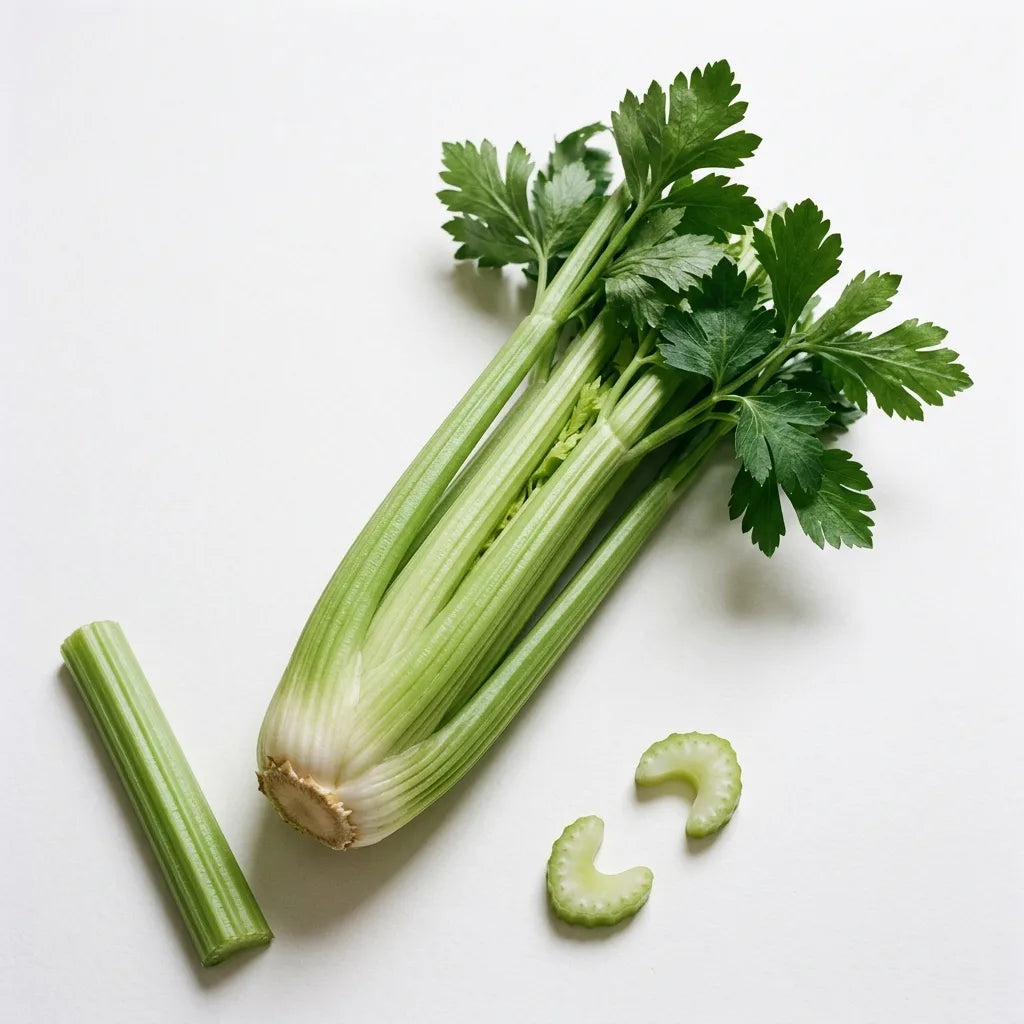
Stalk celery, rib celery, cultivated marsh parsley: this is the selected form of a wild plant from salt marshes, marsh parsley, whose bitterness and intense aroma have gradually been softened. Its fleshy stalks, crisp when raw and meltingly tender when cooked, make it both a vegetable and a seasoning.
Characteristics:
-
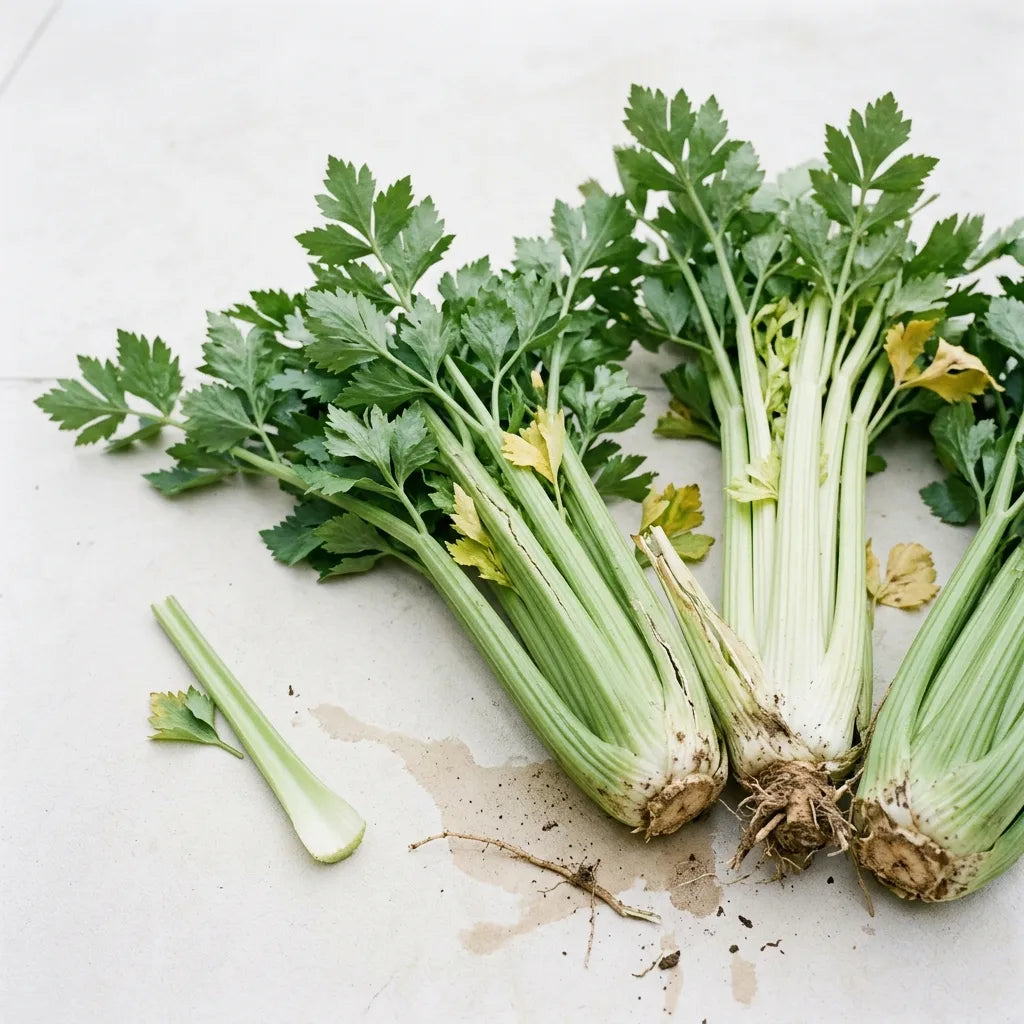
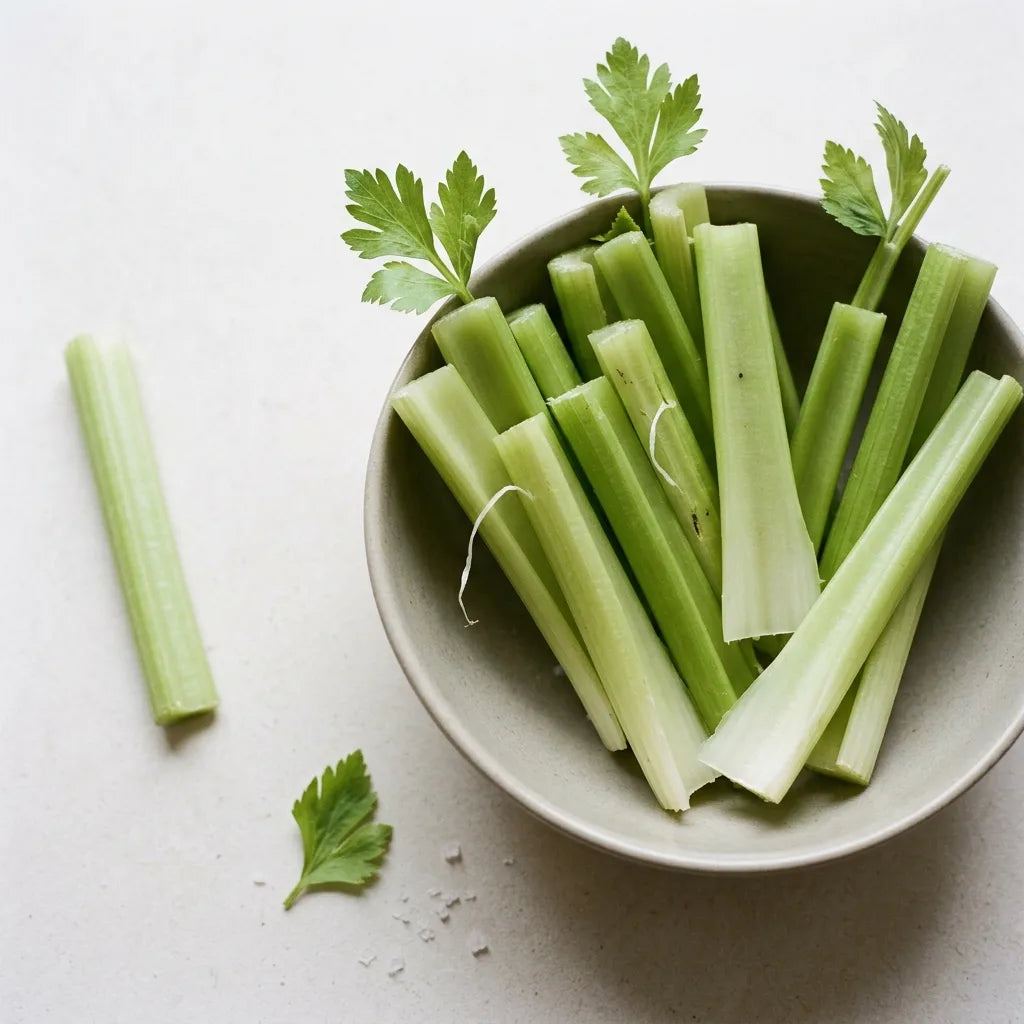
Fleshy stalks: smooth or ribbed, green or white depending on the variety.
-
Dual texture: crisp when raw in sticks, tender and delicate once cooked.
-
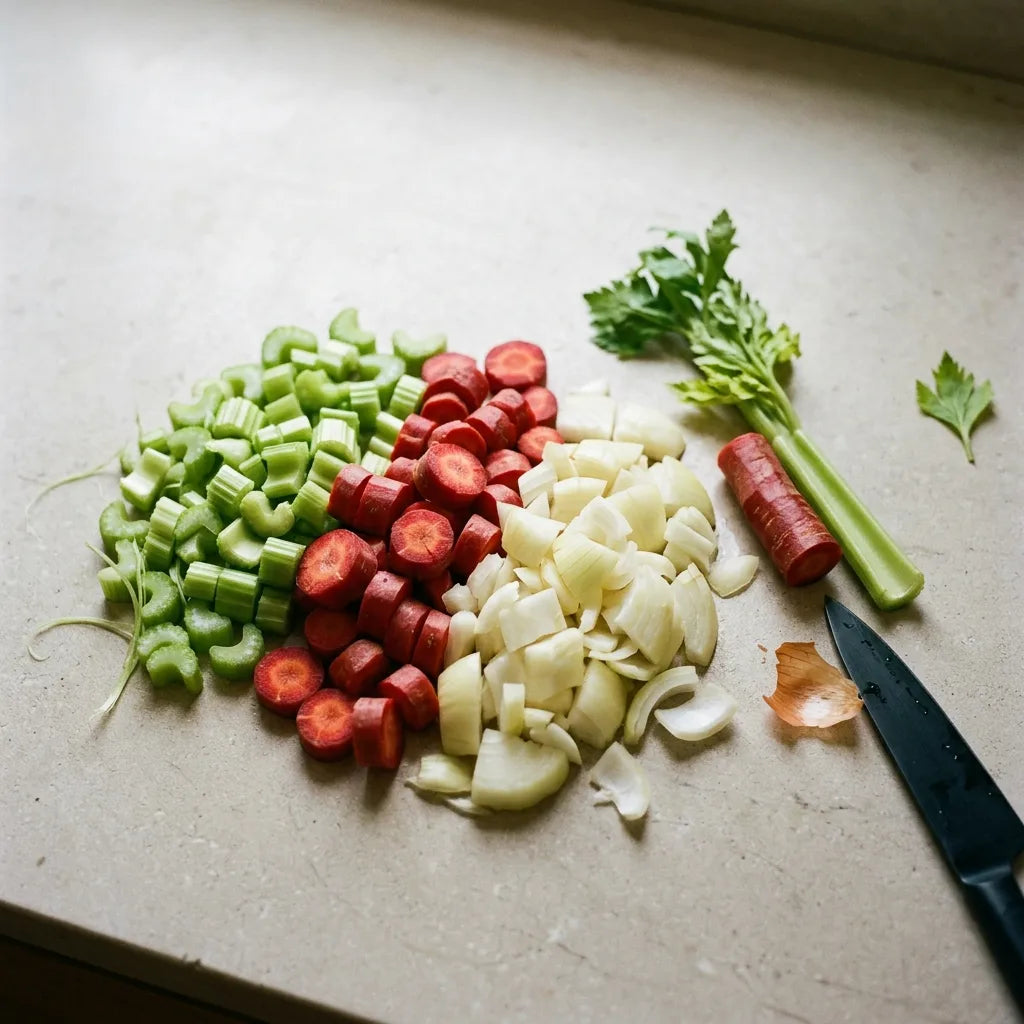
Aromatic base: it is used in almost all stocks, broths, and mirepoix.
-
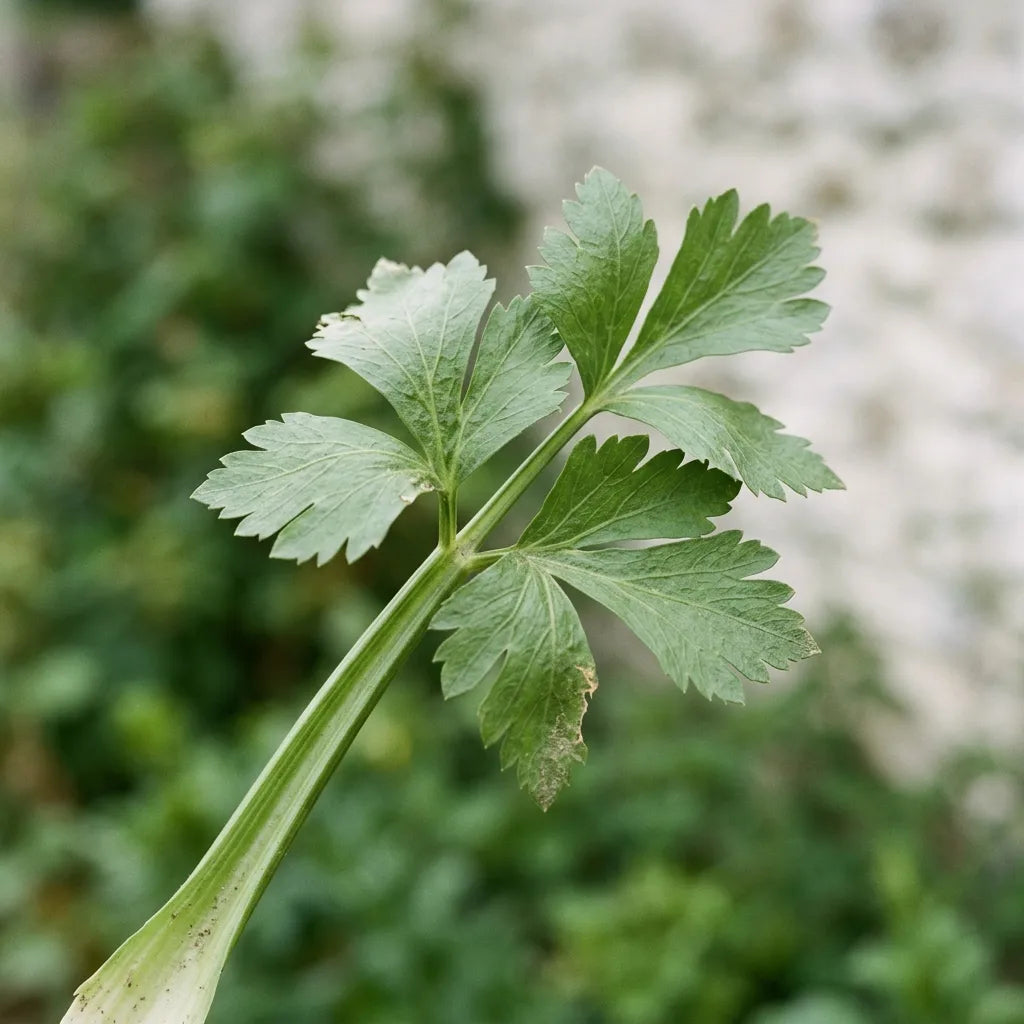
Usable leaves: often discarded, they nevertheless add excellent flavor to broths.
Sowing advice:
-
Exposure: a well-exposed, warm location.
-
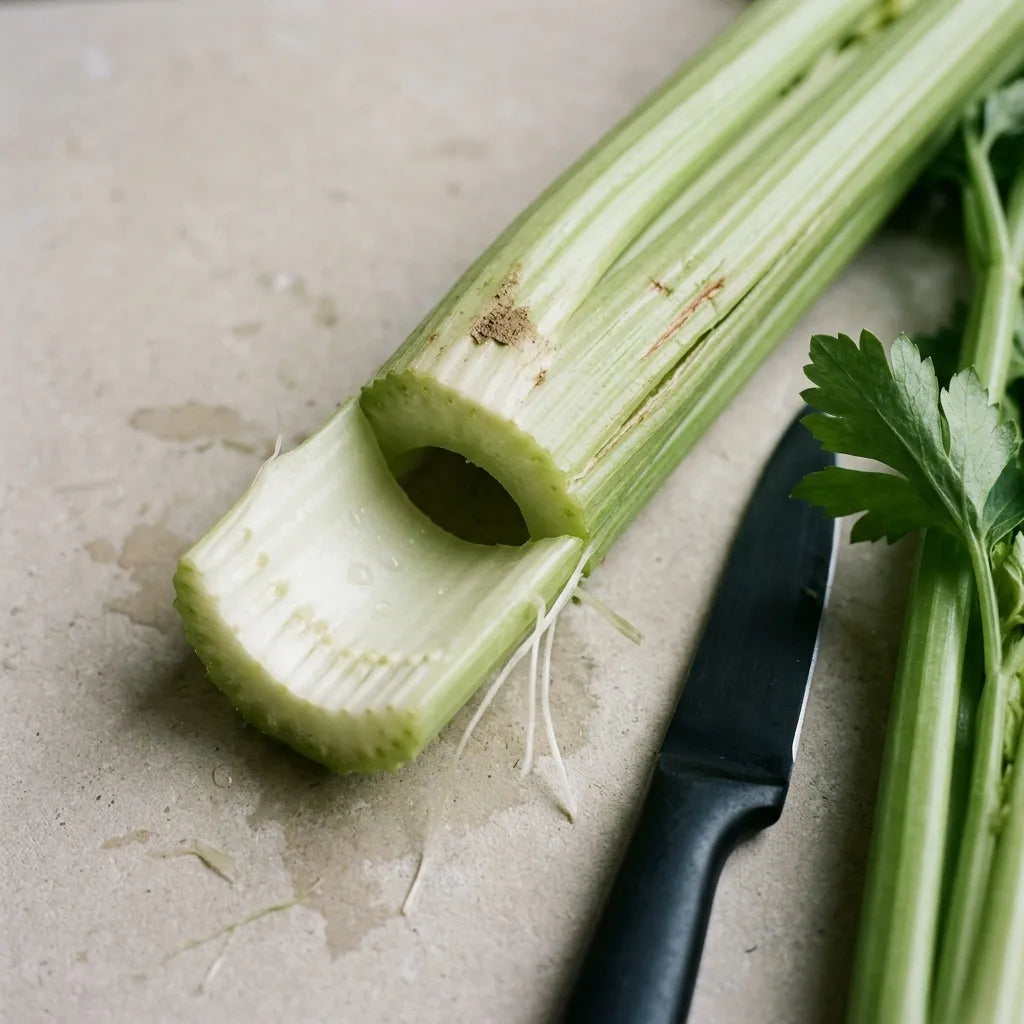
Soil: fertile, deep, and above all consistently moist — this is the decisive point. Descended from a marsh plant, celery cannot tolerate drying out: water stress causes it to bolt and makes its stalks hollow and stringy. Enrich generously with compost and wood ash.
-
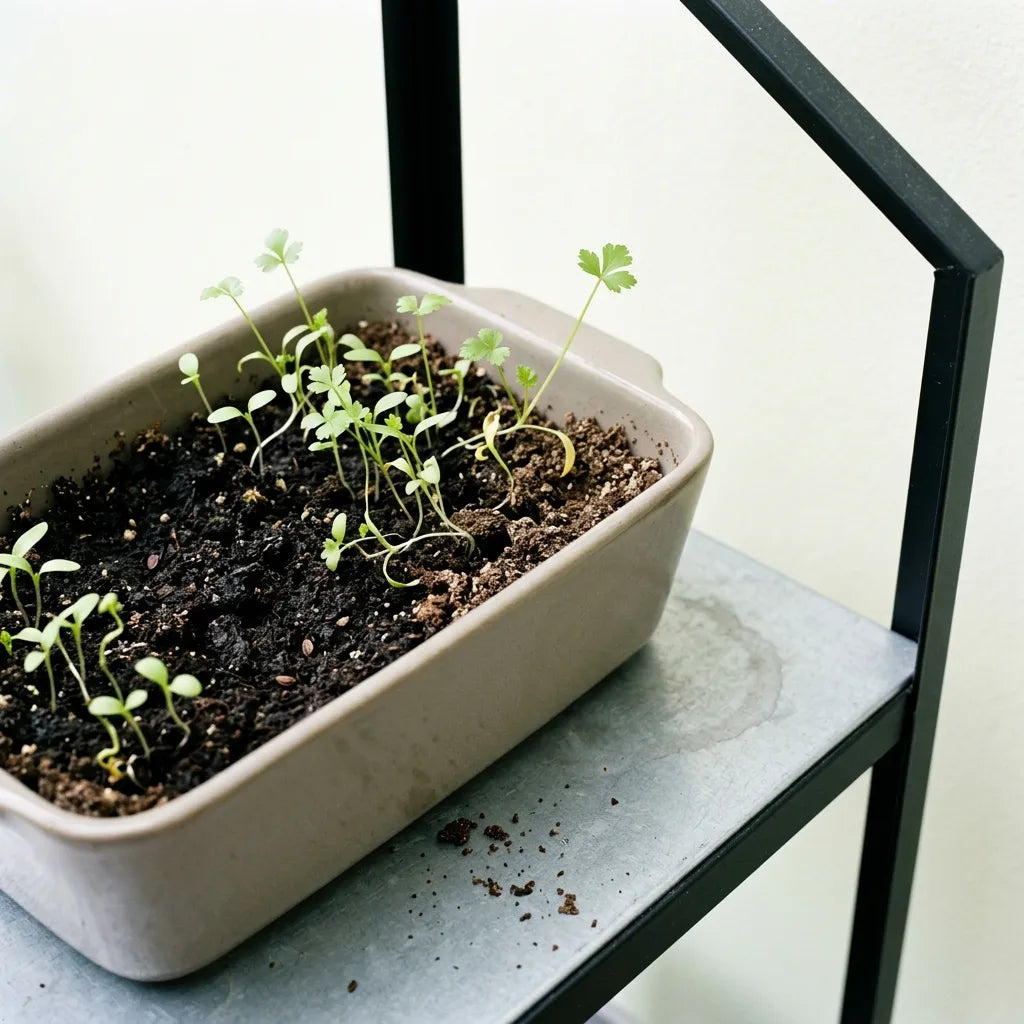
Method: sow in February–March under cover at 18–20 °C, on the surface or barely covered — the tiny seeds need light. Germination is slow; allow three to four weeks. See how to sow your seeds.
Planting advice:
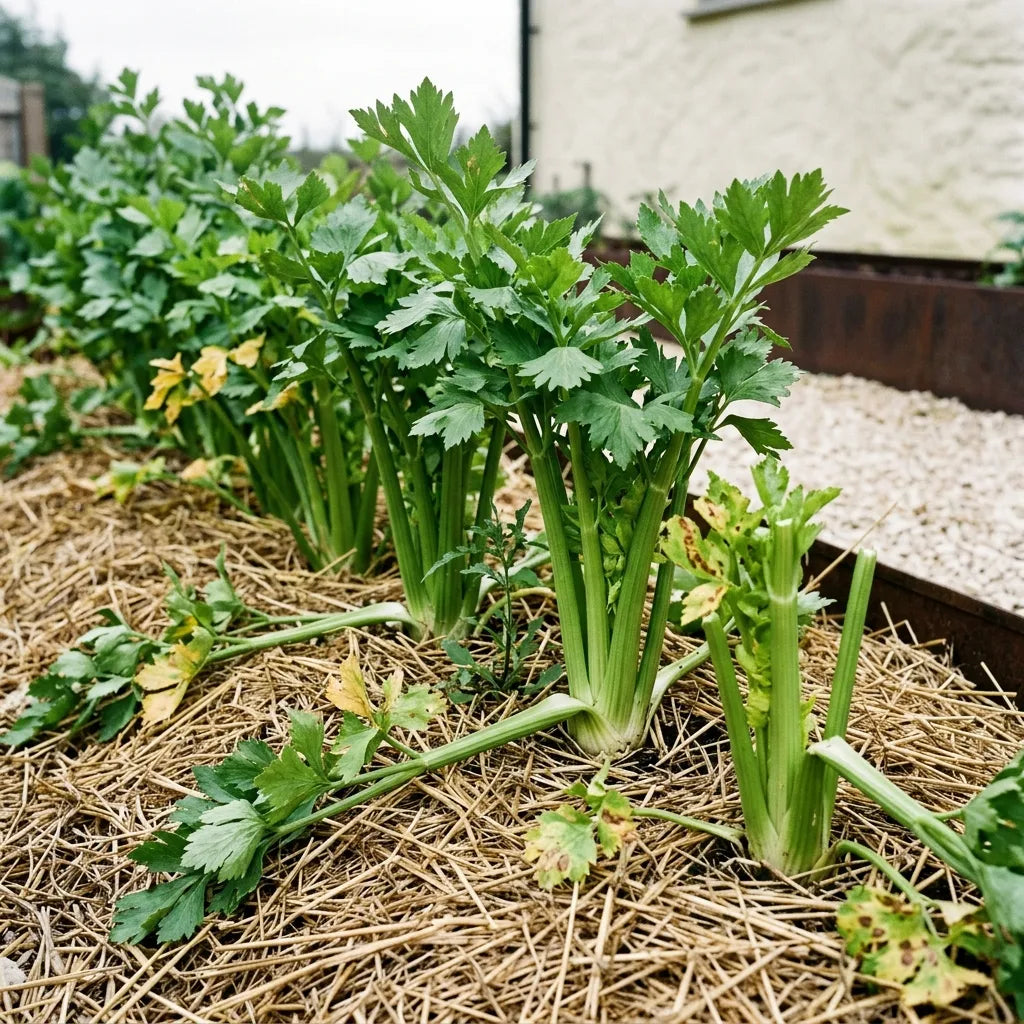
- Transplant after the frosts, when the plants have 5 or 6 leaves, spacing them 30 cm apart. Do not bury the crown, or it will rot.
Care advice:
- Water abundantly and regularly, never allowing the soil to dry out. Apply a thick mulch.
-
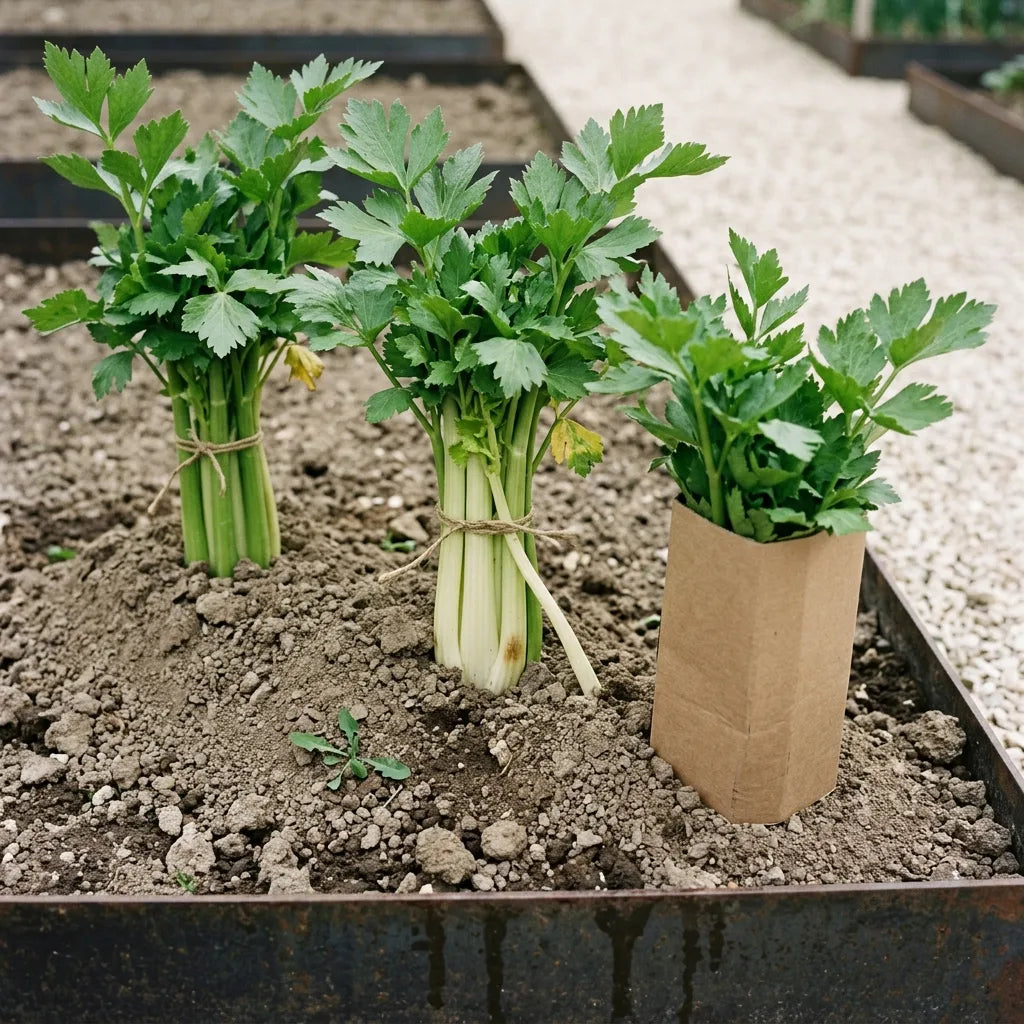
Blanching for tender stalks: three weeks before harvesting, tie the stalks together and mound soil around the base, or surround it with cardboard. Deprived of light, the stalks become paler, lose their bitterness, and become noticeably more tender.
Harvesting advice:
- Harvest the entire plant in autumn, before severe frosts, or pick the outer stalks as needed while leaving the crown to continue producing.
- Do not discard the leaves: once dried, they make an excellent substitute for celery powder.
Beneficial companions:
- It grows well with cabbages, leeks, and tomatoes — its scent is reputed to deter the cabbage white butterfly. Avoid planting it near corn and potatoes. See vegetable garden companion planting.
Benefits for biodiversity:
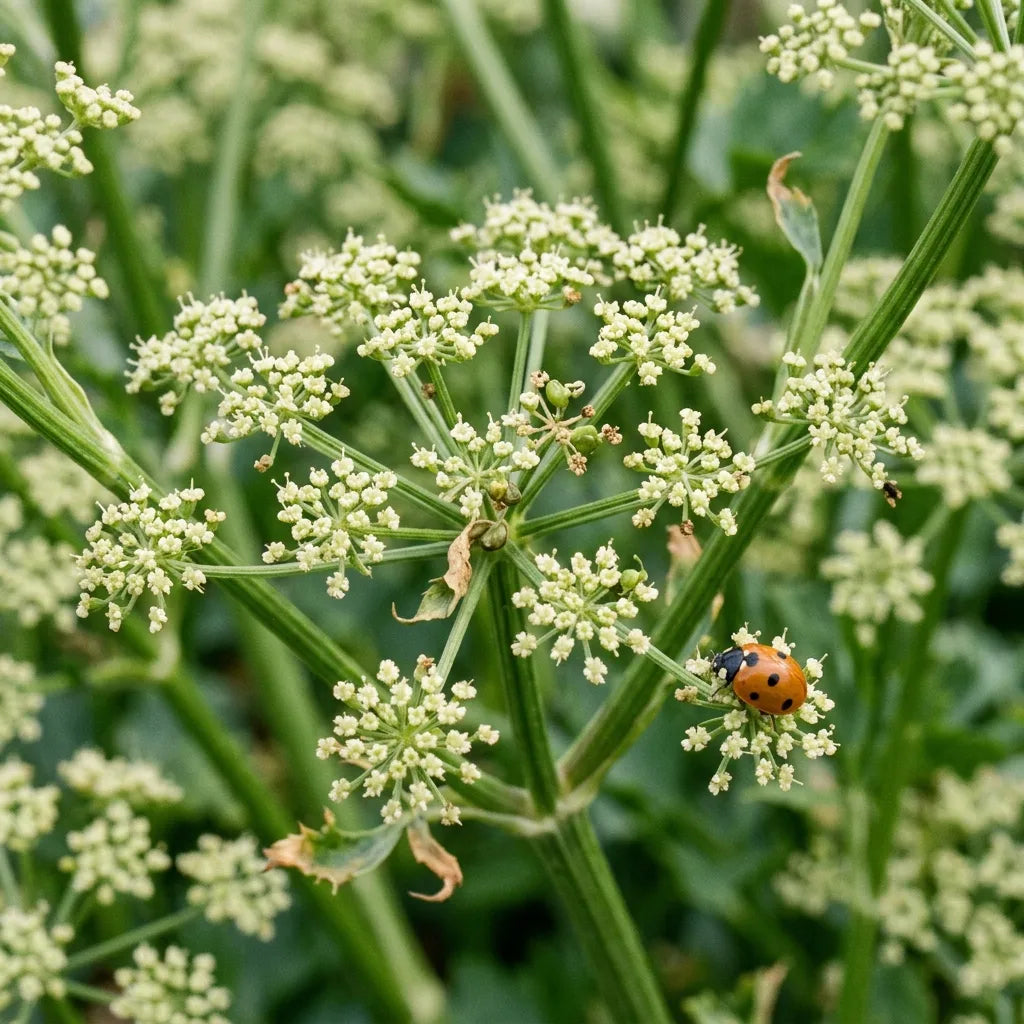
- Let one plant go to seed in its second year: its greenish-white umbels are genuine platforms for hoverflies and beneficial parasitic wasps, whose larvae devour aphids.
- Like all umbellifers, it is a host plant for Swallowtail caterpillars.
Uses:
- Raw in sticks for dipping or sliced into salads; cooked in soups, stews, slow-cooked dishes, and braises. Together with carrot and onion, it forms the aromatic base of most European cuisines.
- A traditional medicinal plant, cultivated since Antiquity. See our medicinal plants to sow.
Harvesting your own seeds:
Biennial, it goes to seed in its second year: leave one plant in the ground over winter, protected by mulch, then harvest the umbels when the seeds turn brown. Be careful: it will cross-pollinate with celeriac, so isolate your seed plant. See saving your seeds.
Commitment to Quality: at SemiSauvage - Permaculture, we grow and select our seeds with respect for all living things as our guiding principle. Based near the Volcanoes of Auvergne, we choose reproducible, non-hybrid varieties, tested for their germination rate, carefully sorted and packaged, with no chemical treatment. Our belief: to give gardeners back the ability to resow, year after year, seeds that truly belong to them.
The aromatic base for all your soups, grown at home.