Abelmoschus esculentus
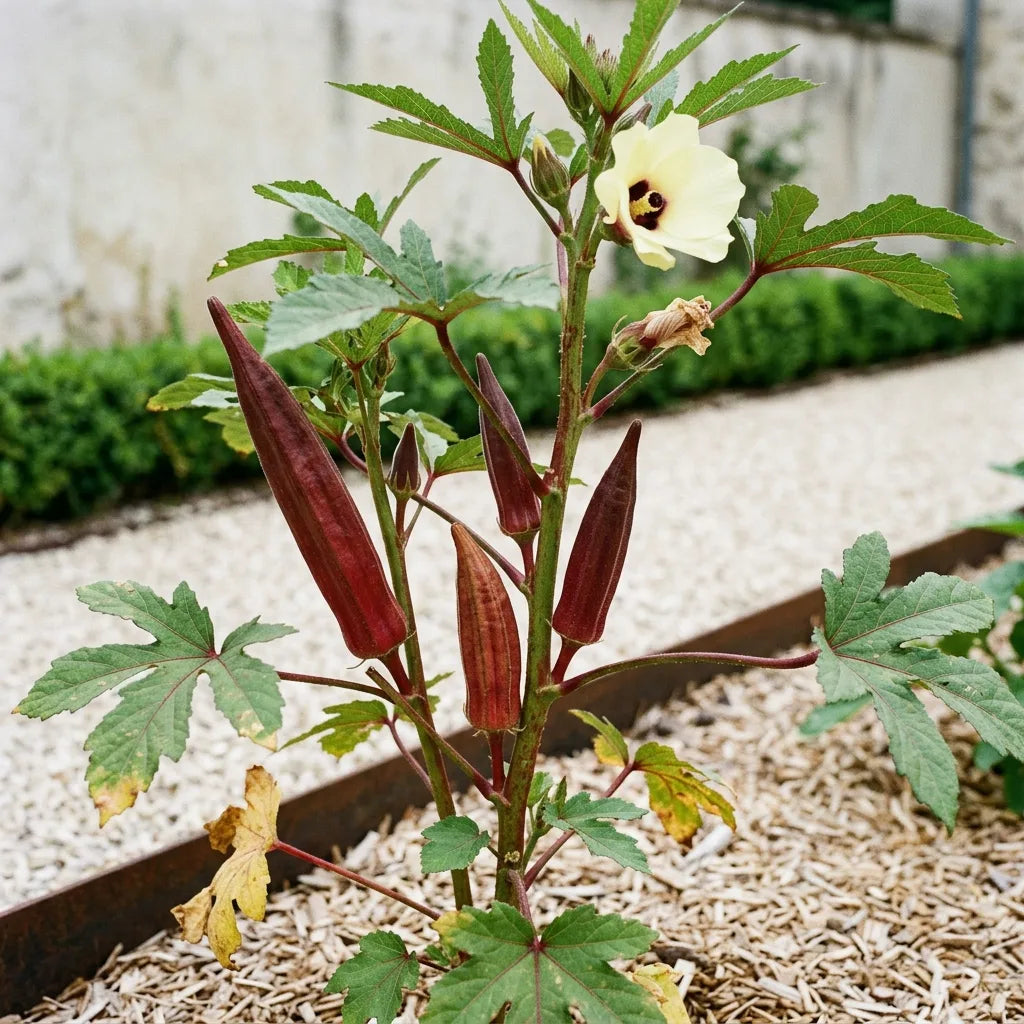
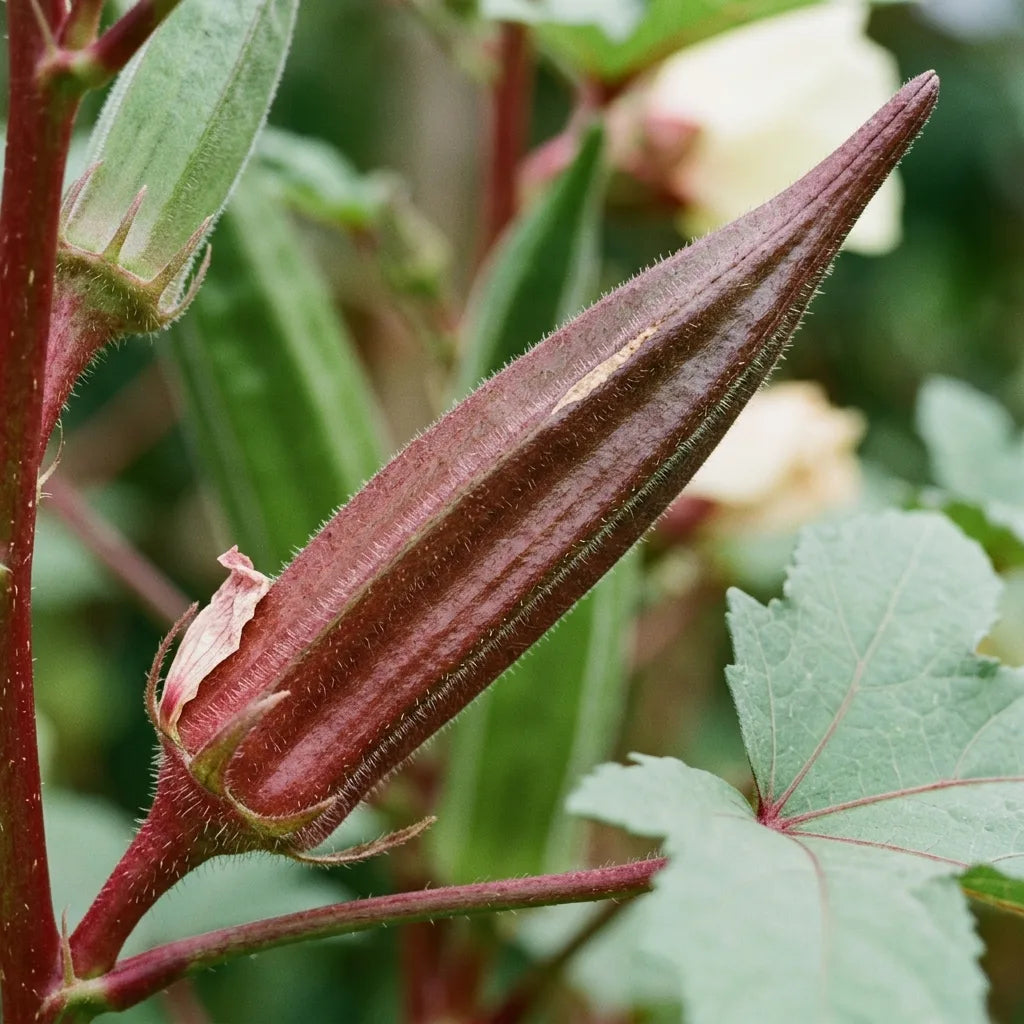
Red okra, okra, edible hibiscus, Greek horn, calou: it is a mallow, a cousin of hibiscus—which explains its magnificent pale yellow flowers with purple centers. Its red pods, harvested young, release a mucilage when cooked that naturally thickens dishes: this is what gives Creole okra dishes and Louisiana gumbo their texture.
Characteristics:
-
Red pods: very decorative on the plant, they turn slightly green when cooked.
-
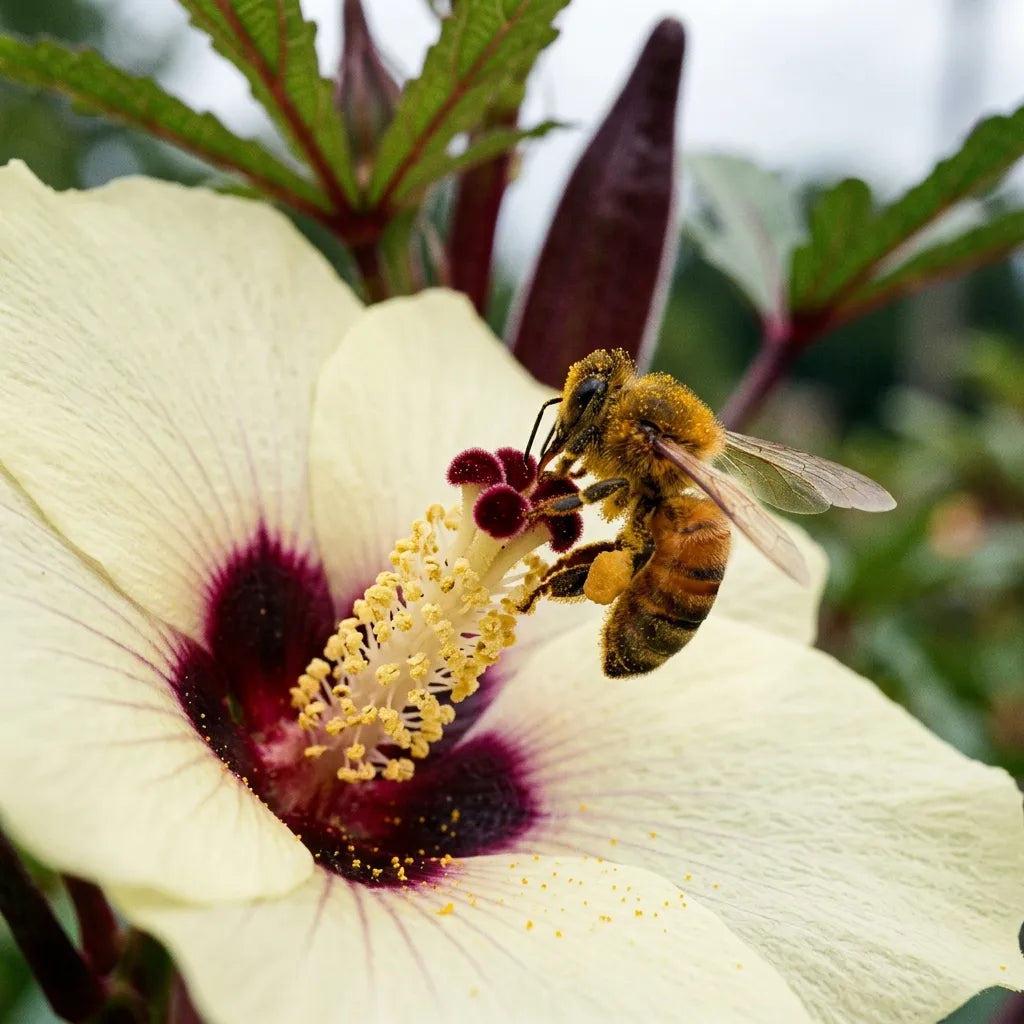
Spectacular flowers: pale yellow with purple centers, worthy of an ornamental bed.
-
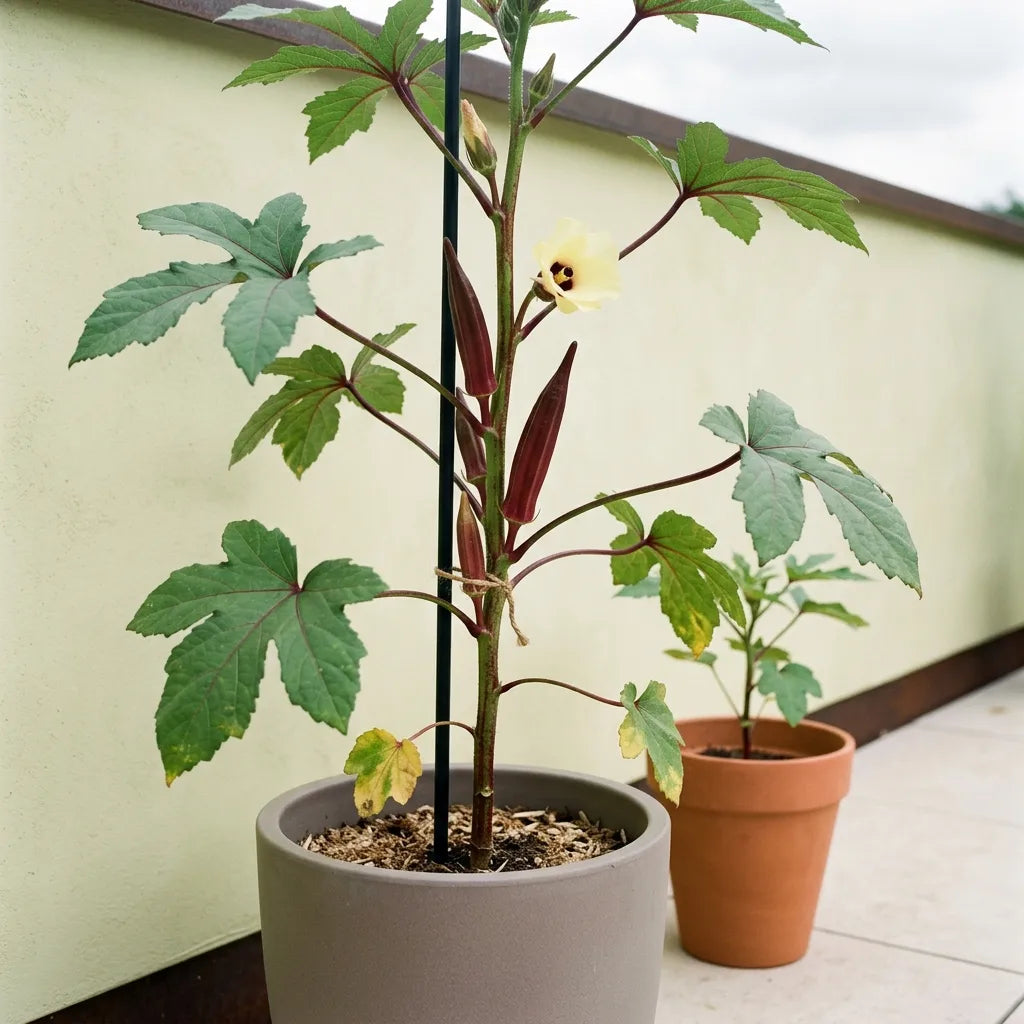
Slender annual plant: 1 to 1.5 m tall, it can be grown in a pot on a warm terrace.
-
Dual purpose: a vegetable and a thickening condiment in Creole, African, Indian, and Japanese cuisines.
Sowing advice:
-
Exposure: full sun, warm and sheltered—it is a tropical plant and needs heat to produce fruit.
-
Soil: rich, loose, moist, and well-drained. An addition of mature compost is beneficial. It does not tolerate stagnant water or cold.
-
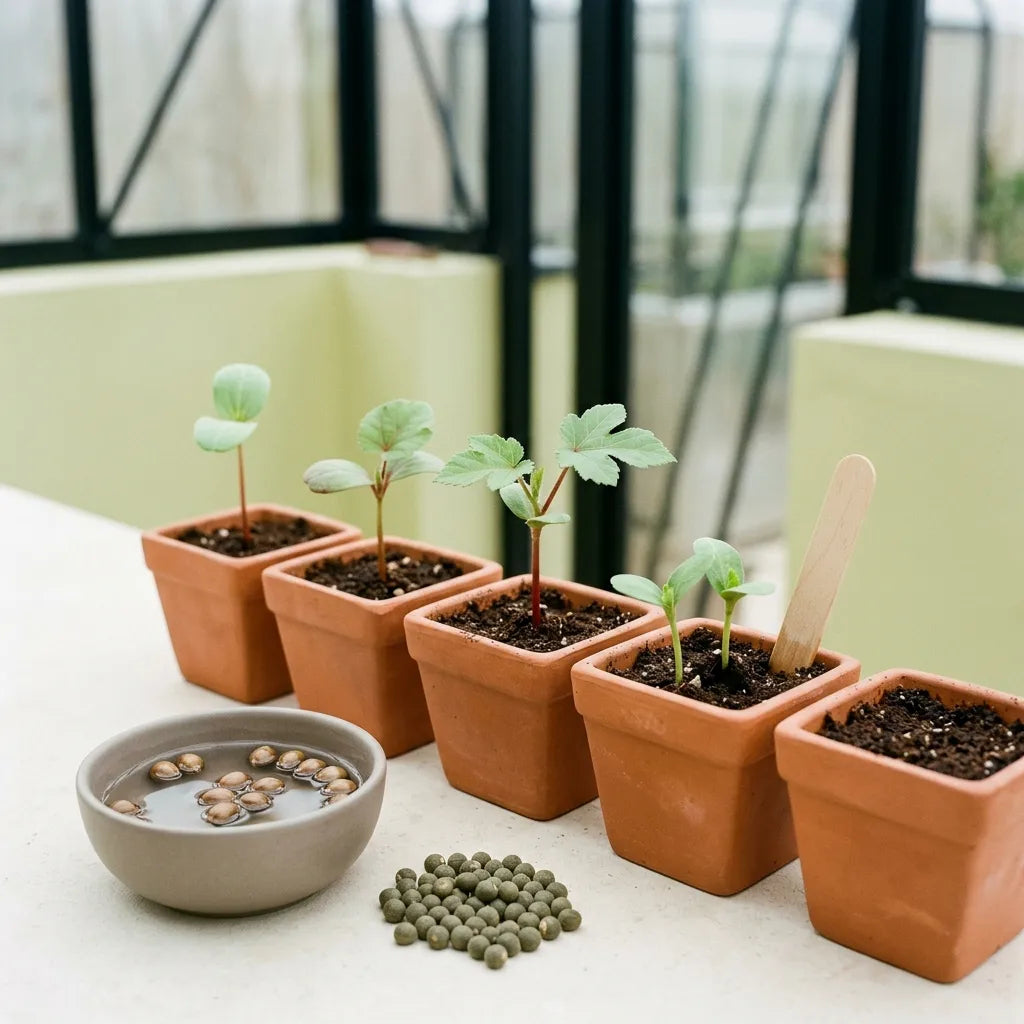
Method: its seeds have a hard coating: soak them for 12 to 24 hours in lukewarm water before sowing, otherwise germination will be slow and uneven. Sow in pots 1 cm deep, under cover at 22–25°C from March–April. See how to sow your seeds.
Planting advice:
- Transplant after the last frosts, spacing plants 40 to 50 cm apart in every direction. Growing in a pot works well in a large container in a sheltered position.
Care advice:
- Water regularly at the base and mulch. A stake is useful for the tallest plants.
- Pinch out the top when the plant reaches 60 cm to encourage branching, which bears the pods.
Harvesting advice:
-
The decisive point: harvest very young, between 5 and 10 cm long, every two days. Beyond that, the pods become fibrous and immediately inedible—this is the classic mistake.
- Cut with pruning shears and wear gloves: the pods and stems are covered in irritating hairs.
Beneficial companions:
Benefits for biodiversity:
- Its large mallow flowers are frequently visited by bees and bumblebees, which find abundant pollen there.
- Its relationship to marsh hibiscus makes it as ornamental as it is useful—it has every place along the edge of a flower bed.
Uses:
- Sliced, raw or cooked: in gumbo, curry, Creole stew, or quickly sautéed over high heat. Tip to reduce the mucilage if you dislike its texture: sear the whole pods over high heat without cutting them, or add a splash of lemon juice.
Harvesting your own seeds:
Leave two or three pods to fully ripen on the plant until they turn brown and split open, then collect the round seeds and dry them. See how to store your seeds.
Commitment to Quality: at SemiSauvage - Permaculture, we grow and select our seeds with respect for all living things as our guiding principle. Based near the Auvergne Volcanoes, we choose reproducible, non-hybrid varieties, test them for germination rates, and carefully sort and package them without any chemical treatment. Our belief: to give gardeners back the ability to resow, year after year, seeds that truly belong to them.
A tropical vegetable that is as beautiful in flower as it is useful in the kitchen.