
In this article 8
A sowing calendar is never a calendar of dates: it is a calendar of conditions. Two gardens 200 kilometers apart can have a six-week difference for the same crop. Before going through the months, this guide therefore presents the three reference points that let you adapt any calendar to your garden — followed by month-by-month details, both in the ground and under cover.
The three reference points that shift everything
1. Your last frost date
This is the most important factor in the vegetable garden, yet it is rarely known. In France, it ranges roughly from mid-March on the Mediterranean coast and the southern Atlantic coast to mid-June in the middle mountains, with a broad area around mid-May. The Ice Saints tradition (May 11–13) is a cautious reference point valid for much of the country, but too late in the south and too early at higher elevations.
Once this date is known, everything can be calculated backward: tomatoes are sown under cover 6 to 8 weeks before, and squash 3 to 4 weeks before. Sowing earlier does not save time — you end up with leggy seedlings that will suffer when transplanted.
2. Soil temperature, not air temperature
This is the classic mistake of the first fine weekend in March. A seed responds not to mild air but to warm soil. A few useful thresholds:
| Soil temperature | What germinates |
|---|---|
| from 5 °C | Broad bean, pea, spinach, lamb's lettuce, radish |
| from 8–10 °C | Carrot, lettuce, beetroot, onion, cabbage |
| from 12–15 °C | Bean, corn, squash, zucchini |
| from 18–20 °C | Tomato, pepper, eggplant, basil, melon |
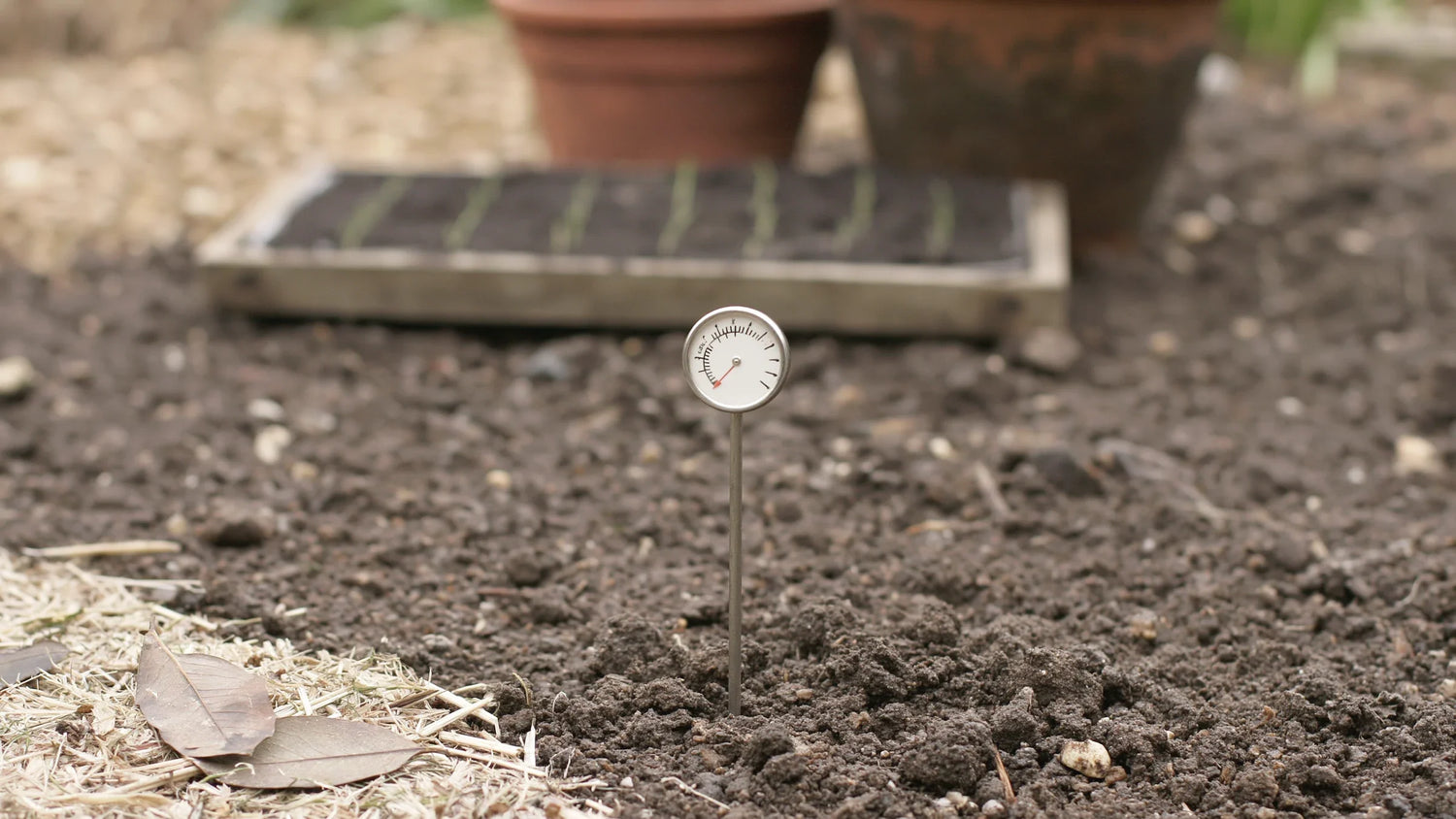
A kitchen thermometer pushed 5 cm into the soil in the morning provides the answer in ten seconds. It is the best investment you can make for your vegetable garden.
3. Direct sowing or sowing in pots?
The rule can be summed up in one sentence: anything that hates being disturbed should be sown directly in place.
- Must be sown directly in place — carrot, radish, parsnip, turnip, lamb's lettuce, spinach, pea, broad bean, bean. Their taproot does not tolerate transplanting well.
- Preferably in pots — tomato, pepper, eggplant, cabbage, leek, celery: a long growing cycle means gaining several weeks in the season.
- Optional — squash, zucchini, cucumber, lettuce, basil. Pots allow you to get a head start without any problems, provided you transplant while the plants are young.
The technique for each method is detailed in How to sow seeds in cotton, pots, or directly in the ground.
Winter: January and February
Few sowings, but the month that determines the year. This is the time to draw up your growing plan, check your seed lots, and prepare the containers.
January
- In a heated shelter (20 °C minimum): eggplant, chili pepper, bell pepper — only if you have grow lights. Without supplemental light, the seedlings become leggy and you lose the expected head start.
- Under a cold frame: winter lettuce, spinach, lamb’s lettuce.
- In a warm place, without special lighting: seeds requiring cold stratification (trees, shrubs, and certain perennials) should go in the refrigerator now to break dormancy in spring.
Useful task: carry out a germination test on seed lots more than three years old. You will know which ones to buy again before the February rush.
February
- Under cover: leek, celery, storage onion, parsley, early cabbage. Tomatoes at the end of the month in the south only.
- In the ground, if the soil is well-drained and not frozen: broad beans, round-seeded peas, shallots, spring garlic.
The soil is “well-drained” when a handful of pressed soil leaves no water between your fingers and crumbles when you open your hand. Working waterlogged soil compacts it permanently.
Spring: March, April, May
The main season. Find all the relevant varieties in our Spring Sowing collection.
March
- In the ground: radish, early carrot, spinach, spring lettuce, turnip, peas, parsnip.
- Under cover: tomato (the key month in most regions), beetroot, summer cabbage, basil at the end of the month.
Important reminder: move the mulch away from your beds two weeks before sowing. Covered soil stays cold, and you lose precisely the head start you are seeking.
April
- In the ground: beans at the end of the month, depending on the region; beetroot, Swiss chard, squash and zucchini in the south, sunflower, nasturtium, calendula, phacelia.
- Under cover: zucchini, cucumber, melon, late eggplant, annual herbs.
April is also the right month to establish companion planting, starting at sowing rather than afterwards.
May
- In the ground, after the last frost: beans, sweet corn, squash, cucumber, melon, watermelon, basil.
- Transplants: tomatoes, peppers, eggplants, zucchini grown under cover.
Transplanting technique: take the seedlings outside one week beforehand, for a few hours each day, to acclimatize them gradually (this is called hardening off). A seedling moved directly from the greenhouse into the open wind loses two weeks of growth.
Summer: June, July, August
The season for succession sowings—the ones we most often forget, yet which make the difference between a vegetable garden that produces for two months and one that produces for six. See the Summer sowings collection.
June
- Open ground: beans (2nd sowing), chicory, fennel, autumn turnips, summer lettuce, winter leeks for transplanting.
- Green manures on cleared beds: phacelia, buckwheat.
July
- Open ground: winter carrots, late beets, kale, frisée chicory, beans (last sowing in the north).
The problem in July is germination. The soil dries out on the surface faster than the seed can germinate. Two solutions: sow deeper than in spring (1.5 times as deep), and cover the row with a fleece or board for three days to retain moisture—removing it as soon as the first shoots appear.
August
- Open ground: lamb's lettuce, winter spinach, winter radishes, autumn lettuce, turnips, arugula, watercress.
This is the decisive month for winter harvests. A successful sowing of lamb's lettuce in August provides salads from November to February; the same sowing in October will yield almost nothing.
Autumn: September to December
Collection Autumn sowings.
September
- Open ground: lamb's lettuce, spinach, winter lettuce under a cold frame, arugula, green manures (rye, clover, mustard).
- Sow biennial herbs: parsley, chervil, coriander—they emerge slowly and grow vigorously again in spring.
October
- Open ground: white and purple garlic, white onions, broad beans and winter peas in mild regions.
- Trees and shrubs: this is the time to sow species requiring natural stratification, left outdoors all winter—the cold does the work for you.
November and December
- Open ground: garlic (until early December), gray shallots in mild regions.
- The rest of the work is preparation: compost, thick mulch, and above all never leave a bed bare over winter.
And off-season sowings
A few species fall entirely outside the calendar: indoor herbs (basil, chives, parsley), sprouting seeds, microgreens, and tropical species grown in pots. They only need a stable temperature and light. Our All Year-Round Sowing collection brings them together—useful for avoiding empty-handed Januarys.
Frequently asked questions
I sowed too early—what should I do?
If the seedlings are leggy (long, pale stems), repot them deeper by burying part of the stem—tomatoes produce adventitious roots and recover very well. For other species, it is often better to sow again: two weeks later, they make up the difference within a few days of growth.
How can I tell whether sowing has failed or is just taking longer?
Compare it with the theoretical germination time: 3 to 5 days for a radish, 6 to 10 for lettuce, 8 to 15 for a tomato, and up to 3 weeks for parsley or carrots in cold soil. If it takes more than twice as long, dig up a seed: if it is soft and decomposed, it has rotted; if it is intact, it is simply waiting for warmer conditions.
Should you follow the lunar calendar?
It is an old tradition, without solid scientific validation, but it has real practical value: it imposes a regular routine of visiting the garden. If it helps you stick to it, it is useful. We have documented it in Waxing or waning moon.
Can I sow later than indicated in this calendar?
Yes, and it is even recommended for short-cycle species. Sowing 20 radishes every two weeks is better than sowing 100 all at once: you harvest continuously instead of losing everything at once.
Key takeaway
A sowing calendar is read through three filters: your last frost date, your soil temperature, and the species’ tolerance for transplanting. Once you understand these three factors, you no longer need a calendar: you know how to read your garden.
To go further
- Sowing in April: what should you plant in the vegetable garden this month?
- Autumn vegetable garden: what to sow and when to harvest?
- Sowing green manure: benefits, types, and schedule
- How do you create a permaculture vegetable garden?
Find our varieties sorted by season: spring, summer, autumn, and all year round.

Leave a comment
This site is protected by hCaptcha and the hCaptcha Privacy Policy and Terms of Service apply.