Ocimum basilicum 'Purpurascens'
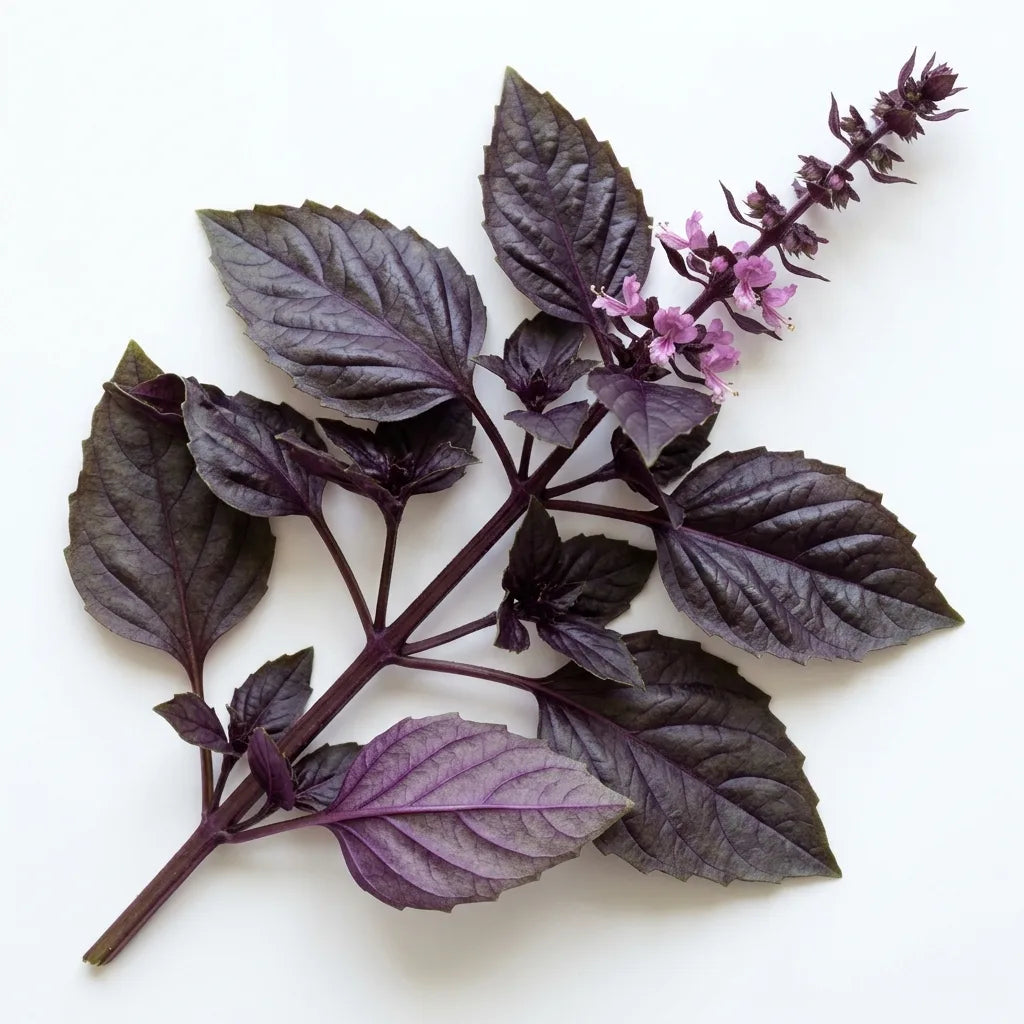
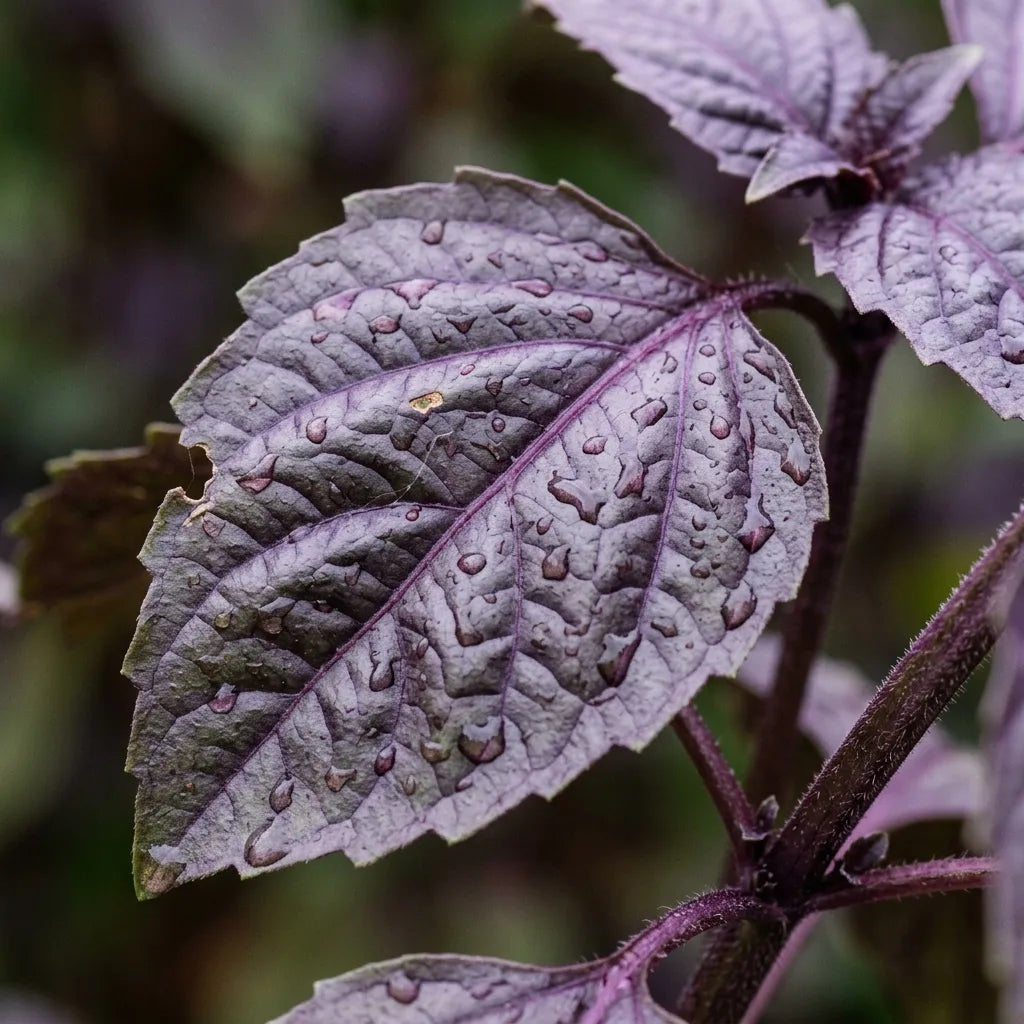
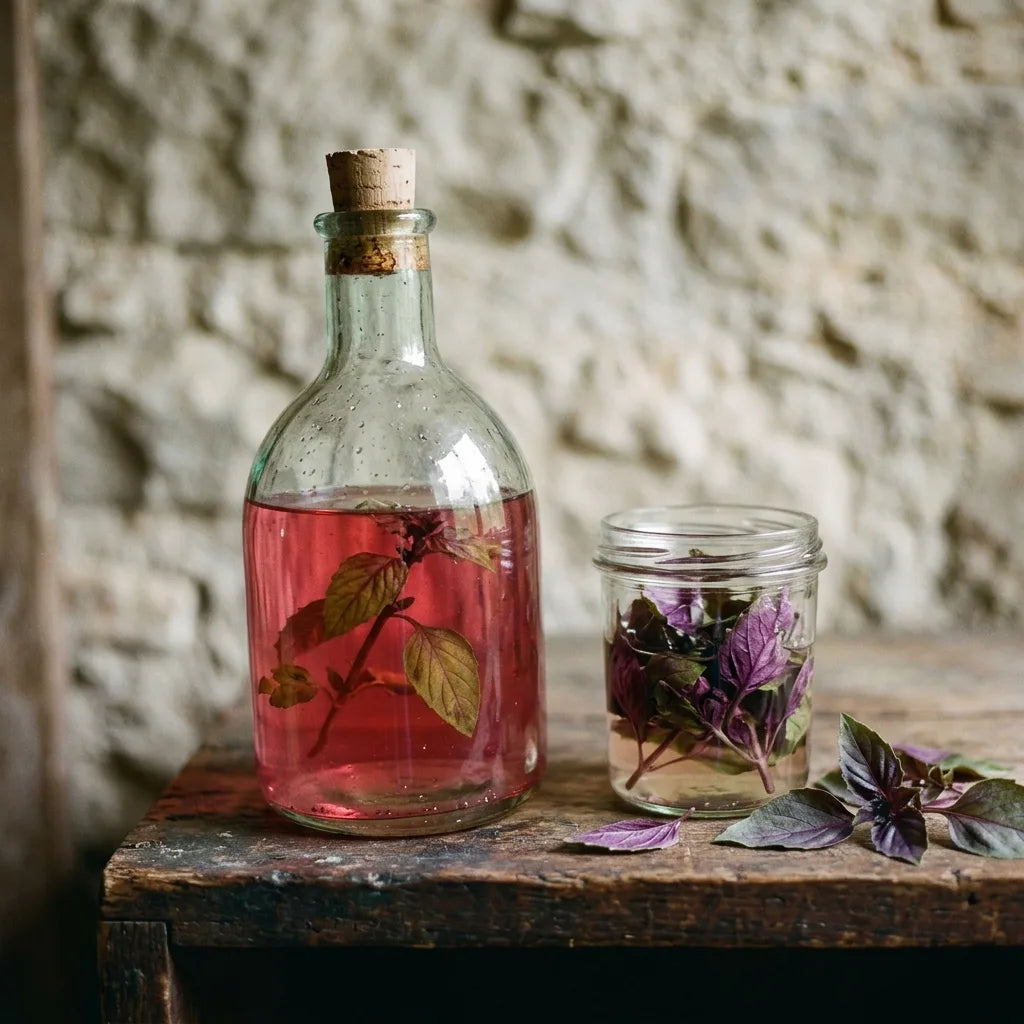
Purple basil, black basil, dark opal: its color comes from anthocyanins, the same pigments found in red cabbage. Beyond its spectacular visual effect, its aroma is slightly more spicy and clove-like than that of green basil — and it beautifully colors vinegar or oil, giving them a ruby hue.
Characteristics:
-
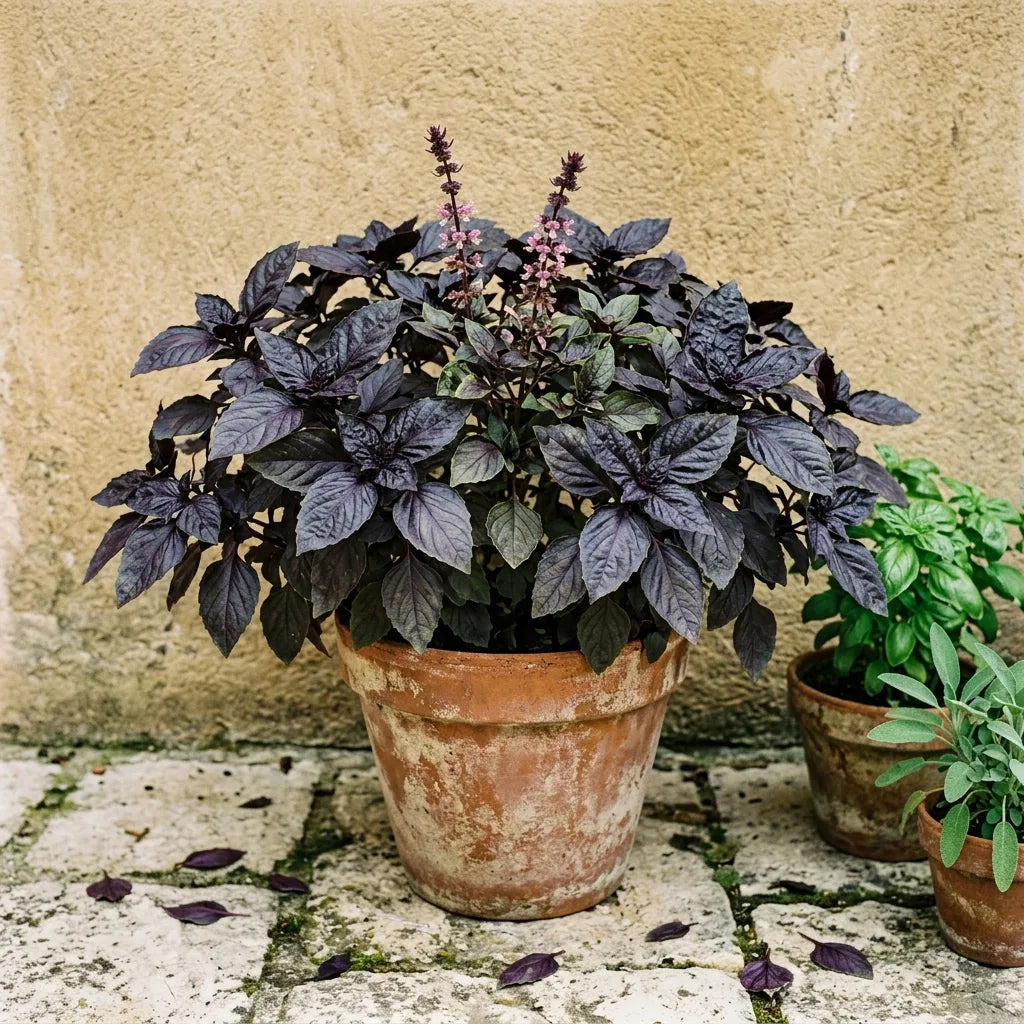
Dark purple foliage: almost black, highly decorative in the vegetable garden or in a planter.
-
Spicy aroma: stronger and slightly more clove-like than common basil.
-
Easy to grow: in pots or in the ground, indoors or outdoors.
-
Frost-sensitive: annual in our climate, it disappears with the first frosts.
Sowing advice:
-
Exposure: full sun and warmth — this is what intensifies its purple color. In the shade, it turns green.
-
Soil: light, rich in organic matter, moist and well-drained. Like all basil varieties, it thrives in fertile soil that does not dry out; adding compost benefits it. It dislikes standing water.
-
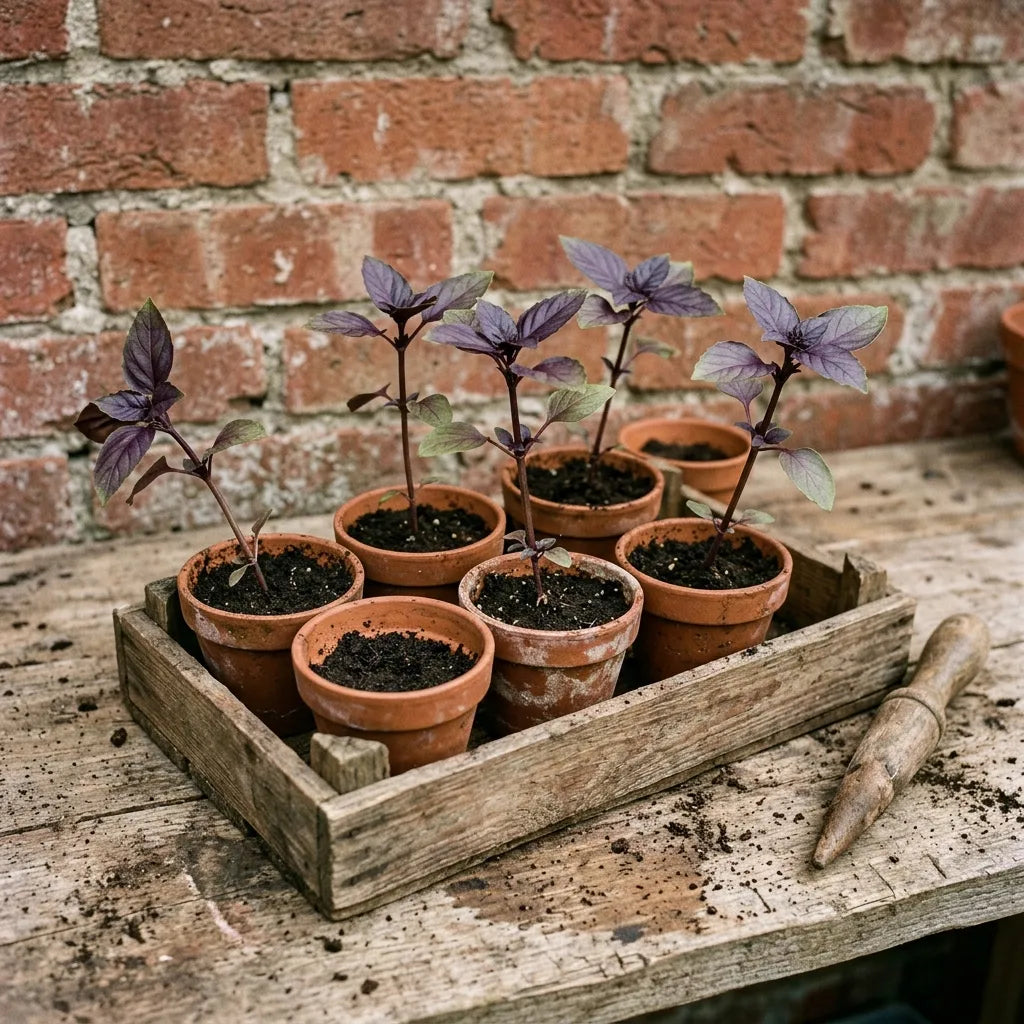
Method: sow from April to June, in pots under cover at 20 °C, or directly in the ground after the last frosts — from mid-April in the South, and preferably in May or June elsewhere. Barely cover the seeds. See how to sow your seeds.
Planting advice:
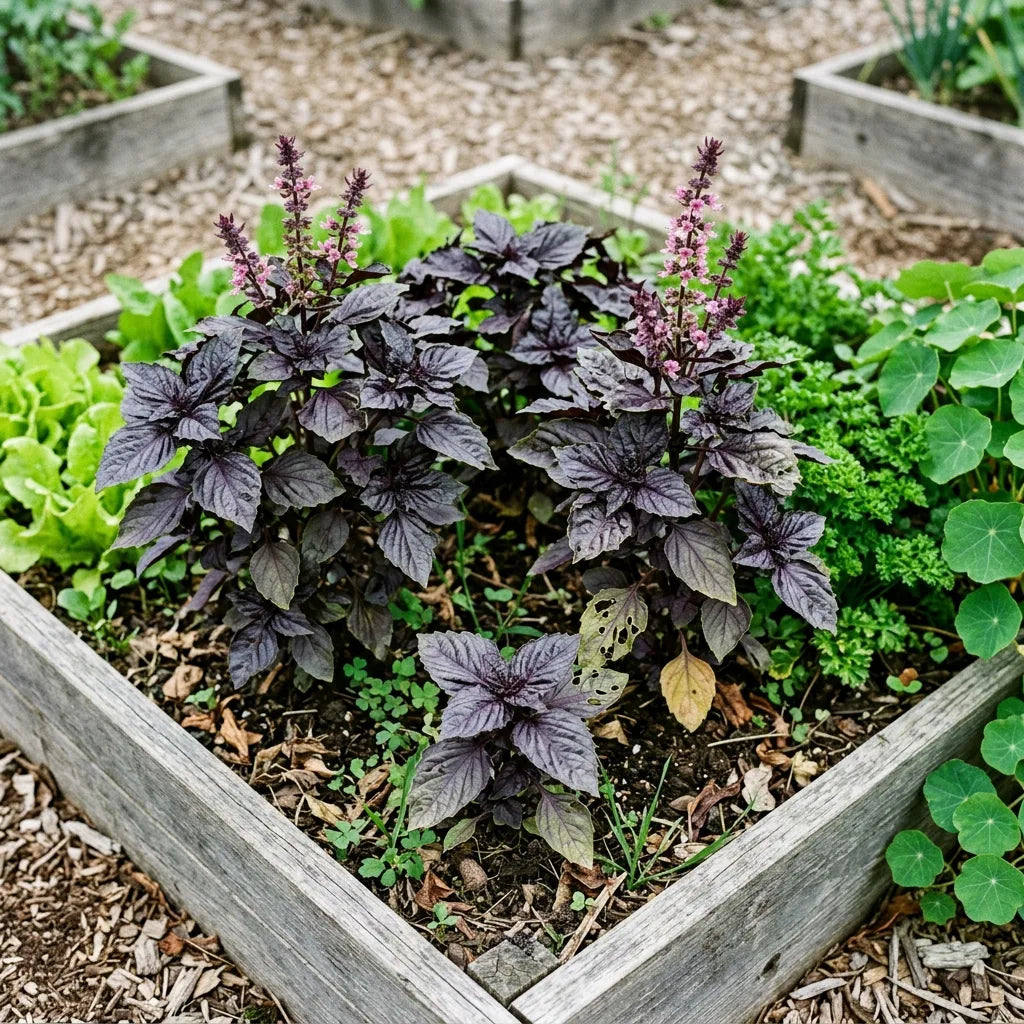
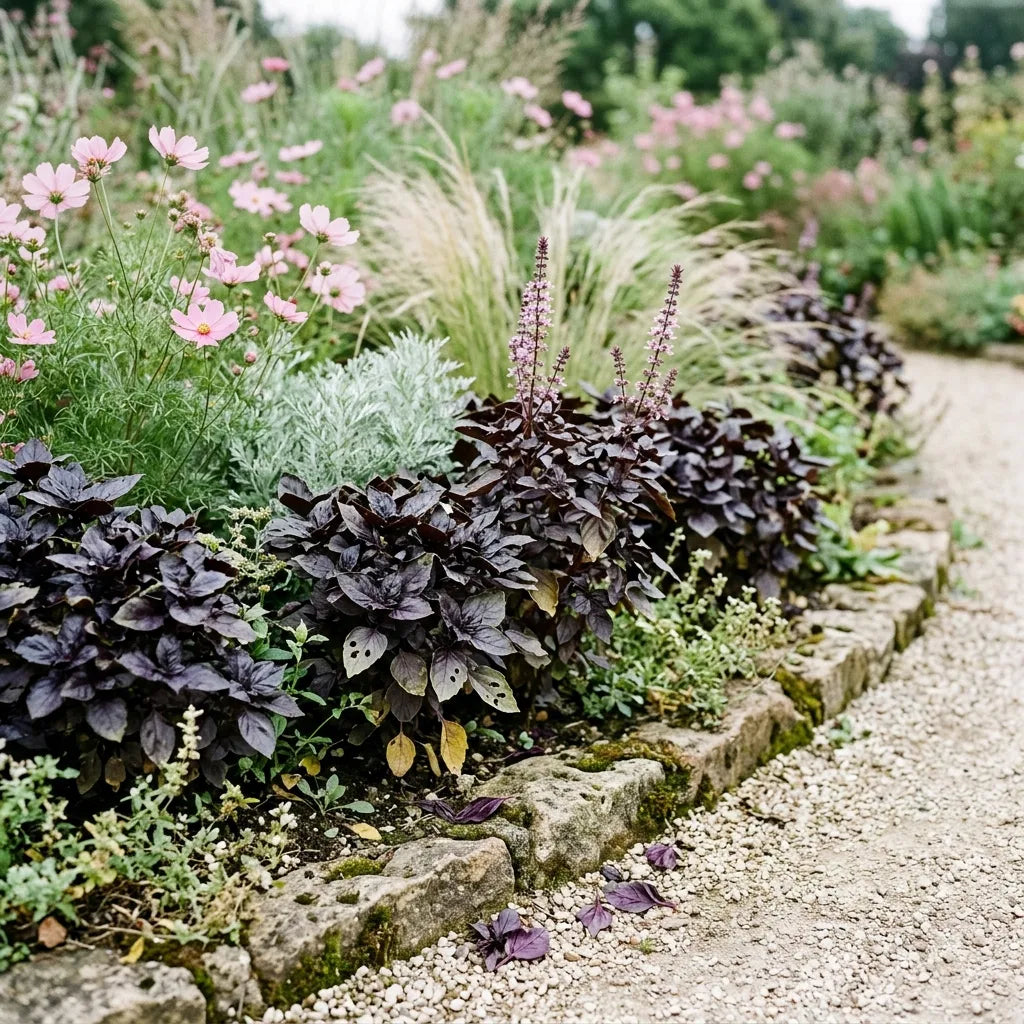
- Transplant with 25 cm spacing. Its dark foliage creates a superb contrast in a planter with light-colored flowers or green basil.
Care advice:
- Keep the soil slightly moist by watering at the base in the morning, without wetting the foliage.
-
The step that makes all the difference: pinch the stems regularly just above a pair of leaves and remove flower buds as soon as they appear. This makes the plant branch out and extends the harvest by several months.
Harvesting advice:
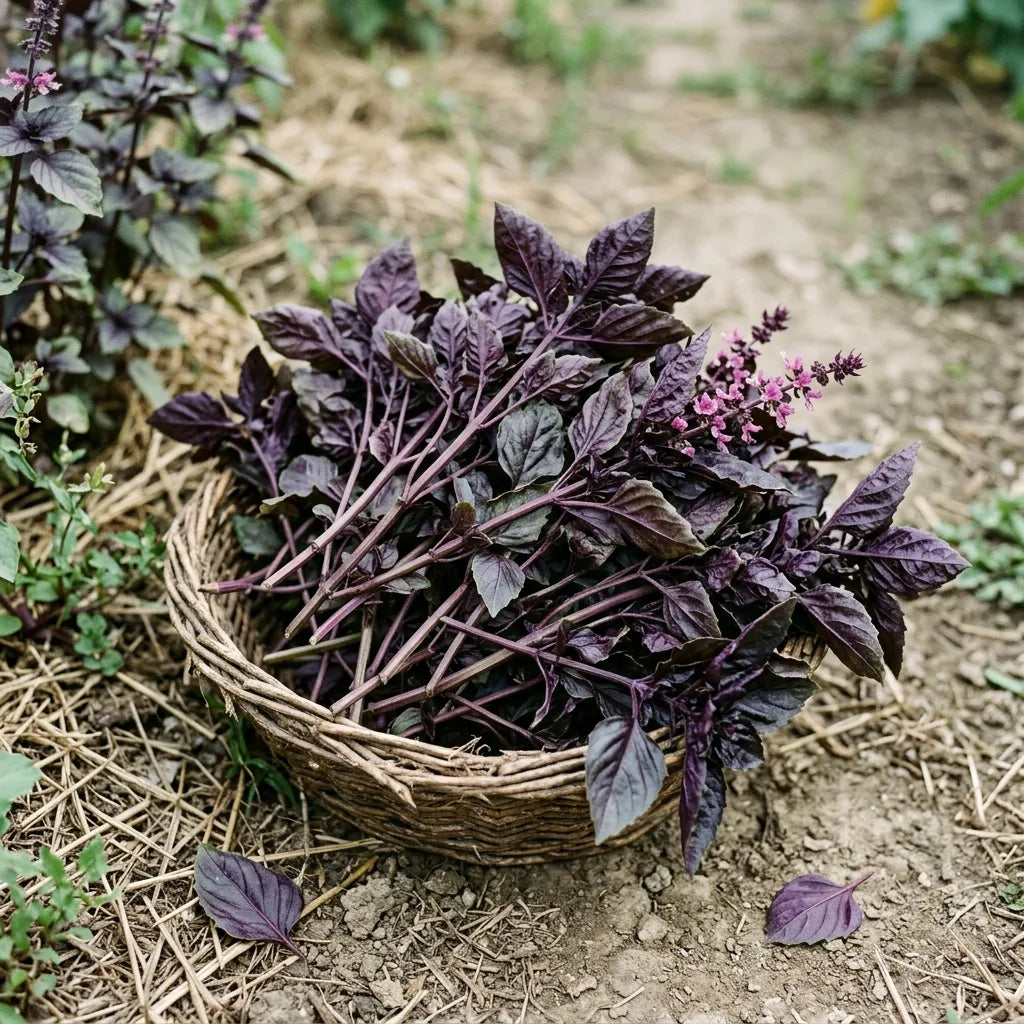
- Pick the leaves as needed, starting from the top. They freeze much better than they dry.
Beneficial pairings:
Benefits for biodiversity:
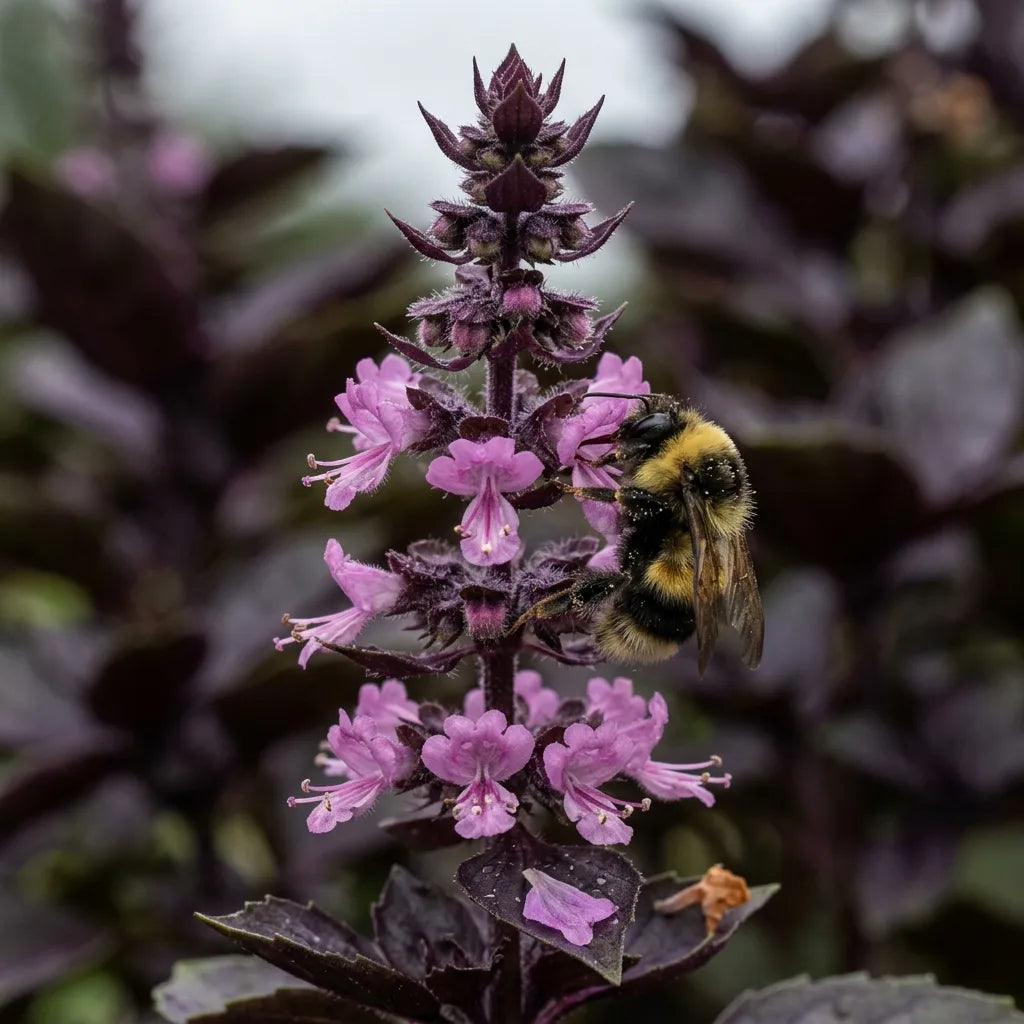
- Let one or two plants flower at the end of the season: their pink to purple flower spikes are highly visited by bees and bumblebees.
- Its aroma diverts several pests from neighboring crops. See our repellent plants.
Uses:
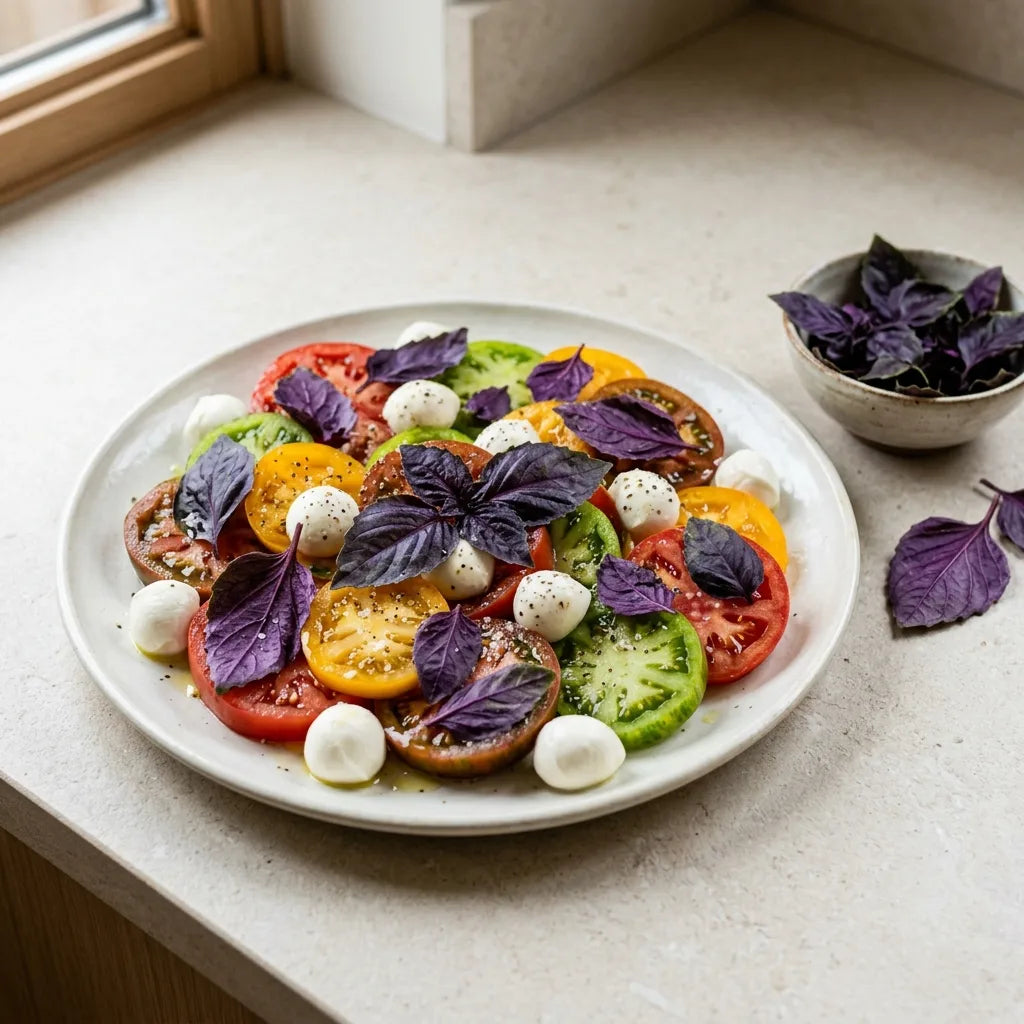
- Salads, sauces, pizzas and pasta, like green basil, but with a much greater visual impact. Its great specialty: flavored vinegars and oils, which it tints a deep ruby color within a few days.
- A traditional medicinal plant, used in herbal medicine since Antiquity. See our medicinal plants to sow.
Harvesting your own seeds:
Let a few flower spikes dry completely on the plant until they turn brown, then rub them over a container. Be careful, basil varieties cross very easily: isolate your seed plant if you grow several varieties, or you risk losing the purple color. See how to store your seeds.
Commitment to Quality: at SemiSauvage - Permaculture, we grow and select our seeds with respect for all living things as our guiding principle. Based near the Volcanoes of Auvergne, we choose open-pollinated, non-hybrid varieties, tested for their germination rate, carefully sorted and packaged, with no chemical treatment. Our conviction: to give gardeners back the ability to resow, year after year, seeds that truly belong to them.
The basil that tints your vinegars ruby red.