Ocimum basilicum var. citriodorum
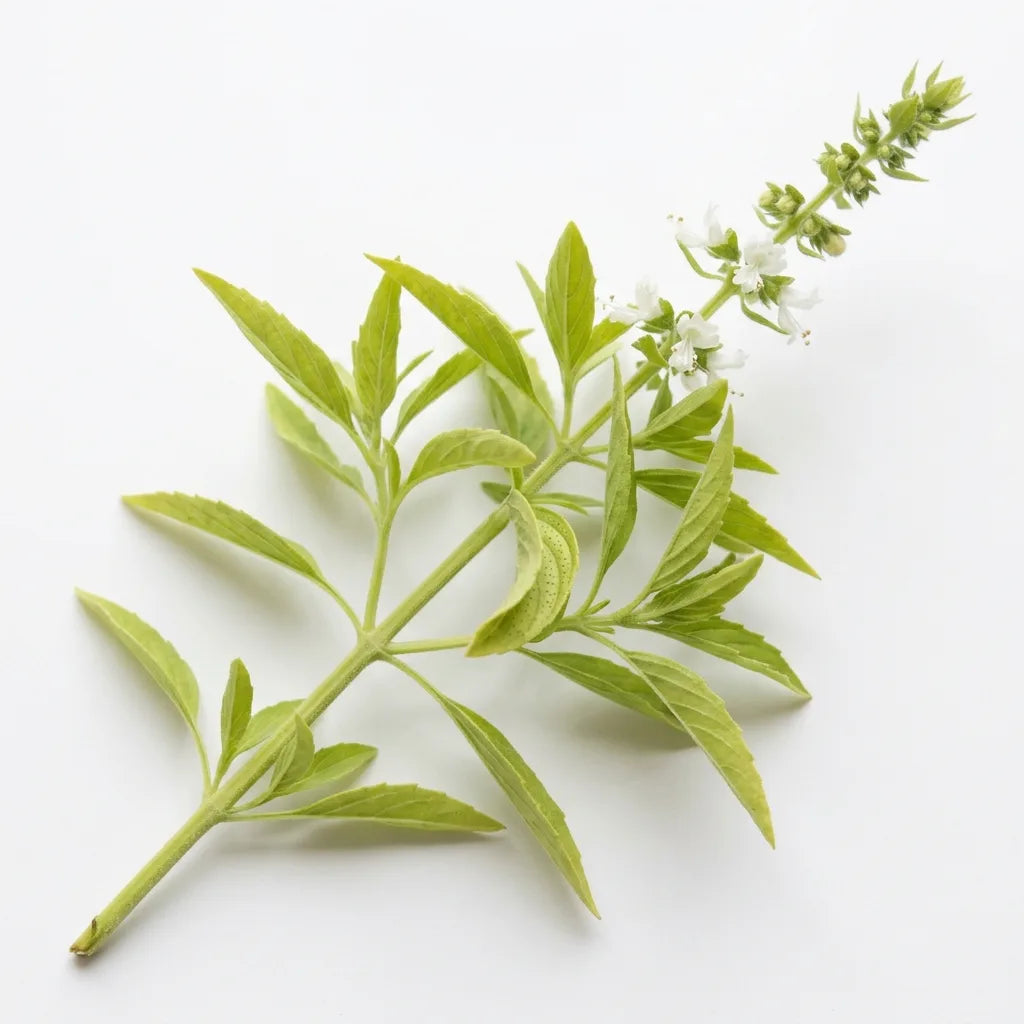
Lemon basil, lemon-scented basil, lemon basil, Thai lemon basil: its citrus note does not come from an added flavoring but from citral, the same molecule found in lemongrass and lemon zest. Its narrower leaves and lighter growth habit distinguish it at a glance from common basil.
Characteristics:
-
Lemon aroma: a citrus freshness layered over basil's aniseed base.
-
Fine foliage: leaves smaller and narrower than those of common basil.
-
More resistant: it withstands diseases better than most other basils.
-
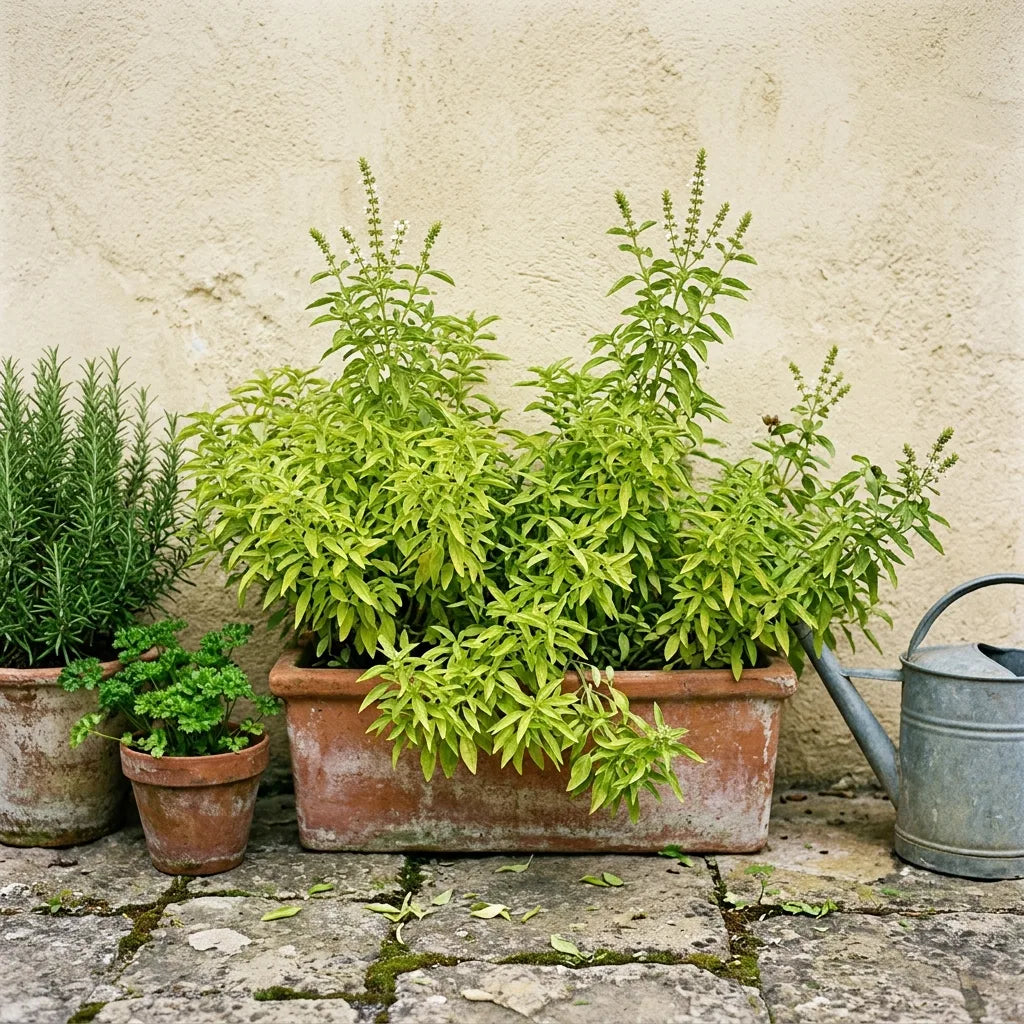
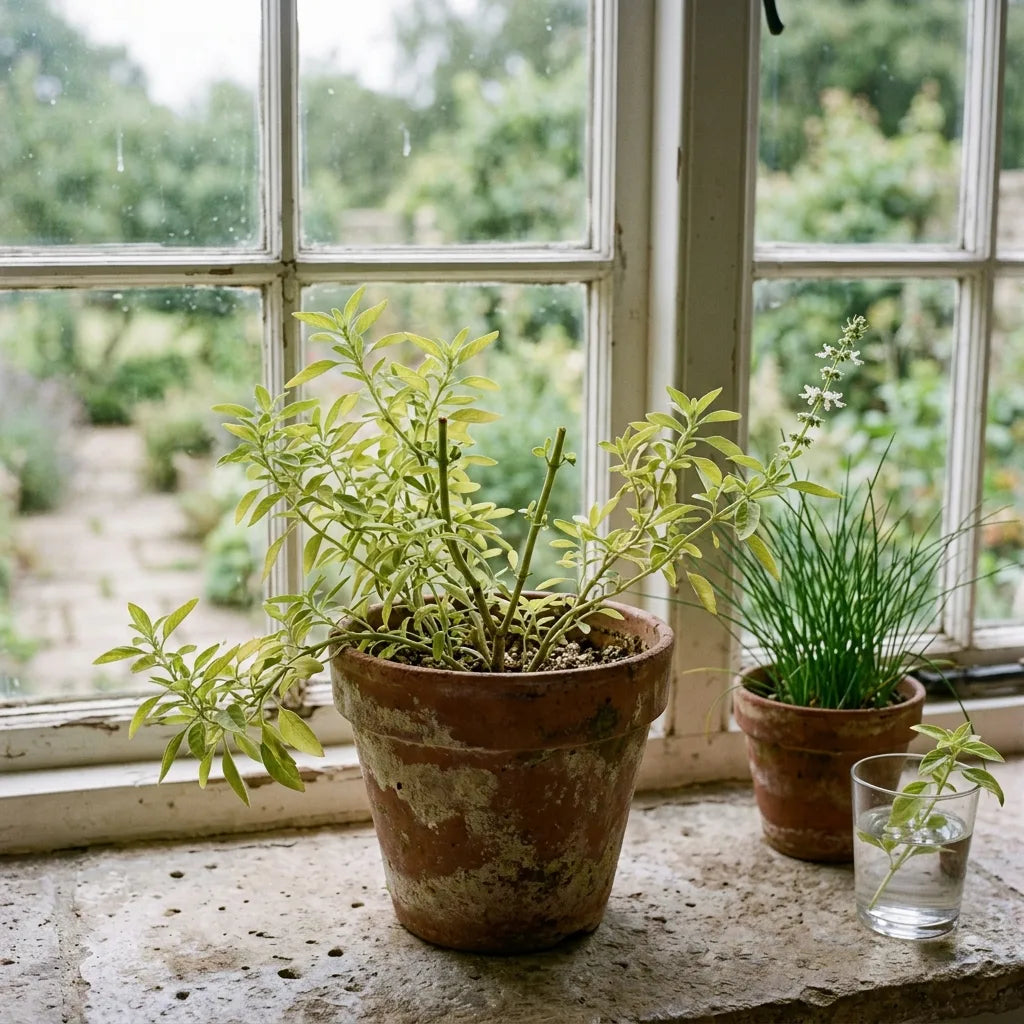
Sensitive to frost: grown as an annual in our climates, but can be cultivated in pots all year round.
Sowing advice:
-
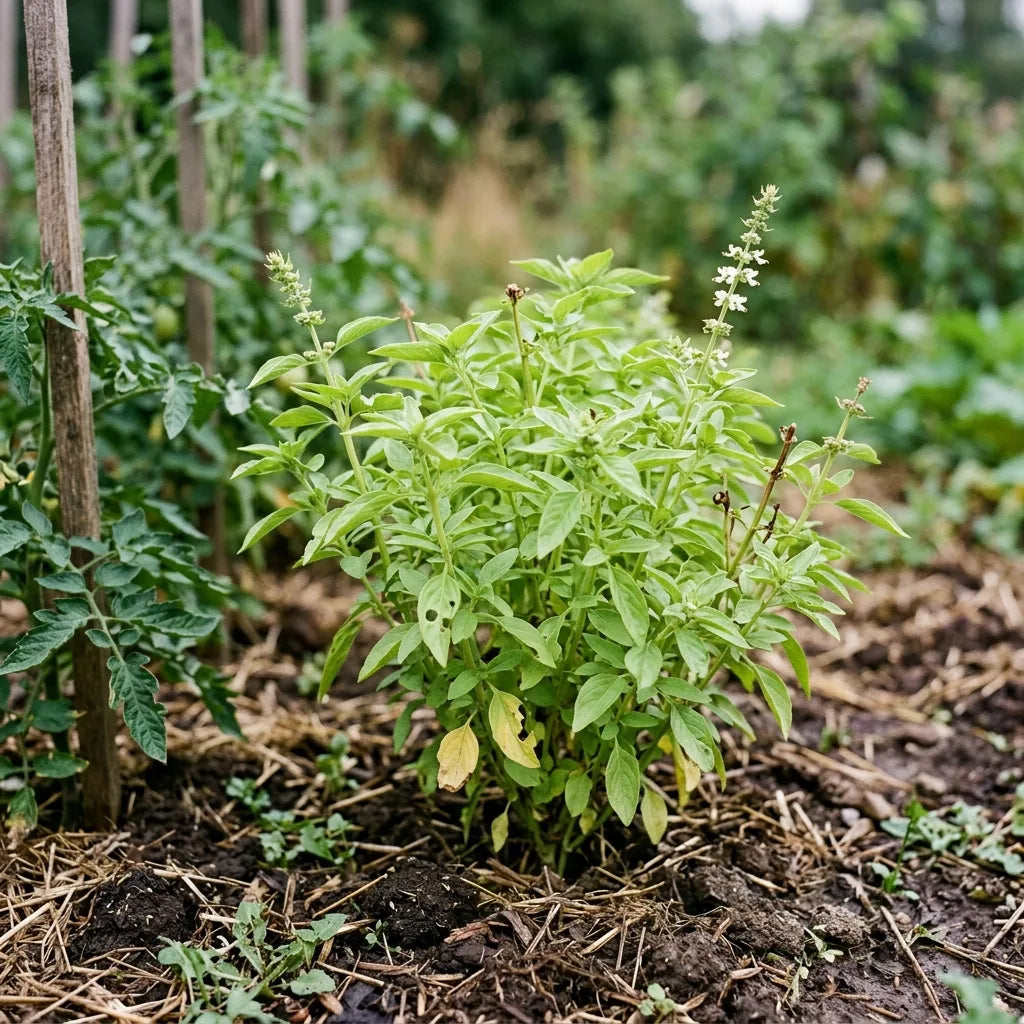
Exposure: full sun and warmth. In the South, plant it outdoors from mid-April; elsewhere, use a pot.
-
Soil: light, rich in organic matter, moist and well drained. Like all basils, it appreciates fertile soil that does not dry out — adding compost benefits it. It dislikes stagnant water.
-
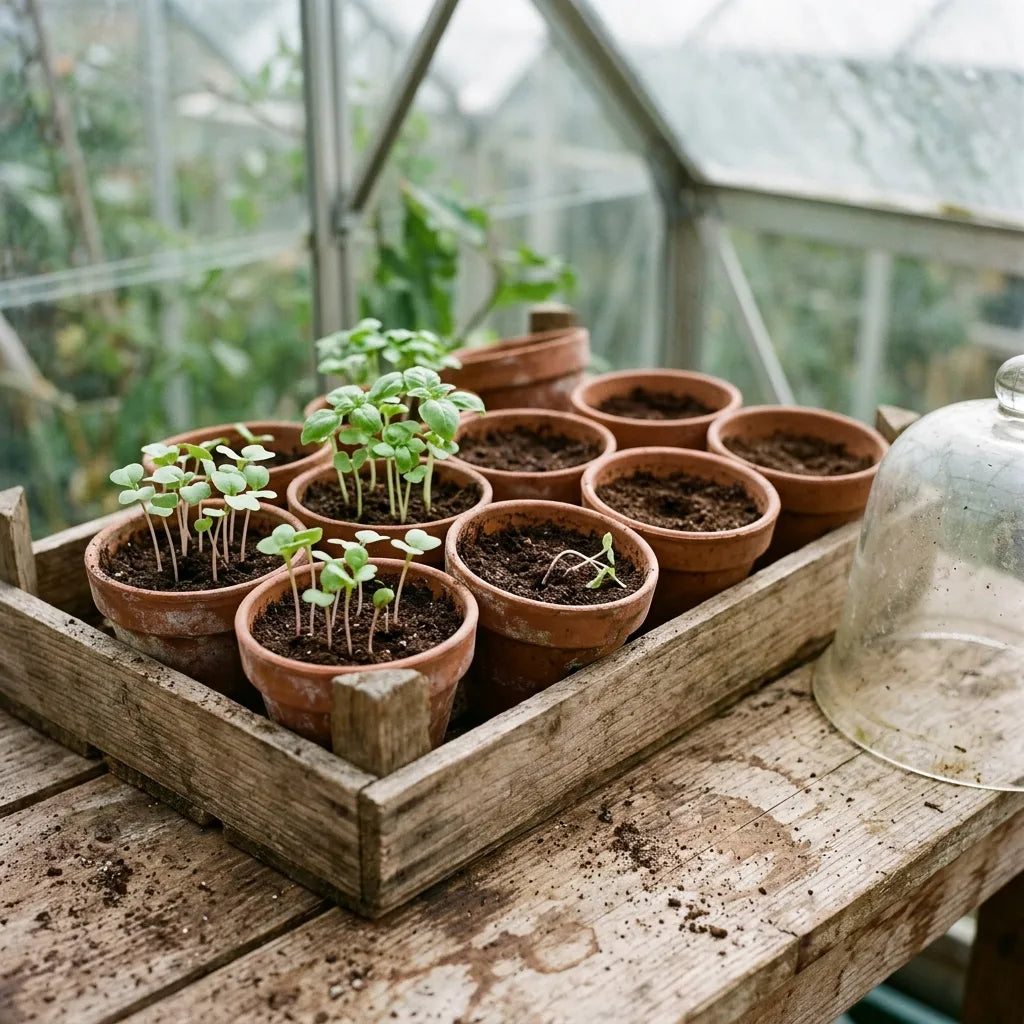
Method: sow from April to June, in pots under cover at 20 °C or directly outdoors after the last frosts, barely covering the seeds. Do not move it outdoors until the nights are mild. See how to sow your seeds.
Planting advice:
- Transplant 25 cm apart, in the ground, in pots, in a greenhouse, conservatory or behind a well-sunny window.
Care advice:
- Water regularly at the base, in the morning, without wetting the foliage.
-
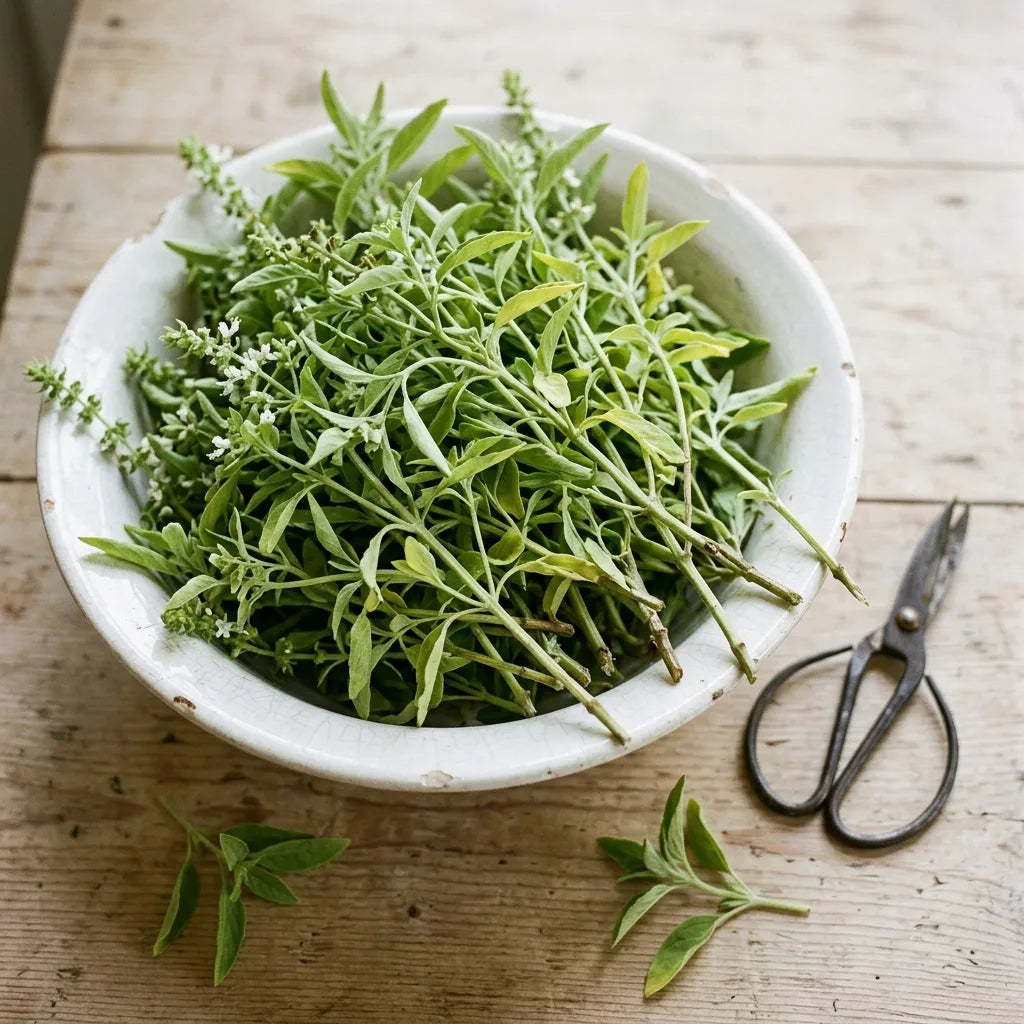
The step that makes all the difference: pinch the stems just above a pair of leaves and remove flower buds as soon as they appear. This makes the plant branch out and extends the harvest by several months.
Harvesting advice:
- Pick the leaves as needed, starting from the top. They freeze much better than they dry — its particularly volatile lemon note almost completely disappears when dried.
Beneficial companions:
Benefits for biodiversity:
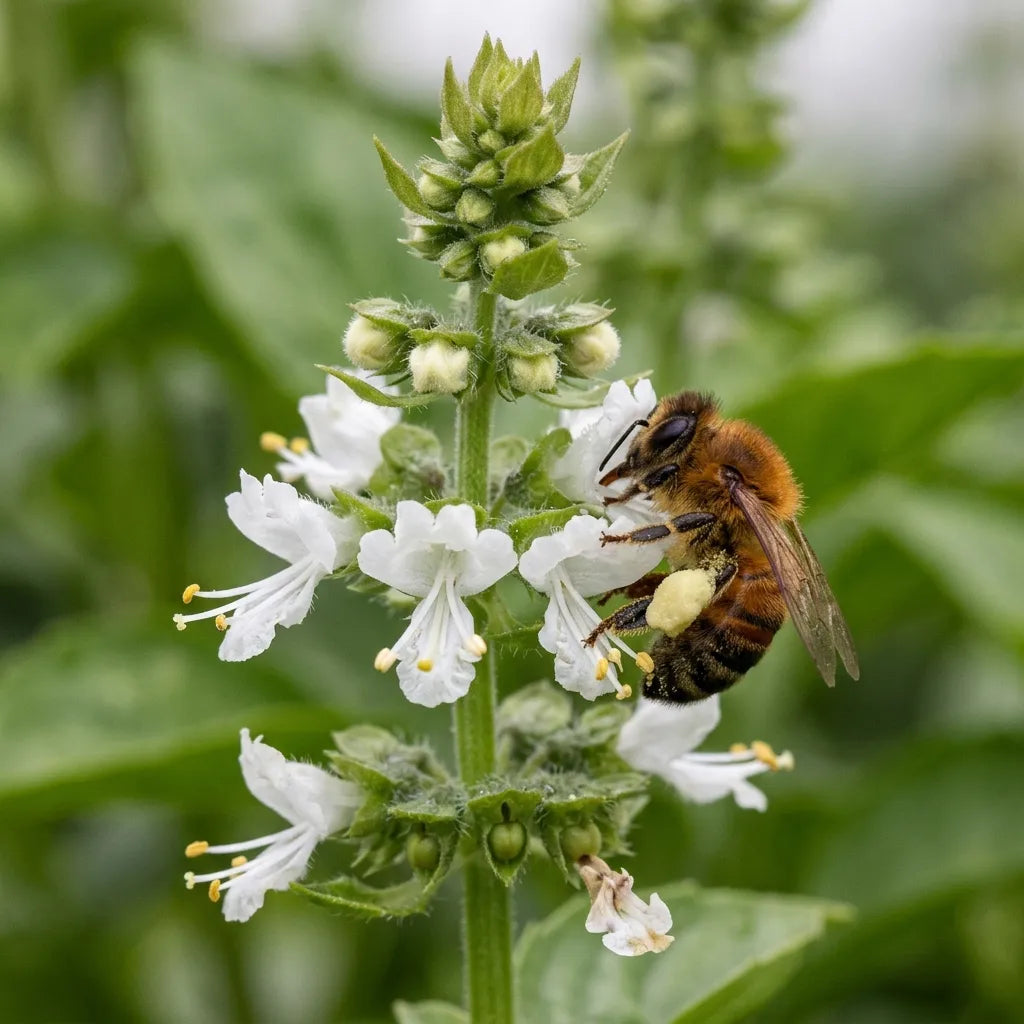
- Allow one or two plants to flower at the end of the season: their white flower spikes are heavily visited by bees and bumblebees.
- Its fragrance deters several pests from neighboring crops. See our repellent plants.
Uses:
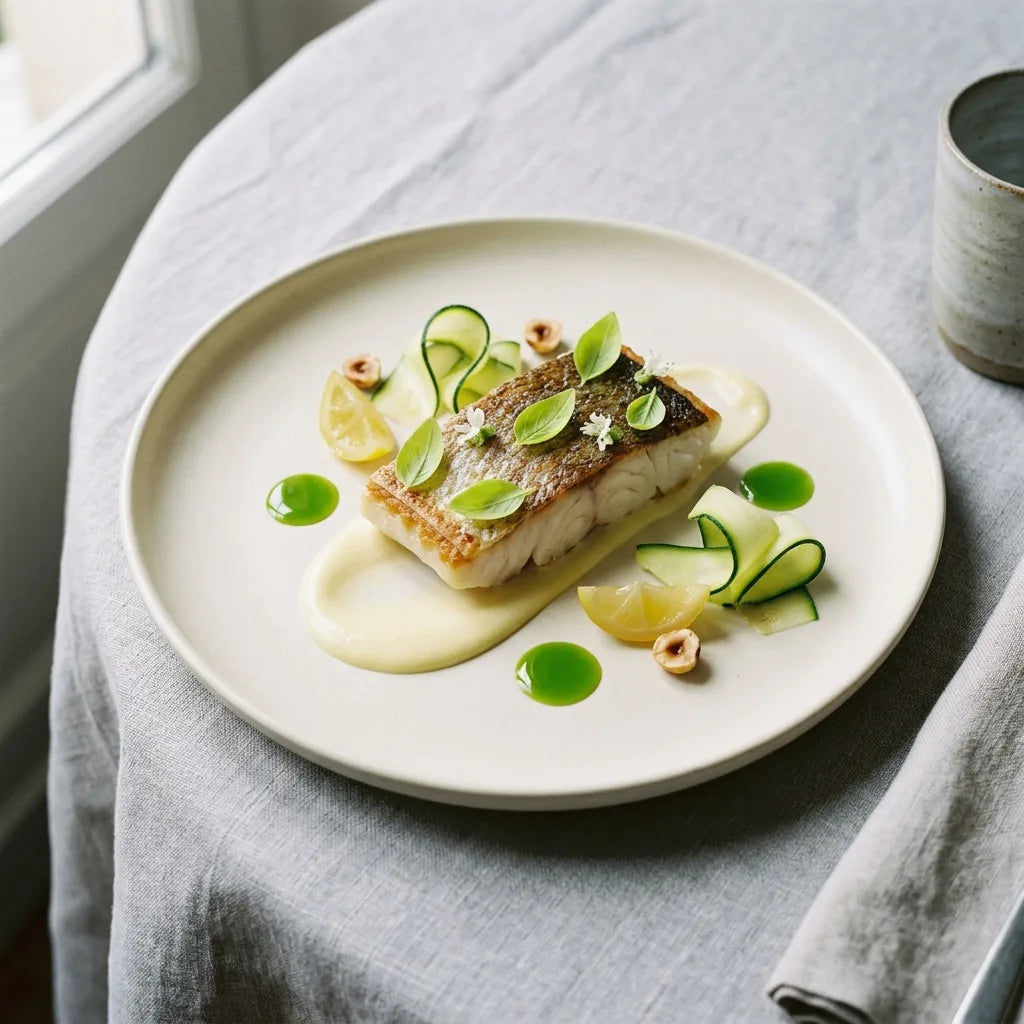
- Its citrus note lends itself to uses where common basil does not: fish, seafood, fruit salads, sorbets, lemonades and iced teas. It is also excellent in curries and Asian stir-fries. Always add it off the heat.
- A traditional medicinal plant, used in herbal medicine since Antiquity. See our medicinal plants to sow.
Harvesting your own seeds:
Allow a few flower spikes to dry completely on the plant until they turn brown, then crumble them over a container. Be careful: basils cross-pollinate very easily with one another. Isolate your seed plant if you grow several varieties, or you may lose the lemon note. See how to store your seeds.
Commitment to Quality: at SemiSauvage - Permaculture, we grow and select our seeds with respect for living things as our guiding principle. Based near the Auvergne Volcanoes, we choose reproducible, non-hybrid varieties, tested for their germination rate, carefully sorted and packaged, with no chemical treatment. Our conviction: to give gardeners back the ability to resow, year after year, seeds that truly belong to them.
The basil that smells of lemon: an aromatic plant in its own right.