Cucumis sativus “Lemon”
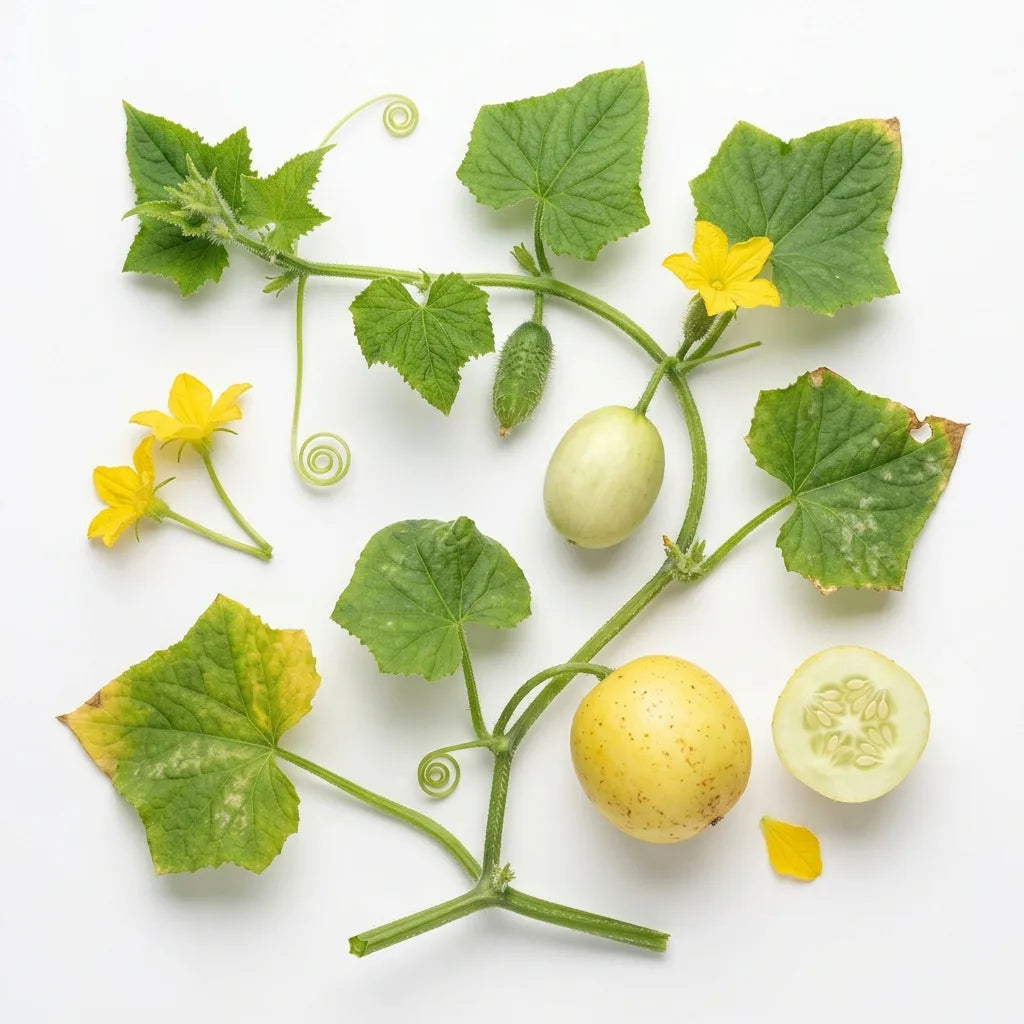
Lemon cucumber, apple cucumber, Crystal Apple: don’t be misled by the name—it doesn’t taste anything like lemon. This old variety owes its nickname to its round, pale yellow fruits, about the size of a tennis ball. Its flesh is mild, barely bitter, and easier to digest than that of long cucumbers—a further reason to bring it back to the vegetable garden.
Characteristics:
-
Round, yellow fruits: approximately 6 to 8 cm across, very original for serving.
-
Mild flesh: barely bitter and easy to digest, with a thin skin that does not need peeling.
-
Old variety: seed-saving, highly productive, and hardy for a cucumber.
-
Individual size: one fruit makes one serving, ideal for avoiding leftovers.
Sowing advice:
-
Position: warm, sunny, and sheltered from the wind.
-
Soil: rich in humus, deep, moist, and well drained. Like all cucumbers, it has high water and organic-matter requirements: a generous supply of well-rotted compost is essential.
-
Method: sow in pots under cover from April at 20–22°C, or sow directly after the frosts, 2 cm deep, placing the seed on its edge. See how to sow your seeds.
Planting advice:
- Transplant after the frosts, spacing plants 60 cm apart. Train it up a trellis: its round fruits hang attractively, stay clean, and the foliage dries more quickly, helping to limit disease.
Care advice:
- Water abundantly and regularly at the base, without wetting the foliage. Water stress produces bitter fruits.
- Mulch generously to keep the soil cool.
Harvesting advice:
- Harvest when the fruits are still pale yellow, before they turn bright yellow: at this late stage, the skin hardens and the seeds develop. This is the main pitfall of this variety.
- Pick very regularly to maintain production.
Beneficial companion plants:
Benefits for biodiversity:
- Its yellow flowers are frequently visited by bees, on which fruit production entirely depends.
- When trained vertically, it forms a plant screen that shelters beneficial insects and shades more delicate crops.
Uses:
- Raw in salads without peeling, hollowed out and stuffed like a small container, or made into pickles. Its round shape makes it a highly decorative vegetable to serve whole.
Saving your own seeds:
Leave one fruit to turn completely yellow and soften on the plant. Remove the seeds, let them ferment for two days in a little water, then rinse and dry them. It can cross with other cucumbers, but not with melons or squash. See how to save your seeds.
Commitment to Quality: at SemiSauvage - Permaculture, we grow and select our seeds with respect for living things as our guiding principle. Based near the Auvergne volcanoes, we choose open-pollinated, non-hybrid varieties, test them for germination rates, and carefully sort and package them, without any chemical treatment. Our belief: to give gardeners back the ability to sow, year after year, seeds that truly belong to them.
A round, golden cucumber that always surprises at the table.