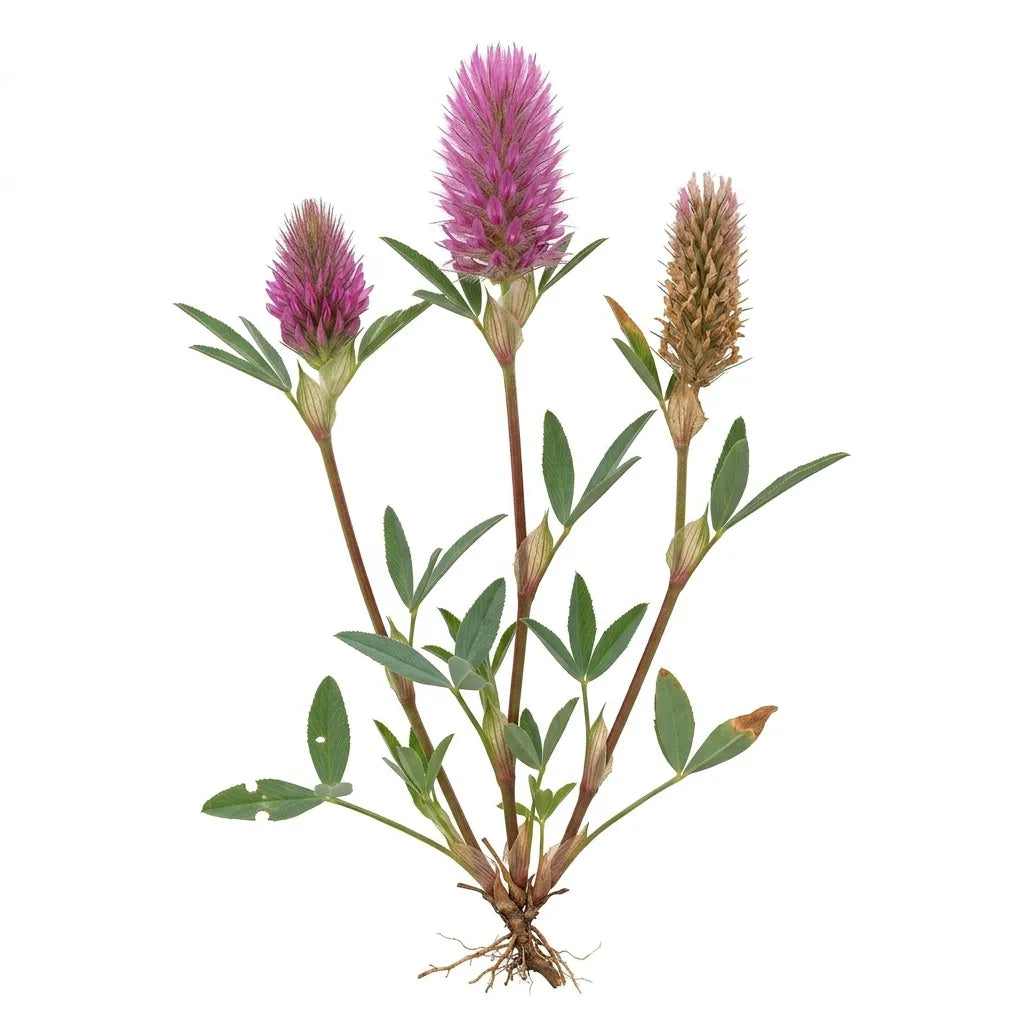
Trifolium rubens
Purple clover, rubens clover, wild crimson clover: not to be confused with meadow clover or Trifolium incarnatum, this species stands out for its upright pink-purple, feathery spikes resembling small plumes. A perennial that is both striking and ecologically valuable, yet still too rare in gardens.
Characteristics:
-
Remarkable inflorescences: dense, feathery pink-purple spikes that are highly decorative and bring a wild, graphic touch to flower beds.
-
Hardy perennial: resistant down to -20 °C, it forms long-lasting clumps and sometimes reseeds itself spontaneously.
-
Nitrogen-fixing: like all legumes, it naturally enriches the soil.
Sowing advice:
-
Exposure: full sun or partial shade.
-
Soil: moist to slightly dry, well drained, poor to moderately fertile — it clearly prefers lean, calcareous soils to rich ones. No fertilization is necessary: as a nitrogen-fixing plant, it produces its own fertilizer.
-
Method: sow directly in the ground in spring (March to May) or at the end of summer (August to September). No pots or prior soaking. See how to sow your seeds.
Care advice:
- No particular care is required. Cut off faded flowers to extend flowering, or let them go to seed for spontaneous reseeding.
Beneficial combinations:
- With nitrogen-hungry vegetables (squash, tomatoes) after incorporation into the soil, and with grasses in wildflower meadow mixes.
- Alongside other bee-friendly plants such as phacelia or white clover. See our guide to green manures.
Benefits for biodiversity:
- Highly attractive to bees, it draws a wide variety of pollinators: honeybees and wild bees, long-tongued bumblebees, and butterflies.
- By fixing atmospheric nitrogen through its root nodules, it improves soil structure and fertility — see the basics of living soil.
Uses:
- In ornamental beds, wildflower meadows, as an improving ground cover, or as forage appreciated by herbivores in extensive grazing systems.
Symbolism:
Like all clovers, it is associated with luck and harmony with nature, as well as fertility and cooperation: its symbiosis with soil bacteria makes it a subtle emblem of mutual aid between species.
Harvesting your own seeds:
Leave a few spikes to turn brown and dry completely on the plant, then thresh them by hand over a container. The plant may also reseed itself in the garden. See how to store your seeds.
Commitment to Quality: at SemiSauvage - Permaculture, we grow and select our seeds with respect for all living things as our guiding principle. Based near the Auvergne volcanoes, we choose open-pollinated, non-hybrid varieties, tested for their germination rate, carefully sorted and packaged, with no chemical treatment. Our belief: to give gardeners back the ability to resow, year after year, seeds that truly belong to them.
Sales reserved for amateur gardeners seeking quality and authenticity.