Amaranthus cruentus
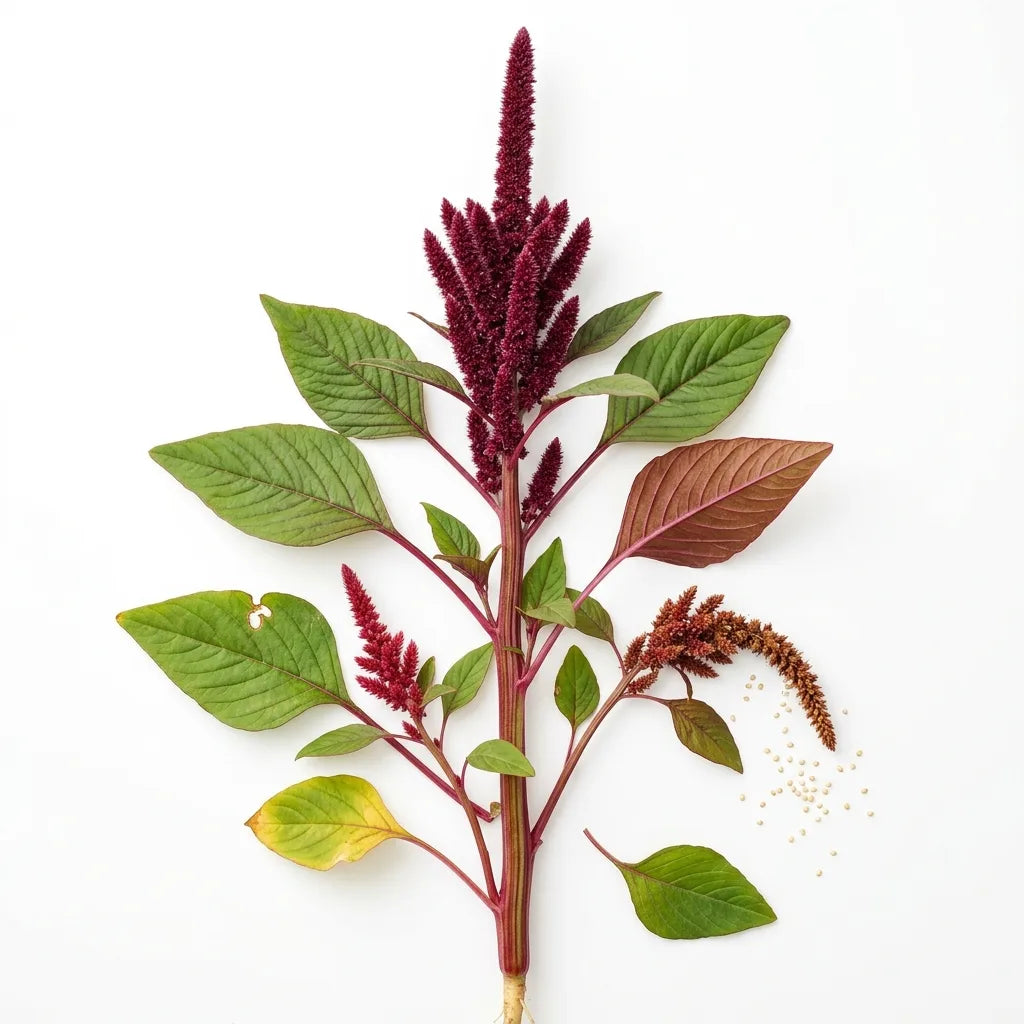
Amaranth, red amaranth, Inca wheat, foxtail: its name comes from the Greek amarantos, “that which does not wither”—its flower spikes indeed retain their color for months after drying. A staple food of pre-Columbian civilizations, it offers gardeners two harvests in one: leaves like spinach and seeds like a pseudocereal.
Characteristics:
-
Spectacular flower spikes: upright or drooping, in deep reds that persist for a long time.
-
Dual purpose: foliage eaten like spinach, seeds harvested like a cereal.
-
Fast-growing: vigorous annual, reaching up to 1.50 m in a single season.
-
Highly adaptable: tolerates drought and various soil types.
Precautions:
- Like spinach, its leaves contain oxalates and nitrates: blanch them in boiling water before cooking, and avoid eating large quantities raw.
- It self-seeds very easily: pull out unwanted young plants in spring if you do not want it to spread.
Sowing advice:
-
Exposure: sunny and warm.
-
Soil: ordinary, loose, and well-drained. Not demanding, it tolerates poor soil and drought once established, but cool soil enriched with compost produces more abundant, tender foliage.
-
Method: no stratification. Sow in spring once all risk of frost has passed, on the surface or barely covered—the seeds are tiny and need light. See how to sow your seeds.
Care advice:
- Thin to 40 cm apart. Water regularly during dry periods if you are growing it for the foliage; for seeds, it can fend for itself.
Harvesting advice:
- Pick the young leaves throughout the summer, starting from the bottom.
- For the seeds, cut the spikes when they begin to shed seeds when rubbed, dry them on a sheet, then rub them. A single plant can produce tens of thousands of seeds.
Beneficial associations:
Benefits for biodiversity:
- Its abundant seeds provide plentiful food for seed-eating birds in autumn and winter—goldfinches, greenfinches, and sparrows flock to them if you leave the spikes standing.
- Its flowers are visited by many small insects, and its dense foliage shelters beneficial insects.
Uses:
- Leaves blanched and then cooked like spinach; seeds cooked as porridge, popped like miniature popcorn, or ground into gluten-free flour. Dried spikes make long-lasting decorative bouquets.
Symbolism:
A sacred plant of the Aztecs, who used it in their rituals, it symbolizes immortality—its flower, which does not wither, made it in Ancient Greece an emblem of that which never dies.
Harvesting your own seeds:
Nothing could be simpler: the harvest takes care of itself. Leave a few spikes to ripen fully on the plant, then rub them over a container and winnow to separate the chaff. See how to store your seeds.
Commitment to Quality: at SemiSauvage - Permaculture, we grow and select our seeds with respect for all living things as our guiding principle. Based near the Auvergne Volcanoes, we choose open-pollinated, non-hybrid varieties, tested for germination rates, carefully sorted and packaged, with no chemical treatment. Our conviction: to give gardeners back the ability to resow, year after year, seeds that truly belong to them.
A plant of the Aztecs, decorative, nourishing, and generous in seeds.