Physalis alkekengi var. franchetii
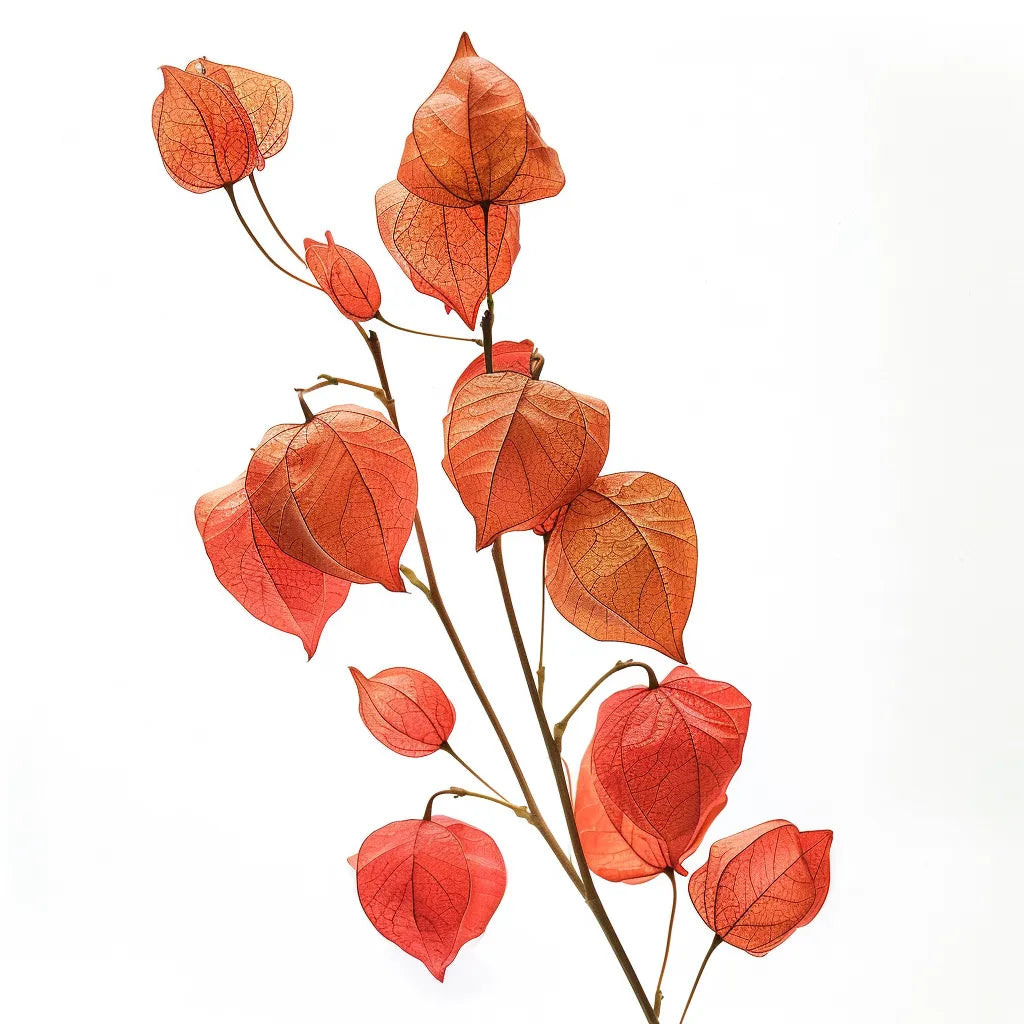
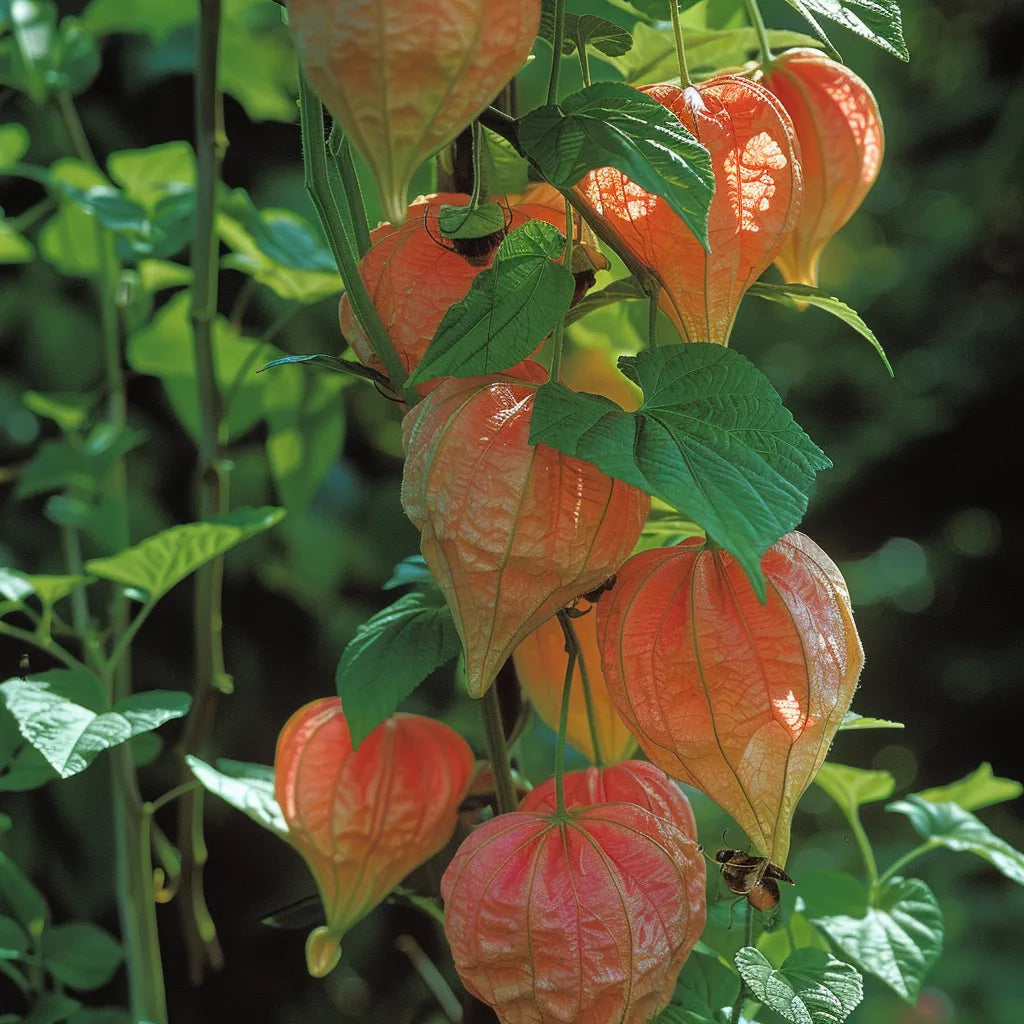
Chinese lantern, winter cherry, bladder cherry: not to be confused with the Cape gooseberry, which is grown for its sweet fruit. Here, the star is the calyx: as it ripens, it swells and turns bright orange, forming those translucent lanterns that light up the garden in autumn and make the most beautiful dried bouquets.
Characteristics:
-
Spectacular lanterns: bright orange, lantern-shaped calyces, highly decorative from September until the first frosts.
-
Hardy perennial: deciduous, it regrows from its crown every spring and spreads through rhizomes.
-
Very easy to grow: it adapts to almost all soil types and thrives even in pots.
Precautions:
-
Only the perfectly ripe, orange, fleshy fruit is edible. Unripe green fruit, leaves, and stems contain alkaloids and must not be eaten. Keep the plant out of reach of young children, who may be attracted by its colorful lanterns.
- Its creeping rhizomes can make it invasive: restrict it to a defined area, a contained border, or a large pot if you are concerned about its spread.
Sowing advice:
-
Position: full sun to partial shade.
-
Soil: ordinary, moist, and well-drained. It is truly undemanding and tolerates both alkaline and poor soils. Soil that is too rich only accentuates its spreading habit.
-
Method: 4 to 6 weeks of cold stratification significantly improves germination in this temperate-climate species. Then sow in spring, in pots or directly in the ground, lightly covering the seeds.
Care advice:
- Almost none. Cut back the dry stems at the end of winter, and limit the spread of the rhizomes with an underground barrier if necessary.
Harvesting advice:
- For dried bouquets, cut the stems when the lanterns are deep orange but still firm, then hang them upside down in the shade. They will keep for years without fading.
Benefits for biodiversity:
- Its inconspicuous flowers are visited by bees in summer.
- Its lanterns, if left in place, add structure to the winter garden and shelter small insects.
Uses:
- Primarily ornamental: flower beds, contained borders, container plantings, and especially dried bouquets, where it is indispensable.
- Its fully ripe fruit is very acidic and considerably less tasty than that of the Cape gooseberry, which is preferable if you are looking for fruit to eat.
Harvesting your own seeds:
Crush a few fully ripe fruits in a little water, leave them to ferment for two days, then rinse them: the healthy seeds will sink to the bottom. Dry them before storing. The plant also spreads very effectively on its own through its rhizomes. See saving your seeds.
Commitment to Quality: at SemiSauvage - Permaculture, we grow and select our seeds with respect for all living things as our guiding principle. Based near the Auvergne Volcanoes, we choose open-pollinated, non-hybrid varieties, tested for their germination rate, carefully sorted and packaged, with no chemical treatment. Our belief: to give gardeners back the ability to resow, year after year, seeds that truly belong to them.
Brighten up your autumn and dried bouquets with these Chinese lantern seeds.