Luffa aegyptiaca
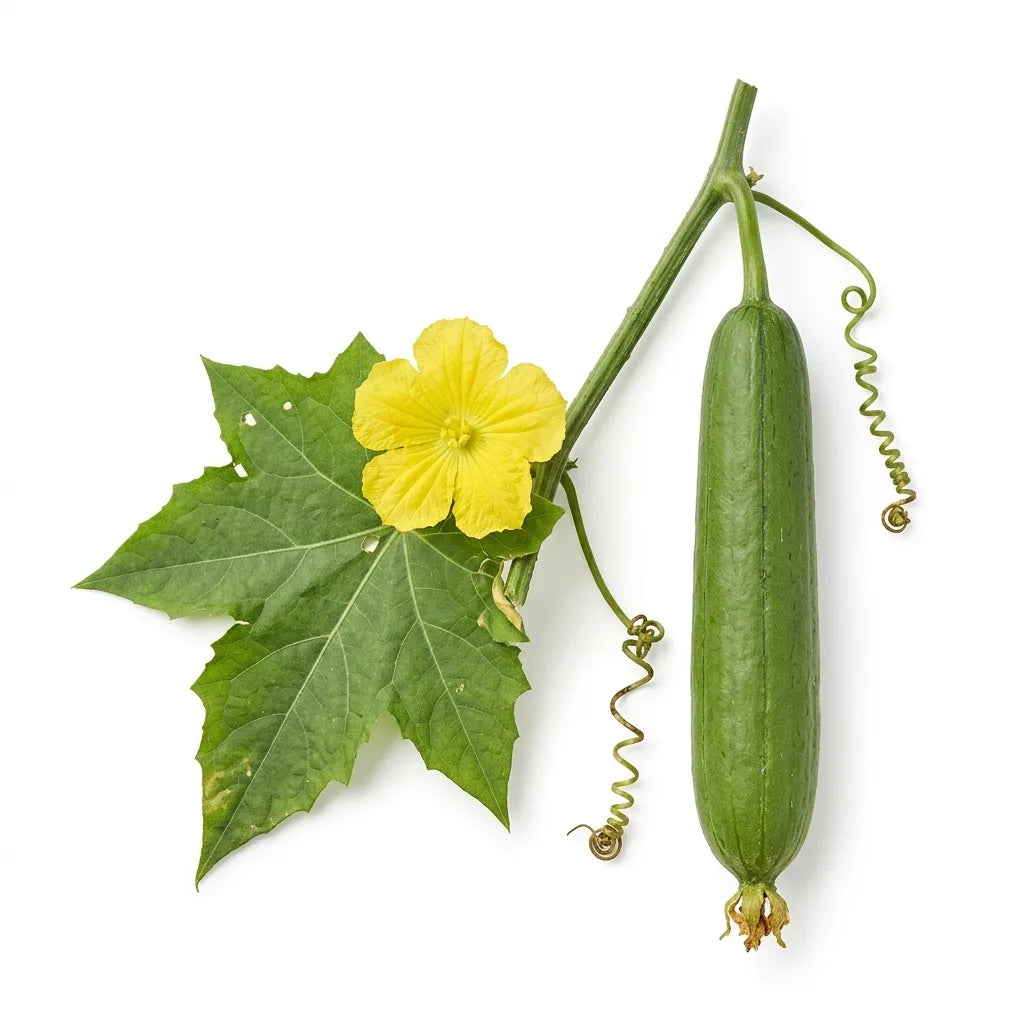
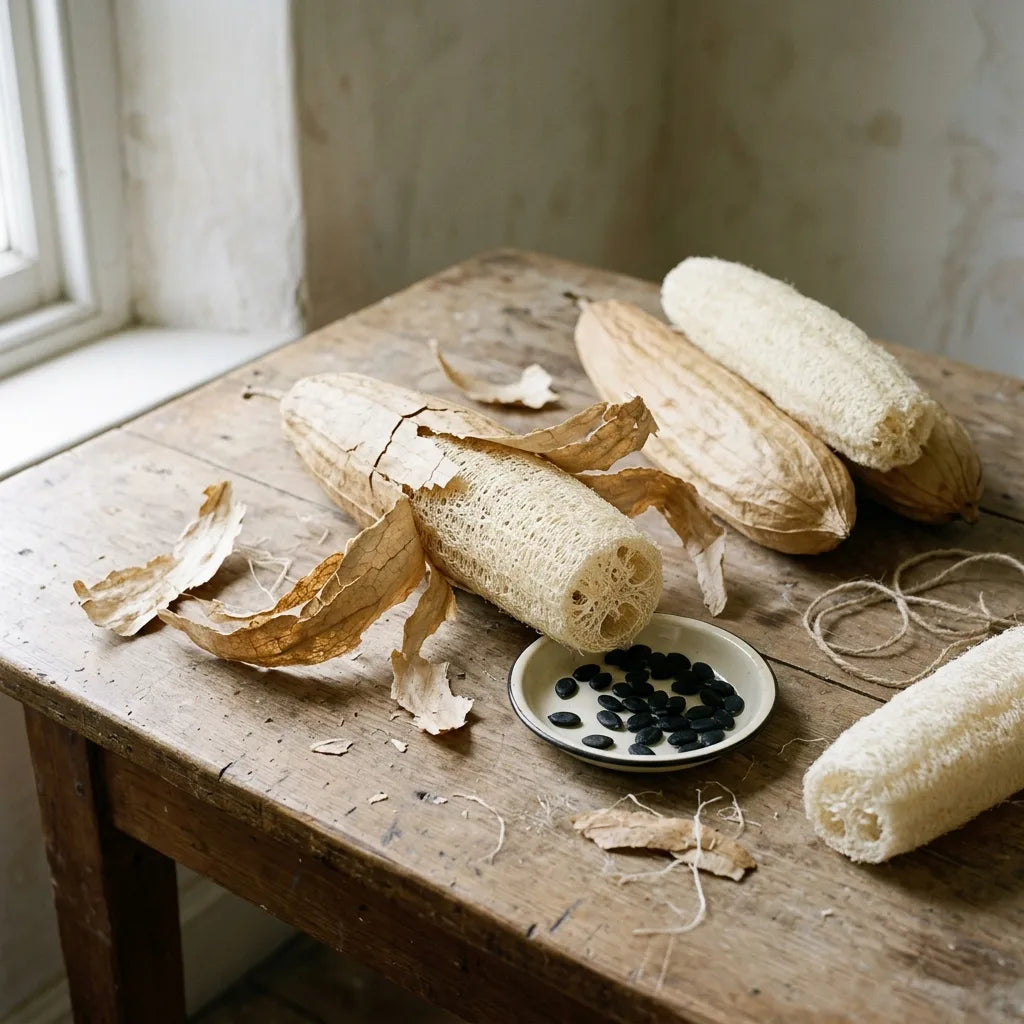
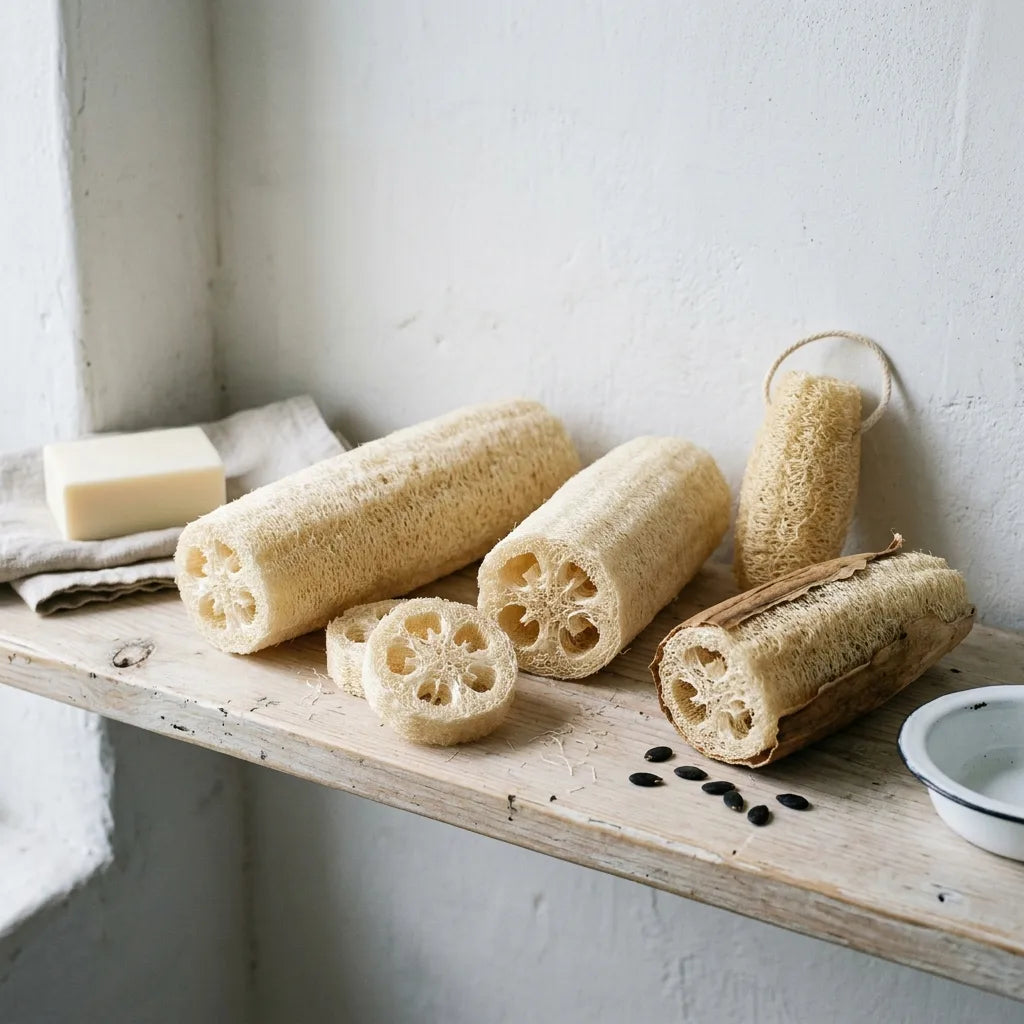
Sponge gourd, luffa, loofah, vegetable sponge, pétole: this is probably the most surprising plant in the vegetable garden—the only one from which you harvest an object rather than food. Its ripe fruit contains a network of fibers that, once the skin is removed, produces a natural, compostable and durable sponge. Picked young, it can be eaten like a zucchini.
Characteristics:
-
Dual purpose: young edible fruits, vegetable sponges when mature.
-
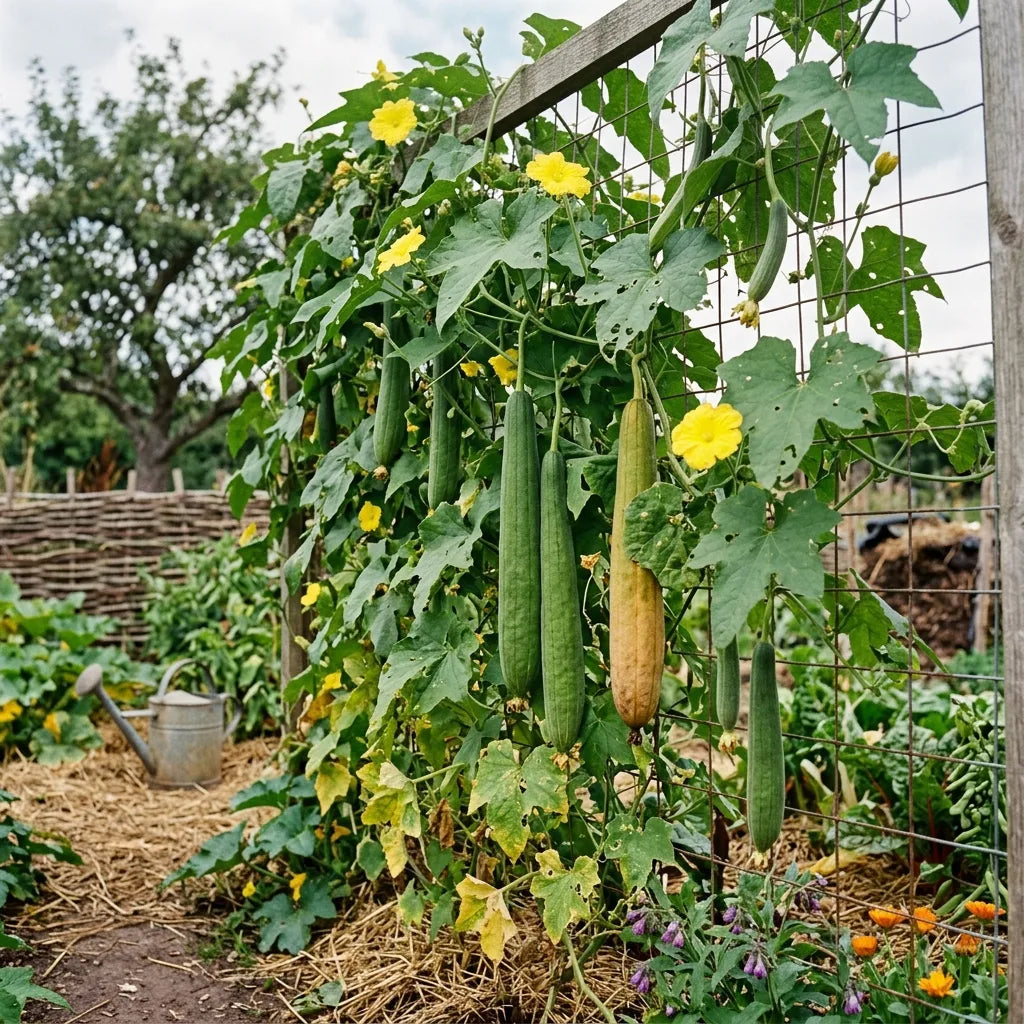
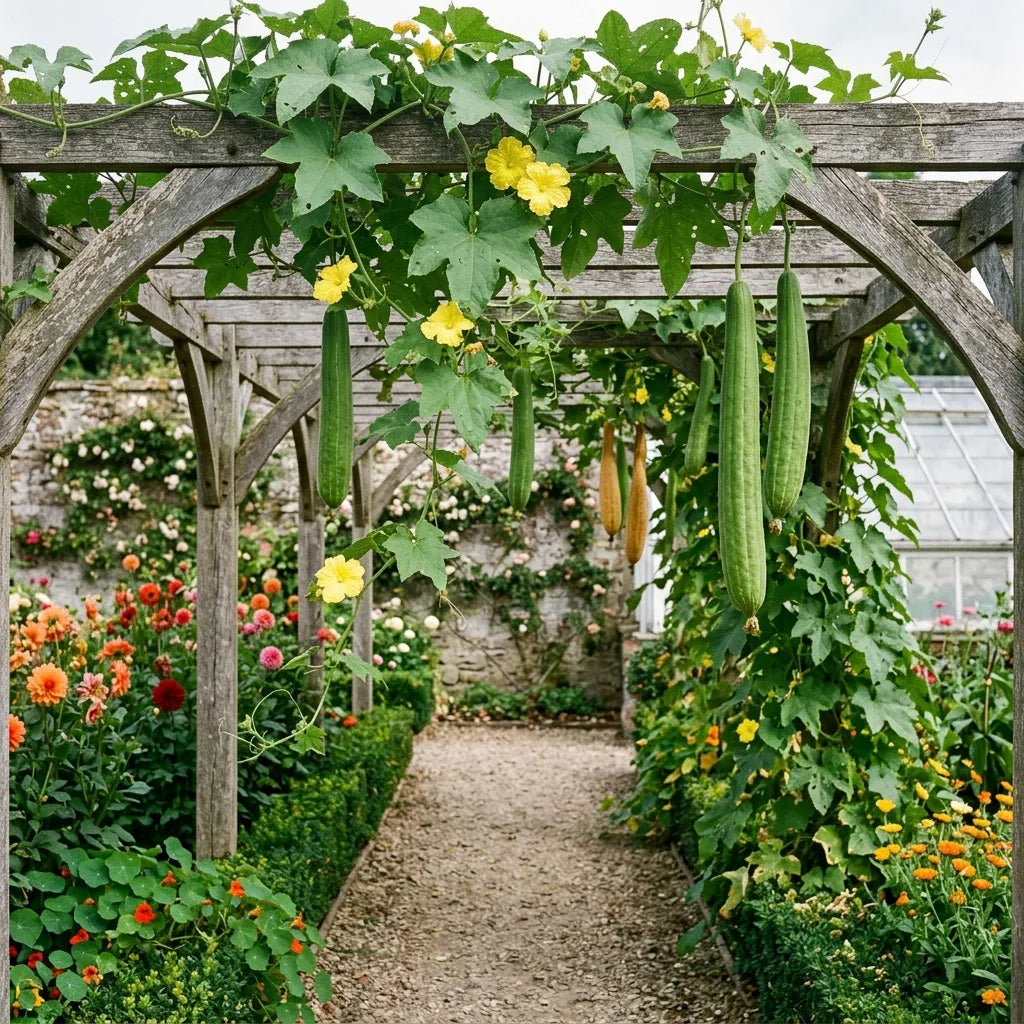
Vigorous vine: it easily climbs 3 or 4 meters on a trellis.
-
Zero waste: a homegrown alternative to synthetic sponges, fully compostable.
Precautions:
- Only eat very young fruits, before they reach 15 cm: after this stage, the fibers lignify and the fruit immediately becomes inedible. A fruit that has become bitter should not be eaten.
- Frost-tender and heat-demanding: in cool climates, growing it in a greenhouse or polytunnel is almost essential for obtaining mature sponges.
Sowing advice:
-
Exposure: full sun, warmth and atmospheric humidity.
-
Soil: rich, sandy, deep and well-drained, with a generous addition of compost. Like all cucurbits, it is very demanding in terms of water and organic matter.
-
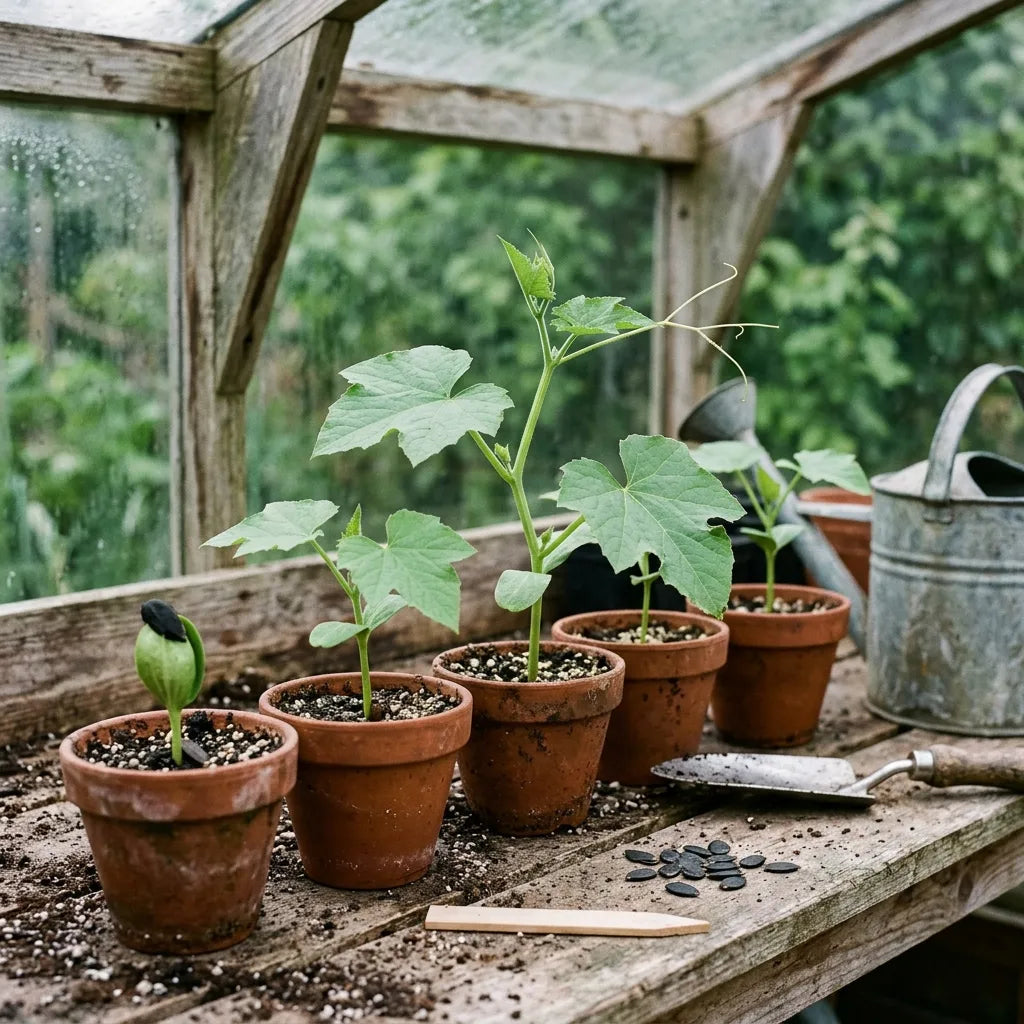
Method: its growing cycle is long—nearly 5 months—so sow early, from March onward, in pots at 25 °C. Soak the seeds for 24 hours in lukewarm water: their hard coating otherwise slows germination. See how to sow your seeds.
Planting advice:
- Transplant after the last frosts at the foot of a sturdy trellis. Trellising is clearly preferable: the fruits hang down, grow straight and do not rot when touching the soil.
Care advice:
- Water abundantly and regularly throughout the summer. Mulch around the base.
- Limit the plant to 4 or 5 fruits if you are aiming for sponges: a few well-ripened fruits are better than many that fail to mature.
Harvest advice:
- For the sponge, harvest around October when the skin turns brown, splits and the fruit becomes light—you can hear the seeds moving inside. Tear off the skin, shake out the seeds, then rinse and dry the fibers completely.
- For eating, pick very young, before 15 cm.
Beneficial companions:
Benefits for biodiversity:
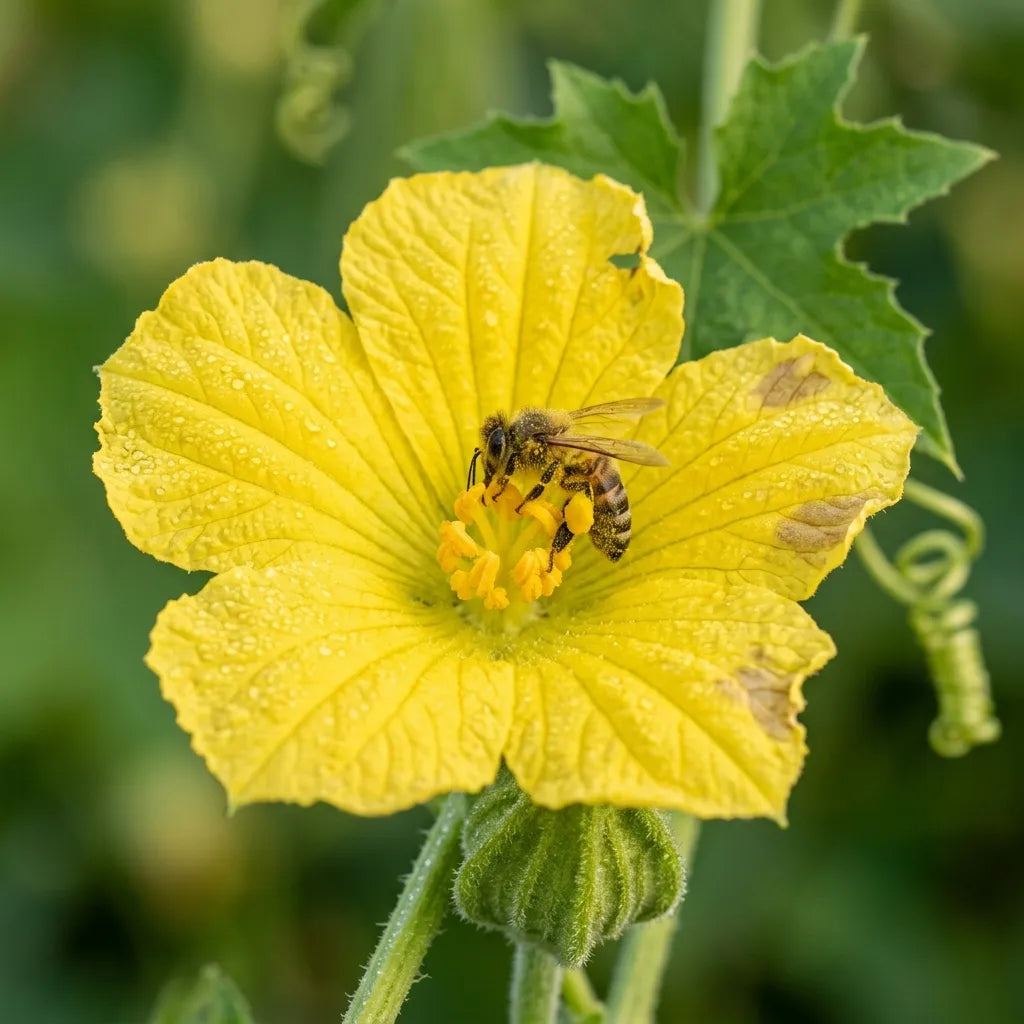
- Its large yellow flowers are highly attractive to pollinators and remain open for a long time during the day, making them a valuable resource for bees in midsummer.
- Growing your own sponge means replacing a petroleum-based object with a garden product that can be composted at the end of its life.
Uses:
- Body sponge for exfoliating damp skin, or household sponge with baking soda, white vinegar or black soap—it scratches neither dishes nor car bodies. Rinse it well and let it dry after each use.
- Young fruits cooked like zucchini, sautéed or in curry, a common use in Asia.
Harvesting your own seeds:
Harvesting itself does the job: by shaking the ripe fruit to release the sponge, you collect dozens of flat black seeds. Dry them before storing. See how to store your seeds.
Commitment to Quality: at SemiSauvage - Permaculture, we grow and select our seeds with respect for all living things as our guiding principle. Based near the Auvergne Volcanoes, we choose open-pollinated, non-hybrid varieties, tested for their germination rate, carefully sorted and packaged, with no chemical treatment whatsoever. Our belief: to give gardeners back the ability to resow, year after year, seeds that truly belong to them.
Grow your own sponge: the most astonishing zero-waste practice in the vegetable garden.