

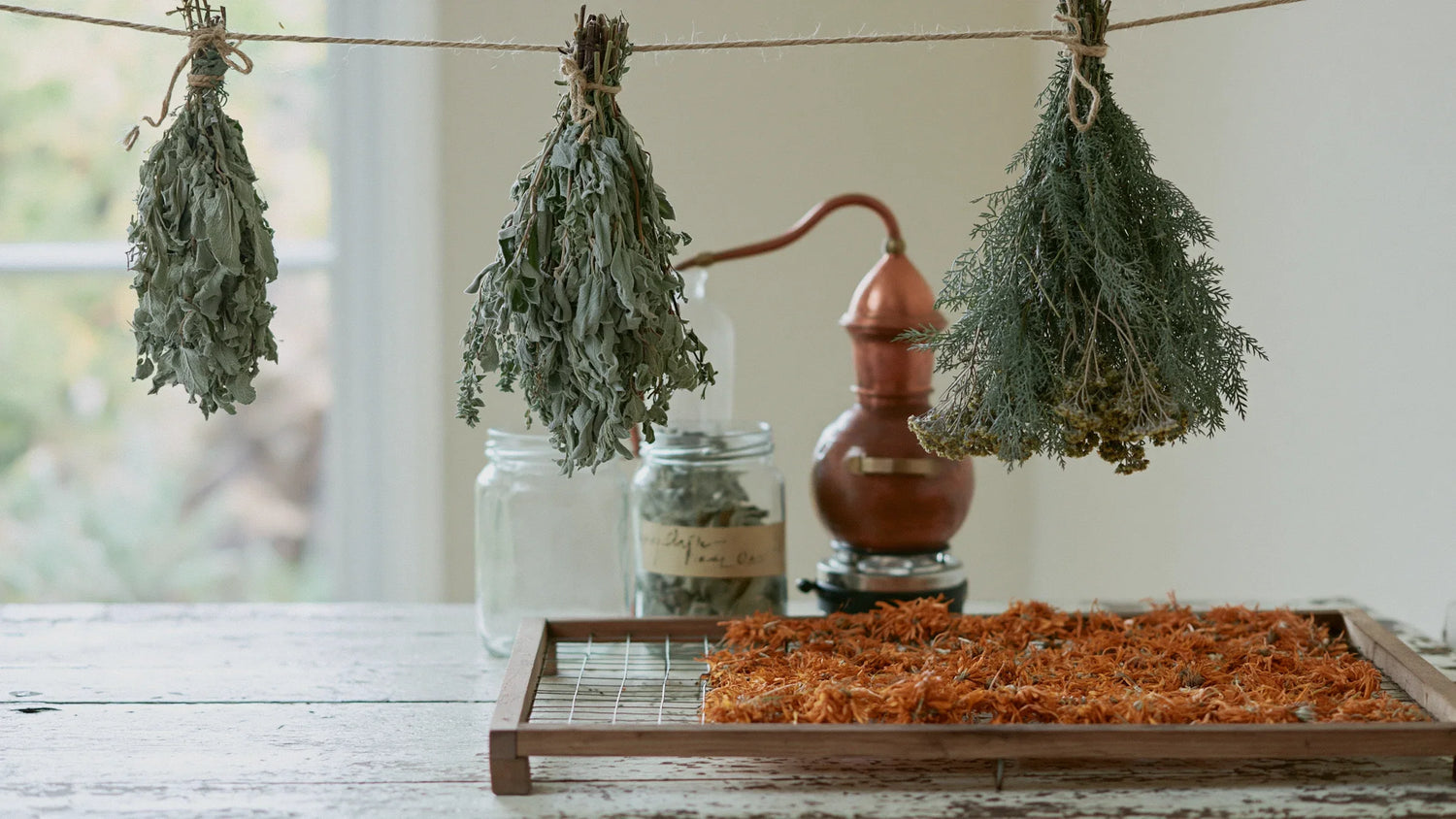
A medicinal plant bed is one of the most beautiful parts of a garden: staggered blooms, fragrances, and pollinators all season long. Most of these species are also hardy, water-wise, and undemanding — they were growing in cottage gardens long before anyone spoke of permaculture.
This guide covers their cultivation: what to sow, when and how to harvest and dry it. It does not cover their therapeutic uses, for a reason that must be stated from the outset.
Read this first
The term “medicinal plant” refers to a tradition of use, not safety. Several species in this family are toxic, and some are severely so.
- These plants are not a substitute for any treatment. If you have symptoms, consult a doctor or pharmacist.
- Some interact with medications or are contraindicated during pregnancy, while breastfeeding, in children, or in the presence of chronic conditions. Always seek professional advice before any internal use.
- Some species in our collection are ornamental or toxic and must under no circumstances be eaten: wormwood, common rue, tansy, and opium poppy. They are grown for their botanical, bee-friendly, or decorative value.
- Never use a plant you have not identified with certainty. Several medicinal plants in the Apiaceae family have deadly look-alikes.
What follows is therefore about gardening and passing on plant heritage — not health advice.
The easy ones to begin with
Hardy, undemanding, and easy to identify. These are the ones to start with.
- German chamomile (Matricaria chamomilla) — annual; sow directly in spring or autumn, barely covered: it needs light to germinate. It will self-seed afterward.
- Lemon balm (Melissa officinalis) — very easy perennial with a clear lemon fragrance. Germination is slow and unpredictable: sow in a seed tray and be patient. Once established, it becomes invasive — give it a confined space.
- Calendula (Calendula officinalis) — annual; direct sowing from March to May, with a very long flowering period. Self-seeds.
- Thyme and common sage — Mediterranean perennials. Well-drained, poor soil and full sun; no watering once established. Sow in spring; slow growth in the first year.
- Yarrow (Achillea millefolium) — extremely hardy perennial; its flat flower heads are one of the best resources for hoverflies.
- Mallow and marshmallow — perennials with a long summer flowering period, highly decorative at the back of flower beds.
Perennials to plant once
Slower-growing, but they establish themselves for years.
- Purple coneflower (Echinacea purpurea) — spectacular and very popular with pollinators. Requires cold stratification for 4 to 8 weeks to germinate properly: see Cold stratification.
- Valerian (Valeriana officinalis) — tall and fond of moist soil. Surface sowing; light is required for germination.
- Garden angelica (Angelica archangelica) — imposing biennial, growing up to two metres tall. Its seeds quickly lose their ability to germinate: sow them fresh, preferably in autumn.
- White horehound (Marrubium vulgare) — perennial of dry, poor soil, with velvety silver foliage.
- Dandelion (Taraxacum officinale) — yes, it is deliberately sown: leaves for salads, roots, and it is one of the earliest sources of nectar in spring. Also, our emblem.
- Nettle (Urtica dioica) — keep it confined to a dedicated corner. A host plant for many butterflies, the basis of nettle fertilizer, and an excellent compost activator.
Exotic species and curiosities
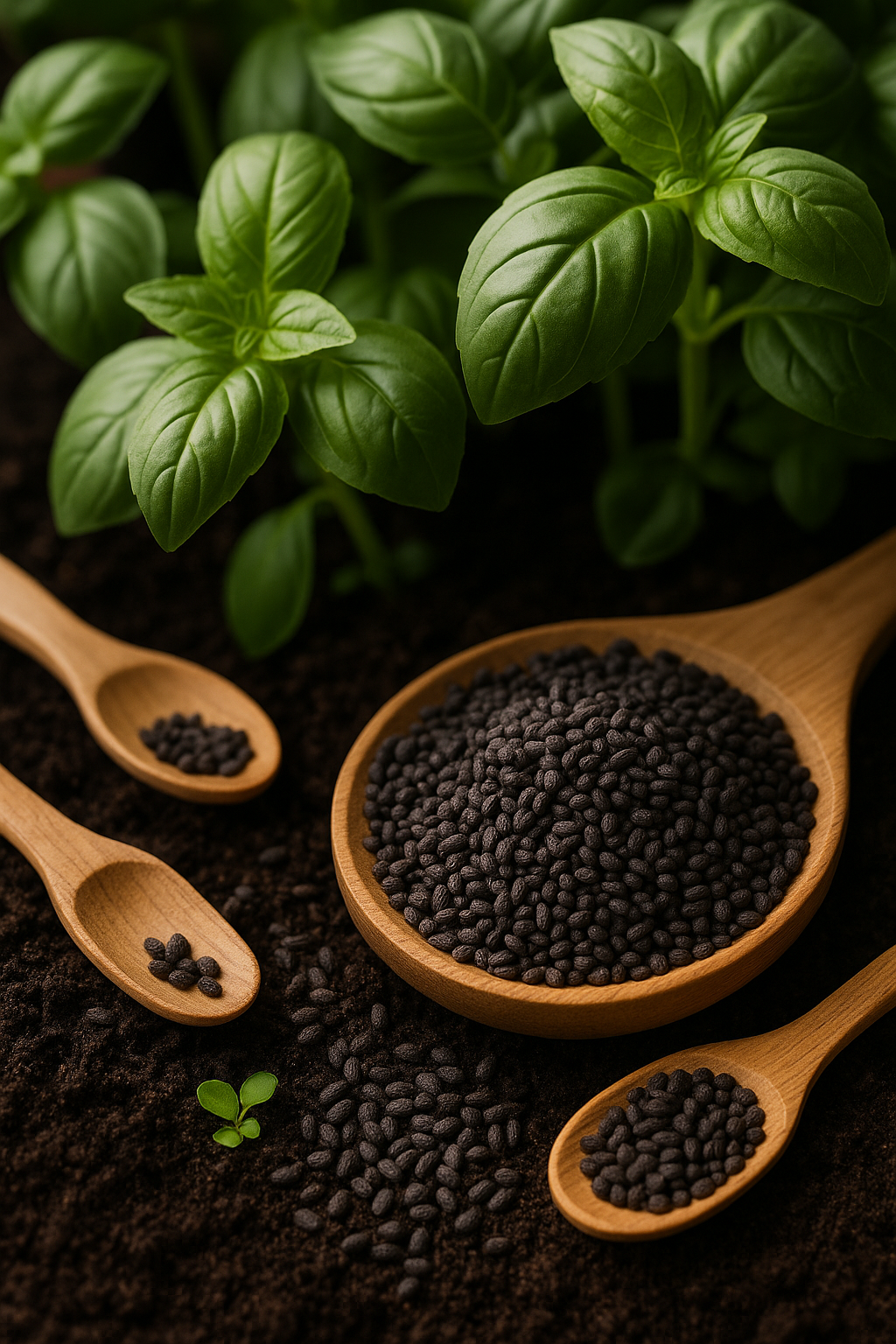
- Holy basil Tulsi (Ocimum tenuiflorum) — grown as an annual in our climate, perennial in a conservatory. Very distinctive fragrance, somewhere between clove and pepper.
- Stevia (Stevia rebaudiana) — leaves with intense sweetening power. Tender: grow in a pot and bring indoors for the winter. Germination is delicate; sow on the surface in a warm place.
- Indian ginseng (Withania somnifera) — tropical shrub, grown in pots in our climate.
- Bay laurel (Laurus nobilis) — culinary shrub. Germination is very slow, taking several months. Do not confuse it with oleander, which is toxic.
Sowing calendar
| Period | Species | Method |
|---|---|---|
| February–March | Echinacea (after stratification), thyme, sage, stevia | Under cover, in a warm place |
| March–May | Chamomile, calendula, yarrow, white horehound, mallow | Direct sowing |
| April–June | Lemon balm, valerian, marshmallow, holy basil | Sow in a seed tray, then transplant |
| August–September | Chamomile, calendula, yarrow | Direct sowing, early flowering the following year |
| October–November | Angelica (fresh seeds), perennials requiring stratification | Sow outdoors; the cold breaks dormancy |
One point that explains many failures: many medicinal plants have very fine seeds that require light to germinate—chamomile, valerian, stevia, mallow. Do not bury them: simply press them against the moist growing medium.
Harvesting and drying
When to harvest
The right time depends on the plant part, because the concentration of active compounds varies throughout the cycle.
- Leaves — before flowering, when the plant concentrates its resources in them.
- Flowers — at the very beginning of flowering, freshly opened.
- Entire aerial parts — in full bloom.
- Roots — in the autumn of the second year, when the plant has drawn its reserves down into the roots.
- Seeds — when fully ripe, before dispersal.
In all cases: in the morning, after the dew has evaporated, in dry weather. This is when the essential oils are most concentrated.
Drying properly
- In complete shade — light degrades the active compounds and causes the colors to change.
- In a well-ventilated place, between 20 and 35°C. An airy attic is ideal.
- In small bunches hung upside down, or laid flat on racks for delicate flowers.
- Do not pile them up — air must circulate between the stems, otherwise they will mold at the center.
- The test: a dry plant snaps cleanly instead of bending. Allow anywhere from a few days to two weeks.
Storing
In airtight glass jars, away from light, with a label and date. Leaves and flowers retain their qualities for about a year, roots for two to three years. One reliable sign: if the scent has disappeared, the plant is no longer worth much.
Their place in the garden
A medicinal herb bed is more than just a utilitarian space: it is one of the best reservoirs of beneficial insects in a vegetable garden.
- Group by water requirements — Mediterranean plants (thyme, sage, horehound) on one side, in well-drained, poor soil; moisture-loving plants (lemon balm, valerian, angelica) on the other. Mixing them is the costliest mistake you can make.
- Do not fertilize. Essential oils become concentrated in a slightly stressed plant. Excess nitrogen produces abundant, bland foliage.
- Contain invasive plants — lemon balm, nettles, mint: in buried pots or with a barrier.
- Let them flower — even if you harvest the leaves before flowering, leave a few plants in bloom for pollinators. See Combining flowers with the vegetable garden.
- Place them in zone 1 or 2 — near the house, where you pass by. A medicinal plant at the back of the property will never be harvested.
Frequently asked questions
Can medicinal plants be grown in pots?
Yes, especially Mediterranean species — thyme, sage, and horehound — which thrive in well-drained, poor substrates. Stevia and Indian ginseng even require these conditions in our climate. See Balcony vegetable garden.
Why aren't my lemon balm seeds germinating?
Three possible causes: they were sown too deeply (they need light), the growing medium is too cold, or they are simply slow — lemon balm can sometimes take three to four weeks. Do not discard the seed tray too soon.
Do you need a physic garden to do it properly?
No, the arrangement is flexible. What matters is grouping them according to water needs and ensuring accessibility. Many medicinal plants fit very well along the edge of a vegetable garden or in an ornamental bed.
Can you harvest their seeds?
Yes, and it is simple for most of them: chamomile, calendula, yarrow, mallow, and lemon balm produce abundant seeds. Be careful with angelica, whose seeds do not store well. See How to store your seeds.
Do these plants attract pests?
Quite the opposite. Their essential oils interfere with the scent detection of many insects, and their flowers feed beneficial insects. This is one reason they were traditionally planted along the edges of vegetable gardens.
Key points
Start with chamomile, calendula, lemon balm, and thyme: four unambiguous species that are easy to grow successfully and dry. Group them according to their water needs, do not fertilize, harvest in the morning, and dry in the shade. For any internal use, seek professional advice — growing and providing care are two different professions.
Further reading
- Edible flower seeds: sowing, harvesting, and uses
- Edible perennial plants
- Cold stratification: why and how to germinate seeds
- The month-by-month sowing calendar
Discover our collection of medicinal plants and our aromatic and medicinal seeds — all reproducible and untreated.

اترك تعليقًا
This site is protected by hCaptcha and the hCaptcha Privacy Policy and Terms of Service apply.