Ocimum tenuiflorum
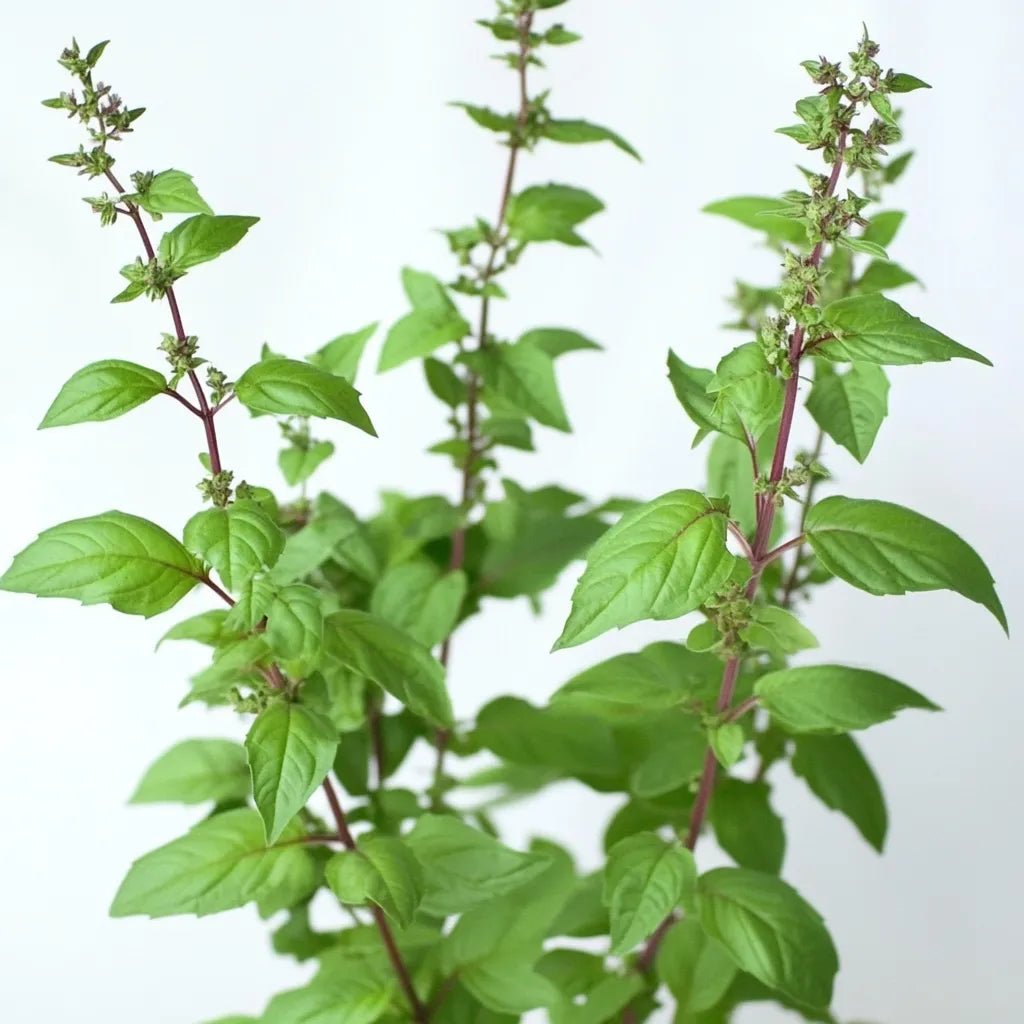
Holy basil, tulsi, tulasi, sacred basil: in India, it is not merely an aromatic herb but a revered plant. It is traditionally grown in a dedicated planter at the center of courtyards, and many Hindu households worship it daily. Not to be confused with Thai basil: its fragrance is more peppery, with an almost clove-like note.
Characteristics:
-
Unique peppery fragrance: notes of clove and pepper, very different from common basil.
-
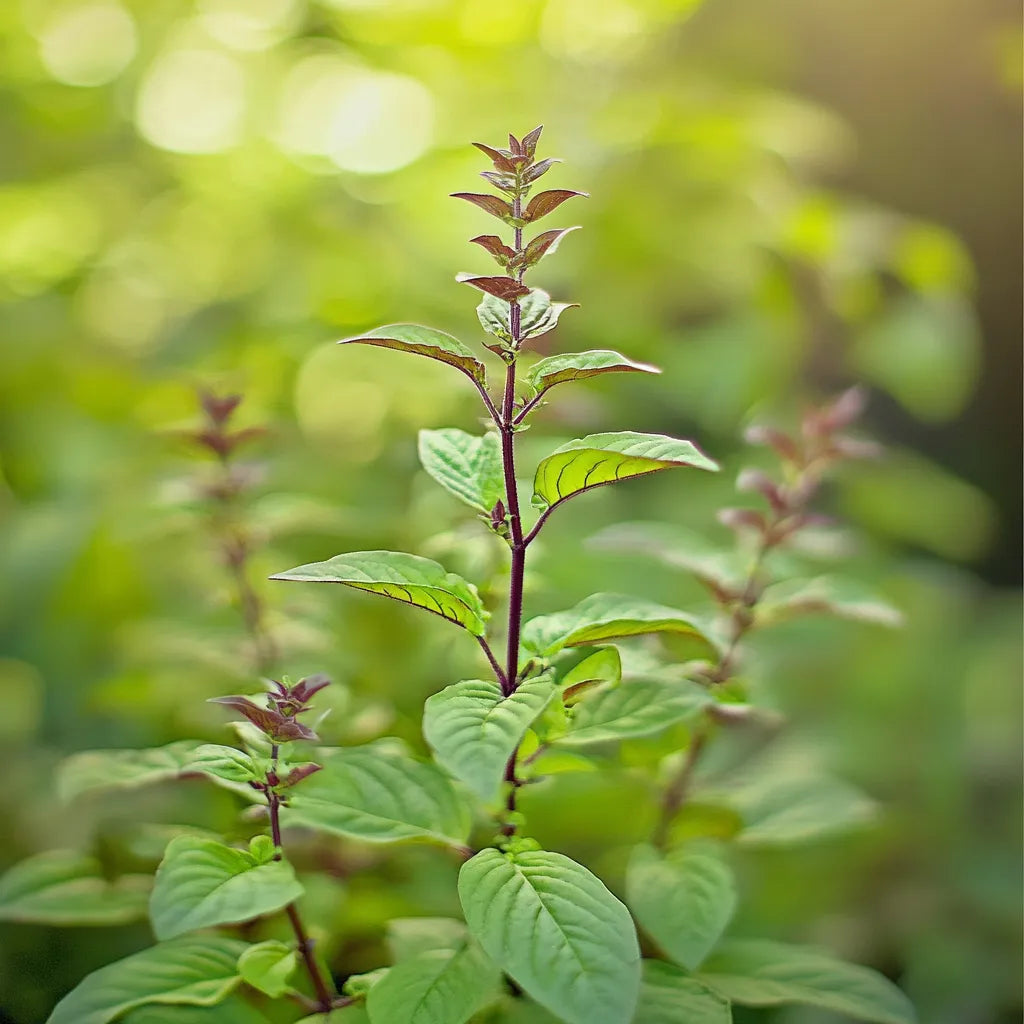
Fragrant foliage: green to purple depending on the variety, slightly downy.
-
Small mauve flowers: grouped in spikes, making it as decorative as it is useful.
-
Suitable for growing in pots: ideal for a balcony or an herb garden.
Precautions:
- Frost-tender and tropical in origin: it is grown as an annual in our climates, or in a pot brought indoors for winter in a warm, bright place.
Sowing advice:
-
Position: full sun and warmth.
-
Soil: light, rich in organic matter, and well drained. Like all basil varieties, it appreciates fertile soil that does not dry out completely, but it is sensitive to stagnant water.
-
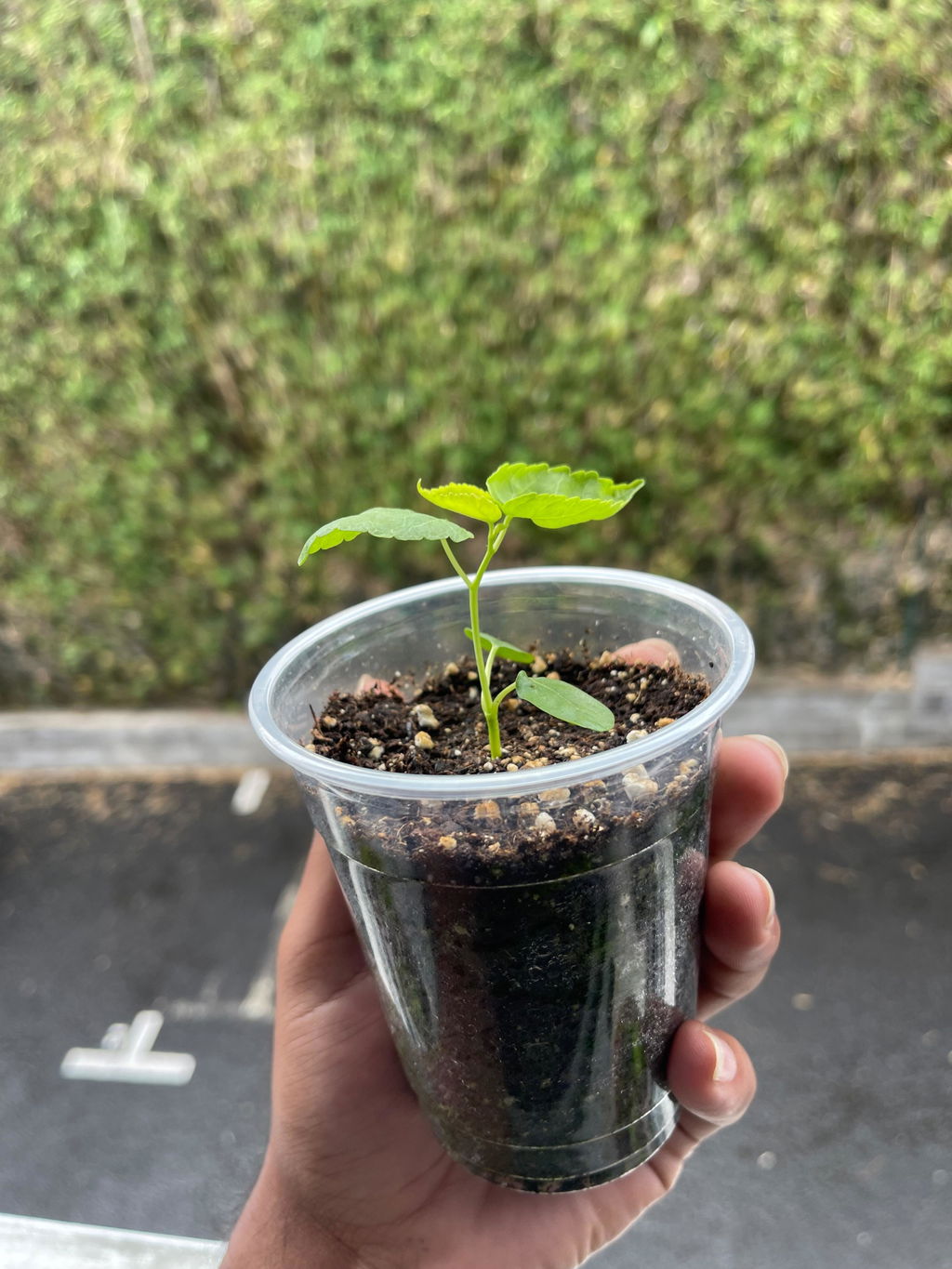
Method: sow in spring, on the surface or barely covered — the seeds need light to germinate. Sow in pots at 20–25 °C, then transplant after the last frosts. See how to sow your seeds.
Planting advice:
- Transplant 30 cm apart, in the ground in full sun or in a pot at least 20 cm deep.
Care advice:
- Water regularly but not excessively, at the base of the plant and in the morning.
-
The key step: pinch out the stems regularly just above a pair of leaves. The plant branches out, becomes fuller, and produces for much longer.
Harvesting advice:
- Pick the leaves as needed. Unlike common basil, tulsi dries very well and retains most of its fragrance — this is, in fact, the form in which it is traditionally used as an infusion.
Beneficial pairings:
Benefits for biodiversity:
- Its mauve flower spikes are highly visited by bees and bumblebees — let a few plants flower at the end of the season.
- Its powerful fragrance disrupts several unwanted insects affecting neighboring crops. See our repellent plants.
Uses:
- As an infusion, fresh or dried — this is its primary use. In cooking, its leaves enhance Indian and Asian dishes when added off the heat.
- A major medicinal plant in Ayurvedic medicine, used in India for millennia. See our medicinal plants to sow.
Symbolism:
Considered the earthly manifestation of the goddess Tulsi in Hinduism, the plant is symbolically married during the Tulsi Vivah ceremony, which marks the beginning of the wedding season in India.
Harvesting your own seeds:
Let a few flower spikes dry completely on the plant, then rub them over a container to release the small brown seeds. Be aware that Ocimum species cross-pollinate easily: isolate your seed plants if you grow several types of basil. See how to store your seeds.
Commitment to Quality: at SemiSauvage - Permaculture, we grow and select our seeds with respect for all living things as our guiding principle. Based near the Volcanoes of Auvergne, we choose reproducible, non-hybrid varieties, test them for germination rates, and carefully sort and package them without any chemical treatment. Our belief: to give gardeners back the ability to reseed, year after year, with seeds that truly belong to them.
India's holy basil, with its clove and pepper fragrance.