

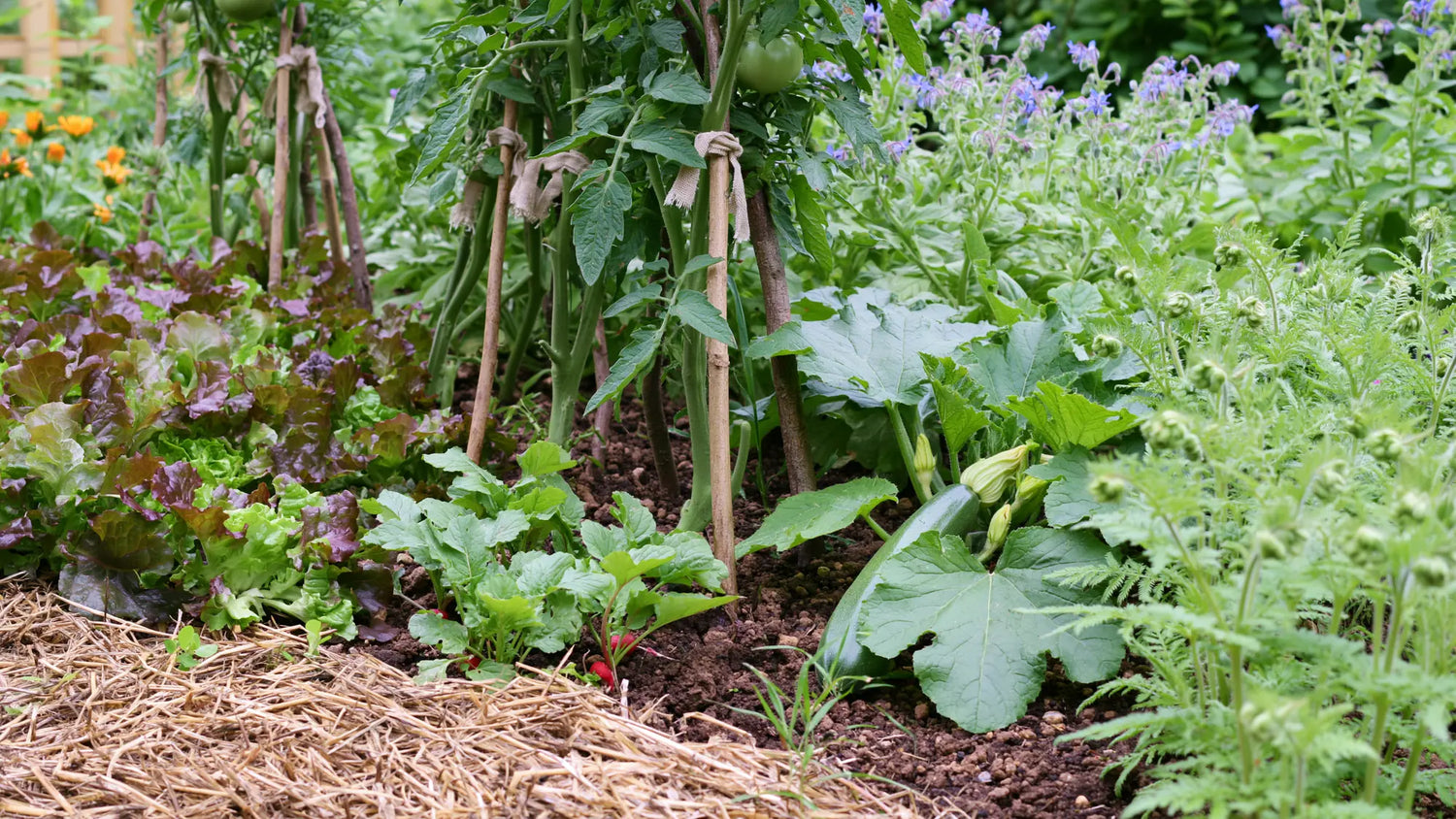
Faced with a seed catalogue, we buy whatever catches our eye — and come spring, we find ourselves with fifteen packets of fruiting vegetables, no flowers, no green manure, and a bed that remains bare for half the year.
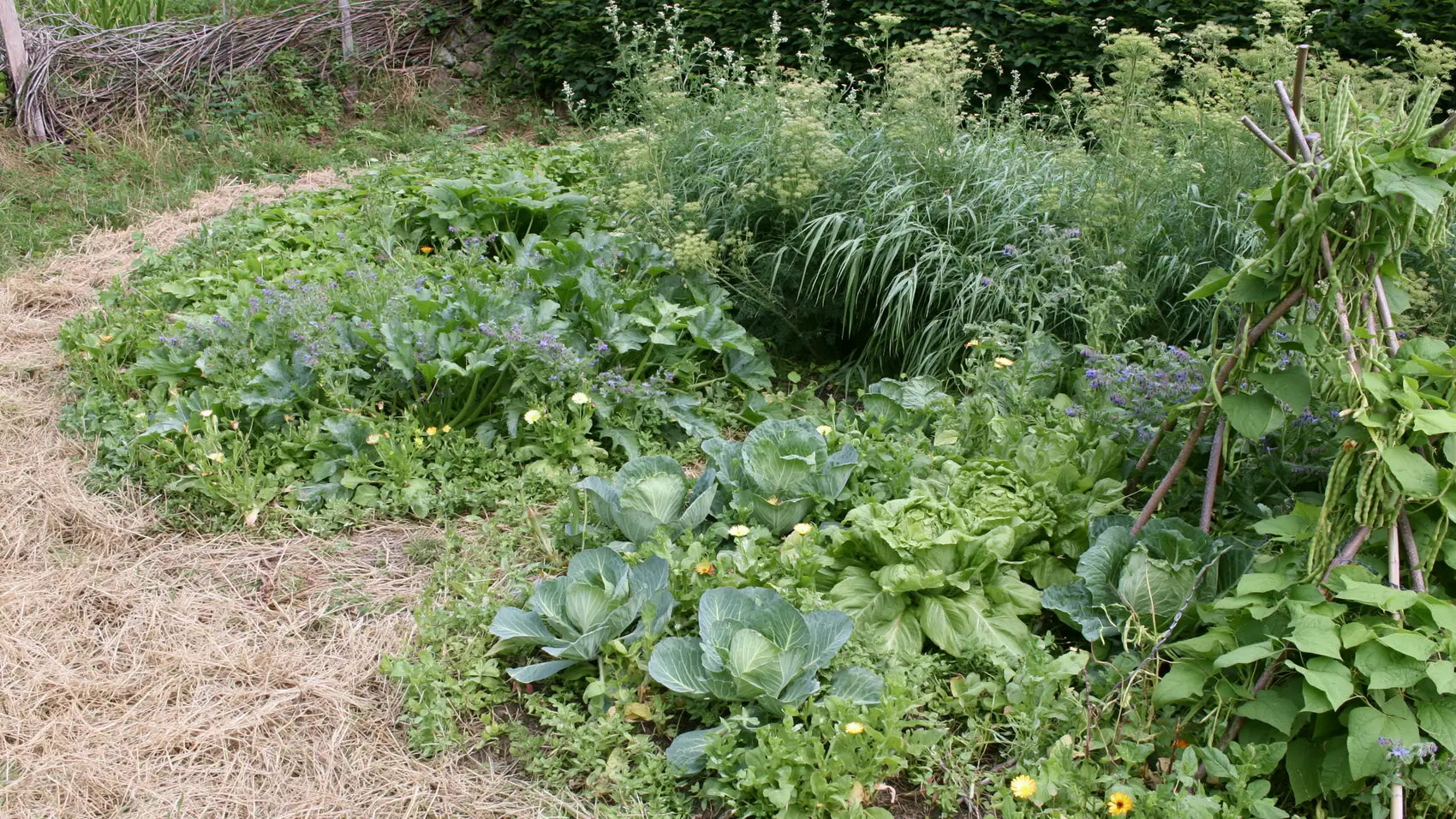
A permaculture vegetable garden is not designed like a conventional one. It is not simply a matter of choosing what to eat, but of bringing together five families of plants, each fulfilling a function. Here they are, along with a practical list for the first year.
The prerequisite: reproducible
Before anything else. In permaculture, a seed is not an annual consumable but a component of the system: it must be possible to harvest, resow, adapt, and pass it on. An F1 hybrid, repurchased identically every spring, closes no loops.
See Why choose non-hybrid, reproducible seeds?.
Three other criteria, in order:
- Adaptation to your climate — start with widely available varieties, then refine your selection with regional varieties.
- Ease of seed harvesting — choose self-pollinating plants in the first year: tomatoes, beans, peas, and lettuce.
- Hardiness rather than yield — in living soil without inputs, an undemanding variety outperforms a demanding one.
Family 1 — the quick providers
The ones that produce quickly and keep motivation high. In a beginner's vegetable garden, this is far from incidental: a first harvest in three weeks changes your relationship with the garden.
- Radishes — 18 to 25 days. Also useful for marking the rows of slower-germinating seeds.
- Cut-and-come-again lettuce — harvest leaf by leaf for weeks.
- Arugula, lamb's lettuce, watercress — short cycles, and can be sown at staggered intervals throughout the season.
- Spinach, Swiss chard — productive, hardy, and tolerant of partial shade.
These are also the species to sow in succession: twenty radishes every two weeks rather than one hundred all at once.
Family 2 — the seasonal backbone crops
The heart of the vegetable garden, occupying the space all summer.
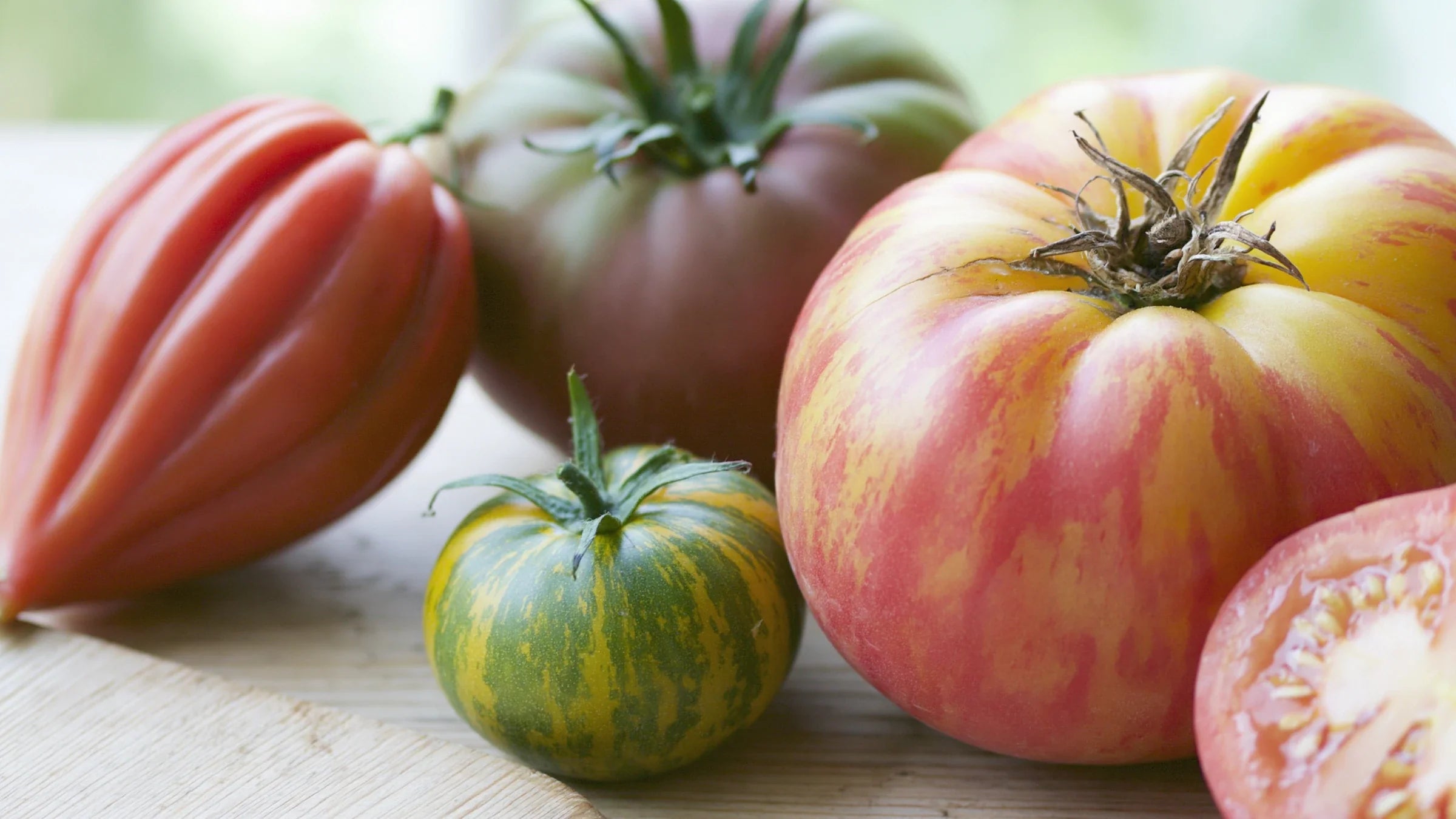
- Tomatoes — two or three varieties of different types: one for salads, one for cooking, and one cherry variety. See Heirloom tomato seeds.
- Zucchini and squash — their foliage covers the soil and protects it from evaporation. Two zucchini plants are enough for a family.
- Beans — bush or climbing. They fix nitrogen, so they improve the bed while producing a crop.
- Carrots, beets — root crops that must be sown directly in place.
- Bell peppers, chili peppers — if your site exposure allows it.
A vegetable garden made up only of deep roots, or only of shallow ones, makes poor use of the available soil volume. Carrots and beets grow downward, lettuce and radishes stay near the surface, while squash and tomatoes occupy the middle: it is this mixture that fills the bed from top to bottom.
Family 3 — green manures
It's the family you would never spontaneously buy, and it is probably the one with the greatest long-term effect. Green manure isn't harvested: it works for the soil while no crop occupies the bed.

- Phacelia — the versatile one. Very fast growth, nectar-rich flowering, and above all, it belongs to no plant family cultivated in the vegetable garden: it fits anywhere in a rotation without risk.
- White clover — permanent ground cover that tolerates trampling, ideal for paths. Fixes nitrogen.
- Mustard — emergency cover in just a few weeks, and an excellent nitrate trap.
- Alfalfa, red clover — to restore a tired plot over one or two full seasons.
Mustard is a crucifer, just like cabbage, radishes, turnips, and arugula. Sowing it as green manure on a bed that has grown or will grow these vegetables means growing the same family twice in the same place—and maintaining clubroot, which persists in the soil for years. On those beds, choose phacelia instead: it belongs to no plant family cultivated in the vegetable garden.
See Sowing green manures and our green manure collection.
Family 4 — functional flowers
They are not decorative: they serve three distinct functions, and a flowerless vegetable garden deprives itself of its best allies.
- Feed adult beneficial insects — ladybugs, hoverflies, and lacewings consume aphids only in their larval stage; adults live on nectar and pollen. Without flowers, they do not settle in or lay eggs.
- Serve as a trap crop — nasturtiums attract black aphids away from broad beans and zucchini.
- Disrupt olfactory cues — marigolds, calendula, flowering herbs.

The most effective: borage (very long flowering period, edible), calendula (self-seeds from one year to the next), nasturtium, cosmos, phacelia. Aim for continuous flowering from March to October rather than an explosion of blooms in June.
See our nectar plants and flower seeds.
Family 5 — perennials and herbs
Plant them once and they produce for years. They offer the best return on effort in the entire vegetable garden, yet they are the last things people buy.
- Perennial herbs — thyme, oregano, savory, chives, tarragon, mint (in a pot, it is invasive).
- Annual herbs — basil, parsley, cilantro, dill.
- Perennial vegetables — rhubarb, sorrel, artichoke, perennial leek.
Their flower clusters are among the vegetable garden's best resources for hoverflies—and a nectar-fed adult hoverfly is one that lays eggs, resulting in larvae that consume aphids. Letting two or three plants flower is worth more than the leaves you lose.
See our culinary and medicinal herb seeds and our perennial plants.
The concrete list for 20 m², first year
A balanced, deliberately limited composition. Twelve well-tended species are better than thirty poorly managed ones.
| Family | Species | Why |
|---|---|---|
| Fast-growing | Radishes, cut-and-come-again lettuce, arugula | Harvest in as little as three weeks, succession sowing |
| Structural crops | 2 tomatoes, 1 zucchini, bush beans, carrots | The heart of summer production |
| Green manures | Phacelia, mustard | Cover empty beds and nourish the soil |
| Flowers | Borage, calendula, nasturtium | Beneficial insects, trap crops, staggered flowering |
| Herbs | Basil, parsley, thyme, chives | Zone 1, daily harvest |
That makes about fifteen packets. In the second year, you will only need to buy some of them again—the tomatoes, beans, and lettuce will reseed themselves from your own harvests.

 In our shop
Seed Box — Specially for Beginner Gardeners
In our shop
Seed Box — Specially for Beginner Gardeners
Composition mistakes
- Too many varieties at once. Fifteen well-tended species are better than forty half-opened packets.
- Forget green manures. They are what build fertility for the years to come, and they cost next to nothing.
- Choose only fruiting vegetables. Tomatoes, peppers, and eggplants all require full sun, time, and water. A vegetable garden made up solely of these crops is fragile and demanding.
- Ignore the season. A catalogue is read in January, but an August sowing is nothing like a March sowing. See The month-by-month sowing calendar.
- Buy without leaving room for what comes next. Always reserve an empty bed: it is where succession crops and green manures will go.
Frequently asked questions
How many packets should I buy to get started?
About fifteen for 20 m², spread across the five families. A packet often contains far more seeds than you need for one season, and they remain viable for several years — see How to store your seeds.
Should I buy seedlings or seeds?
Seeds for everything that is sown directly in place and for easy-to-grow species. Seedlings remain a practical choice in the first year for tomatoes and peppers if you do not have a warm, bright place for starting seeds. But you lose the ability to harvest seeds if the plant is an F1 hybrid.
Which seeds should I choose if my soil is poor?
Start with green manures for a full season, then choose undemanding species: beans, radishes, Swiss chard, and Mediterranean herbs. See Which seeds are best for poor, dry soil?.
What if I only have a balcony?
The five families remain relevant on a balcony: herbs in zone 1, one cherry tomato plant, successive sowings of radishes, nasturtiums for beneficial insects, and a handful of phacelia between two crops. See Balcony vegetable garden.
Can you sow everything in the same year?
Yes, but spread your purchases throughout the season rather than ordering everything in February. You’ll buy autumn-sown seeds in August, with a year’s more experience and a better idea of what works for you.
Key takeaways
Choose by function, not desire: fast-growing plants for motivation, structural plants for production, green manures for the soil, flowers for beneficial insects, and perennials for longevity. And choose everything reproducible — it’s the only decision that makes all the others cumulative.
To go further
- How do you create a permaculture vegetable garden? Complete guide
- The best vegetable combinations for the garden
- Planning your garden according to zones and exposure
- The month-by-month sowing calendar
To plan your first year: our vegetable garden seeds, our green manures, our bee-friendly plants, and our starter kits.

Jätä kommentti
Tämä sivu on suojattu hCaptcha-tunnistuksella, ja hCaptchan tietosuojakäytäntöjä ja käyttöehtoja sovelletaan.