Salvia viridis (syn. S. horminum)
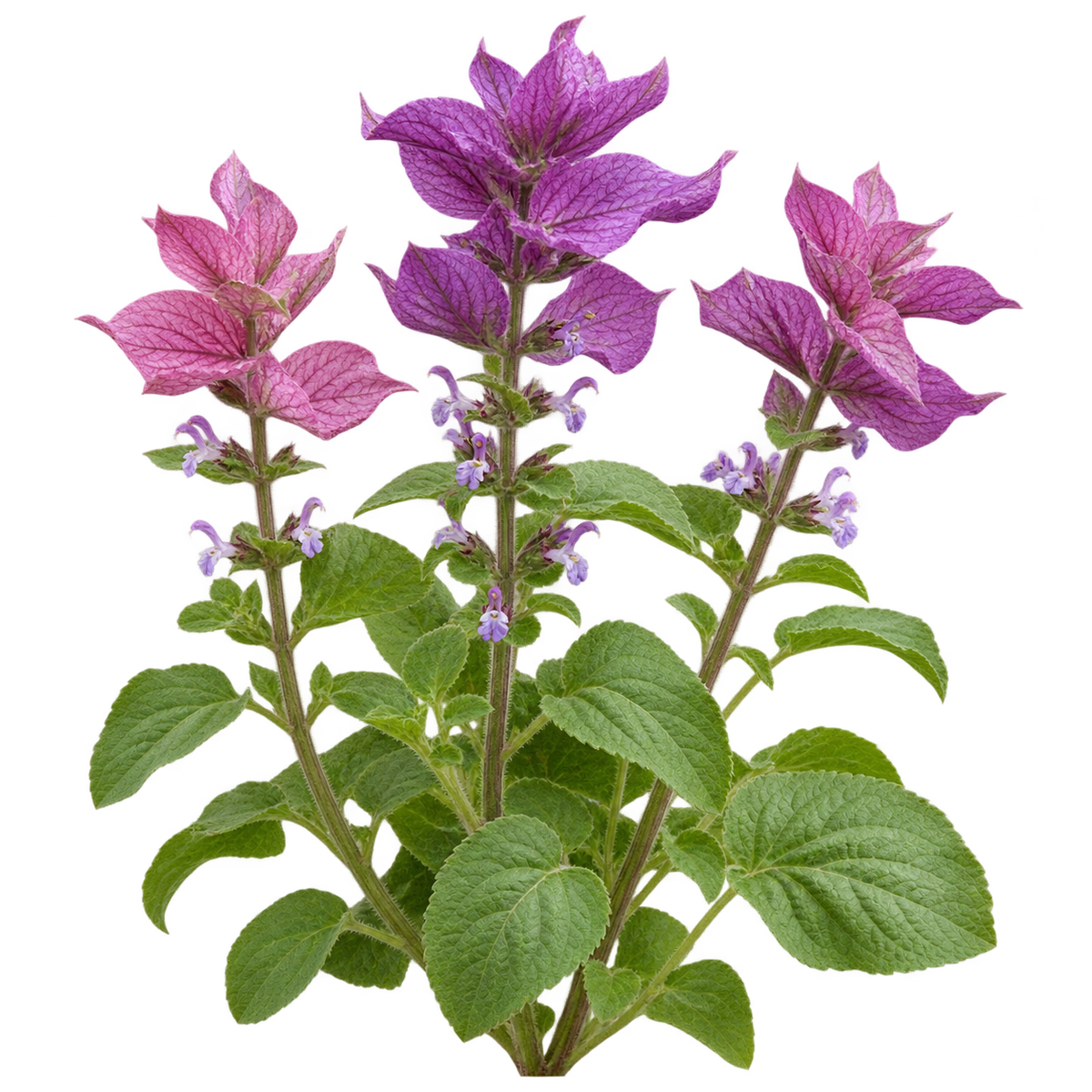
Green sage has a distinctive feature at the top of its stems: the large colored parts are bracts, while the true flowers, which are smaller, are found beneath them. This ornamental annual adds vertical accents to flower beds and remains attractive in dried bouquets. The name Salvia viridis, also known by the synonym Salvia horminum, identifies the plant sold under the common name Virginia sage.
Characteristics:
- Ornamental annual sage with colorful bracts at the top of the stems.
- Small flowers arranged beneath the bracts.
- Stems suitable for fresh or dried bouquets.
Sowing tips:
-
Timing: Sow in March–April under cover at 16–18 °C, or directly outdoors after the last frosts.
-
Method: Sow thinly on fine soil and cover very lightly. Keep the surface moist while the seeds germinate, and provide enough light as soon as the seedlings emerge.
-
Spacing: Thin or transplant to about 20 to 30 cm apart, then water to help the plants establish.
Find the preparation steps in our guide to sowing methods.
Growing and care tips:
Plant in a sunny spot in well-drained soil. Gradually acclimatize young plants raised under cover to outdoor conditions. Monitor watering while they establish roots and during dry spells, while avoiding standing water. Leave enough space for the stems to branch out and remain visible among neighboring plants. Cut back faded stems to keep the bed looking tidy, except for those you are saving for seed.
Flowering and harvesting:
In summer, observe the bracts and the small flowers above them separately: they do not develop at exactly the same pace. For bouquets, cut stems with bracts that are richly colored and still fresh. Remove any leaves that would be submerged in water. To dry, gather small bunches and hang them in a dry, well-ventilated place, protected from direct sunlight. A bunch that is too tight slows drying and can damage the stems.
Garden use:
Green sage adds height to an arrangement without the bulk of a large flower head. Pair its stems with round flowers, ornamental grasses, or understated foliage, in the garden or in a vase. In a border near the vegetable garden, give it a sunny spot where the bracts remain visible above shorter plants. This sage is presented for its ornamental value; it is not a substitute for culinary common sage.
Harvesting your own seeds:
Leave a few stems after flowering. The seeds form in the calyces of the small flowers beneath the colorful bracts: these are the parts to observe, not just the color at the top. Wait until the calyces dry and the small fruits turn brown and detach easily. Cut the stems over a container, finish drying them, then shake gently to collect the nutlets. Remove any debris and label the species and year. The colors of the offspring may vary. See our tips for storing harvested seeds.
Commitment to Quality:
At SemiSauvage, we offer seeds that grow true to type to cultivate diversity in the garden. This packet contains at least 150 seeds, packed in France. The periods indicated are guidelines to adapt to your climate, soil, and seasonal conditions.
An annual worth taking a closer look at to understand the difference between a flower and the bracts that highlight it.