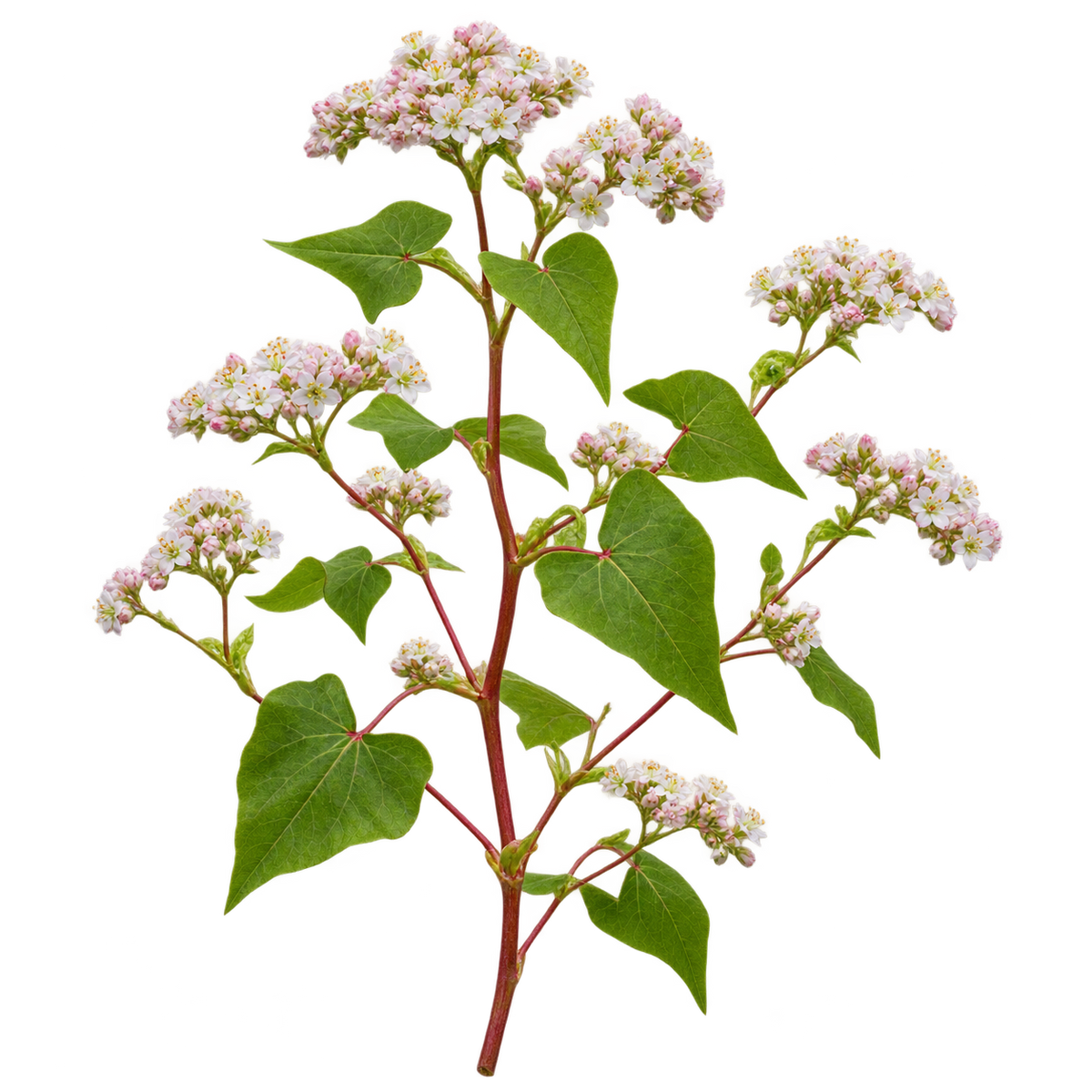
Fagopyrum esculentum
Buckwheat, also called black wheat, can quickly fill an available plot in summer. Its heart-shaped leaves and clusters of small, pale flowers form a living cover, useful between crops. Despite its name, it is not part of the wheat family: it is called a pseudocereal because its seeds can be used in similar ways. In the garden, choose your goal from the outset: grow a cover crop to mow, or leave some plants to produce seeds.
Characteristics:
- A fast-growing annual, sensitive to frost.
- Broad, heart-shaped leaves, often reddish stems, and small white to pinkish flowers.
- Summer cover crop, a floral resource for pollinators, with potential seed production.
- Buckwheat does not fix nitrogen from the air like a legume.
Sowing tips:
-
Timing: Sow from May to August after the last frost, leaving enough time before the cold returns for your intended use.
-
Preparation: Clear the plot, loosen the soil surface, then spread the seeds evenly. Cover them lightly and press them into contact with the soil.
-
Moisture: Water if needed while the plants establish. Find preparation tips in our guide to sowing methods.
Growing tips:
Choose a sunny spot with well-drained soil. How quickly the plants establish depends in part on warmth and available moisture: sowing in dry soil will not immediately produce a dense cover. Watch for the first seedlings and tackle weeds while the plants are still small. Avoid mixing this cover crop with young vegetables that it could compete with or shade.
Managing a cover crop:
To cover the soil between crops, mow before the seeds ripen. Leave the cut material on the surface if that suits the next crop. If you wait until the seeds form, volunteer plants may emerge afterward. The cycle is short, around two to three months depending on the season, but let the flowers and fruits guide your timing rather than a fixed date.
Benefits for pollinators:
The small flowers bloom in succession, providing pollen and nectar for insects. To balance this benefit with a cover crop that won't self-seed, monitor the development of the first fruits while flowering continues. On a small plot, you can reserve one area for seed production and mow the rest earlier.
Using the seeds:
Ripe seeds are used, among other things, to make buckwheat flour. They have an outer covering that must be removed to obtain the hulled grain used in cooking. This process requires more preparation than simply picking a fresh vegetable. The packet is intended for sowing, not for direct consumption.
Harvesting your own seeds:
Let the flowers develop their small, angular fruits, called achenes. When ripe, their outer covering turns brown to dark brown. Ripening is staggered: flowers may still be present while the first grains are ready. Watch for browning, harvest in several passes if needed, then dry the seeds before gently threshing and sorting them. Do not store a damp mixture of seeds and green stems. Label your harvest and follow our advice on storing your seeds.
Commitment to Quality:
At SemiSauvage, we offer seed that breeds true, to grow diversity in the garden. This packet contains at least 600 seeds, packaged in France. The dates given are guidelines to adapt to your climate, soil, and seasonal conditions.
Buckwheat can give an available summer plot a purpose, provided you choose the right time to mow or harvest it.