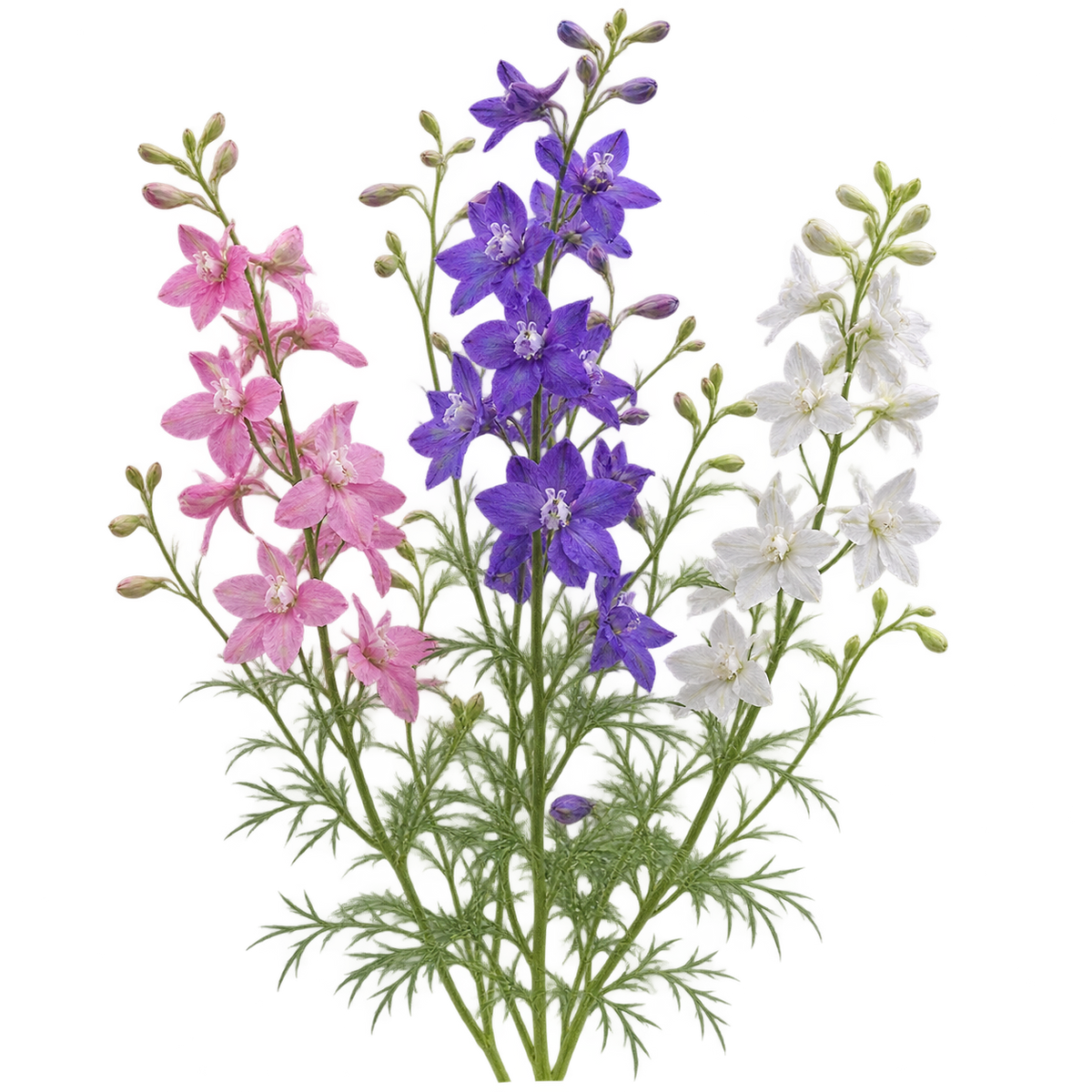
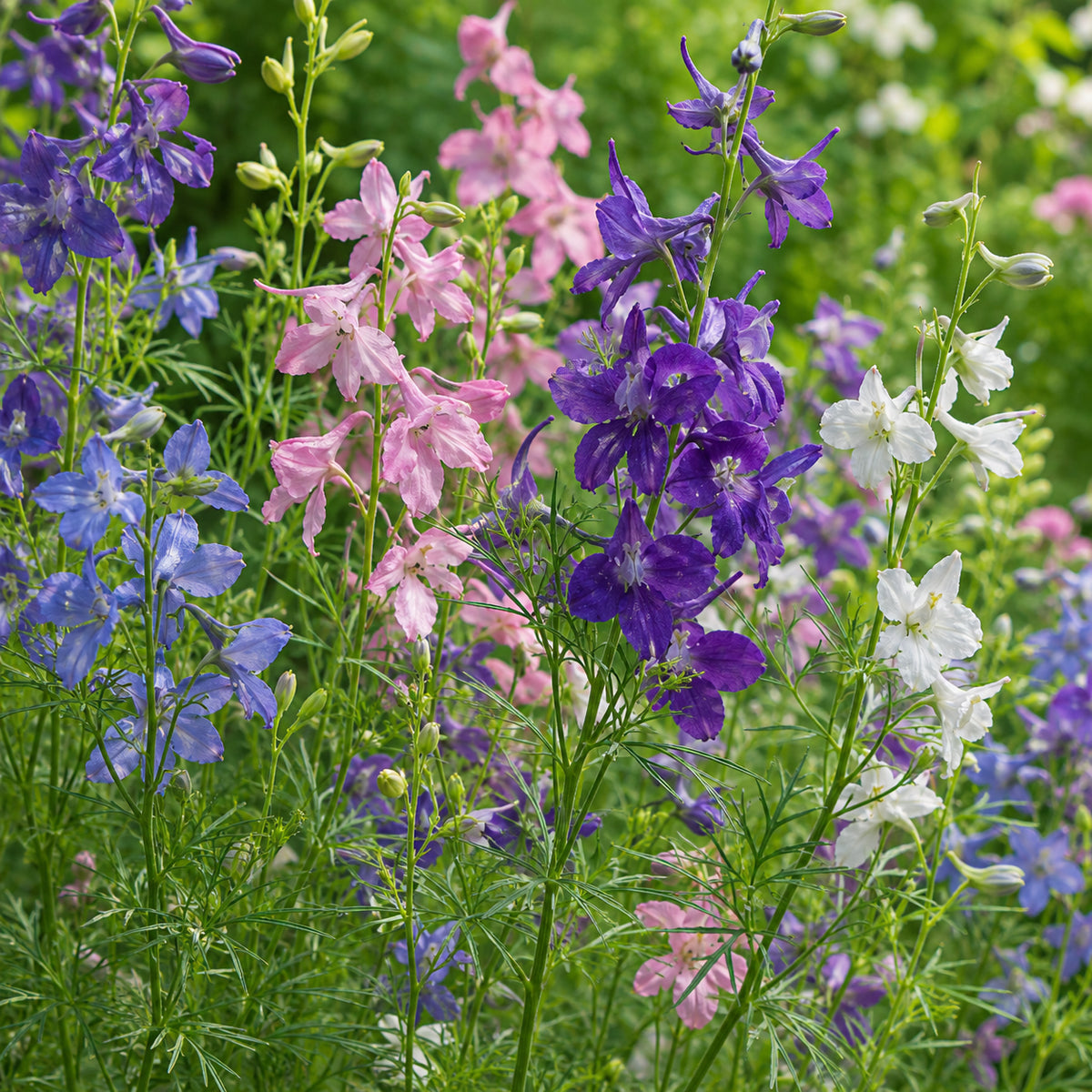
Delphinium consolida 'Imperial'
Imperial larkspur adds height to flower beds without the bulk of a shrub. Its long flower spikes bear spurred flowers above finely divided foliage. This annual complements cottage-style flower gardens and bouquets. To grow it successfully, direct sowing and a sufficiently open spot matter more than planting very close together: the stems need room to develop without being smothered by their neighbors.
Characteristics:
- Annual larkspur from the Imperial selection.
- Flowers bloom on long spikes in shades of blue, purple, pink, and white, depending on the plants.
- Leaves divided into fine segments; flowers are recognizable by their spurs.
- Ornamental plant for flower beds and bouquets; not for food use.
Sowing tips:
-
When to sow: sow directly in place in autumn or early spring, depending on local conditions.
-
Location: prepare fine, well-draining soil in a sunny spot. Avoid waterlogged soil and sowing too deeply.
-
Care: Keep the soil moderately moist while the seeds germinate, then thin the seedlings to leave plenty of space between them. Our guide to sowing methods explains how to prepare for direct sowing.
Growing tips:
Choose fertile, well-drained soil in a sunny spot. Direct sowing avoids disturbing the roots during transplanting. When thinning, keep the strongest plants rather than trying to save every seedling: an overcrowded group competes for resources and is harder to support. Place tall plants behind low borders, while keeping their stems accessible for cutting.
Care tips:
Water while the plants are getting established and during dry spells, without keeping the soil waterlogged. In windy locations, provide discreet support before the flowering stems begin to lean. Remove spent flower clusters if you do not want self-seeding; keep only those you have chosen for seed collection.
Flowering and bouquets:
Flowering takes place from late spring through summer, depending on when the seeds are sown and the climate. For a bouquet, choose stems with some flowers already open and some buds remaining. Make a clean cut, place them in water promptly and use a vase reserved for flowers. The flower spikes add height to a rounder arrangement without requiring a tightly packed bouquet.
Caution:
The plant and its seeds are toxic if ingested. Do not use them in cooking or to decorate food. Keep the seeds clearly labeled and out of reach of children and animals, and wash your hands after handling them.
Harvesting your own seeds:
After flowering, dry fruits develop where the flowers were: these are follicles, which open at maturity to release the seeds. Let a few ripen on selected stems. Harvest them when they turn brown and dry, before they scatter, then allow them to finish drying in a paper bag. Collect the seeds and clearly label them as ornamental and inedible. Colors may vary in the next generation. Find our tips for storing seeds in a dry place.
Commitment to Quality:
At SemiSauvage, we offer open-pollinated seeds to grow diversity in the garden. This packet contains at least 250 seeds, packaged in France. The periods indicated are guidelines to adapt to your climate, soil and seasonal conditions.
Imperial brings a light, upright accent to summer borders and garden bouquets alike.