Mesembryanthemum sp.
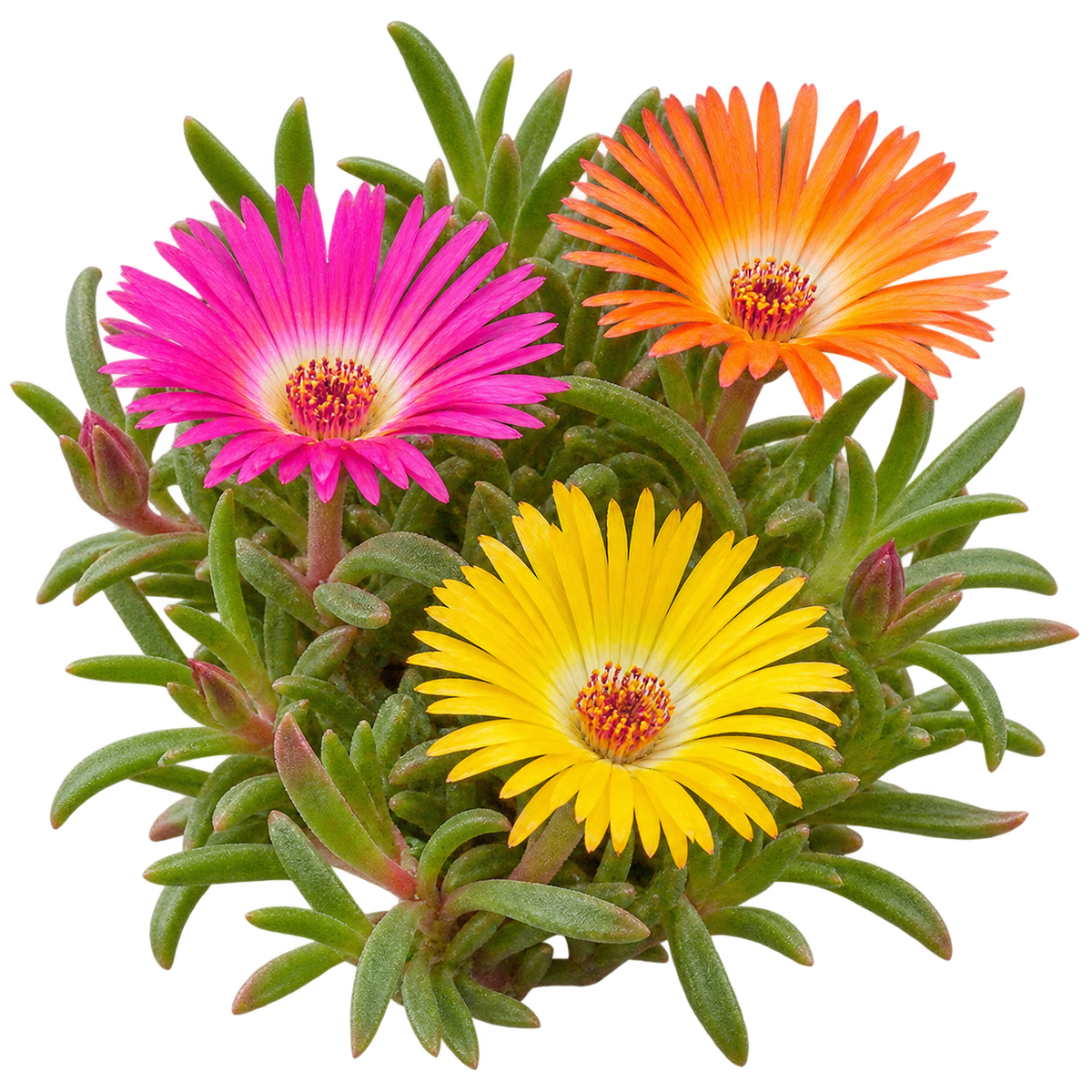
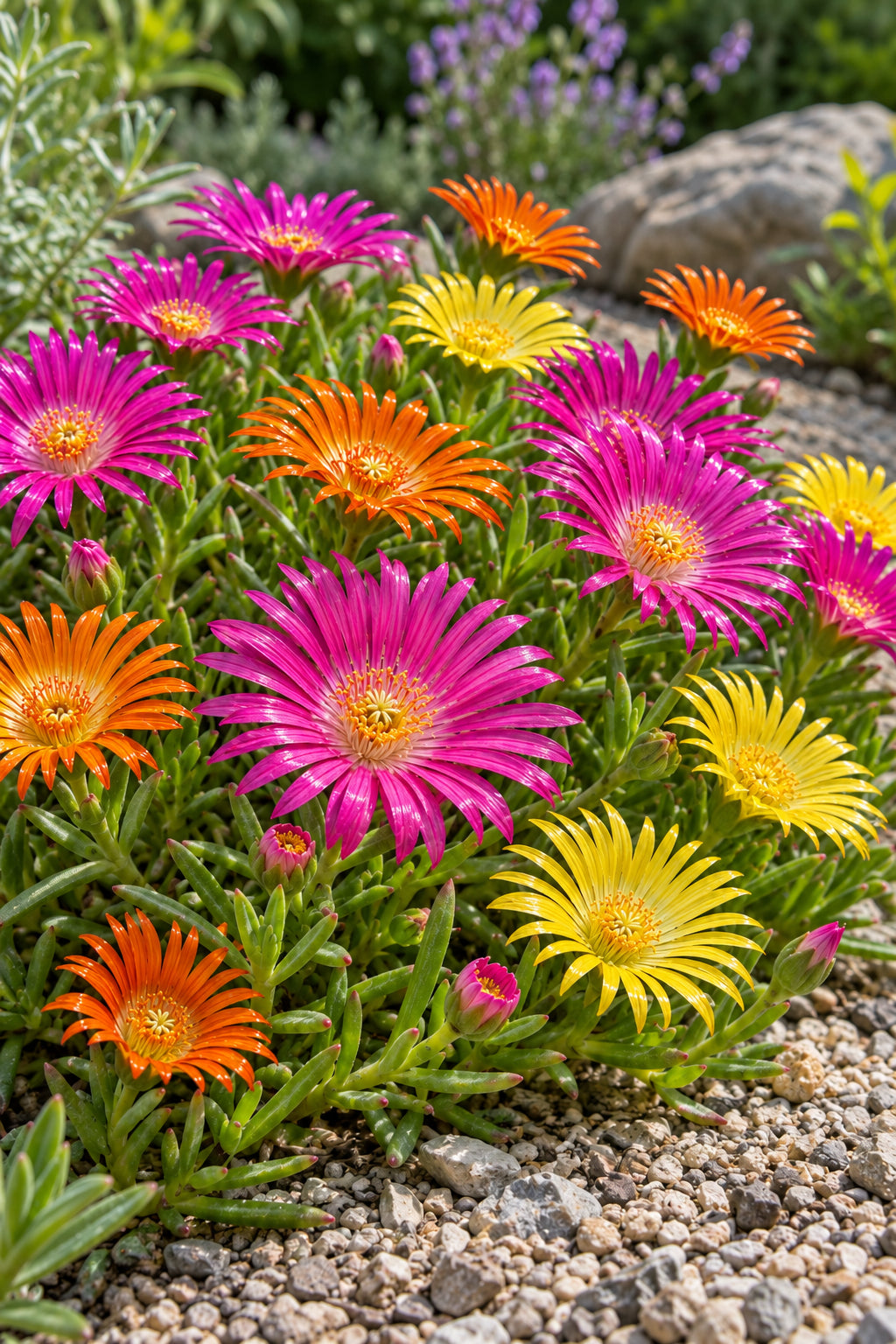
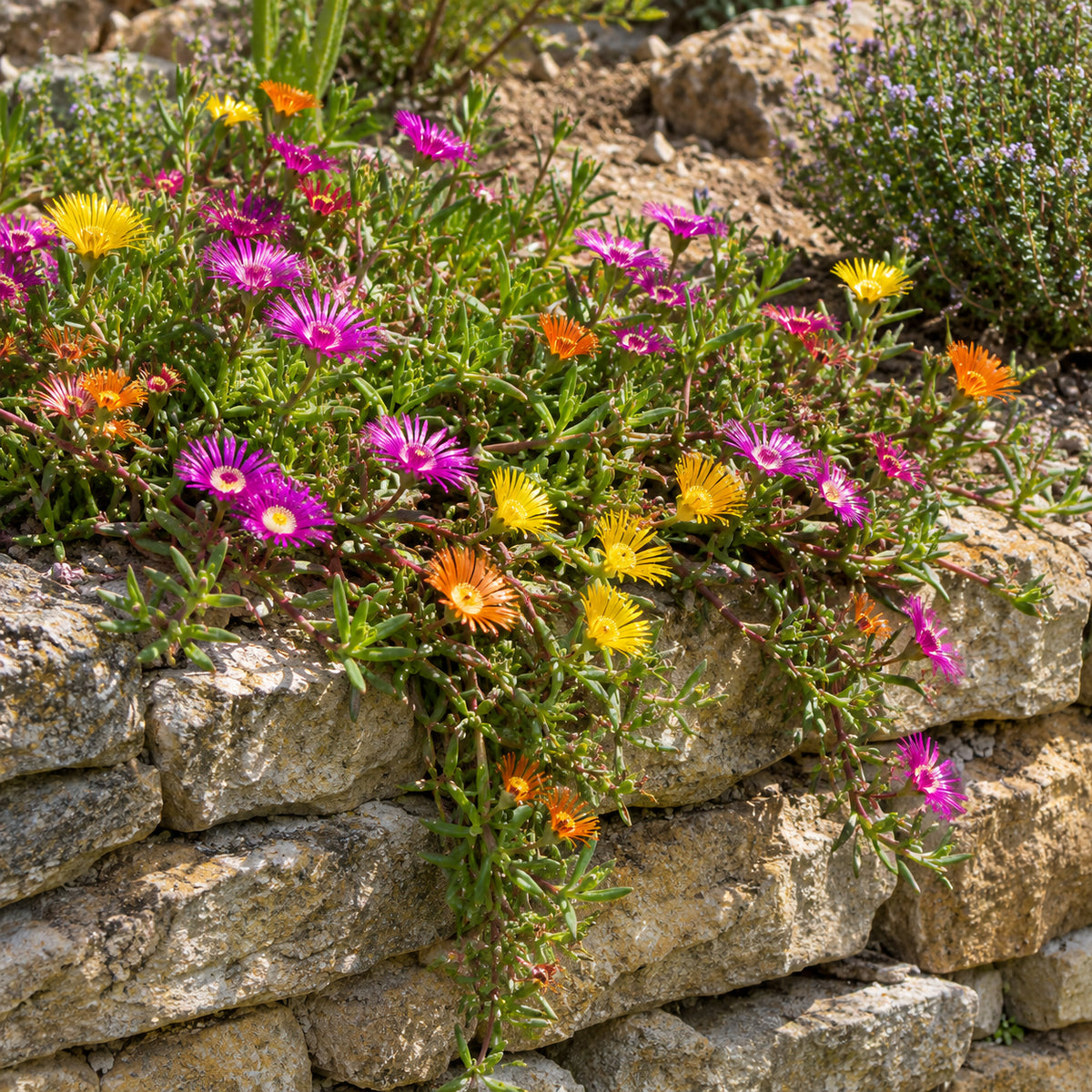
Magic Carpet ice plant combines fleshy foliage and a low-growing habit with flowers made up of numerous fine petals. The mix of colors brings bright touches to rock gardens, borders, and sunny containers. Choose its location primarily for light and drainage: it does better where the soil drains well than in a hollow where rainwater collects.
Characteristics:
This annual ice plant is grown for its summer carpet of flowers and fleshy leaves. “Mixed” indicates a mix of colors; the distribution of shades may vary from one sowing to another. It is suitable for low-growing arrangements and small, well-drained containers.
Sowing tips:
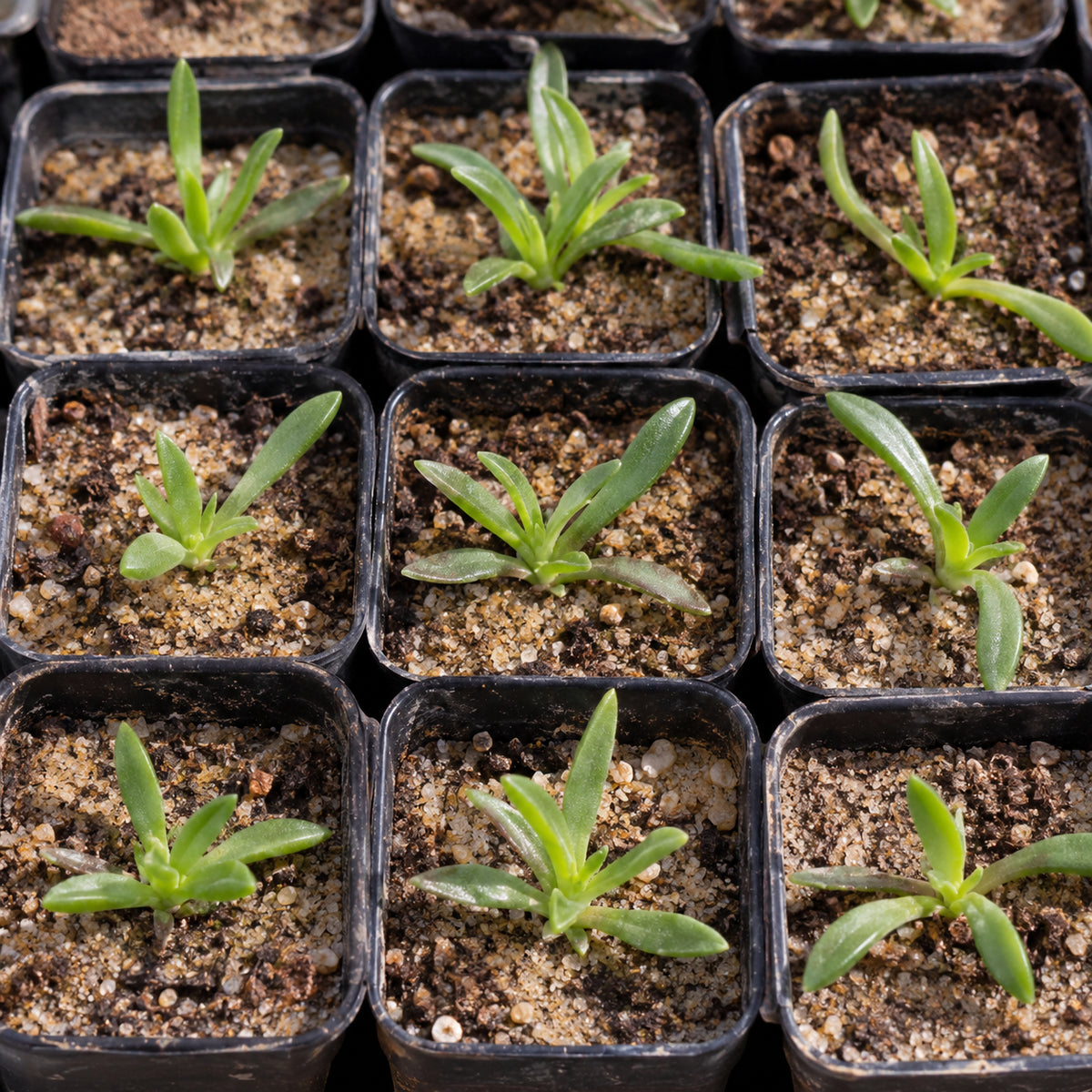
Sow indoors in February–March at 15–20 °C in fine potting soil. Scatter the small seeds without clumping them together, then cover them very lightly. Moisten gently so they are not displaced, and keep the substrate moist during germination without waterlogging it. Place the young plants in the light.
Find preparation steps in our guide to sowing methods.
Planting and care:
Plant outdoors in a sunny spot after the frosts, gradually acclimating the plants to outdoor conditions. Choose very well-drained soil. In a pot, use a container with drainage holes and empty any water that collects in the saucer. Water moderately while the plants establish, then water less often, keeping an eye on the growing medium. Its fleshy foliage doesn’t mean you can stop checking pots exposed to the sun.
Flowering and uses:
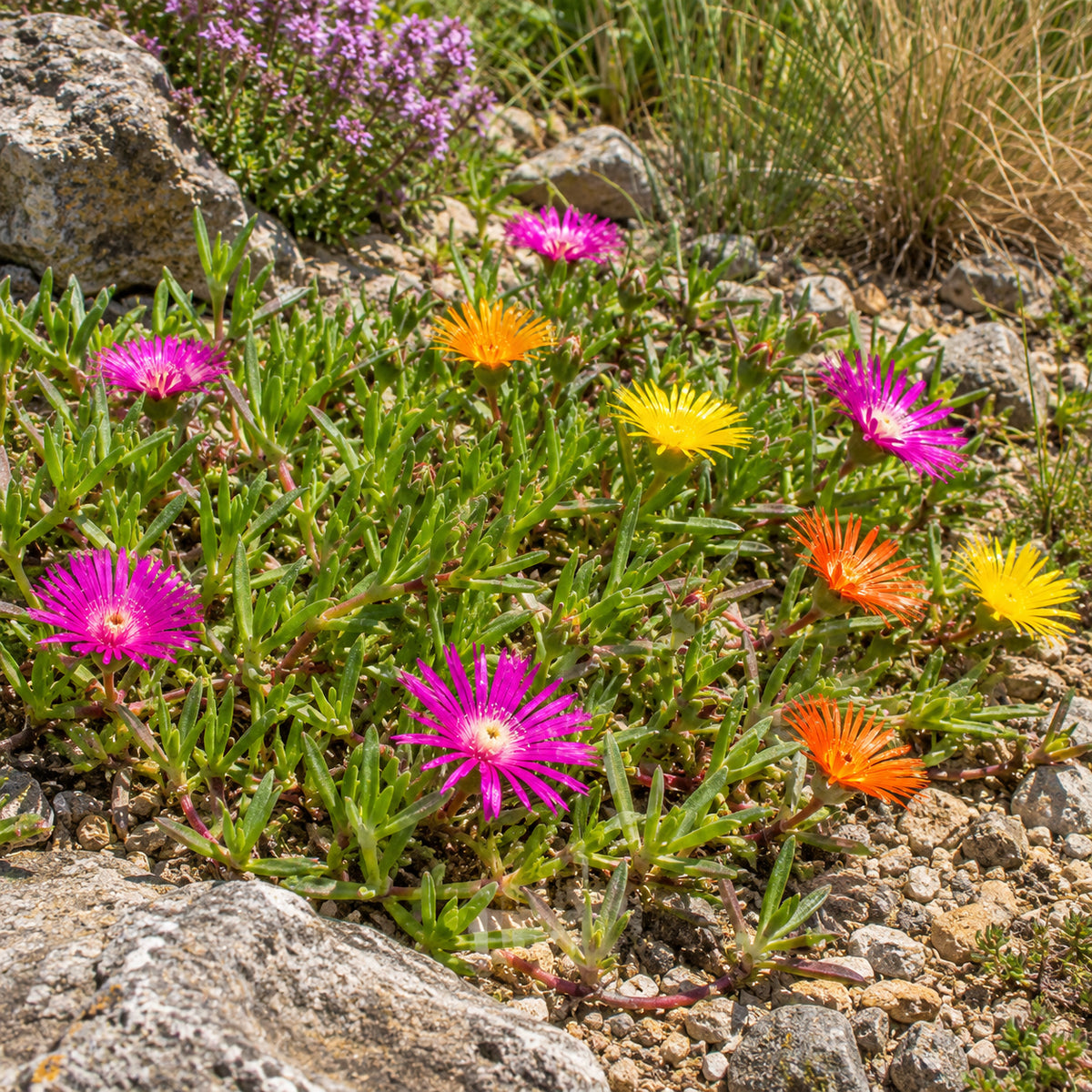
It blooms in summer, depending on the sowing date and growing conditions. Place the fig marigold at the front of a rock garden or along the edge of a low planter: its low-growing habit keeps its flowers in clear view without hiding them behind taller plants. A setting of stones and understated foliage highlights its flowers.
Companion planting:
In a diverse planting, give it an open spot alongside plants that also enjoy sun and well-drained soil. Don’t let a vigorous neighbor overtake it. Pairing colors or growth habits is a design choice; it doesn’t guarantee protection against pests.
Harvesting your own seeds:
Save a few fruits from healthy plants and let them ripen. Harvest them in dry weather once they are fully dry, then leave them to finish drying under cover. Carefully open them and sort the seeds. Label the harvest with the mix name and year. The variety of colors is part of the mix: don’t select just one color if you want to preserve several. See our tips for storing harvested seeds.
Commitment to Quality:
At SemiSauvage, we offer open-pollinated seeds to grow diversity in the garden. This packet contains at least 500 seeds, packaged in France. The timings provided are guidelines to adapt to your climate and growing conditions.