Typha latifolia
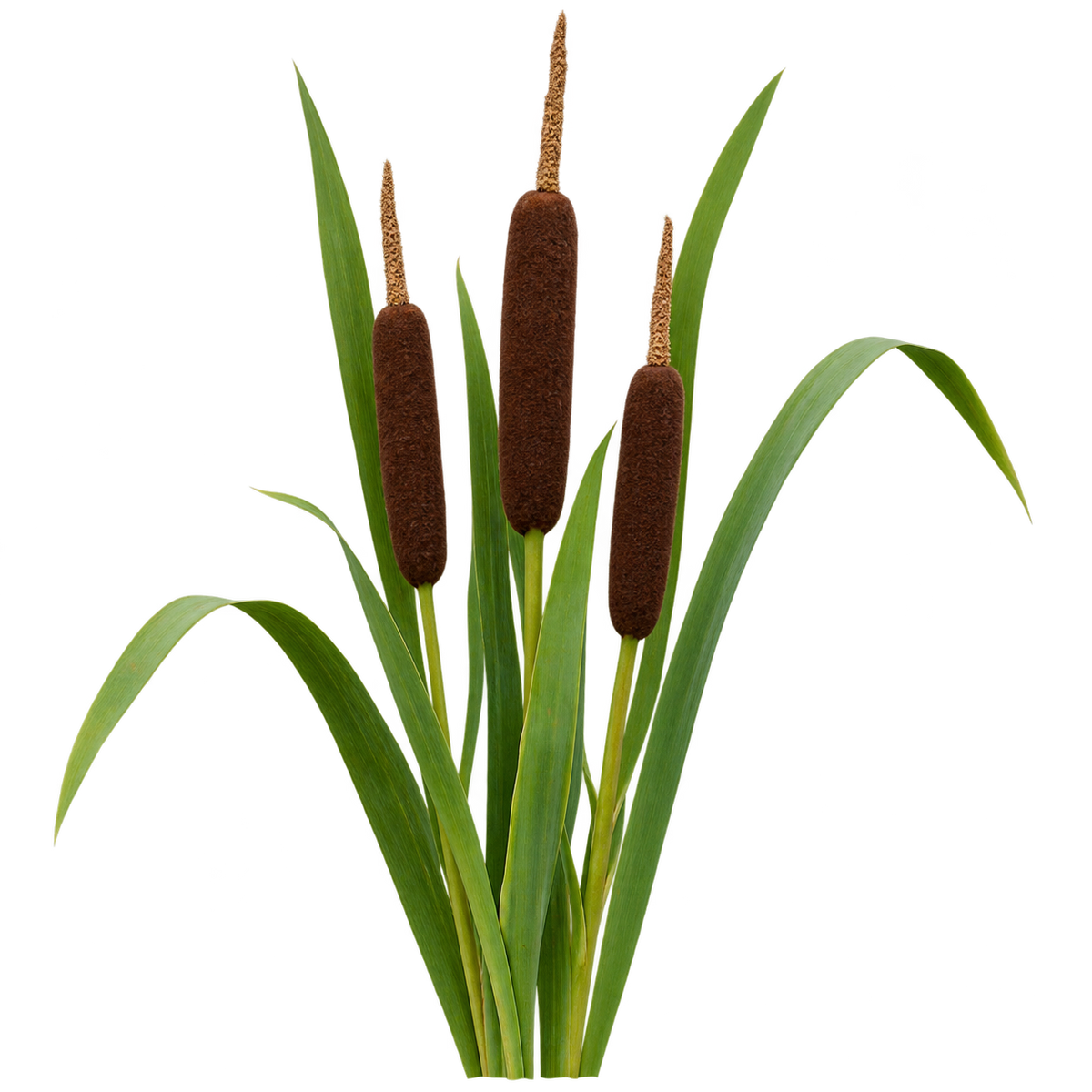
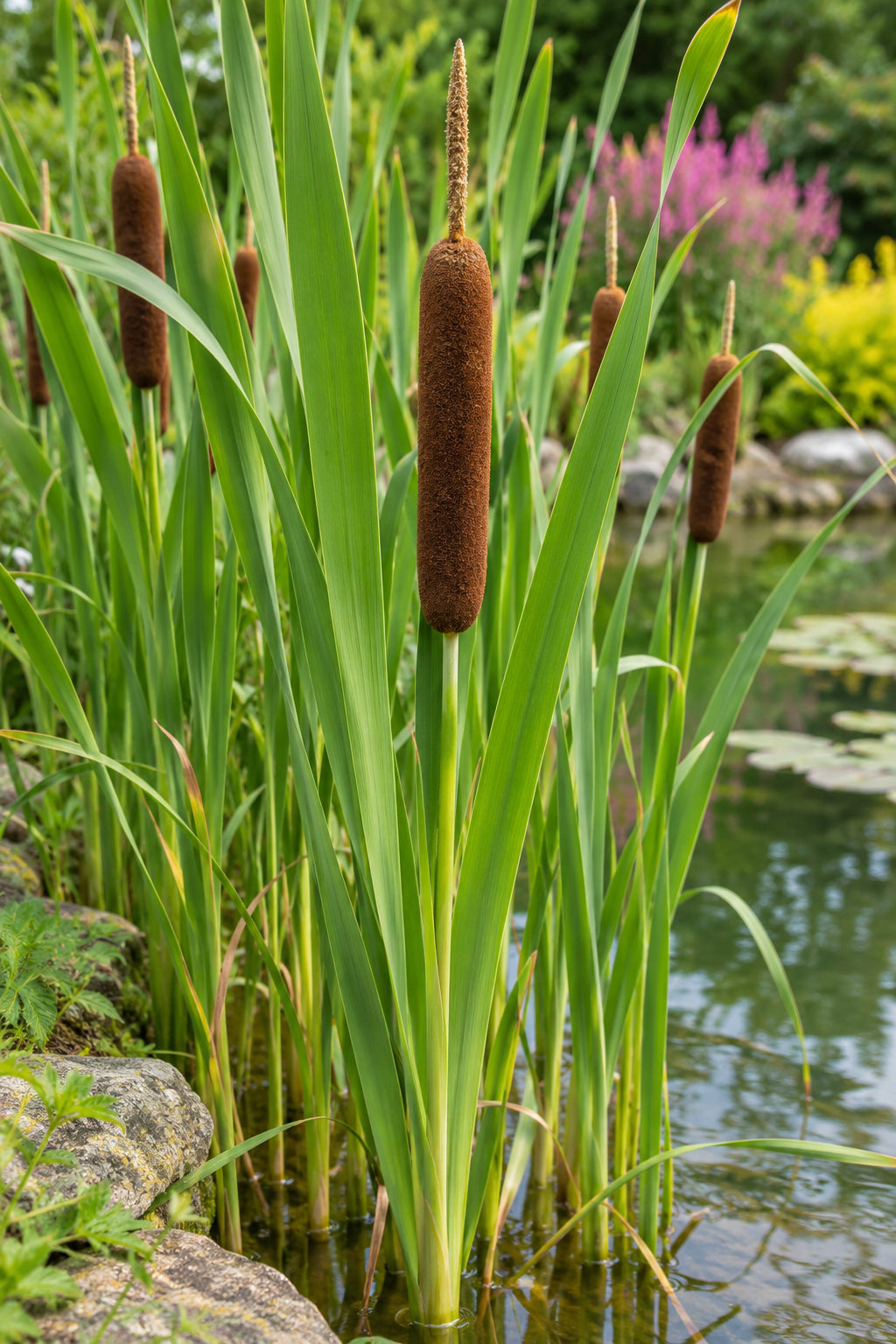
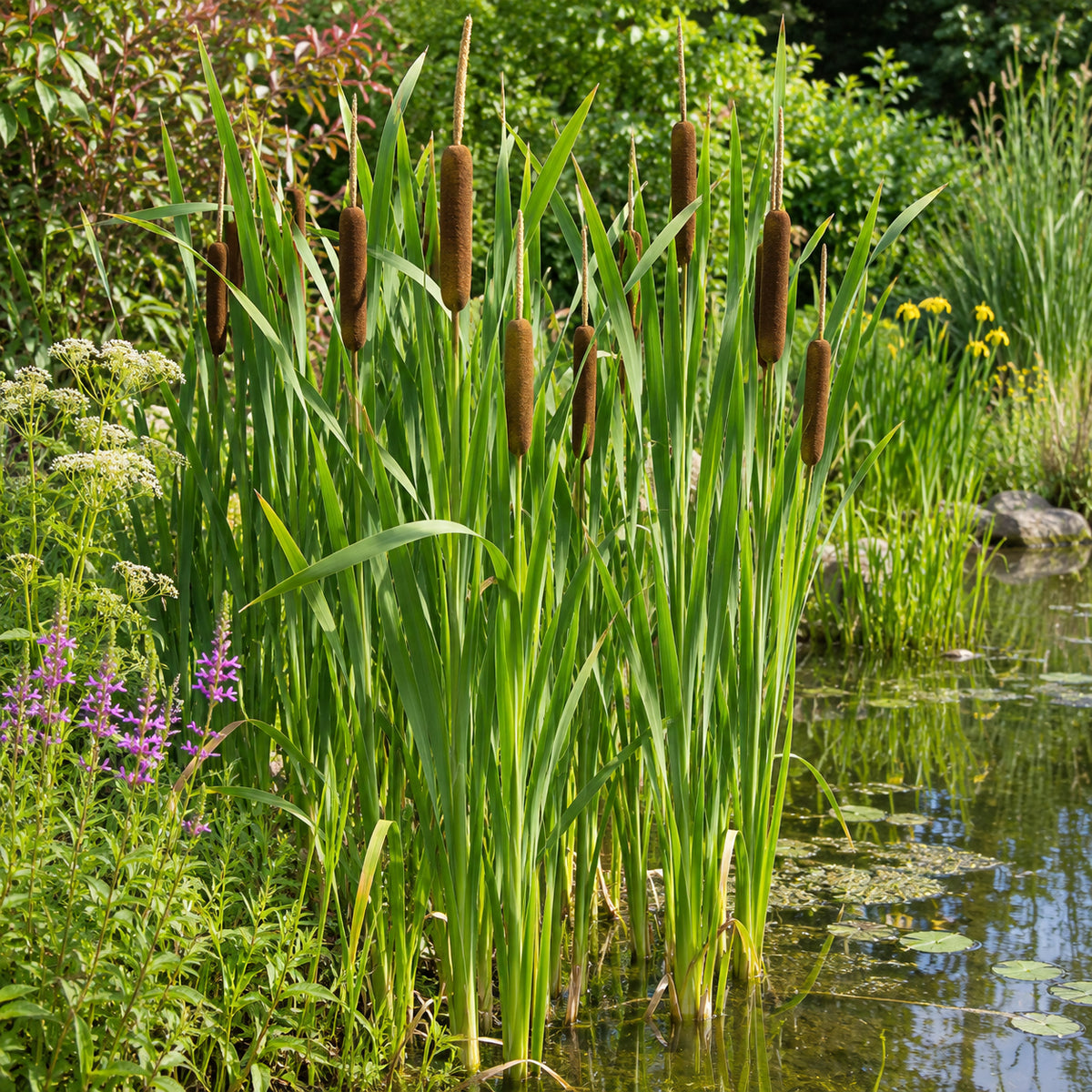
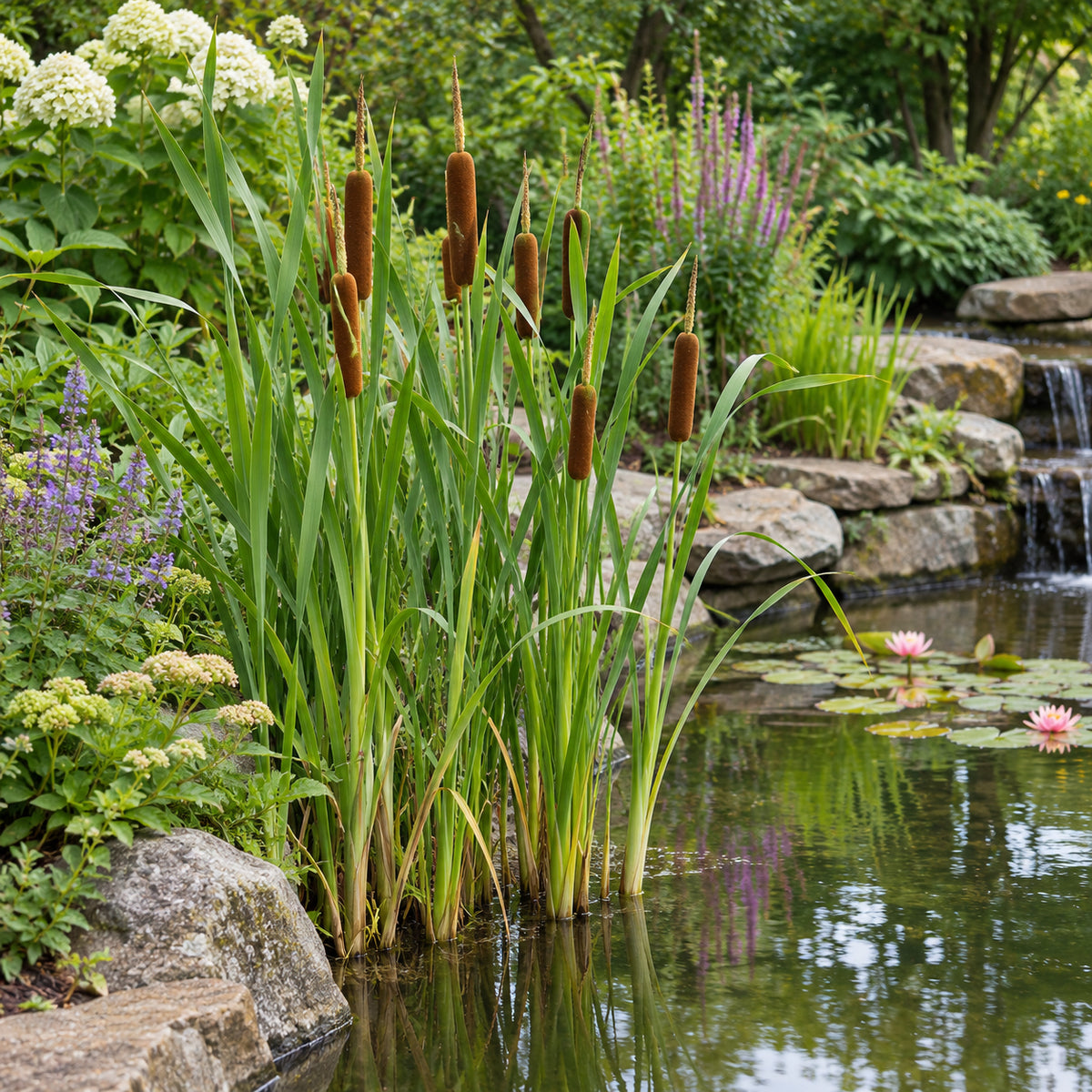
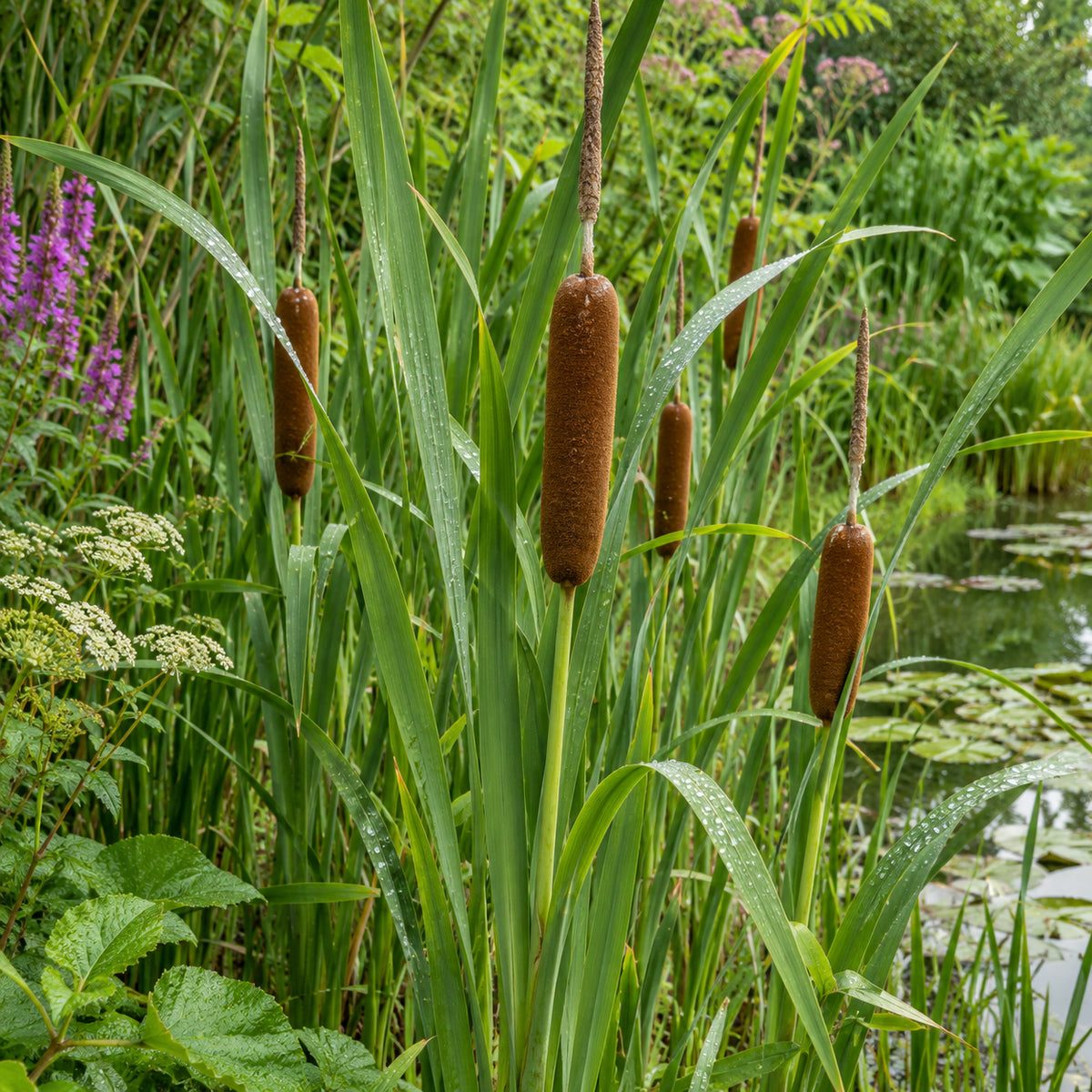
Broadleaf cattail gives pond banks their marshland silhouette: long, upright strap-like leaves, followed by brown cylindrical flower spikes that remain recognizable after flowering. This large aquatic perennial spreads by rhizomes and can form dense stands. It suits spacious waterside displays, where its vigorous growth can be monitored and contained from the time of planting.
Characteristics:
- Perennial of pond banks and shallow water.
- Strap-like foliage and highly distinctive brown flower spikes.
- Spread by rhizomes: allow space and access for maintenance.
Sowing tips:
-
Timing: sow in spring in a bright, sufficiently warm place.
-
Method: spread the seeds over the surface of a fine substrate and keep it very moist. They need light, so do not cover them with a thick layer of soil.
-
Establishing: let young plants become established before transplanting. The water level suited to an adult cattail is not suitable right away for a fragile seedling.
Find preparation steps in our guide to sowing methods.
Growing and care tips:
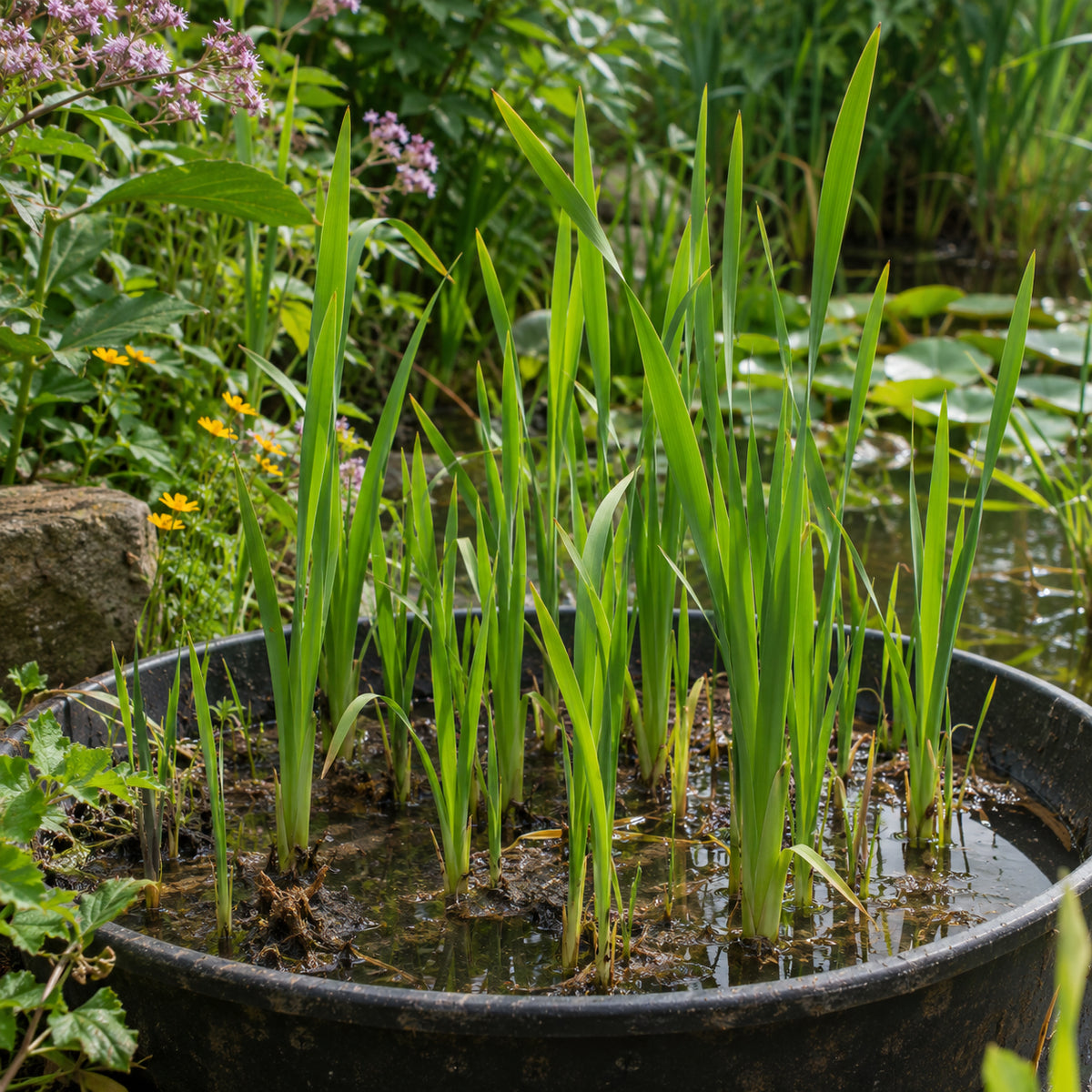
Choose full sun and consistently moist soil, on a bank or under shallow water. For established plants, keep the water depth to around 30 cm at most. Use a sturdy, suitable container if you want to limit its spread in a pond, then regularly check the rhizomes and new shoots: a container does not remove the need for monitoring. Avoid direct contact between vigorous rhizomes and a fragile pond liner. Keep the planting accessible so you can work on it without damaging other aquatic plants.
Flowering and harvesting:
The flower spikes appear in summer. On each flower stalk, the male part sits above the female part, which later forms the characteristic brown cylinder. As it ages, the cylinder breaks down into a fluffy mass that carries the seeds away. Remove the flower heads before they disperse if you want to avoid self-seeding. Old stems can be cut back before new growth begins; also keep an eye on its spread.
Garden uses:
Cattail adds height behind shorter waterside plants. It can structure a large waterside display, provided you leave open water and space for less vigorous species. It is wind-pollinated, so its landscape appeal does not rely on nectar-rich blooms. For a small ornamental pond, first measure the space actually available at maturity, rather than the space taken up by the young plant.
Harvesting your own seeds:
To save seeds, reserve a female flower spike on a clearly identified plant. Wait until it starts to break apart, when the seeds and their hairs become visible, then gather a small amount before it blows away. Work out of the wind and over a container. Dry the harvest, separate out as much debris as possible, and note the species and year. The main thing is to watch for the right stage of maturity: a brown spike that is still compact and one that is shedding its fluff are at different stages. See our tips for storing harvested seeds.
Commitment to Quality:
At SemiSauvage, we offer open-pollinated seeds to cultivate diversity in the garden. This packet contains at least 800 seeds, packaged in France. The dates given are guidelines to adapt to your climate, soil, and seasonal conditions.
A striking presence for water gardens, best planted where it has room to grow and can receive care suited to its vigorous growth.