Phaseolus vulgaris 'Helda'
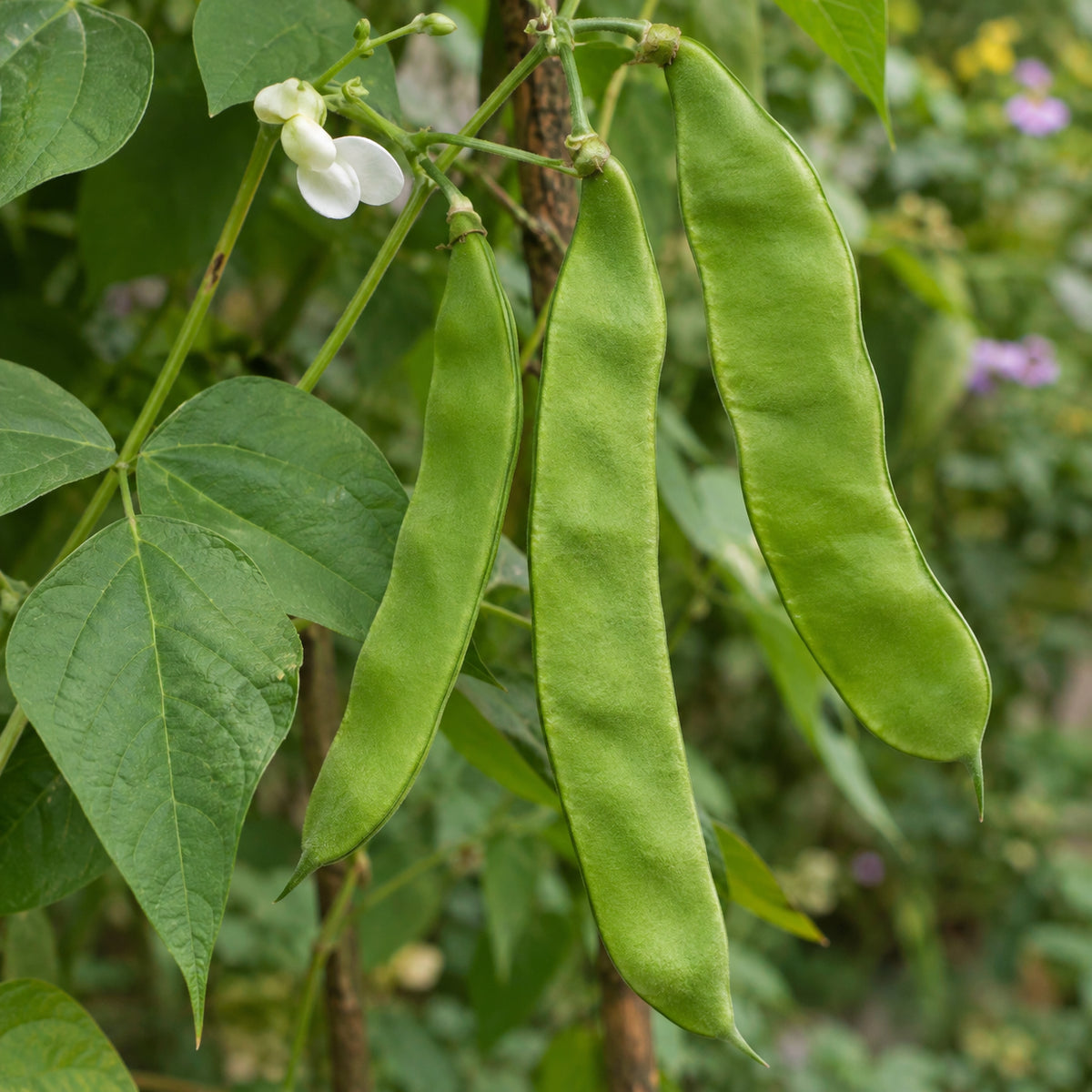
Helda is a climbing bean grown for its long, flat green pods. Its climbing growth makes use of the height of the vegetable garden, and it can be harvested over several pickings. Picking at the right stage makes all the difference: pick the pods while they are still tender, before the seeds become very swollen. Set up support before sowing and ensure easy access to both sides of the foliage, as the pods are harder to spot in dense growth.
Characteristics:
- Climbing bean, distinct from dwarf varieties: provide support for its climbing growth.
- Long, flat green pods, to be harvested young and regularly.
- Warm-season vegetable whose pods should only be eaten cooked.
- Open-pollinated seeds; packet of at least 40 seeds.
Sowing tips:
-
Timing: Sow from May to July after the last frosts, when the soil has warmed sufficiently.
-
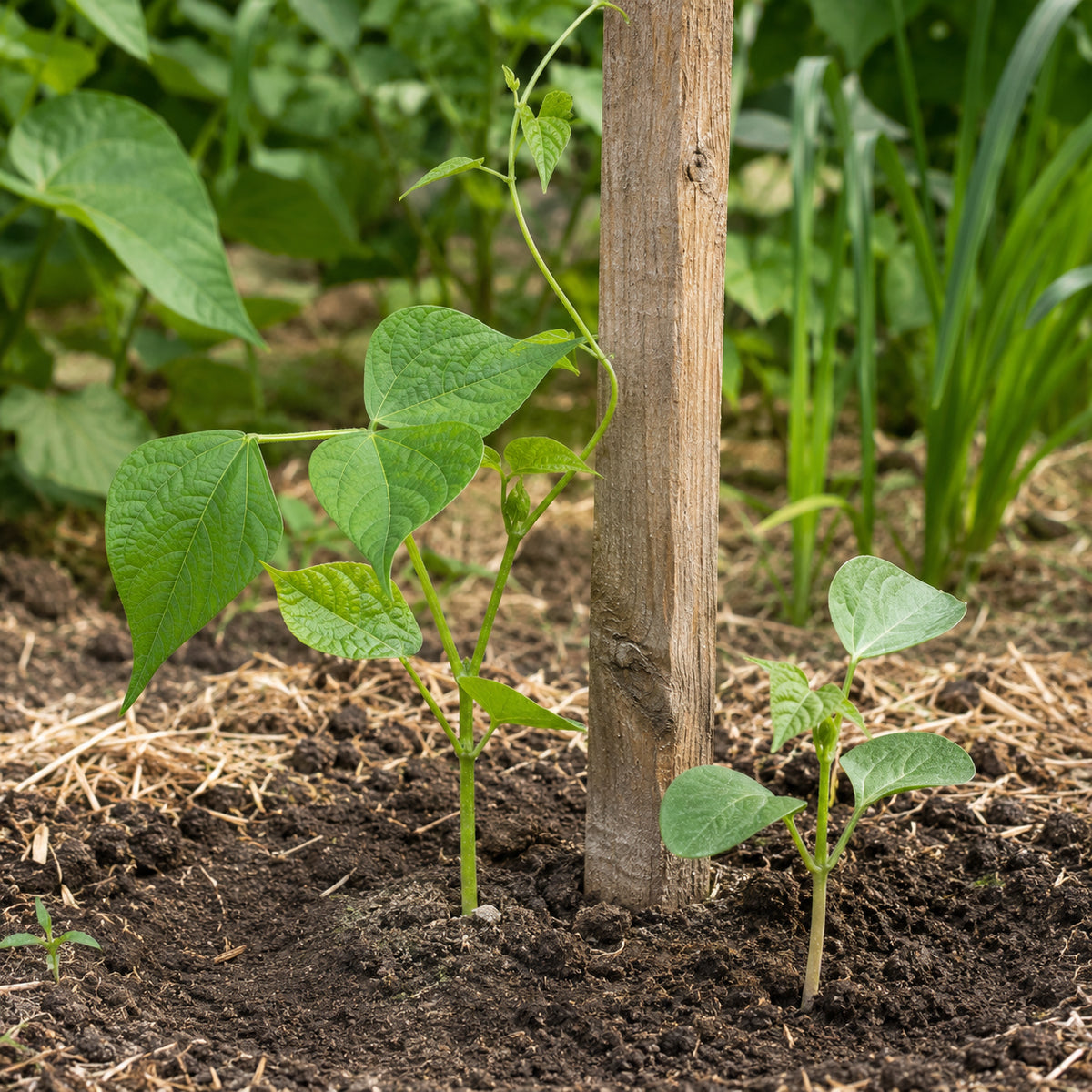
Support and depth: Set up the poles first, then sow at their base at a depth of about 3 to 4 cm.
-
Watering: Water according to soil moisture, without soaking the sowing area. Cold, waterlogged soil hinders establishment.
Planting tips:
Choose a sunny spot and soil that stays cool while draining well. Secure the poles or trellis firmly, and provide access from both sides if possible: you’ll be able to find the pods among the leaves more easily. Direct sowing is suitable; our guide to sowing directly in the ground covers the soil preparation steps.
Care tips:
Guide the first stems toward the support without tying them too tightly. Water at the base, especially during flowering and pod formation. Mulch laid over already-warm soil helps retain moisture. Make sure the support stays stable as the foliage and harvests gain weight.
Harvesting tips:
Pick the pods regularly while they are still young, before the seeds become very plump. Check behind the foliage for pods that are hiding. Hold the stem while picking to avoid pulling up the plant. Harvesting takes place in summer and can continue into early fall, depending on the sowing date and climate.
Cooking:
Trim the ends off the pods, then cut them into large pieces or on the diagonal. Always cook them before eating: they can then be served as a side, stir-fried, or added to a slow-cooked vegetable dish. Picked young, they are well suited to cooking that keeps their large pieces firm.
Planning for vertical growth:
Position the support with its shade in mind, so it does not fall on lower-growing vegetables. In a diverse, mulched vegetable garden, leave a path for watering, checking the ties, and picking. The stems need stable support as soon as they start to grow taller, well before the pods weigh down the foliage.
Harvesting your own seeds:
Set aside a few pods from healthy plants and let them grow past the green-harvest stage. For seed, wait until the pods are beige, dry, and brittle, with hard seeds inside. Pick in dry weather, shell the pods, then let the seeds finish drying in the air before storing them. Discard damaged seeds and label the variety and harvest year. Seeds must therefore be much more mature for sowing than the pods picked for cooking. Read our tips on storing your seeds.
Commitment to Quality:
At SemiSauvage, we offer open-pollinated seeds to grow and discover plant diversity. This packet contains at least 40 seeds, packaged in France. The advice will guide you from sowing to growing; adapt it to your climate and garden conditions.
With sturdy supports and regular picking, Helda makes use of the vegetable garden's height to produce a harvest of flat pods for cooking.