Phaseolus vulgaris var. nanus 'Tytania'
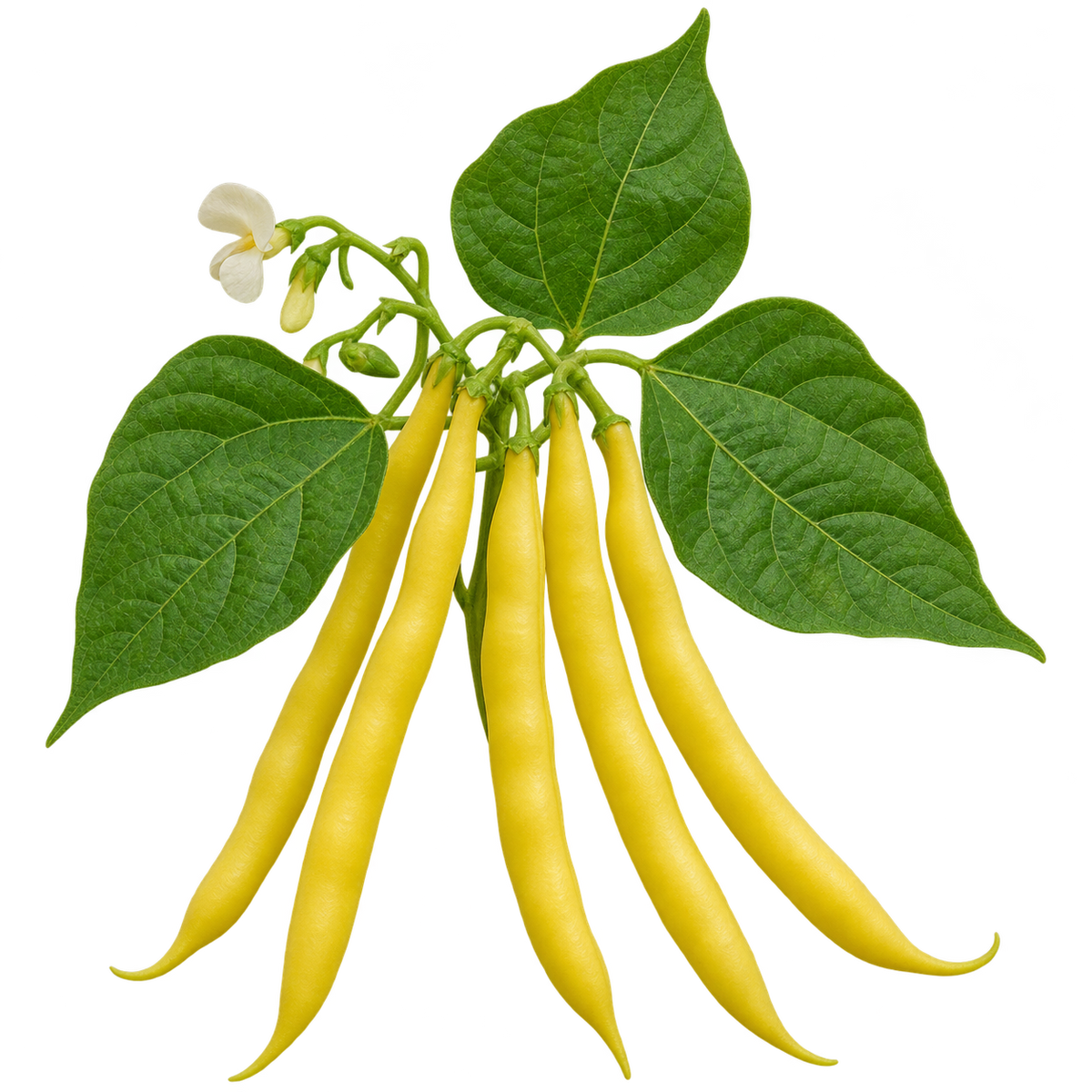
Tytania produces slightly curved, slender yellow pods with a round cross-section. This dwarf bean is well suited to small vegetable gardens and does not need a tall support. Its appeal also lies in the harvest: the light-colored pods stand out among the leaves, but you still need to check that they are tender. Pick the pods before they become thick and the seeds show prominently.
Characteristics:
- Yellow, slender, round pods, distinct from flat beans.
- Dwarf growth habit; no tall climbing structure is needed.
- Repeated harvests at the tender stage.
Sowing tips:
-
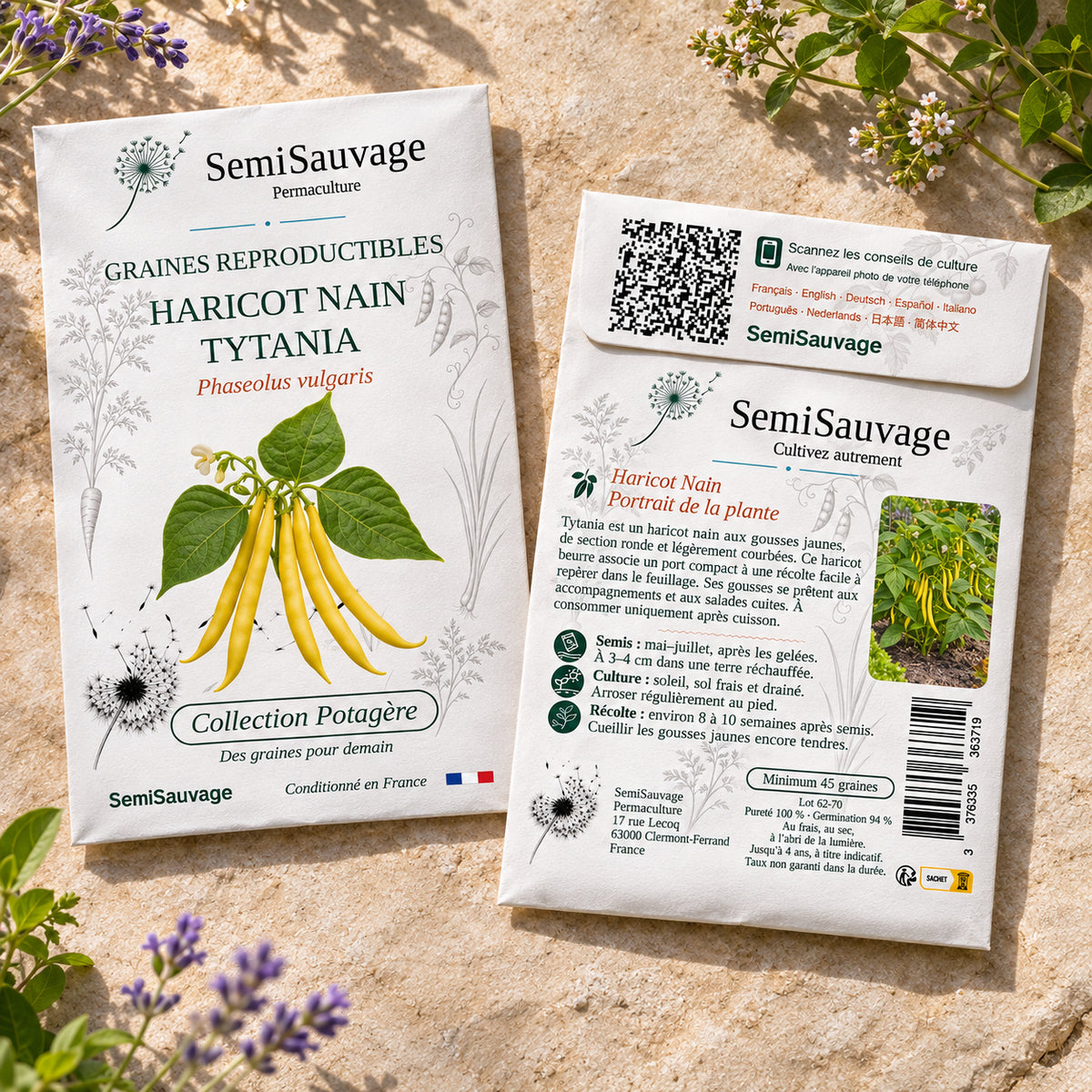
Season: sow from May to July, after the last frost, in soil that has warmed up. A calendar date alone is not enough if the soil is still cold and wet.
-
Depth: place the seeds 3–4 cm deep in loosened soil. Close the furrow, then water without soaking the soil.
-
Planning: For a staggered harvest, opt for several small successive sowings rather than one large bed. Our guide to sowing methods covers the preparation steps.
Growing and care tips:
Choose a sunny spot and soil that stays cool while allowing water to drain away. Leave enough space to reach the plants and pick without breaking the stems. Weed early, then mulch once the soil has warmed and the plants are well established. Water at the base during dry spells, paying particular attention during flowering and pod formation. Avoid letting the soil dry out during this stage.
Harvesting tips:
As a general guideline, the first harvests come about 8 to 10 weeks after sowing, depending on the temperature and growing conditions. The visible stage is the best guide: choose young, tender pods whose seeds are not yet very developed. Hold the stem with one hand and pick the pod with the other without pulling up the plant. Harvest regularly so the pods do not get too large.
Uses:
The fine pods are suitable for side dishes, stir-fries, and salads made with cooked beans. Their round cross-section makes for a different presentation from flat, flat-podded beans. Eat them only after they have been fully cooked.
In a diverse vegetable garden:
Plant the bed near low-growing crops, while keeping access to the harvest and sunlight. Flowers along the edge add variety to the garden; they do not replace watering or monitoring young plants. Make sure a vigorous neighboring plant does not cover the foliage.
Harvesting your own seeds:
Set aside a few healthy, identified plants, then let their pods continue developing well beyond the edible stage. The flowers produce pods that contain the seeds. Wait until the seeds are fully formed and the pods have dried on the plant. Harvest in dry weather, shell the pods, then finish drying the seeds under cover before sorting them. Label the variety and year; keep each variety's harvest separate. See our tips on storing harvested seeds.
Commitment to Quality:
At SemiSauvage, we offer open-pollinated seeds to grow diversity in the garden. This packet contains at least 45 seeds, packaged in France. The dates given are guidelines to adapt to your climate, soil, and the conditions of the season.
With Tytania, make room in your summer harvest for fine yellow pods.