Matthiola incana
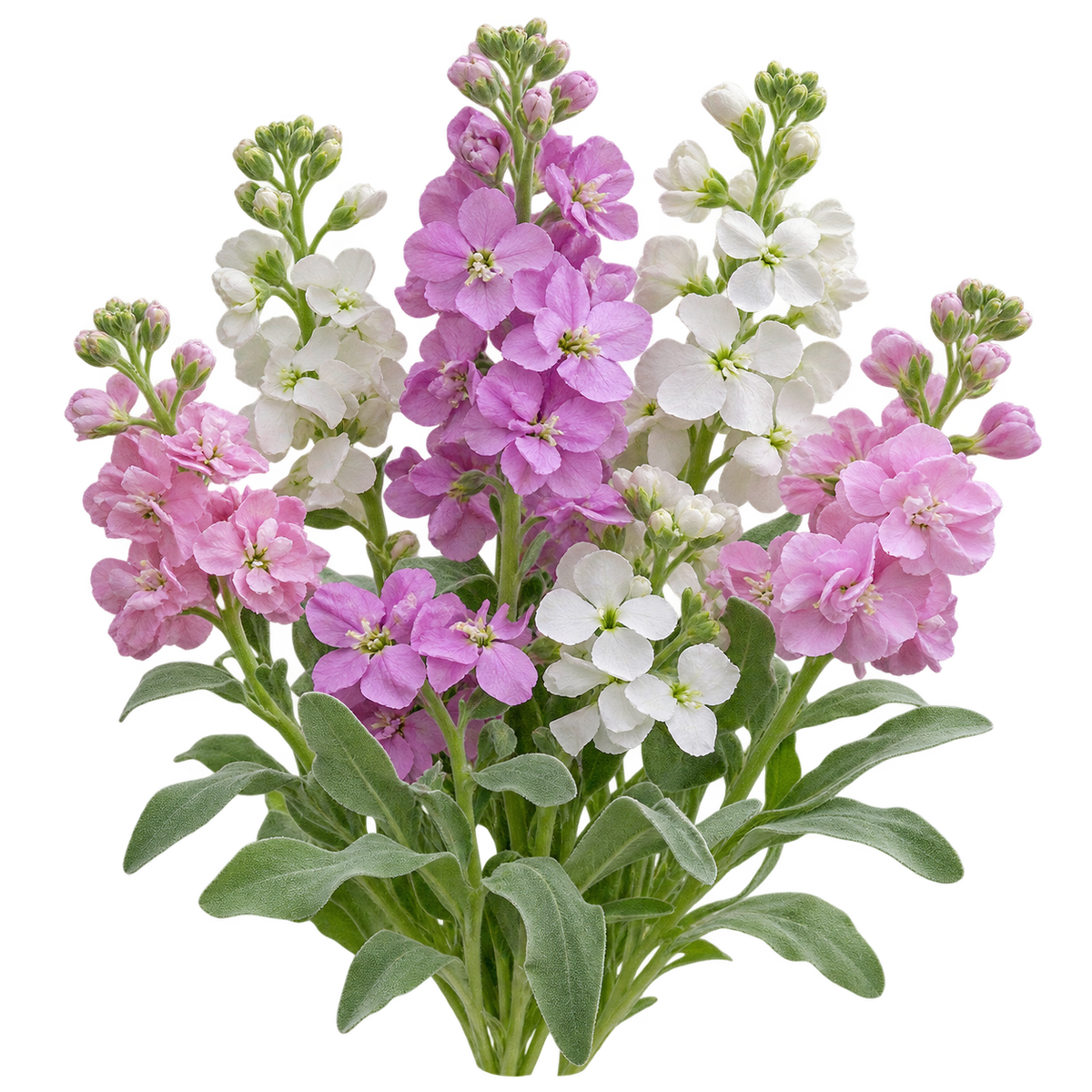
Stock combines clusters of fragrant flowers with slightly velvety gray-green foliage. It is grown in beds near paths and for cutting: just a few stems add vertical interest to a bouquet. Depending on the sowing time and climate, it can be grown as an annual or biennial. The botanical name Matthiola incana distinguishes it from other plants also called stocks.
Characteristics:
- Clusters of fragrant flowers held above gray-green foliage.
- Grown as an annual or biennial, depending on conditions.
- Flowers for beds and bouquets; double flowers are sterile.
Sowing tips:
-
Timing: sow in early spring under cover. Summer sowing is also possible with winter protection suited to the climate.
-
Method: sow thinly in fine potting soil, cover lightly, then keep moist without overwatering. Give seedlings plenty of light early on to prevent them from becoming leggy.
-
Transplanting: handle young plants with their root balls, gradually ventilate the shelter, and choose a mild period to plant them out.
Find preparation instructions in our guide to sowing methods.
Growing and care tips:
Choose a sunny, sheltered spot in neutral to alkaline soil that drains well. Soil that stays constantly wet in winter is unsuitable, even when temperatures remain moderate. Water after planting and during dry spells, without leaving the base waterlogged. Allow air to circulate between plants. If you choose a summer sowing, adapt winter protection to your region rather than assuming all plants will survive the winter outdoors.
Flowering and harvesting:
Flowering occurs from spring to summer, depending on the growing cycle. For a bouquet, cut a stem whose first flowers have opened and whose remaining buds will continue to develop. Use a clean tool, remove any leaves that would be submerged, and place the stems in water promptly. In the garden, plant a few near a patio or path so you can enjoy their fragrance without having to walk into the flower bed.
Garden uses:
The upright stems add structure to bouquets and pair well with more rounded flowers. In a flower bed, the gray-green foliage contrasts with darker leaves. Pair wallflowers with plants that also like well-drained soil, and avoid placing them beneath dense foliage. The sowing date affects the season when this fragrant presence will be available: plan your planting for the spring or summer you want to fill with flowers.
Harvesting your own seeds:
Set aside single-flowered plants: double flowers of Matthiola incana are sterile and do not produce seeds. After pollination, the single flowers form elongated fruits called siliques. Let them grow and then turn brown and dry before cutting them just before they open. Finish drying them under cover, open the siliques over a tray, and sort the seeds. Label the harvested plants and the year. So, the ability to produce seeds does not mean that every flower on every plant will form them. See our tips for storing harvested seeds.
Commitment to Quality:
At SemiSauvage, we offer open-pollinated seeds to cultivate diversity in the garden. This packet contains at least 75 seeds, packed in France. The timings given are guidelines to adapt to your climate, soil, and seasonal conditions.
A plant to grow for fragrant borders and bouquets, while keeping single-flowered plants for seed harvesting.